Why is Nanofabrication Deposition Essential for Modern Technology?
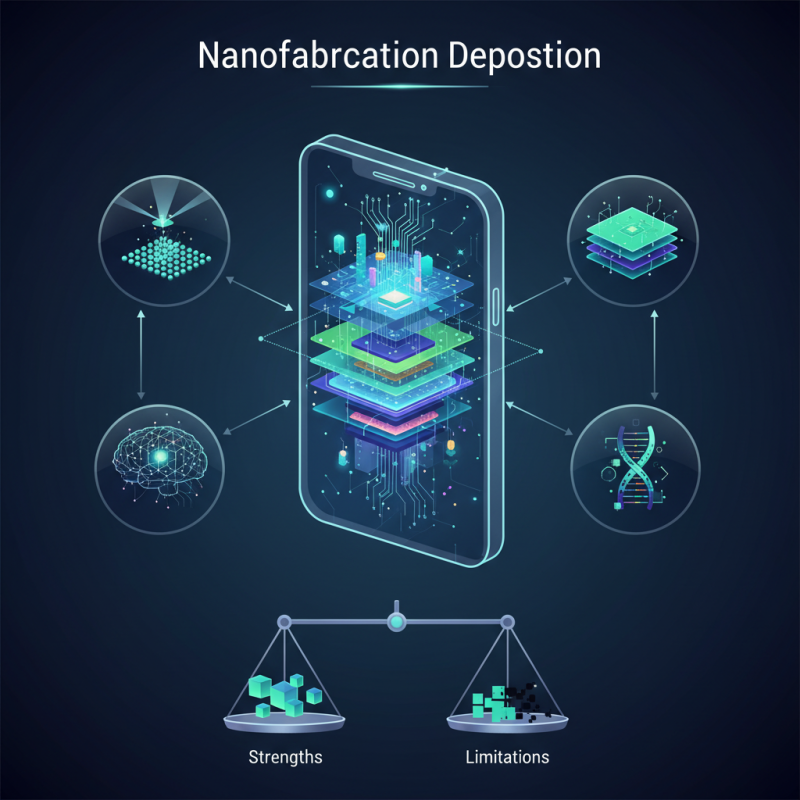
Nanofabrication Deposition plays a crucial role in modern technology. It involves depositing materials at the nanoscale, allowing for new innovations. This process enables the creation of smaller, more efficient electronic devices. Every smartphone, for instance, incorporates nanofabricated components. These components improve performance while reducing size.
The precision of Nanofabrication Deposition is remarkable. Engineers use various methods to ensure exact layer thicknesses and material composition. This precision can affect the device's overall functionality. It is essential for applications in semiconductors, sensors, and even biomedical devices. However, challenges remain. The process can be costly and technically demanding.
Nanofabrication Deposition is not flawless. Issues such as material defects or inconsistencies can arise during fabrication. These factors require constant refinement and innovation in techniques. As we delve into the importance of this technology, it is vital to recognize both its strengths and limitations. Understanding these nuances can pave the way for future advancements.
Overview of Nanofabrication and its Importance in Technology
Nanofabrication is a crucial process in modern technology. It focuses on fabricating devices at the nanoscale, which is about 1 to 100 nanometers. This scale is vital because it leads to improvements in electronic, optical, and material properties. For example, semiconductor chips rely on nanofabrication techniques. The ability to create tiny structures enhances their performance and efficiency.
The deposition processes in nanofabrication are particularly important. Techniques such as chemical vapor deposition and physical vapor deposition allow for precise layer-by-layer construction. This precision helps in achieving desired material properties. However, challenges persist. Controlling defects at such small scales can be difficult. Even minor imperfections can have significant effects on device functionality. This highlights the need for continuous research and innovation in the field.
As technology advances, the demand for nanofabricated devices grows. These devices increasingly find applications in energy storage, medical devices, and even environmental solutions. The possibilities are promising, but the journey is complex. Researchers must address various obstacles. Balancing innovation with reliability and sustainability is essential. The world of nanofabrication is exciting but fraught with challenges.
Why is Nanofabrication Deposition Essential for Modern Technology?
| Dimension | Description | Importance |
| Scalability | Ability to produce nanostructures in large quantities. | Enables mass production and cost efficiency in various sectors. |
| Precision | Ability to manipulate materials at the atomic or molecular level. | Critical for advancements in electronics and materials science. |
| Versatility | Application across various fields like electronics, medicine, and energy. | Promotes innovation and development of new technologies. |
| Energy Efficiency | Reduction in energy consumption for devices and processes. | Contributes to sustainability and environmental friendliness. |
| Integration | Seamless incorporation with existing technologies. | Facilitates advancements in smart devices and materials. |
Key Techniques in Nanofabrication Deposition Methods
Nanofabrication deposition plays a crucial role in advancing modern technology. It includes several key techniques that empower the creation of miniaturized devices. Among these, Chemical Vapor Deposition (CVD) and Atomic Layer Deposition (ALD) are significant. CVD is noted for its ability to produce thin films with high uniformity. This precision is vital for semiconductor manufacturing, where even minor deviations can impact device performance.
According to a report by MarketsandMarkets, the global nanofabrication market is projected to reach $57.7 billion by 2025, growing at a CAGR of 21.6%. This growth underscores the importance of efficient deposition methods. ALD is particularly notable for its capability in conformal coatings. This technique allows for the systematic growth of materials one atomic layer at a time, enabling intricate designs.
Despite these advancements, challenges remain. The control over deposition thickness and uniformity can be inconsistent. Industry experts emphasize the need for improved parameters in real-time monitoring. This area is critical to enhance reproducibility. As the technology progresses, addressing these imperfections will be essential for meeting the demands of next-gen applications.
Applications of Nanofabrication in Electronics and Materials Science
Nanofabrication plays a crucial role in the fields of electronics and materials science. Its ability to create structures at the nanoscale opens up numerous possibilities. For electronics, it allows for the production of smaller, faster, and more efficient devices. This advancement is evident in the development of transistors that are only a few nanometers in size. However, such miniaturization raises questions about reliability. As components shrink, maintaining performance becomes challenging.
In materials science, nanofabrication leads to innovative materials with unique properties. For instance, engineered nanoparticles can enhance strength and reduce weight in composites. These advances have implications for everything from aerospace to biomedical applications. Yet, the scalability of these processes remains a concern. Researchers must address how to produce these materials economically and safely.
Despite these challenges, the positive impact of nanofabrication cannot be understated. We are witnessing a revolution in how we design and utilize materials. Continued exploration and dialogue in the field are essential. There is much to learn as we push the boundaries of what’s possible with nanofabrication.
Applications of Nanofabrication in Modern Technology
This chart illustrates the various applications of nanofabrication in modern technology, highlighting key areas such as semiconductors, nanocoatings, MEMS, optoelectronics, and nanostructured materials. Each application area reflects the increasing importance of nanofabrication techniques in driving technological advancements.
Challenges and Innovations in Nanofabrication Deposition Techniques
Nanofabrication deposition techniques are at the forefront of modern technology. However, they face significant challenges. One major issue is controlling the uniformity of thin films. Variations can impact device performance. Engineers are constantly seeking methods to enhance precision. They experiment with different materials and processes. This innovation is crucial for applications in electronics and materials science.
Another challenge lies in scalability. As demand increases, producing nanoscale structures on a larger scale remains difficult. Techniques like electron beam lithography offer high resolution but are slow. Alternative methods, such as nanoimprint lithography, show promise, yet they need further development. Addressing these scalability issues can lead to advancements across various sectors.
Moreover, sustainability is a growing concern in nanofabrication. Many current processes consume vast amounts of energy and resources. Researchers are now looking at greener alternatives. This transition is essential for aligning with global sustainability goals. The journey of innovation in nanofabrication is ongoing, with both hurdles and advancements shaping its trajectory.
Future Trends and Developments in Nanofabrication Technologies
Nanofabrication technologies have rapidly evolved, shaping the landscape of modern electronics, healthcare, and materials science. The future trends in nanofabrication are promising, fueled by continuous innovation in deposition methods. Techniques like atomic layer deposition (ALD) and selective area growth are enhancing precision in creating nanostructures. Researchers are looking closely at these methods to improve their reliability and efficiency.
Emerging applications, such as nanoelectronics and improved drug delivery systems, highlight the importance of reliable deposition processes. For example, the ability to deposit thin films with atomic precision could revolutionize the semiconductor industry. However, challenges remain in scalability and cost-efficiency. Many researchers are reflecting on how to overcome these hurdles to make nanofabrication more accessible.
The integration of machine learning with deposition techniques is another trend to watch. It has the potential to optimize processes in real-time, improving quality control. Still, the ethical implications of such technologies raise important questions. Balancing innovation with responsibility will be essential for sustainable development in nanofabrication. This field is set to evolve, but it requires careful consideration of both its capabilities and challenges.





