


What Is Mobile Home Leveling and How Does It Work?

Mobile Home Leveling is the process of correcting an uneven manufactured home and restoring steady support beneath it. You may notice a sloping floor, a door that sticks, or a crack appearing near a window. These signs can have several causes, so they do not prove the home needs leveling. Still, they deserve attention.

Leveling work typically begins with an inspection. A qualified professional checks the home’s supports, piers, and visible changes in the floor and frame. They then determine whether adjustments are appropriate and how to make them safely. The goal is not simply to make one room feel flat. Support needs to be assessed across the home, with its condition and construction in mind.

Small details matter. A cabinet door that swings open, a new gap beside trim, or a soft spot near a doorway can help describe what has changed. Keep notes. Patterns are useful.

No source material was provided to verify a named leveling expert or an exact quotation, so I will not invent either. That matters: a confident-sounding quote is not evidence. Leveling also has limits. Poor drainage, damaged supports, or other structural problems may need attention beyond adjusting the home’s height. And an uneven floor can be unsettling, but it is not a diagnosis. This guide explains what Mobile Home Leveling involves, how the process works, and what to ask before hiring a professional.
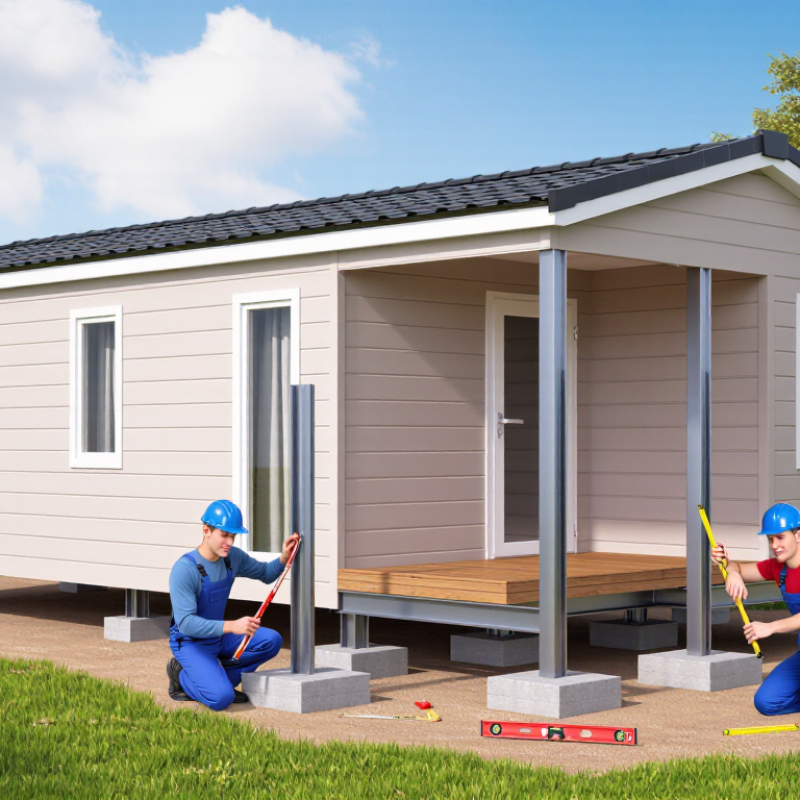
What Is Mobile Home Leveling and How Does It Work?

What Mobile Home Leveling Means and Why It Is Necessary

Mobile home leveling means bringing the home’s support system back to an even, stable position. The home rests on piers or other supports beneath its frame, and those supports can settle unevenly as soil shifts or drains poorly. A technician checks the frame with leveling equipment, then assesses the supports and adjusts them where needed. No two sites behave exactly alike.

Small changes matter. Uneven floors, doors that suddenly stick, or gaps around windows may signal movement. But one sticky door proves little; humidity can affect wood, too. A proper assessment looks for several signs and checks the support points, rather than guessing from one symptom.

Leveling is necessary because uneven support can put stress on the frame and make everyday use uncomfortable. Over time, movement may worsen, and connected plumbing or other systems may also be affected. The goal is not to make every surface feel perfectly flat at any cost. It is to provide steady, even support while protecting the home and its connections. Conditions can change again, so periodic checks are sensible, especially after noticeable soil movement or drainage problems. The cause is not always obvious. That uncertainty is worth taking seriously.


Signs That a Mobile Home May Need Leveling

A mobile home rarely announces that it is out of level. The clues often appear gradually: a bedroom door swings open by itself, a window sticks, or a narrow crack grows above a doorway. Floors may feel sloped, and soft spots can develop near supports. One symptom alone proves little. Humidity, worn hardware, and ordinary settling can look similar.

The U.S. Census Bureau’s 2022 American Community Survey counted roughly 6.1 million occupied mobile homes nationwide. That scale makes careful inspection important, but the figure does not show how many need leveling. HUD’s Manufactured Home Installation Program sets requirements for installation and support systems; a qualified inspector can compare visible movement with the home’s installation documents. Look for gaps between the frame and supports, tilted piers, or skirting that has pulled away. Check several rooms, not just the spot that feels wrong.

Notice changes after heavy rain or freeze-thaw weather. A fresh diagonal crack matters more than an old, stable hairline. Take dated photos and note which doors bind; small details help. I’ve seen owners dismiss one sticky latch, then discover several windows are tight. Still, symptoms are not a diagnosis. Avoid crawling beneath an unstable home; a trained professional should inspect the supports and confirm whether leveling is needed.

How Professionals Assess the Home and Its Support System

Before leveling begins, a professional examines the home and the ground supporting it. They may check whether floors feel uneven, doors stick, or gaps appear around windows. Small clues matter. A technician can use a laser level or similar instrument to compare elevations at several points. Measurements help show whether the home is out of level and where the difference is greatest. They also inspect accessible areas beneath the home, looking for shifted piers, damaged supports, loose shims, or soft bearing pads.

The support system is only part of the assessment. Professionals consider soil firmness, drainage, and signs of persistent moisture, since these conditions can affect how supports hold over time. They may note plumbing lines, utility connections, and limited crawlspace access before recommending adjustments. A careful assessment distinguishes a leveling concern from damage that may need separate repair.

Not every symptom has one obvious cause. That takes time. Photos and written measurements can help document existing conditions and guide the work. If access is restricted or the structure shows significant damage, the technician may recommend further evaluation before lifting or adjusting anything.

How the Leveling Process Restores a Stable, Even Foundation

Mobile home leveling restores a stable, even foundation by correcting changes in support beneath the home. Over time, soil can settle, moisture can soften the ground, and supports may shift. Signs can include sloping floors, doors that stick, or gaps around trim. Not every dip is structural, though. A trained technician checks floor levels, support points, piers, and the condition of the ground before making adjustments.

During leveling, the technician uses jacks to raise low areas gradually, then adjusts or replaces shims and support components as needed. The home is rechecked across several points to avoid transferring stress from one area to another. Small changes matter. Plumbing connections and doors may also need inspection after the work. The exact approach depends on the home’s frame, existing supports, and site conditions; a quick lift without careful measurements can create new problems.

Tips: Note which rooms feel uneven and whether doors have changed recently. Keep people clear of jacking areas, and ask the technician to explain the measurements and support adjustments. Take your time. A level home should rest securely, not merely look straighter.

How to Check the Results and Prevent Future Shifting

After leveling, check the home again over several days. Place a four-foot level on floors in several rooms, including near exterior doors. Watch for doors that swing open, windows that stick, or fresh gaps around trim. Photograph each area and record the date. These small clues help reveal movement that a single floor check can miss. A hand check is not a diagnosis.

The U.S. Census Bureau and HUD’s Manufactured Housing Survey recorded roughly 89,000 new manufactured-home shipments in 2023, making reliable site setup important for many households. HUD’s installation standards, in 24 CFR Part 3285, require support and anchoring suited to the home and site. Keep gutters and downspouts clear, direct water away from the perimeter, and avoid soil erosion beneath piers. Recheck after heavy rain, plumbing leaks, or nearby excavation. A contractor can inspect piers, shims, anchors, and soil conditions if symptoms return. Don’t assume a door that closes means the supports are sound; I would want the underside checked, too. Regular notes help, though they cannot replace a proper inspection.

Mobile Home Leveling: Checking Floor Elevation

How to read this: These illustrative readings show floor-height differences from a chosen reference point, measured at the same locations with a level or laser. After leveling, recheck those points and watch for changes over time; recurring shifts may need inspection of supports, drainage, or soil conditions.

Powder Coat Booths

For those larger-sized parts, or smaller quantity runs, we have 2 independent powder coat booths and ovens. The quality, durability and affordability of today’s powder coating finishes make this the process of choice for world-class companies.

Powder coating advantages over other forms of coating are many. Materials used in the Powder coating process can be metals and non-metals that come in a multitude of thicknesses, textures, colors, etc. Another of Powder coating’s biggest advantages over conventional coatings is its ability to create finishes in many different textures. Powder Coating Booths allow us the ability to apply these advantages to large products.

Wet Paint Line

Tri-State Fabricators runs a full-service conveyor line for painting. Wet painting can provide protection or decoration to many different part styles. From start to finish, every project is easier to undergo random and point-based inspection by our skilled painting team.

Advantages to our Wet Paint Line are these lines start with product prep and ends with a thorough inspection of a high quality finished product. Our ability to complete large and small projects with a superior finish and doing so in a timely and economical fashion. This passes along the savings in production to our customers. When powder coating ins not an option, our Wet Paint Line gets the job done right the first time.

Wet Paint Booths

When the parts get big and heavy we roll-out our custom paint racks and oversize booth. By utilizing our partnerships with all the major paint brands, we can match virtually any color with wet paint.

The advantages of having access to a Wet Paint Booth are many. Large projects of many different shapes can be loaded into the booth. The Wet Paint Booth offers an environment that is much more controlled than a typical parts painting operation.

Not only are they used because of their controlled environment, but they’re are also advantageous when it comes to applying paint to parts that are needed in industries that require specialty coatings such as medical, aerospace, etc.

Military CARC

Our military forces have some very high standards when it comes to the finish of their vehicles and equipment. From the first pre-treatment step to final coat, it takes a great deal of knowledge and experience to protect the men and women of our armed forces. They deserve only the best, and Tri-State Fabricators provides it.

All of our processes are closely monitored by our staff and management teams. Both of which are highly trained in the processes of metal fabrication and finishing. Tri-State Fabricators’ goal is to always fully satisfy each and every customer, including the military. We will always put a 110% into what we do.

Glass-Bead Blasting

Abrasive media blasting is an excellent way to remove old paint, rust, and increase the paint/powder adhesion. Glass beads produce a much smoother and brighter finish than angular abrasives; leaving the part clean yet without any dimensional change. Chemically inert and environmentally friendly, we can recycle our beads approximately 30 times; making them a more preferred method of metal cleaning or surface finishing.

Advantages to Glass Bead Blasting are many. Glass bead blast media is used when a project is needing rough surfaces need to become smooth for applications of coatings such as paint. It is typically used to clean paint and rust from a product surface without deforming the surface it is being used on. Overall, compared to many other blasting media, Glass Bead Blasting is a very economical choice and those savings are always passed on to our customers.

Part Washing

Tri-State Fabricators utilize a zinc phosphate wash to clean and etch the material to ensure the best paint adhesion possible. The unique design of our 3-stage wash system does the work like a 5-stage. From Cleaning and rinsing to conversion coating and post-treatment, Our Part Washing process is a complete service and works throughout the fabrication service and the finishing service.

Along with the previously mentioned benefits, Curing is a vital chemical reaction that leaves the product finish hard and relatively safe from mild abrasion and aggressive corrosion. This process can be done in more than one way; ambient air-dry or in curing ovens at temps that exceed 240°.

Burn-Off Oven

From fixing paint mistakes (someone else’s of course) to simply cleaning our paint line hooks, our burn-off oven is put to good use. After a quick burn-off, a little clean up, and a fresh coat of paint, your parts will look better than new.

Why does our Burn-Off Oven work so well? Because super heating the air around parts turns the materials into ashes. From paint and powder coatings to rubber and machining oils, high temps do the job without degrading the integrity of the part.

Masking

Masking is a vital part of producing high quality products. We have die-cut masking patterns to protect machined surfaces as well as a wide range of plugs and caps to protect threaded holes and bolts. We provide permanent and temporary masking.

Masking allows the selected sections of a product to be protected from a fabrication or finishing service. This can be with both chemicals when etching and tapes, paints when only finishing just a section of the product. Masking is great in aiding the customization process of a project.

Screen Printing

Screen printing is a photographic process that transfers artwork onto a porous nylon screen which allows colored ink to flow through the screen and be deposited on an aluminum or plastic component. We can generally have just about any design created onto a screen for your parts.

Some of the advantages of Screen Printing are, brand recognition for your business displaying on your products, assembly instructions, product warnings/hazards, etc. Tri-State Fabricators produces Screen Printing of the highest quality so you know it’s durable.

Metal Finishing

Metal Finishing is the art of treating the exterior portion of product, often metal but can also be made of other materials, so that the surface is clean and free of any debris. Then the process of applying coats or either paint of powder coat takes place. This coating process improves the quality of the product in both appearance and resistance to wear and corrosion.

Tri-State Fabricators, Inc., understands that a project typically isn’t complete until a high-quality finish has been added to your product. This is why our painting and powder coating teams continuously inspect the products throughout the Metal Finishing process.
