Global buyers need more than a high-efficiency label when selecting a Mini-Pleated Ulpa Air Filter. They need verified performance, stable supply, and practical installation details. This introduction frames the top ten filter types through those priorities. It considers separatorless designs, aluminum-separator models, compact box filters, gasketed units, gel-seal versions, V-bank configurations, PTFE-media filters, fiberglass-media filters, terminal modules, and customized cleanroom assemblies.
Dr. Jeffrey Siegel, a recognized indoor-air-quality and filtration researcher, offers a useful warning: “There is no silver bullet when it comes to indoor air quality.” His point applies directly to ULPA selection. A filter with excellent MPPS efficiency may still create excessive pressure drop, increase fan energy, or fit poorly inside a crowded housing. Small details matter. A 305 × 305 mm frame, a damaged gasket, or an uneven pleat pack can change real performance.
This guide compares efficiency, airflow, pressure drop, media construction, sealing methods, service life, and certification evidence. Buyers should review EN 1822 or ISO 29463 reports, not rely only on supplier marketing language. Some product names overlap across regions. That creates confusion. It also deserves honest attention.
The best Mini-Pleated Ulpa Air Filter is not automatically the most efficient model. It must match the air volume, contamination level, equipment design, maintenance plan, and operating budget. Specifications can mislead. Field conditions can be less tidy. Careful verification remains essential for reliable global purchasing.
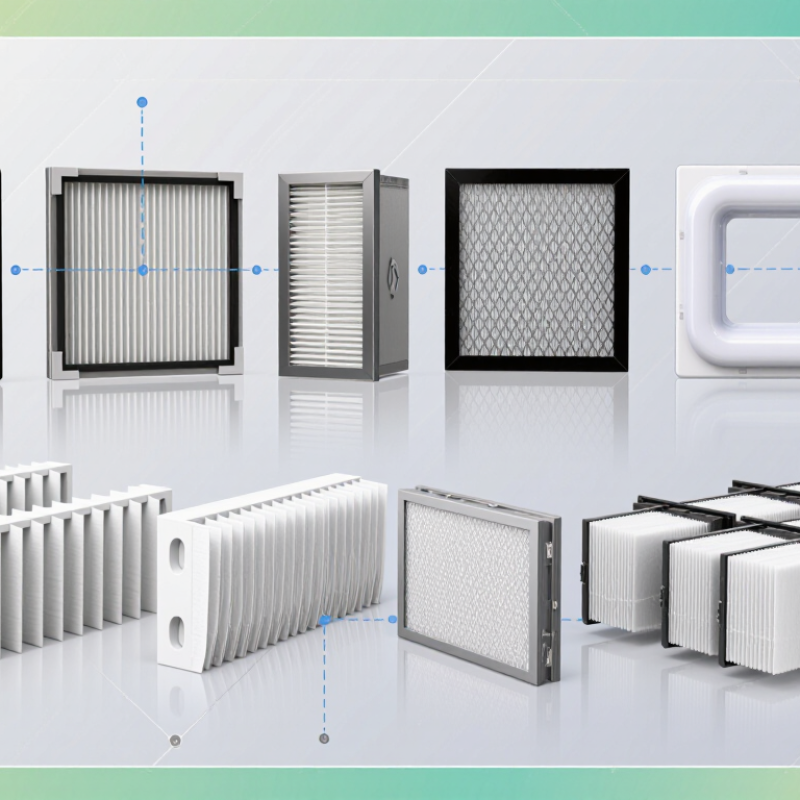
Mini pleated ULPA air filters are compact, high-efficiency filters designed for spaces where particle control matters. Their defining feature is the pleated media, which creates more filtering area inside a small frame. This design supports strong particle capture without requiring a large housing. Very compact.
ULPA performance is normally verified against the most penetrating particle size, but testing methods can differ by standard. Buyers should request efficiency data, airflow results, and pressure-drop curves. A dependable specification also identifies the filter’s dimensions, frame material, gasket position, and sealing method. These details affect installation reliability. A perfect media rating means little when air bypasses the gasket.
In practical selection, check how the filter behaves at the intended airflow, not only its headline efficiency. A narrow mini filter may show excellent capture while creating higher resistance. That can increase fan energy and reduce ventilation if the system is undersized. Pleat depth, spacing, adhesive quality, and protective mesh also deserve inspection. A damaged corner can become a real leakage path.
Experienced buyers often compare factory test reports with independent inspection results. This step reveals measurement gaps and inconsistent terminology. Still, no filter choice is universal. Cleanrooms, medical equipment, laboratories, and compact air handlers may require different balances between size, pressure drop, service life, and sealing. The confusing part is that smaller does not always mean simpler.
The ten main mini pleated ULPA filter types serve different clean-air requirements. Standard aluminum-frame filters offer low weight and reliable rigidity. Galvanized steel frames suit economical equipment and moderate humidity. Stainless-steel frames resist corrosion in demanding laboratory or process areas. Plastic-frame filters reduce weight and support moisture-sensitive installations. Gasket-seal types use a flat elastomer edge for familiar housing compatibility. Gel-seal types fill small surface irregularities and reduce bypass risk. Knife-edge designs create a tighter interface in terminal housings. High-temperature versions use heat-resistant media and sealants. Chemical-resistant versions need carefully selected adhesives and protective coatings. Compact separatorless filters provide more media area within shallow equipment.
Details matter greatly. A 305-millimeter square filter may fit one housing but fail another. Measure face dimensions, depth, airflow direction, and sealing clearance. Check the rated airflow before comparing efficiency. A filter with lower resistance may reduce fan energy, yet its media area could be smaller. That trade-off deserves testing.
Buyers should request efficiency data under applicable EN 1822 or ISO 29463 methods. Confirm scan-test results, pressure drop, leak-test procedures, and material compatibility. ULPA performance is not determined by appearance alone. I have seen installation errors create more bypass than media defects. That is easy to overlook. Transport protection also matters, especially for long international shipments. Some specifications remain vague, and that should prompt questions, not assumptions. A practical trial in the actual housing can reveal problems that a catalog cannot.
Mini pleated ULPA filters differ most at their most penetrating particle size, or MPPS. Under EN 1822:2019 and ISO 29463, U15, U16, and U17 filters achieve minimum efficiencies of 99.9995%, 99.99995%, and 99.999995%, respectively. These figures describe tested particle removal, not every operating condition. That distinction matters.
A U15 design often balances high capture efficiency with moderate airflow resistance. U16 and U17 models provide tighter filtration, but their denser media can raise pressure drop. The 2024 ASHRAE Handbook identifies airflow resistance, face velocity, sealing, and loading as major factors affecting real HVAC performance. A compact pleat pack may fit a small air handler, yet limited pleat depth can reduce dust-holding capacity. Small is not simple.
Frame construction also changes performance. Seamless gaskets reduce bypass risk, while weak separators may create uneven channels or local turbulence. ISO 29463 testing evaluates the filter element under controlled conditions, but installation errors remain outside that result. Global buyers should compare MPPS efficiency, initial pressure drop, final pressure-drop limits, scan-test records, and seal design. Published catalog values can look precise. They are not always comparable. In practice, a slightly lower-rated filter with stable airflow may outperform a higher-rated filter installed with leakage. That is an uncomfortable point, but it deserves attention.
Key performance differences among generic ULPA filter designs, shown by minimum rated efficiency at the most penetrating particle size (MPPS).
U15, U16 and U17 represent progressively higher minimum MPPS efficiencies: 99.9995%, 99.99995% and 99.999995%, respectively. Filter media, pleat geometry, sealing method and airflow resistance can vary by design; final selection should also consider pressure drop, face velocity, leakage testing and housing compatibility. Efficiency classifications are aligned with the EN 1822 / ISO 29463 ULPA classification framework.

Applications Across Cleanrooms and Critical Air Systems
Mini pleated ULPA filters support controlled environments where airborne particles can damage products or compromise testing. Their compact pleat design provides a large media area within shallow housings. This helps maintain airflow in pharmaceutical rooms, semiconductor areas, laboratories, and hospital isolation zones. Many ULPA configurations target extremely high particle removal efficiency, often around 99.999% at a specified test particle size. Buyers must verify the exact standard before comparing products.
Cleanroom ceilings commonly use terminal filters with gasket, gel, knife-edge, or fluid-seal arrangements. Fan filter units may use lightweight mini pleated elements above workstations or process equipment. Air shower systems, sampling rooms, and critical exhaust cabinets require different pressure ratings and sealing details. A filter can perform well in a laboratory but fail in a humid production zone. Details matter.
Airflow resistance deserves close attention. Excessive pressure drop can overload fans and disturb room balance. During inspections, technicians should check leakage, frame distortion, seal condition, and particle counts. A clean filter is not automatically a suitable filter. Some specifications look impressive but ignore installation access, replacement frequency, or airflow distribution. That is a common weakness. Global buyers should request test reports, dimensions, fire ratings, materials, and compatibility data before approval. Local regulations and validation procedures may also change the final selection.
Global buyers should evaluate suppliers beyond catalog photos and stated efficiency. Mini pleated ULPA filters may use separatorless, gel-seal, knife-edge, or compact box designs. Each type affects airflow, leakage risk, installation depth, and replacement cost.
ISO 29463 classifies ULPA performance by efficiency at the most penetrating particle size. For example, U15 requires at least 99.9995% efficiency, while U17 reaches 99.999995%.
Ask suppliers for independent test reports, not only factory declarations. Reports should identify the filter model, airflow, pressure drop, test method, and serial traceability.
EN 1822 also supports individual filter testing, which helps verify real production consistency.
Pressure drop deserves equal attention.
ASHRAE testing principles show that efficiency alone cannot describe operating performance. A filter with excessive resistance can increase fan energy and reduce delivered airflow.
The IEA’s Energy Efficiency 2023 report identifies buildings as responsible for roughly 30% of global energy demand, making lifecycle efficiency a practical purchasing concern.
Request initial and final resistance data, gasket compression records, and dimensional tolerances.
Check packaging too. Bent frames happen.
Supplier audits should review media batch control, pleat spacing, seal inspection, and corrective-action records.
A reliable supplier can explain failure rates with evidence.
Still, no audit replaces field validation. Install trial units, measure airflow, and inspect seals after handling.
One overlooked detail can undermine excellent laboratory results.


For those larger-sized parts, or smaller quantity runs, we have 2 independent powder coat booths and ovens. The quality, durability and affordability of today’s powder coating finishes make this the process of choice for world-class companies.
Powder coating advantages over other forms of coating are many. Materials used in the Powder coating process can be metals and non-metals that come in a multitude of thicknesses, textures, colors, etc. Another of Powder coating’s biggest advantages over conventional coatings is its ability to create finishes in many different textures. Powder Coating Booths allow us the ability to apply these advantages to large products.
Tri-State Fabricators runs a full-service conveyor line for painting. Wet painting can provide protection or decoration to many different part styles. From start to finish, every project is easier to undergo random and point-based inspection by our skilled painting team.
Advantages to our Wet Paint Line are these lines start with product prep and ends with a thorough inspection of a high quality finished product. Our ability to complete large and small projects with a superior finish and doing so in a timely and economical fashion. This passes along the savings in production to our customers. When powder coating ins not an option, our Wet Paint Line gets the job done right the first time.
When the parts get big and heavy we roll-out our custom paint racks and oversize booth. By utilizing our partnerships with all the major paint brands, we can match virtually any color with wet paint.
The advantages of having access to a Wet Paint Booth are many. Large projects of many different shapes can be loaded into the booth. The Wet Paint Booth offers an environment that is much more controlled than a typical parts painting operation.
Not only are they used because of their controlled environment, but they’re are also advantageous when it comes to applying paint to parts that are needed in industries that require specialty coatings such as medical, aerospace, etc.
Our military forces have some very high standards when it comes to the finish of their vehicles and equipment. From the first pre-treatment step to final coat, it takes a great deal of knowledge and experience to protect the men and women of our armed forces. They deserve only the best, and Tri-State Fabricators provides it.
All of our processes are closely monitored by our staff and management teams. Both of which are highly trained in the processes of metal fabrication and finishing. Tri-State Fabricators’ goal is to always fully satisfy each and every customer, including the military. We will always put a 110% into what we do.
Abrasive media blasting is an excellent way to remove old paint, rust, and increase the paint/powder adhesion. Glass beads produce a much smoother and brighter finish than angular abrasives; leaving the part clean yet without any dimensional change. Chemically inert and environmentally friendly, we can recycle our beads approximately 30 times; making them a more preferred method of metal cleaning or surface finishing.
Advantages to Glass Bead Blasting are many. Glass bead blast media is used when a project is needing rough surfaces need to become smooth for applications of coatings such as paint. It is typically used to clean paint and rust from a product surface without deforming the surface it is being used on. Overall, compared to many other blasting media, Glass Bead Blasting is a very economical choice and those savings are always passed on to our customers.
Tri-State Fabricators utilize a zinc phosphate wash to clean and etch the material to ensure the best paint adhesion possible. The unique design of our 3-stage wash system does the work like a 5-stage. From Cleaning and rinsing to conversion coating and post-treatment, Our Part Washing process is a complete service and works throughout the fabrication service and the finishing service.
Along with the previously mentioned benefits, Curing is a vital chemical reaction that leaves the product finish hard and relatively safe from mild abrasion and aggressive corrosion. This process can be done in more than one way; ambient air-dry or in curing ovens at temps that exceed 240°.
From fixing paint mistakes (someone else’s of course) to simply cleaning our paint line hooks, our burn-off oven is put to good use. After a quick burn-off, a little clean up, and a fresh coat of paint, your parts will look better than new.
Why does our Burn-Off Oven work so well? Because super heating the air around parts turns the materials into ashes. From paint and powder coatings to rubber and machining oils, high temps do the job without degrading the integrity of the part.
Masking is a vital part of producing high quality products. We have die-cut masking patterns to protect machined surfaces as well as a wide range of plugs and caps to protect threaded holes and bolts. We provide permanent and temporary masking.
Masking allows the selected sections of a product to be protected from a fabrication or finishing service. This can be with both chemicals when etching and tapes, paints when only finishing just a section of the product. Masking is great in aiding the customization process of a project.
Screen printing is a photographic process that transfers artwork onto a porous nylon screen which allows colored ink to flow through the screen and be deposited on an aluminum or plastic component. We can generally have just about any design created onto a screen for your parts.
Some of the advantages of Screen Printing are, brand recognition for your business displaying on your products, assembly instructions, product warnings/hazards, etc. Tri-State Fabricators produces Screen Printing of the highest quality so you know it’s durable.
Metal Finishing is the art of treating the exterior portion of product, often metal but can also be made of other materials, so that the surface is clean and free of any debris. Then the process of applying coats or either paint of powder coat takes place. This coating process improves the quality of the product in both appearance and resistance to wear and corrosion.
Tri-State Fabricators, Inc., understands that a project typically isn’t complete until a high-quality finish has been added to your product. This is why our painting and powder coating teams continuously inspect the products throughout the Metal Finishing process.




