


Metallic Liquid Tight Conduit protects electrical conductors where moisture, vibration, oil, and physical movement create installation challenges. It usually combines a flexible metal core with a continuous, moisture-resistant outer jacket. Properly installed fittings help maintain the conduit’s liquid-tight seal. This detail matters near washdown areas, outdoor equipment, and machinery with moving connections.
It is commonly used for motors, pumps, air-conditioning units, generators, industrial control panels, and rooftop equipment. In a factory, for example, it may connect a vibrating motor to a rigid raceway while reducing mechanical stress on the wires. It can also protect conductors beside a loading dock, where rain, impact, and frequent maintenance are realistic concerns.
The material is not a universal solution. That assumption is incomplete. Excessive bending, sharp edges, poor fittings, or unsupported runs can weaken the installation. Installers should check the conduit’s trade size, temperature range, jacket compatibility, bend radius, and environmental rating before work begins. Product markings and manufacturer instructions deserve careful attention.
Applicable requirements may include the National Electrical Code, UL listings, and local inspection rules, depending on the project location. Standards can change. Always verify the current edition and the approved use of each component. A reliable installation depends on more than selecting Metallic Liquid Tight Conduit. It requires suitable connectors, correct support spacing, protected entries, and testing after installation. Small mistakes often remain invisible until water or vibration exposes them. A thoughtful design leaves room for inspection, replacement, and future maintenance. That practical perspective makes the conduit valuable—not because it solves every problem, but because it manages specific electrical risks when used correctly.
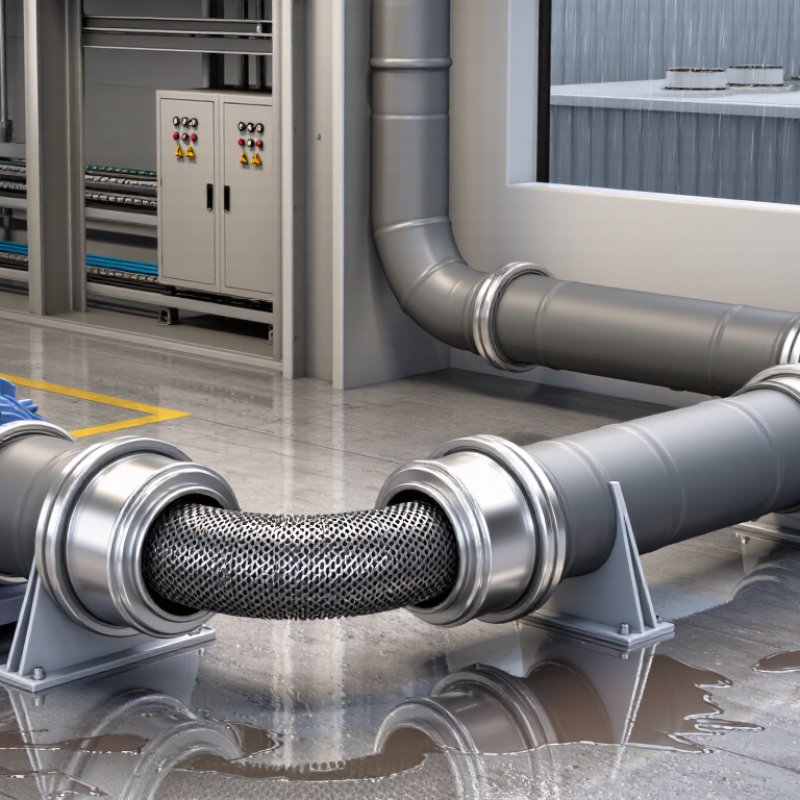
Metallic liquid tight conduit is a flexible raceway designed to protect electrical conductors from moisture, oil, dust, and mechanical damage. It is often used near pumps, motors, outdoor equipment, washdown areas, and vibrating machinery. Unlike ordinary flexible metal conduit, it has a liquid-resistant outer jacket.
Its basic structure has three main parts. The inner core is a helically wound metal strip, commonly galvanized steel, that provides strength and flexibility. A sealed outer jacket, usually made from a tough polymer, helps block water and corrosive fluids. The ends use specialized fittings with sealing rings, locknuts, and compression components. These fittings connect the conduit to enclosures or equipment while preserving the protective path.
The metal core bends around corners without collapsing easily. The jacket limits exposure to sharp edges and splashing liquids. Still, the conduit is not automatically waterproof. Poorly tightened fittings, damaged jackets, or excessive bending can create weak points. That detail is easy to overlook.
A practical installation needs careful measurement. The conduit should reach the equipment without tension, but extra length can sag and collect water. Grounding and bonding also require attention because the metal core may form part of the fault-current path, depending on the installation design. A qualified electrician should verify continuity and fitting security. Small errors matter here.
Metallic Liquidtight Flexible Conduit (LFMC) is a flexible metal raceway covered by a liquidtight, nonmetallic jacket. A complete installation uses a metallic flexible core, an outer jacket, and compatible liquidtight fittings.
Basic structure: The metallic core provides mechanical protection and flexibility, the outer jacket helps prevent the entry of water, oil, and other liquids, and properly selected fittings maintain the liquidtight connection at equipment and enclosures. LFMC is commonly used for motors, pumps, outdoor equipment, damp or wet locations, and areas subject to vibration or movement.
What Is Metallic Liquid Tight Conduit and Where Is It Used?
Metallic liquid tight conduit combines a flexible metal core with a moisture-resistant outer jacket. The core is commonly galvanized steel, although aluminum may be selected when lower weight matters. A PVC jacket surrounds the metal, helping block water, oil, dust, and sunlight. This layered construction protects insulated conductors in demanding spaces. It is often installed near pumps, outdoor equipment, rooftop units, washdown areas, and vibrating machinery.
The metal core provides mechanical protection against impact and crushing. Its flexibility also helps installers route cables around corners without adding many rigid elbows. Proper fittings are essential because weak connections can allow moisture inside. The conduit may support grounding continuity, but this depends on its construction, fittings, and local electrical requirements. In field inspections, poor bonding is a repeated concern. A neat installation can still be electrically unreliable. Temperature limits, chemical exposure, and movement frequency should be checked before selection.
Tips: Match the conduit size to the cable fill and pulling needs. Seal unused entries carefully. Check the jacket for cuts after installation. Avoid forcing tight bends, since repeated stress can damage the inner conductors. I would also recheck fittings after vibration begins; this small step is often overlooked. Metallic liquid tight conduit is protective, but it is not indestructible. Its performance depends on correct routing, compatible materials, and careful workmanship.
Metallic liquidtight conduit is a flexible metal raceway with a sealed outer jacket. It protects conductors from moisture, oil, vibration, and physical damage. Installers commonly use it near pumps, rooftop equipment, machine tools, and outdoor disconnects. Its value depends heavily on installation quality, not appearance alone.
Begin by measuring the route carefully, allowing gentle bends at equipment entries. Cut the conduit square, then remove sharp metal edges before fitting the listed connectors. A rushed cut is where many installations quietly fail. Push the conductors through without scraping insulation, and avoid exceeding the conduit’s minimum bending radius. Excessive bending can restrict pulling space and damage cable jackets.
Installers should tighten fittings according to the manufacturer’s instructions, then verify continuity across the metallic path. The conduit must connect correctly to the equipment grounding system under the applicable electrical code. Support spacing, entry sealing, and conductor fill also require code-based checks.
The 2022 U.S. Bureau of Labor Statistics Census of Fatal Occupational Injuries recorded 145 fatal injuries involving electric current, showing why verification cannot be treated as paperwork.
UL 360 and CSA C22.2 No. 56 provide recognized construction and performance requirements for liquid-tight flexible conduit. Still, standards do not correct poor workmanship.
A final inspection should check loose fittings, flattened bends, exposed jacket damage, and water paths around threaded entries.
Metallic liquid tight conduit, or LFMC, combines a flexible metal core with a sealed, moisture-resistant jacket. It protects insulated conductors from water, oil, impact, vibration, and abrasion. Under the National Electrical Code, Article 350 covers LFMC installations, while bonding and grounding remain essential. A poor connection can turn strong protection into a weak point.
Its common uses are practical and visible. Electricians install it beside rooftop air-conditioning units, pumps, compressors, conveyors, and industrial control panels. It also suits food-processing areas, vehicle workshops, outdoor lighting, and washdown zones where rigid conduit cannot follow moving equipment.
Short flexible sections help absorb vibration near motors. They also make maintenance easier. Too much flexibility, however, can invite sagging or sharp bends.
The International Energy Agency’s Electricity 2024 report estimates that industry consumed about 42% of global electricity in 2023. That scale makes reliable motor and equipment wiring important. NFPA 70 provides installation rules, while NEMA 250 helps define enclosure protection for environmental conditions. These standards guide selection, but field judgment still matters. A conduit rated for wet locations may fail when fittings are mismatched or seals are damaged. Installers should check temperature, chemical exposure, bending radius, and connector compatibility.
The overlooked detail is often the fitting.
Metallic liquid tight conduit, usually called LFMC, combines a flexible metal core with a moisture-resistant outer jacket. It protects conductors near pumps, rooftop units, machine tools, and vibrating equipment. In field installations, correct sizing matters more than appearance. Choose the trade size, bend radius, temperature rating, and connector type together. A crushed bend can restrict conductor movement and damage insulation.
Safety requirements deserve equal attention. NFPA research estimates that electrical distribution and lighting equipment caused about 32,000 U.S. home fires annually from 2015 to 2019. Those fires caused approximately 470 civilian deaths, 1,100 injuries, and $1.3 billion in property damage each year. LFMC cannot prevent every failure. It also does not replace proper overcurrent protection, grounding, or qualified inspection. Verify listings, installation methods, and wet-location suitability against the applicable electrical code and product standard. In corrosive areas, jacket degradation remains a practical concern. I have seen “weatherproof” assumptions age badly.
Tips: Keep runs short and support them properly. Seal unused openings. Confirm bonding continuity with a meter, especially across painted enclosures. Avoid forcing conductors through tight bends. Leave enough slack for vibration, but not enough to create loops or trip hazards. One overlooked detail can undo an otherwise careful installation.
Metallic liquid tight conduit, commonly abbreviated as LFMC, is a flexible metal raceway with a liquid-resistant jacket. It is selected where wiring requires mechanical protection, flexibility, and resistance to moisture, oil, or other environmental exposure.
| Data Dimension | Verified Technical Information | Typical Use or Selection Guidance | Limitations and Safety Requirements | Priority |
|---|---|---|---|---|
| Product Definition | LFMC consists of a flexible metallic core, typically made from galvanized steel or another corrosion-resistant metal, with a liquid-resistant nonmetallic jacket. | Useful when conductors must be routed around equipment, machinery, motors, pumps, or other components that move or require final-position adjustment. | The jacket must remain intact. Cuts, severe abrasion, crushed sections, or damaged fittings can compromise the liquid-resistant function. | Essential |
| Primary Protection Functions | Provides mechanical protection, a defined wiring pathway, flexibility, and resistance to specified environmental conditions when the complete assembly is properly installed. | Appropriate for short flexible connections between rigid raceways and equipment enclosures or between fixed equipment and vibrating machinery. | It is not a substitute for correct conductor insulation, overcurrent protection, enclosure ratings, or a suitable grounding and bonding path. | High |
| Common Installation Locations | Common locations include wet or damp areas, washdown zones, outdoor equipment, industrial machinery, HVAC equipment, pumps, compressors, and areas exposed to oil or coolants. | Choose the conduit only when its jacket, fittings, and installation method are suitable for the specific liquid, temperature, ultraviolet exposure, and mechanical conditions. | Environmental suitability is not universal. A conduit suitable for water exposure may not be suitable for aggressive chemicals, solvents, or high-temperature fluids. | High |
| Conduit Trade Size | LFMC is manufactured in standardized trade sizes. The internal usable area depends on the trade size, wall construction, and the number and type of conductors. | Determine the required size from conductor count, conductor dimensions, permitted raceway-fill rules, fitting space, and the expected pulling or routing conditions. | Do not select size by outside diameter alone. The smallest practical size may make conductor installation difficult and can increase the risk of insulation damage. | High |
| Conductor Fill | Raceway fill is limited by electrical installation rules. The permitted percentage depends on the number of conductors and the applicable code or standard. | Calculate fill using the actual conductor dimensions and the applicable jurisdictional requirements before ordering conduit and fittings. | Overfilling can make pulling difficult, damage insulation, reduce heat dissipation, and create a noncompliant installation. | Critical |
| Bend Radius | The minimum bend radius varies by conduit construction, trade size, fitting system, and manufacturer instructions. | Plan the route with gradual bends and enough space to install fittings without forcing the conduit into a sharper curve than permitted. | Exceeding the allowable bend can flatten the conduit, restrict conductor installation, damage the jacket, or reduce mechanical and liquid resistance. | Critical |
| Maximum Practical Flexing | LFMC is flexible, but most installations treat it as a protected connection rather than a continuously flexing cable system. | Use it for equipment connections and limited movement. For continuous robotic or repeated-motion applications, use a wiring system specifically rated for that service. | Repeated flexing can fatigue the metal core, jacket, conductors, or fittings. A flexible appearance does not automatically mean continuous-flex suitability. | High |
| Liquid Resistance | The liquid-resistant performance depends on the conduit jacket, connector, sealing method, and correct assembly of the entire raceway system. | Use listed liquid-tight fittings and install them according to the fitting instructions. Seal or orient terminations to prevent water migration where required. | A liquid-tight conduit body with an incorrectly installed connector is not a liquid-tight system. Water can enter through open ends, damaged jackets, or poorly sealed fittings. | Critical |
| Grounding and Bonding | The metallic raceway may be part of the equipment grounding and bonding path when the complete system is suitable, properly connected, and installed under the governing electrical requirements. | Use fittings designed for the conduit type and verify continuity across joints, enclosures, and equipment connections. Install a separate grounding conductor when required by the applicable rules or design. | Paint, corrosion, loose fittings, incompatible connectors, or excessive mechanical damage can interrupt electrical continuity. Never assume continuity without verification. | Critical |
| Fittings and Terminations | Connectors must match the conduit type, trade size, enclosure entry, environmental rating, and required grounding or bonding method. | Select fittings with appropriate sealing rings, locknuts, bonding components, and strain-relief features where applicable. | Mixing unapproved conduit and fitting systems can reduce pullout strength, liquid resistance, enclosure integrity, and grounding reliability. | Critical |
| Temperature Range | Allowable operating temperatures are determined by the conduit jacket, fittings, conductors, and installation conditions. Exact limits vary by product construction. | Check the product marking and technical documentation for ambient temperature, sunlight exposure, oil exposure, and installation-temperature limitations. | Excessive heat can harden or deteriorate the jacket and may require conductors with an appropriate temperature rating. Low temperatures can reduce flexibility. | High |
| Chemical and Oil Exposure | Resistance to oils, fuels, solvents, acids, alkalis, and process chemicals varies by jacket material and product construction. | Identify the actual chemical, concentration, exposure time, temperature, and cleaning method before selecting the conduit. | Do not infer chemical compatibility from the term “liquid-tight.” Confirm compatibility using the applicable product documentation or engineering review. | Critical |
| Outdoor and UV Exposure | Outdoor use requires a jacket and fitting system suitable for sunlight, rain, temperature changes, and the expected environmental conditions. | Use products identified for the intended outdoor exposure and protect routing from standing water, sharp edges, and unnecessary direct sunlight where appropriate. | UV aging, weathering, and water intrusion can reduce service life. Outdoor suitability should be verified rather than assumed. | High |
| Mechanical Protection | The metal core improves resistance to impact and crushing compared with many nonmetallic flexible raceways, but it is not damage-proof. | Use supports, guards, and suitable routing where the conduit may be exposed to impact, abrasion, vibration, or vehicle traffic. | Do not use damaged, kinked, flattened, or severely abraded conduit. Replace compromised sections instead of relying on the jacket to conceal damage. | High |
| Support and Routing | Flexible conduit requires support and must be routed to avoid unnecessary strain on fittings, terminals, and enclosure entries. | Provide support at intervals required by the applicable electrical code and installation instructions. Keep runs as short and direct as practical. | Unsupported weight, excessive length, sharp bends, and side loading can loosen fittings or transfer stress to electrical terminals. | High |
| Installation Length | LFMC is most effective as a flexible connection; long runs may be less economical and more difficult to support and pull conductors through. | Use rigid or other suitable raceway for long, straight portions when practical, and reserve LFMC for movement, alignment, vibration isolation, or final connections. | Long flexible runs can increase voltage-drop considerations, pulling difficulty, sagging, and exposure to mechanical damage. | Medium |
| Electrical Ratings | Conduit itself does not determine the circuit voltage, ampacity, or overcurrent protection. These depend on the conductors, equipment, and governing electrical requirements. | Verify conductor ampacity, insulation temperature rating, voltage rating, short-circuit requirements, and enclosure compatibility separately. | Never increase circuit capacity simply because a larger conduit is installed. The complete electrical system must be evaluated. | Critical |
| Standards and Code Review | In the United States, LFMC installations are commonly evaluated under applicable requirements such as NFPA 70 Article 350, while product construction may be covered by standards such as UL 360. | Confirm the current edition, local amendments, inspection requirements, and product markings applicable to the installation location. | Code requirements differ by country, authority, hazardous location, and installation type. A general product description does not replace jurisdiction-specific review. | Critical |
| Hazardous Locations | Hazardous or classified locations require equipment, fittings, sealing methods, and installation practices specifically permitted for the classification. | Obtain a documented area classification and use a wiring method accepted for the gases, vapors, dusts, fibers, temperature class, and zone or division involved. | Standard liquid-tight conduit and ordinary fittings must not be assumed acceptable in a classified location. Specialized sealing and bonding requirements may apply. | Critical |
| Inspection Before Energizing | The completed installation should be checked for correct size, secure fittings, acceptable bends, intact jacket, proper support, grounding continuity, and enclosure entry integrity. | Perform visual inspection and electrical tests required by the project, code, safety program, or commissioning procedure before energization. | De-energize and isolate circuits before handling or modifying conduit. Only qualified personnel should perform electrical testing and corrective work. | Critical |
| Key Advantages | Flexibility, metallic mechanical protection, compatibility with many industrial environments, and the ability to form sealed equipment connections when correctly fitted. | Best suited to equipment interfaces, vibration-prone connections, wet areas, and locations requiring a flexible metallic raceway. | Advantages depend on correct sizing, compatible fittings, environmental suitability, and proper grounding and bonding. | Summary |
| Key Limitations | Not automatically suitable for continuous motion, every chemical environment, every temperature, or every hazardous location. | Compare the installation conditions with the product markings, technical documentation, code requirements, and fitting instructions. | When conditions are uncertain, stop selection and obtain a qualified electrical or engineering review before installation. | Critical |



For those larger-sized parts, or smaller quantity runs, we have 2 independent powder coat booths and ovens. The quality, durability and affordability of today’s powder coating finishes make this the process of choice for world-class companies.
Powder coating advantages over other forms of coating are many. Materials used in the Powder coating process can be metals and non-metals that come in a multitude of thicknesses, textures, colors, etc. Another of Powder coating’s biggest advantages over conventional coatings is its ability to create finishes in many different textures. Powder Coating Booths allow us the ability to apply these advantages to large products.
Tri-State Fabricators runs a full-service conveyor line for painting. Wet painting can provide protection or decoration to many different part styles. From start to finish, every project is easier to undergo random and point-based inspection by our skilled painting team.
Advantages to our Wet Paint Line are these lines start with product prep and ends with a thorough inspection of a high quality finished product. Our ability to complete large and small projects with a superior finish and doing so in a timely and economical fashion. This passes along the savings in production to our customers. When powder coating ins not an option, our Wet Paint Line gets the job done right the first time.
When the parts get big and heavy we roll-out our custom paint racks and oversize booth. By utilizing our partnerships with all the major paint brands, we can match virtually any color with wet paint.
The advantages of having access to a Wet Paint Booth are many. Large projects of many different shapes can be loaded into the booth. The Wet Paint Booth offers an environment that is much more controlled than a typical parts painting operation.
Not only are they used because of their controlled environment, but they’re are also advantageous when it comes to applying paint to parts that are needed in industries that require specialty coatings such as medical, aerospace, etc.
Our military forces have some very high standards when it comes to the finish of their vehicles and equipment. From the first pre-treatment step to final coat, it takes a great deal of knowledge and experience to protect the men and women of our armed forces. They deserve only the best, and Tri-State Fabricators provides it.
All of our processes are closely monitored by our staff and management teams. Both of which are highly trained in the processes of metal fabrication and finishing. Tri-State Fabricators’ goal is to always fully satisfy each and every customer, including the military. We will always put a 110% into what we do.
Abrasive media blasting is an excellent way to remove old paint, rust, and increase the paint/powder adhesion. Glass beads produce a much smoother and brighter finish than angular abrasives; leaving the part clean yet without any dimensional change. Chemically inert and environmentally friendly, we can recycle our beads approximately 30 times; making them a more preferred method of metal cleaning or surface finishing.
Advantages to Glass Bead Blasting are many. Glass bead blast media is used when a project is needing rough surfaces need to become smooth for applications of coatings such as paint. It is typically used to clean paint and rust from a product surface without deforming the surface it is being used on. Overall, compared to many other blasting media, Glass Bead Blasting is a very economical choice and those savings are always passed on to our customers.
Tri-State Fabricators utilize a zinc phosphate wash to clean and etch the material to ensure the best paint adhesion possible. The unique design of our 3-stage wash system does the work like a 5-stage. From Cleaning and rinsing to conversion coating and post-treatment, Our Part Washing process is a complete service and works throughout the fabrication service and the finishing service.
Along with the previously mentioned benefits, Curing is a vital chemical reaction that leaves the product finish hard and relatively safe from mild abrasion and aggressive corrosion. This process can be done in more than one way; ambient air-dry or in curing ovens at temps that exceed 240°.
From fixing paint mistakes (someone else’s of course) to simply cleaning our paint line hooks, our burn-off oven is put to good use. After a quick burn-off, a little clean up, and a fresh coat of paint, your parts will look better than new.
Why does our Burn-Off Oven work so well? Because super heating the air around parts turns the materials into ashes. From paint and powder coatings to rubber and machining oils, high temps do the job without degrading the integrity of the part.
Masking is a vital part of producing high quality products. We have die-cut masking patterns to protect machined surfaces as well as a wide range of plugs and caps to protect threaded holes and bolts. We provide permanent and temporary masking.
Masking allows the selected sections of a product to be protected from a fabrication or finishing service. This can be with both chemicals when etching and tapes, paints when only finishing just a section of the product. Masking is great in aiding the customization process of a project.
Screen printing is a photographic process that transfers artwork onto a porous nylon screen which allows colored ink to flow through the screen and be deposited on an aluminum or plastic component. We can generally have just about any design created onto a screen for your parts.
Some of the advantages of Screen Printing are, brand recognition for your business displaying on your products, assembly instructions, product warnings/hazards, etc. Tri-State Fabricators produces Screen Printing of the highest quality so you know it’s durable.
Metal Finishing is the art of treating the exterior portion of product, often metal but can also be made of other materials, so that the surface is clean and free of any debris. Then the process of applying coats or either paint of powder coat takes place. This coating process improves the quality of the product in both appearance and resistance to wear and corrosion.
Tri-State Fabricators, Inc., understands that a project typically isn’t complete until a high-quality finish has been added to your product. This is why our painting and powder coating teams continuously inspect the products throughout the Metal Finishing process.