


Buying a Magnetic Starter can look straightforward, yet small specification errors may create expensive problems. A reliable choice must match the motor’s voltage, frequency, rated current, starting method, and operating environment. Global buyers also need to check whether the starter suits local electrical practices and recognized safety standards. A mismatch may cause nuisance tripping, overheating, or early contact wear.
This guide presents seven practical buying tips for international procurement teams. It focuses on real details, including thermal overload protection, enclosure design, coil voltage, terminal quality, and replacement-part availability. A supplier should provide clear datasheets, test records, wiring diagrams, and traceable product information. Photographs help, but they cannot replace technical documents. Ask for samples when the application involves pumps, compressors, conveyors, or frequent starts. A five-minute inspection may reveal loose terminals or weak labeling.
Cost still matters. However, the lowest quotation may hide poor copper contacts, limited warranty support, or uncertain delivery. Experienced buyers compare total ownership costs, not only the purchase price. They also confirm packaging strength for long-distance shipping and verify whether after-sales support operates across time zones. No checklist removes every risk. Even a reputable supplier can misunderstand an unusual motor duty. That is why written confirmation, independent inspection, and a controlled site test remain valuable. These steps may feel slow, but they protect production schedules and purchasing credibility. A careful buyer should remain skeptical, especially when specifications seem unusually attractive.
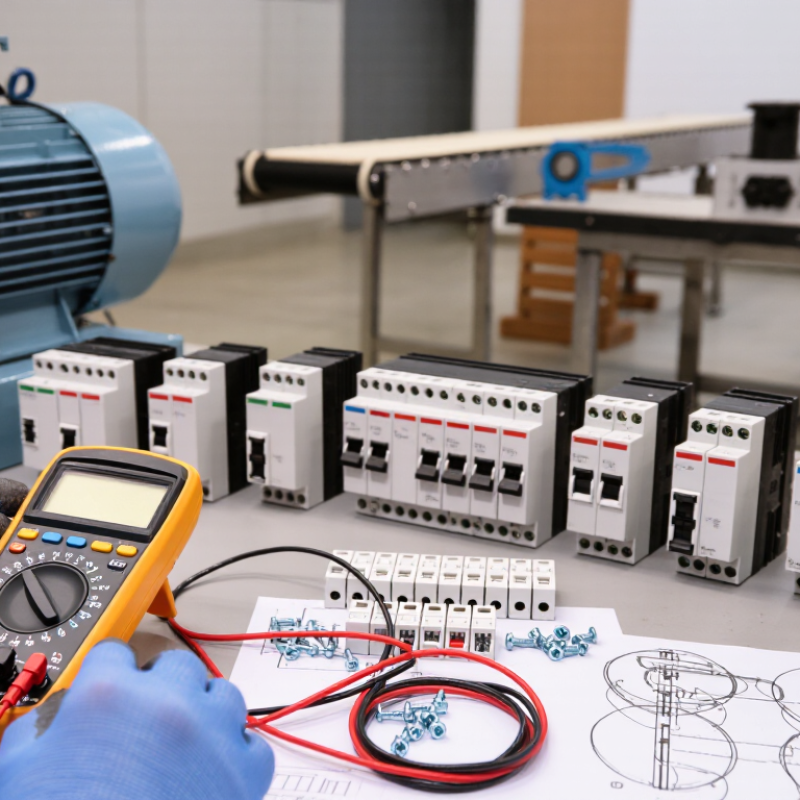
Choosing a magnetic starter begins with the motor, not the catalog page. A full-voltage non-reversing starter suits pumps, fans, and simple conveyors. It applies line power directly to one rotation direction. A reversing starter adds interlocking contactors for forward and reverse movement. This fits hoists, machine tables, and some conveyor systems. Reduced-voltage starters can limit starting stress on larger motors, but they need careful motor and load matching.
Check the motor’s voltage, phase, rated current, and starting method. The starter’s contactor must handle the motor’s duty, while its overload relay should match the motor’s service current. Too small is dangerous. Too large reduces protection. Coil voltage also matters, especially when control circuits use a separate transformer. In humid workshops, a suitable enclosure protects internal parts from dust and moisture. However, enclosure ratings must match the real installation, not an assumed environment.
I have seen installations fail because buyers selected by horsepower alone. Cable length, ambient heat, switching frequency, and locked-rotor current can change the result. A compressor may need stronger starting performance than a lightly loaded fan. A reversing unit also requires mechanical and electrical interlocking. Small details matter. One practical check is comparing the starter with the motor nameplate and the control diagram before shipment. I still allow room for doubt, because field conditions often differ from the original specification. That extra review can reveal an incorrect coil, unsuitable overload range, or missing phase-loss protection.
| Buying Tip | Key Specification to Check | Magnetic Starter Type | Typical Motor Application | Practical Selection Guidance |
|---|---|---|---|---|
| 1. Match the supply voltage and frequency | Verify motor voltage, control-coil voltage, phase configuration, and 50 Hz or 60 Hz frequency. | Single-voltage or dual-voltage direct-on-line starter | Three-phase pumps, fans, compressors, conveyors, and machine tools | The starter's coil voltage must match the control circuit. The motor connection must follow its nameplate voltage and the local power system. |
| 2. Select the correct starting method | Consider locked-rotor current, available supply capacity, starting torque, and permissible voltage drop. | Direct-on-line (DOL) magnetic starter | Small and medium motors where the electrical system can tolerate high inrush current | DOL provides full-voltage starting and high starting torque, but motor starting current can commonly reach several times the full-load current. |
| 3. Choose a starter for the required direction of rotation | Check reversing frequency, electrical interlocking, mechanical interlocking, and control-button arrangement. | Reversing magnetic starter | Hoists, winches, conveyors, garage doors, and material-handling equipment | A reversing starter uses two contactors to interchange two motor phases. Interlocking helps prevent both contactors from closing simultaneously. |
| 4. Reduce starting current for larger motors | Confirm motor winding connection, transition timing, load breakaway torque, and the number of contactors required. | Star-delta magnetic starter | Fans, centrifugal pumps, and lightly loaded machines with motors designed for star-delta starting | Star-delta starting reduces line starting current compared with DOL, but it also reduces starting torque and requires a motor with accessible winding terminals. |
| 5. Size the overload protection correctly | Use motor full-load current, service factor, ambient temperature, trip class, and phase-loss protection requirements. | Magnetic starter with thermal or electronic overload relay | Most general-purpose induction motor applications | Set the overload relay according to the motor manufacturer's instructions. IEC Class 10 or 10A is commonly used for normal starting conditions; longer-starting loads may require another class. |
| 6. Confirm ratings and international compliance | Compare utilization category, motor current rating, short-circuit coordination, enclosure rating, and applicable certification requirements. | Open or enclosed magnetic starter | Industrial machinery, commercial equipment, and packaged motor systems | IEC 60947-4-1 is commonly used for low-voltage contactors and motor starters. NEMA-based projects may use different rating conventions, so compare test standards directly. |
| 7. Evaluate the installation environment and serviceability | Check enclosure protection, operating temperature, altitude, humidity, dust, vibration, mounting space, and replacement-part availability. | Enclosed, weather-resistant, or panel-mounted magnetic starter | Outdoor pumps, agricultural equipment, workshops, HVAC systems, and dusty production areas | Use an enclosure suitable for the location, provide proper ventilation where required, and confirm that contactors, overload relays, coils, and auxiliary contacts are replaceable locally. |

Selecting a magnetic starter begins with the motor nameplate, not the catalog headline. Record voltage, phase, frequency, full-load current, and rated power. A 400 V motor is not automatically compatible with every 400 V starter. The control coil may require 24 V, 110 V, or 220 V instead. Frequency also matters: a 50 Hz motor supply can produce different speed and current behavior at 60 Hz.
Check phase carefully. A single-phase motor needs a starter designed for its starting current and switching arrangement. Three-phase motors require correct line connections and overload protection. Select the contactor by rated operational current and AC-3 duty, rather than horsepower alone. Motor power is only a screening value. Two motors with identical kilowatts may have different full-load currents.
Use real operating conditions. Ambient temperature, enclosure location, starting frequency, and cable length can change thermal performance. The International Energy Agency reports that motor-driven systems consume roughly half of global electricity, so small selection errors can create lasting energy waste. IEC 60947-4-1 provides recognized requirements for contactors and motor starters, while IEC 60034-1 defines key motor rating conditions. These standards improve reliability, but they do not replace nameplate verification. I have seen buyers match voltage correctly and still undersize the overload relay. That mistake is easy to miss. Recheck the current range, trip class, phase count, and local electrical requirements before ordering.
Tip 1: Check the overload protection before comparing prices. A reliable magnetic starter should match the motor’s full-load current range. Adjustable thermal overload relays help protect against sustained overcurrent and overheating. Confirm the reset method, trip class, and phase-loss response. Manual reset is often safer during unexpected restarts. I once saw a starter selected only by horsepower. That shortcut ignored actual operating current.
Tip 2: Inspect the enclosure rating carefully. Dust, moisture, oil mist, and outdoor exposure can damage internal components. Choose an IP or NEMA rating suited to the installation area. A sealed enclosure may need ventilation or cooling in hot environments. Check the gasket, cable entries, and mounting position. Small details matter.
Tip 3: Review safety features beyond the contactor. Look for undervoltage release, emergency-stop compatibility, clear terminals, and dependable grounding provisions. Verify coil voltage and motor voltage separately. They are not always identical. Also check whether the starter supports local isolation and lockout procedures. Ask for wiring diagrams, test records, and temperature limits from the supplier. Documentation is evidence, not decoration. A careful inspection may reveal limitations that a product photograph hides.
7 Magnetic Starter Buying Tips for Global Buyers
Compare Global Standards, Certifications, and Installation Compatibility
Global buyers need more than a low purchase price when selecting a magnetic starter. Standards, certificates, and site conditions affect safety and operating life. Tip 1: Confirm the applicable standard, such as IEC 60947-4-1 or a regional equivalent. Do not assume one certificate satisfies every market. Tip 2: Request current test reports, declarations, and ratings from the supplier. Check whether documents match the exact model, not a similar product.
Tip 3: Compare coil voltage and frequency with the control circuit. A 24 V AC coil cannot replace a 24 V DC coil without checking compatibility. Tip 4: Match the starter’s motor rating to local voltage, phase, and duty category. A 15 kW rating may change under different operating conditions. Tip 5: Inspect terminal markings and wiring diagrams before ordering. Small differences can delay installation.
Tip 6: Check enclosure protection, ambient temperature, and mounting space. Dusty workshops may require stronger protection than clean indoor panels. Tip 7: Verify overload settings and reset functions with the motor’s full-load current. These details are easy to overlook. I would not rely only on a supplier’s product table; installation manuals often reveal important limits. A cheaper starter may fit electrically but fail mechanically. That mistake is costly. When standards or certificates seem unclear, ask for clarification in writing and record the approved configuration.
When I compare magnetic starters, I inspect contact quality, coil insulation, terminals, and enclosure strength. Request test records for rated current, temperature rise, endurance, and overload performance. IEC 60947-4-1 provides a useful reference for motor starters and contactors. ISO’s 2022 Survey recorded more than 1.26 million ISO 9001 certificates worldwide. A certificate helps, but it does not replace product testing.
Do not compare unit prices alone. Compare total landed cost, including freight, spare coils, inspection, and failure handling. Ask suppliers to explain price changes for copper and plastics. Warranty language should define coverage, response time, exclusions, and replacement procedures. Specify a practical claim period, such as 18 or 24 months after shipment. World Bank’s 2023 Logistics Performance Index covers 139 economies and evaluates logistics quality, reliability, and timeliness. That matters. Require a named service contact, replacement-stock location, and remote troubleshooting process. During trials, record startup noise, contact bounce, heating, and trip behavior. I once accepted a polished test report without checking the tested configuration. The delivered starter used a different coil voltage. That mistake was avoidable. Ask for serial-number traceability, production photos, and a pre-shipment sample approval. Also check whether after-sales promises are written into the purchase contract, not left in email conversations.


For those larger-sized parts, or smaller quantity runs, we have 2 independent powder coat booths and ovens. The quality, durability and affordability of today’s powder coating finishes make this the process of choice for world-class companies.
Powder coating advantages over other forms of coating are many. Materials used in the Powder coating process can be metals and non-metals that come in a multitude of thicknesses, textures, colors, etc. Another of Powder coating’s biggest advantages over conventional coatings is its ability to create finishes in many different textures. Powder Coating Booths allow us the ability to apply these advantages to large products.
Tri-State Fabricators runs a full-service conveyor line for painting. Wet painting can provide protection or decoration to many different part styles. From start to finish, every project is easier to undergo random and point-based inspection by our skilled painting team.
Advantages to our Wet Paint Line are these lines start with product prep and ends with a thorough inspection of a high quality finished product. Our ability to complete large and small projects with a superior finish and doing so in a timely and economical fashion. This passes along the savings in production to our customers. When powder coating ins not an option, our Wet Paint Line gets the job done right the first time.
When the parts get big and heavy we roll-out our custom paint racks and oversize booth. By utilizing our partnerships with all the major paint brands, we can match virtually any color with wet paint.
The advantages of having access to a Wet Paint Booth are many. Large projects of many different shapes can be loaded into the booth. The Wet Paint Booth offers an environment that is much more controlled than a typical parts painting operation.
Not only are they used because of their controlled environment, but they’re are also advantageous when it comes to applying paint to parts that are needed in industries that require specialty coatings such as medical, aerospace, etc.
Our military forces have some very high standards when it comes to the finish of their vehicles and equipment. From the first pre-treatment step to final coat, it takes a great deal of knowledge and experience to protect the men and women of our armed forces. They deserve only the best, and Tri-State Fabricators provides it.
All of our processes are closely monitored by our staff and management teams. Both of which are highly trained in the processes of metal fabrication and finishing. Tri-State Fabricators’ goal is to always fully satisfy each and every customer, including the military. We will always put a 110% into what we do.
Abrasive media blasting is an excellent way to remove old paint, rust, and increase the paint/powder adhesion. Glass beads produce a much smoother and brighter finish than angular abrasives; leaving the part clean yet without any dimensional change. Chemically inert and environmentally friendly, we can recycle our beads approximately 30 times; making them a more preferred method of metal cleaning or surface finishing.
Advantages to Glass Bead Blasting are many. Glass bead blast media is used when a project is needing rough surfaces need to become smooth for applications of coatings such as paint. It is typically used to clean paint and rust from a product surface without deforming the surface it is being used on. Overall, compared to many other blasting media, Glass Bead Blasting is a very economical choice and those savings are always passed on to our customers.
Tri-State Fabricators utilize a zinc phosphate wash to clean and etch the material to ensure the best paint adhesion possible. The unique design of our 3-stage wash system does the work like a 5-stage. From Cleaning and rinsing to conversion coating and post-treatment, Our Part Washing process is a complete service and works throughout the fabrication service and the finishing service.
Along with the previously mentioned benefits, Curing is a vital chemical reaction that leaves the product finish hard and relatively safe from mild abrasion and aggressive corrosion. This process can be done in more than one way; ambient air-dry or in curing ovens at temps that exceed 240°.
From fixing paint mistakes (someone else’s of course) to simply cleaning our paint line hooks, our burn-off oven is put to good use. After a quick burn-off, a little clean up, and a fresh coat of paint, your parts will look better than new.
Why does our Burn-Off Oven work so well? Because super heating the air around parts turns the materials into ashes. From paint and powder coatings to rubber and machining oils, high temps do the job without degrading the integrity of the part.
Masking is a vital part of producing high quality products. We have die-cut masking patterns to protect machined surfaces as well as a wide range of plugs and caps to protect threaded holes and bolts. We provide permanent and temporary masking.
Masking allows the selected sections of a product to be protected from a fabrication or finishing service. This can be with both chemicals when etching and tapes, paints when only finishing just a section of the product. Masking is great in aiding the customization process of a project.
Screen printing is a photographic process that transfers artwork onto a porous nylon screen which allows colored ink to flow through the screen and be deposited on an aluminum or plastic component. We can generally have just about any design created onto a screen for your parts.
Some of the advantages of Screen Printing are, brand recognition for your business displaying on your products, assembly instructions, product warnings/hazards, etc. Tri-State Fabricators produces Screen Printing of the highest quality so you know it’s durable.
Metal Finishing is the art of treating the exterior portion of product, often metal but can also be made of other materials, so that the surface is clean and free of any debris. Then the process of applying coats or either paint of powder coat takes place. This coating process improves the quality of the product in both appearance and resistance to wear and corrosion.
Tri-State Fabricators, Inc., understands that a project typically isn’t complete until a high-quality finish has been added to your product. This is why our painting and powder coating teams continuously inspect the products throughout the Metal Finishing process.

