Choosing reliable Glyceryl Propoxy Triacrylate suppliers requires more than comparing prices. This specialty acrylate supports UV-curable coatings, adhesives, inks, and advanced polymer networks. Its multiple acrylate groups can improve curing speed and crosslink density. They can also increase viscosity and brittleness when formulation control is weak.
Dr. Christopher N. Bowman, a respected photopolymerization researcher, has described the broader technology as “a highly versatile means of forming polymer networks under mild conditions.” That principle matters when evaluating Glyceryl Propoxy Triacrylate suppliers. A capable supplier should provide consistent functionality, clear technical specifications, and reliable batch documentation. Look for purity data, viscosity ranges, inhibitor levels, color information, and storage guidance. Small details matter.
Ask for samples.
A strong supplier should also explain packaging, shelf-life testing, and transport conditions. Direct communication with technical staff can reveal more than a polished product page. However, supplier claims still require verification. Independent testing may be necessary, especially for high-performance coatings or sensitive formulations. Not every low-cost offer represents real value. Some listings provide incomplete data, outdated certificates, or unclear manufacturing origins.
This guide examines leading Glyceryl Propoxy Triacrylate suppliers worldwide through quality consistency, production capacity, technical support, documentation, and responsible business practices. The ranking is not absolute. Regional availability, regulatory expectations, and application requirements can change the outcome. That is worth remembering. A supplier suitable for printing inks may not suit medical-device materials or demanding industrial coatings. Careful comparison remains essential.
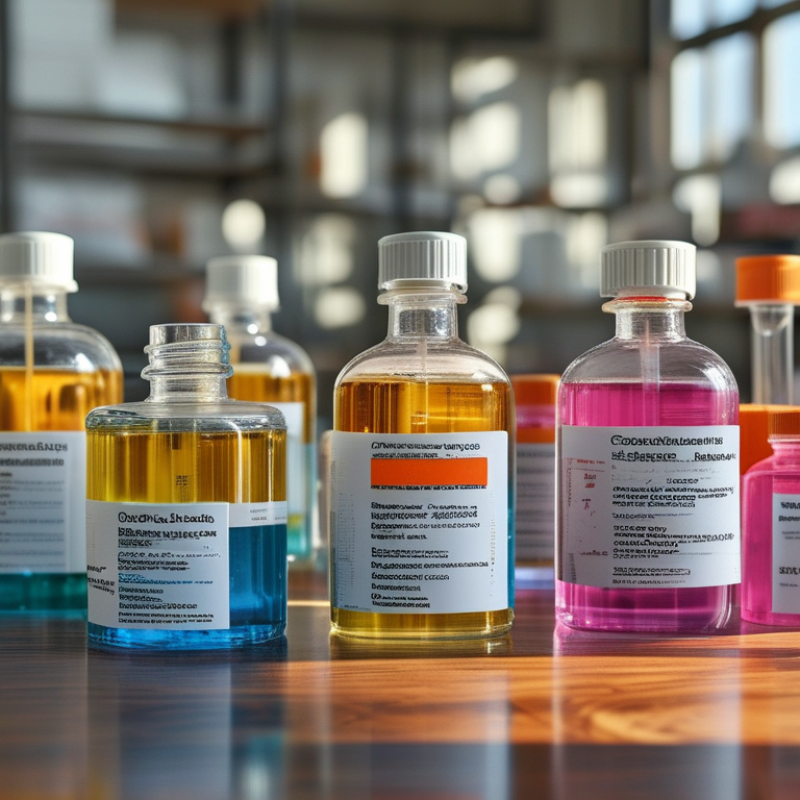
Glyceryl Propoxy Triacrylate is a multifunctional acrylate monomer derived from propoxylated glycerol. Its three reactive acrylate groups support rapid polymer network formation under ultraviolet or electron-beam energy. The propoxy segments can improve flexibility compared with highly rigid multifunctional monomers. However, the exact balance depends on molecular weight, functionality, purity, and formulation grade. It is usually a clear liquid, with viscosity varying between commercial specifications. Check the technical data sheet, not only the product name.
Its main value appears in UV-curable coatings, printing inks, adhesives, and selected resin systems for additive manufacturing. It can act as both a reactive diluent and crosslinking component, helping reduce solvent demand while improving hardness, chemical resistance, and cure speed. Grand View Research reported that the global UV-curable coatings market was valued at approximately USD 7.1 billion in 2023, with continued double-digit growth projected through 2030. That expansion supports demand for multifunctional acrylates, although it does not guarantee suitability for every formulation. Poor dose control may cause brittleness, shrinkage, or incomplete surface curing. Real-world testing matters.
The RadTech technical community also identifies UV and electron-beam curing as important routes for lower-VOC manufacturing. Still, “low VOC” does not mean risk-free handling. Skin sensitization, odor, migration, and residual monomer levels require professional assessment. Suppliers should provide batch traceability, purity data, viscosity results, and recommended storage conditions. Procurement teams should compare these details carefully, rather than selecting only by price.
Glyceryl propoxy triacrylate suppliers are concentrated near major acrylate, polyol, and specialty resin clusters. The International Energy Agency’s Chemicals report identifies the region as the world’s largest chemical manufacturing base. China, Japan, South Korea, and Southeast Asia offer dense supplier networks, export ports, and integrated feedstock access. UNCTAD’s Review of Maritime Transport 2024 reports that Asian ports handled about 62% of global container port throughput in 2023. That logistics advantage can shorten delivery cycles. Sometimes, it does not.
Europe remains important for high-purity grades, technical documentation, and application testing. European chemical industry data published by Cefic shows the region generated roughly €655 billion in chemical sales in 2023.
North America adds strong demand from coatings, adhesives, dental materials, and advanced polymer research.
Supplier selection should examine assay, inhibitor content, viscosity, color, packaging stability, and batch-to-batch consistency. Request recent certificates of analysis. Check storage temperatures too. These details often expose weak sourcing decisions.
Public market reports rarely isolate glyceryl propoxy triacrylate as a separate category. They usually group it within multifunctional acrylates or reactive diluents. That limitation matters. Buyers should compare regional customs data, technical datasheets, audit records, and verified production capacity before trusting headline rankings.
A low quoted price may reflect weaker documentation, longer transit exposure, or inconsistent manufacturing control. Reliable suppliers explain those risks clearly. That is a useful test.
How to Evaluate Glyceryl Propoxy Triacrylate Suppliers
Evaluating glyceryl propoxy triacrylate suppliers requires more than comparing price per kilogram. A 2024 Grand View Research report identifies UV-curable coatings as a growing specialty materials market, driven by faster curing and lower solvent use. This growth attracts new traders, but not every supplier controls production quality. Ask for a recent certificate of analysis, safety data sheet, specification sheet, and batch history. Check purity, viscosity, water content, color, acid value, and inhibitor concentration.
Request a small sample from the exact commercial batch. Test it in your own resin system, not only in the supplier’s laboratory. Watch pot life, cure speed, surface tack, adhesion, and yellowing after storage. A clean-looking sample can still perform poorly in a production line. The European Chemicals Agency advises reviewing substance identity, hazard classification, exposure controls, and registration information through official chemical databases. Confirm that documents match the actual legal entity and shipping location.
Supply reliability deserves equal attention. Review production capacity, drum or container sealing, temperature control, traceability, complaint handling, and average lead time. The 2023 RadTech industry data highlights continued investment in UV and energy-curable technologies, increasing pressure on consistent raw-material supply. Certificates help. Audits help more. I would still question unusually low prices, vague origin statements, and specifications without test methods. One weakness remains easy to miss: a supplier may pass laboratory checks but fail during seasonal transport. Re-test material after extended storage.
A practical procurement-weighting model for comparing suppliers of Glyceryl Propoxy Triacrylate, commonly identified by CAS 52408-84-1.
The chart uses a 100-point evaluation framework rather than company rankings or market-share data. Technical documentation and specification consistency receive the highest weight because acrylic monomers should be assessed against verified identity, purity, inhibitor information, storage requirements, SDS documentation, batch traceability, and certificate-of-analysis records. Buyers should confirm the exact product grade, packaging, delivery conditions, and regulatory documents directly with each supplier.

Quality should be verified, not assumed. Experienced buyers examine each supplier’s certificate of analysis, safety data sheet, and batch traceability records. For glyceryl propoxy triacrylate, key specifications may include acrylic functionality, purity, viscosity, color, water content, acid value, and inhibitor concentration. These figures directly affect curing speed, storage stability, and coating performance.
Look for suppliers operating under ISO 9001 quality systems, with controlled production records and documented laboratory methods. ISO 14001 can indicate stronger environmental management, but it does not replace product testing. Regulatory support also matters. Confirm current REACH, TSCA, or equivalent market requirements for the destination country. The SDS should follow the applicable GHS format and clearly identify handling, storage, and emergency measures.
Ask for a recent batch sample before approving large volumes. Test viscosity at a stated temperature, because results can shift noticeably with heat. Check packaging integrity, lot numbers, shelf life, and recommended storage below the supplier’s stated limit. Some suppliers provide excellent paperwork but weak technical communication. That is a warning sign. Others respond quickly yet cannot explain test methods. Neither situation inspires confidence. An independent comparison may reveal small specification differences that become important during scale-up. Keep records of every review, including unanswered questions. Availability can change; quality evidence should not.
Purchasing glyceryl propoxy triacrylate requires more than comparing a quoted price. Buyers should verify purity, viscosity, color, inhibitor level, and residual moisture. These details affect curing behavior and storage stability.
Request a recent certificate of analysis, safety data sheet, and batch-specific test results. Supplier manufacturing experience also matters. A consistent production record usually reduces formulation adjustments and rejected batches.
Pricing depends on grade, order volume, packaging, and delivery terms. Small quantities often carry higher unit costs. A lower offer may exclude testing, insurance, or import handling. Ask for a complete landed-cost estimate. Include drums, intermediate bulk containers, freight, customs charges, and warehouse fees. Payment terms can also influence the final purchasing decision.
Supply chain planning deserves close attention.
Confirm production lead time, allocation policies, and backup inventory before placing an order. Temperature exposure and unsuitable storage can affect product performance, even when containers remain sealed. Use compatible packaging and request clear handling instructions.
Keep at least one qualified alternative supplier. That sounds cautious, but it may prevent a costly production pause. One weakness in many sourcing plans is overtrusting forecast data. Demand can change quickly. A modest safety stock may be wiser than chasing the lowest quote.


For those larger-sized parts, or smaller quantity runs, we have 2 independent powder coat booths and ovens. The quality, durability and affordability of today’s powder coating finishes make this the process of choice for world-class companies.
Powder coating advantages over other forms of coating are many. Materials used in the Powder coating process can be metals and non-metals that come in a multitude of thicknesses, textures, colors, etc. Another of Powder coating’s biggest advantages over conventional coatings is its ability to create finishes in many different textures. Powder Coating Booths allow us the ability to apply these advantages to large products.
Tri-State Fabricators runs a full-service conveyor line for painting. Wet painting can provide protection or decoration to many different part styles. From start to finish, every project is easier to undergo random and point-based inspection by our skilled painting team.
Advantages to our Wet Paint Line are these lines start with product prep and ends with a thorough inspection of a high quality finished product. Our ability to complete large and small projects with a superior finish and doing so in a timely and economical fashion. This passes along the savings in production to our customers. When powder coating ins not an option, our Wet Paint Line gets the job done right the first time.
When the parts get big and heavy we roll-out our custom paint racks and oversize booth. By utilizing our partnerships with all the major paint brands, we can match virtually any color with wet paint.
The advantages of having access to a Wet Paint Booth are many. Large projects of many different shapes can be loaded into the booth. The Wet Paint Booth offers an environment that is much more controlled than a typical parts painting operation.
Not only are they used because of their controlled environment, but they’re are also advantageous when it comes to applying paint to parts that are needed in industries that require specialty coatings such as medical, aerospace, etc.
Our military forces have some very high standards when it comes to the finish of their vehicles and equipment. From the first pre-treatment step to final coat, it takes a great deal of knowledge and experience to protect the men and women of our armed forces. They deserve only the best, and Tri-State Fabricators provides it.
All of our processes are closely monitored by our staff and management teams. Both of which are highly trained in the processes of metal fabrication and finishing. Tri-State Fabricators’ goal is to always fully satisfy each and every customer, including the military. We will always put a 110% into what we do.
Abrasive media blasting is an excellent way to remove old paint, rust, and increase the paint/powder adhesion. Glass beads produce a much smoother and brighter finish than angular abrasives; leaving the part clean yet without any dimensional change. Chemically inert and environmentally friendly, we can recycle our beads approximately 30 times; making them a more preferred method of metal cleaning or surface finishing.
Advantages to Glass Bead Blasting are many. Glass bead blast media is used when a project is needing rough surfaces need to become smooth for applications of coatings such as paint. It is typically used to clean paint and rust from a product surface without deforming the surface it is being used on. Overall, compared to many other blasting media, Glass Bead Blasting is a very economical choice and those savings are always passed on to our customers.
Tri-State Fabricators utilize a zinc phosphate wash to clean and etch the material to ensure the best paint adhesion possible. The unique design of our 3-stage wash system does the work like a 5-stage. From Cleaning and rinsing to conversion coating and post-treatment, Our Part Washing process is a complete service and works throughout the fabrication service and the finishing service.
Along with the previously mentioned benefits, Curing is a vital chemical reaction that leaves the product finish hard and relatively safe from mild abrasion and aggressive corrosion. This process can be done in more than one way; ambient air-dry or in curing ovens at temps that exceed 240°.
From fixing paint mistakes (someone else’s of course) to simply cleaning our paint line hooks, our burn-off oven is put to good use. After a quick burn-off, a little clean up, and a fresh coat of paint, your parts will look better than new.
Why does our Burn-Off Oven work so well? Because super heating the air around parts turns the materials into ashes. From paint and powder coatings to rubber and machining oils, high temps do the job without degrading the integrity of the part.
Masking is a vital part of producing high quality products. We have die-cut masking patterns to protect machined surfaces as well as a wide range of plugs and caps to protect threaded holes and bolts. We provide permanent and temporary masking.
Masking allows the selected sections of a product to be protected from a fabrication or finishing service. This can be with both chemicals when etching and tapes, paints when only finishing just a section of the product. Masking is great in aiding the customization process of a project.
Screen printing is a photographic process that transfers artwork onto a porous nylon screen which allows colored ink to flow through the screen and be deposited on an aluminum or plastic component. We can generally have just about any design created onto a screen for your parts.
Some of the advantages of Screen Printing are, brand recognition for your business displaying on your products, assembly instructions, product warnings/hazards, etc. Tri-State Fabricators produces Screen Printing of the highest quality so you know it’s durable.
Metal Finishing is the art of treating the exterior portion of product, often metal but can also be made of other materials, so that the surface is clean and free of any debris. Then the process of applying coats or either paint of powder coat takes place. This coating process improves the quality of the product in both appearance and resistance to wear and corrosion.
Tri-State Fabricators, Inc., understands that a project typically isn’t complete until a high-quality finish has been added to your product. This is why our painting and powder coating teams continuously inspect the products throughout the Metal Finishing process.




