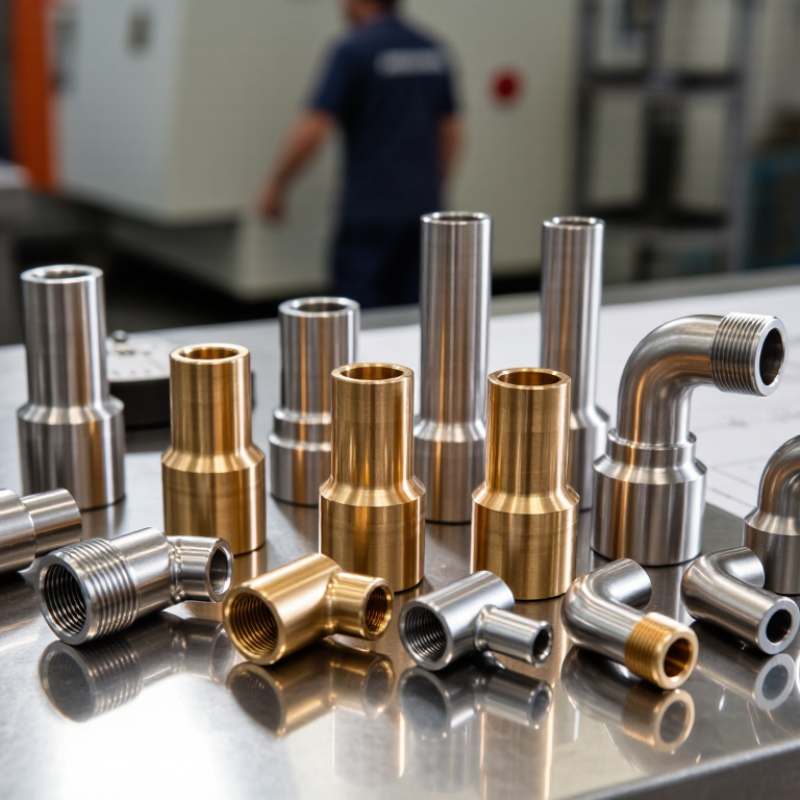
China Top Metal Irregular Nozzle Manufacturers?

Choosing China’s top Metal Irregular Nozzle manufacturers requires more than comparing product photos. These components often serve custom spraying, cooling, mixing, or dosing systems. Their unusual geometry can affect flow direction, pressure loss, sealing, and maintenance. A reliable manufacturer should explain material selection, machining limits, surface finish, and application suitability. Stainless steel, brass, aluminum, and engineered alloys may perform differently in heat, corrosion, and abrasive environments. Small details matter. Thread accuracy matters. So does repeatability between batches.

This guide examines manufacturers through practical evidence, not marketing language. It considers engineering experience, drawing review, prototype support, inspection records, and communication during production. Useful checks include dimensional reports, flow testing, pressure testing where appropriate, and traceable material documentation. ISO certifications can support confidence, but they should not replace factory verification. A polished website is not proof. Samples may look excellent while production consistency remains uncertain. That is where buyers need careful questions and realistic expectations. No supplier is perfect. Even experienced teams can miss a tolerance or misunderstand an installation angle. Clear drawings, approved samples, and written acceptance criteria reduce that risk. The strongest candidates usually show stable processes, responsive technical support, and transparent limits. This comparison aims to help engineers and purchasing teams identify capable Chinese suppliers for dependable metal irregular nozzles, while recognizing that final selection must match actual working conditions.

China Top Metal Irregular Nozzle Manufacturers?

What Are Metal Irregular Nozzles and Where Are They Used?

China Top Metal Irregular Nozzle Manufacturers?

Metal irregular nozzles are engineered outlets with non-circular openings or uneven internal channels. Common designs include fan, slot, annular, multi-port, and elliptical patterns. Stainless steel, nickel alloys, brass, and titanium are selected according to temperature, corrosion, and pressure. The geometry controls spray angle, droplet size, impact force, and coverage. The term is not perfectly standardized. That gap matters.

These nozzles appear in spray drying, industrial washing, surface coating, combustion systems, food processing, and water treatment. A slot nozzle can create a wide, thin curtain across moving sheets. A multi-port nozzle can distribute cleaning fluid around complex equipment.

Grand View Research valued the global spray drying equipment market at roughly USD 5 billion in 2023 showing why precise atomization remains commercially important. Yet this figure covers equipment, not irregular nozzles alone.

China-based manufacturers commonly produce these parts through CNC machining, EDM, laser welding, and metal additive manufacturing. The Wohlers Report 2024 estimated the additive manufacturing industry reached USD 20.035 billion in 2023, supporting more complex flow-channel designs.

Reliable suppliers should provide material certificates, dimensional inspection, pressure testing, and measured flow-rate data. Engineers should also request spray-pattern tests at actual operating pressure. A drawing alone is insufficient.

In practice, I would question any supplier promising perfect uniformity without test conditions, because viscosity, temperature, and installation angle can change performance.

How Are Irregular Nozzles Manufactured in China?

China’s irregular metal nozzles are usually made through a controlled, multi-stage process. Geometry changes everything. Engineers first convert the customer’s 3D model into machining paths and welding instructions. Common materials include stainless steel, carbon steel, and nickel-based alloys. China produced 1,005.1 million tonnes of crude steel in 2024, according to the World Steel Association. This supports strong material availability, but it does not guarantee consistent nozzle quality.

Manufacturers normally cut, forge, turn, mill, and weld the component according to its shape. Complex outlets may require five-axis machining to control wall thickness and internal flow. Automated production is expanding quickly. The International Federation of Robotics reported 276,288 industrial robot installations in China during 2023, representing 51% of global installations. Inspection still matters. Technicians check heat numbers, dimensions, weld appearance, surface finish, and pressure performance. A perfect drawing can still produce a poor part. Tool wear, distortion, and uneven polishing remain practical risks.

Tips: Request a material certificate, 3D drawing, tolerance table, weld procedure, and inspection plan. Ask for dimensional records and a flow or pressure test when performance is critical. Do not skip it. Some suppliers rely too heavily on visual inspection, especially around hidden internal passages. A sample nozzle should be reviewed before approving larger production.

China Top Metal Irregular Nozzle Manufacturers? - How Are Irregular Nozzles Manufactured in China?

Manufacturing Dimension Common Practice for Irregular Metal Nozzles Typical Technical Data or Inspection Point Application and Quality Significance
Engineering Input Manufacturing normally begins with a 2D drawing, 3D CAD model, material specification, flow requirement, and connection details. Key inputs include inlet and outlet dimensions, wall thickness, centerline offsets, pressure, temperature, medium, and surface-finish requirements. Complete design data reduces rework and ensures that the irregular outlet geometry fits the assembly and delivers the required flow pattern.
Material Selection Frequently used materials include stainless steel, carbon steel, aluminum, brass, and nickel-based alloys, selected according to the operating environment. Common stainless-steel choices include 304/304L and 316/316L. Material certificates may verify chemical composition and mechanical properties. 316/316L is generally preferred over 304/304L for chloride-containing or more corrosive service, while carbon steel is often used for lower-cost non-corrosive systems with suitable protection.
Blank Preparation The initial blank may be produced from seamless or welded tube, plate, bar stock, forging, or a cast preform, depending on the nozzle shape and production quantity. Blank dimensions are selected to provide machining allowance for the outer profile, internal passage, flange, and irregular outlet. A correctly selected blank helps prevent distortion, excessive material waste, and insufficient wall thickness after machining.
CNC Turning CNC turning is used for round inlet sections, cylindrical bodies, threads, shoulders, grooves, and sealing surfaces. The process can control concentric features and repeatable diameters; final tolerance depends on material, geometry, machine capability, and drawing requirements. Accurate inlet and sealing dimensions are important for assembly compatibility and leak prevention.
CNC Milling and 5-Axis Machining Multi-axis milling is commonly used for non-round outlets, angled passages, compound surfaces, mounting faces, and asymmetric external profiles. 5-axis machining can reduce repositioning and help maintain the relationship between the inlet axis, outlet axis, and internal flow passage. This method is suitable for complex geometries that cannot be produced efficiently by standard two-axis turning alone.
Fabrication and Welding For larger or highly customized nozzles, separate tube, plate, flange, and outlet components may be fitted and welded before finish machining. Typical controls include qualified welding procedures, compatible filler metal, joint preparation, interpass temperature control, and weld inspection. Welding can reduce material waste and enable large dimensions, but heat input and distortion must be controlled carefully.
Internal Passage Formation Internal passages may be drilled, bored, milled, trepanned, or produced through a welded and machined construction. Inspection focuses on bore diameter, transition radii, wall thickness, burr removal, and the absence of chips or obstructions. Smooth transitions and clean passages help reduce turbulence, pressure loss, particle accumulation, and uneven discharge.
Thread, Flange, or Weld-End Connection Connection ends may be threaded, flanged, socket-welded, butt-welded, or designed with a custom clamp or sanitary connection. Verification may include thread gauge checks, flange dimensions, bolt-hole position, weld bevel angle, face flatness, and alignment. Connection accuracy determines installation time, sealing performance, interchangeability, and maintenance convenience.
Heat Treatment Heat treatment is selected according to the alloy, manufacturing route, service conditions, and required mechanical properties. Possible controls include solution treatment for suitable stainless-steel grades, stress relief where applicable, and hardness verification. Proper thermal processing can reduce residual stress and support corrosion resistance or dimensional stability, depending on the material.
Deburring and Edge Control Machined edges are manually or mechanically deburred, with special attention given to internal intersections and outlet openings. Checks include removal of sharp burrs, chips, loose particles, and excessive edge break that could affect flow or sealing. Clean and controlled edges reduce contamination risks and protect gaskets, seals, operators, and downstream equipment.
Surface Finishing Available finishes may include machining finish, grinding, polishing, bead blasting, pickling and passivation for suitable stainless-steel parts, or protective coating for carbon steel. Surface roughness is specified by the drawing or application; internal surfaces may require a smoother finish than non-functional external areas. Finishing influences corrosion resistance, cleanability, friction, appearance, and the behavior of the discharged medium.
Dimensional Inspection Inspection may use calipers, micrometers, height gauges, thread gauges, bore gauges, optical equipment, and coordinate measuring machines. Typical inspection points include overall dimensions, outlet profile, wall thickness, hole location, angularity, concentricity, and datum alignment. Measurement against the approved drawing confirms that the irregular nozzle can be installed and operated as designed.
Non-Destructive Testing Depending on risk and specification, manufacturers may use visual inspection, dye penetrant testing, magnetic particle testing, ultrasonic testing, or radiographic testing. Dye penetrant testing is suitable for detecting surface-breaking discontinuities in many non-porous materials; ultrasonic and radiographic methods can examine weld or material integrity under appropriate conditions. The selected method should match the material, joint type, thickness, acceptance criteria, and service risk.
Pressure and Leak Testing Where required, completed nozzles or assemblies are subjected to hydrostatic, pneumatic, or low-pressure leak testing according to the approved procedure. Test pressure, holding time, test medium, and acceptance criteria must be defined by the design code, purchase specification, or system requirement. Testing verifies pressure containment and identifies leakage through welds, threaded areas, seals, or material defects.
Flow Verification Flow testing is normally performed when the nozzle has a critical spray pattern, discharge angle, pressure drop, or distribution requirement. Evaluation may include flow rate, pressure loss, discharge direction, spray coverage, velocity distribution, or particle size where relevant. Dimensional conformity alone may not guarantee hydraulic performance for a complex irregular passage.
Documentation and Traceability A controlled production file may include the approved drawing, material certificate, inspection report, weld records, surface-treatment record, and test results. Traceability can be maintained through heat numbers, batch records, serial numbers, inspection status, and revision-controlled documents. Clear documentation supports incoming inspection, regulatory compliance, maintenance, and repeat-order consistency.
Typical End-Use Sectors Irregular metal nozzles are used in process piping, chemical equipment, water treatment, food and beverage systems, combustion equipment, dust-control systems, and industrial cooling or cleaning systems. The required material, finish, testing, and connection design depend on the fluid, pressure, temperature, hygiene level, corrosion exposure, and installation method. Application-specific engineering is essential because an appropriate nozzle design for one service may be unsuitable for another.

Note: Technical values and inspection requirements for a specific irregular nozzle should be confirmed against its approved drawing, material standard, pressure class, applicable design code, and end-use conditions.

What Standards Define High-Quality Metal Nozzles?

China Top Metal Irregular Nozzle Manufacturers?

High-quality metal nozzles begin with traceable materials, not appearance. ASTM material specifications should match pressure, temperature, corrosion, and welding conditions. Dimensional checks should cover bore diameter, wall thickness, angle, concentricity, and flange alignment. ISO 9001 controls help maintain these records, but certification alone proves little. The ISO Survey 2023 reported more than 1.26 million ISO 9001 certificates worldwide. That number shows broad adoption, not automatic product quality.

Pressure performance needs stronger evidence. Manufacturers should provide hydrostatic or pneumatic test records, weld inspection results, and heat-number traceability. ASME pressure-vessel and piping requirements may apply, depending on the nozzle’s final installation. Surface roughness also matters. A rough internal bore can increase turbulence, residue retention, and cleaning difficulty. Small defects become serious at high flow rates. They may not appear during visual inspection.

Industry data supports this caution. The International Energy Agency’s Energy Technology Perspectives 2024 highlights rising pressure on industrial equipment to improve efficiency and reduce material waste. For irregular nozzles, accurate geometry supports both goals. However, a perfect drawing cannot replace testing. This is where procurement teams sometimes overestimate paperwork. A certificate may be genuine, yet the inspection scope can remain too narrow. High-quality suppliers should welcome dimensional reports, material certificates, non-destructive testing, and sample verification before shipment. The standard is evidence, not confidence.

China Top Metal Irregular Nozzle Manufacturers? — What Standards Define High-Quality Metal Nozzles?

This chart shows the general linear dimensional tolerances for tolerance class “m” in ISO 2768-1. These values can be used as a basic benchmark when reviewing machined metal nozzle dimensions. High-quality irregular nozzles should also be evaluated against the technical drawing, applicable material standard, surface-finish requirements, geometric tolerances, and pressure or leakage-test specifications.

Reference: ISO 2768-1, General tolerances for linear and angular dimensions, tolerance class m. The applicable product specification takes precedence over general tolerances.

How to Evaluate China’s Leading Irregular Nozzle Manufacturers

Evaluating China’s leading irregular nozzle manufacturers requires more than comparing prices. Start with engineering capability. Request material certificates, dimensional reports, welding procedures, and pressure-test records. Review how the factory converts complex drawings into stable production. Ask about tolerances around openings, flange alignment, wall thickness, and surface treatment. A reliable manufacturer should explain these details clearly, not hide behind general claims. Samples should match the approved drawing and remain consistent across repeated batches.

Factory experience also matters. Examine similar projects, available machining equipment, inspection tools, and the qualifications of quality personnel. A video tour helps, but an independent audit offers stronger evidence. Check whether the supplier controls raw materials from receipt to shipment. Communication is another practical test. Send one detailed drawing and observe the response. Vague answers may signal weak technical support. No supplier is perfect. A small documentation gap can be corrected, but repeated measurement errors deserve caution.

Tips: Compare at least three factories using the same specification sheet. Ask for a first-article inspection before full production. Confirm packaging for sharp edges, moisture, and deformation. Keep every revision in writing. Do not select the lowest quotation automatically; an inexpensive nozzle can create costly installation delays. I would also inspect rejected parts during a factory visit, because they reveal more than polished samples.

What Factors Affect Nozzle Pricing, Customization, and Delivery?

China Top Metal Irregular Nozzle Manufacturers?

Pricing begins with the alloy, geometry, and production volume. Stainless steel, nickel alloys, and titanium behave differently during machining and forming. Complex angles can require five-axis machining, special fixtures, or secondary polishing. Grand View Research’s 2024 metal fabrication analysis forecasts steady market growth through 2030, but energy, labor, and equipment costs still vary by region. A low quotation can be a warning, not a victory.

Customization affects both cost and risk. Engineers should specify flow rate, pressure, temperature, connection size, surface roughness, and allowable tolerance. A nozzle with a 0.05 mm opening tolerance needs stricter inspection than a general-purpose part. Material certificates, dimensional reports, and pressure-test records add expense, yet they protect production reliability. ISO 9001 registration supports process control, but it does not prove every nozzle meets the drawing. I would request samples.

Delivery depends on more than machining time. Raw-material availability, drawing approval, tooling, inspection queues, and export scheduling can each add days. The World Bank’s Commodity Markets Outlook, October 2024, projected a 5% decline in broad commodity prices for 2025, but price movements remain uneven across industrial metals. Buyers should lock the quotation period and identify adjustment rules. Deloitte’s 2024 Global Chief Procurement Officer Survey also highlights supply continuity as a major procurement concern. In practice, a realistic delivery window beats an attractive promise.

Powder Coat Booths

For those larger-sized parts, or smaller quantity runs, we have 2 independent powder coat booths and ovens. The quality, durability and affordability of today’s powder coating finishes make this the process of choice for world-class companies.

Powder coating advantages over other forms of coating are many. Materials used in the Powder coating process can be metals and non-metals that come in a multitude of thicknesses, textures, colors, etc. Another of Powder coating’s biggest advantages over conventional coatings is its ability to create finishes in many different textures. Powder Coating Booths allow us the ability to apply these advantages to large products.

Wet Paint Line

Tri-State Fabricators runs a full-service conveyor line for painting. Wet painting can provide protection or decoration to many different part styles. From start to finish, every project is easier to undergo random and point-based inspection by our skilled painting team.

Advantages to our Wet Paint Line are these lines start with product prep and ends with a thorough inspection of a high quality finished product. Our ability to complete large and small projects with a superior finish and doing so in a timely and economical fashion. This passes along the savings in production to our customers. When powder coating ins not an option, our Wet Paint Line gets the job done right the first time.

Wet Paint Booths

When the parts get big and heavy we roll-out our custom paint racks and oversize booth. By utilizing our partnerships with all the major paint brands, we can match virtually any color with wet paint.

The advantages of having access to a Wet Paint Booth are many. Large projects of many different shapes can be loaded into the booth. The Wet Paint Booth offers an environment that is much more controlled than a typical parts painting operation.

Not only are they used because of their controlled environment, but they’re are also advantageous when it comes to applying paint to parts that are needed in industries that require specialty coatings such as medical, aerospace, etc.

Military CARC

Our military forces have some very high standards when it comes to the finish of their vehicles and equipment. From the first pre-treatment step to final coat, it takes a great deal of knowledge and experience to protect the men and women of our armed forces. They deserve only the best, and Tri-State Fabricators provides it.

All of our processes are closely monitored by our staff and management teams. Both of which are highly trained in the processes of metal fabrication and finishing. Tri-State Fabricators’ goal is to always fully satisfy each and every customer, including the military. We will always put a 110% into what we do.

Glass-Bead Blasting

Abrasive media blasting is an excellent way to remove old paint, rust, and increase the paint/powder adhesion. Glass beads produce a much smoother and brighter finish than angular abrasives; leaving the part clean yet without any dimensional change. Chemically inert and environmentally friendly, we can recycle our beads approximately 30 times; making them a more preferred method of metal cleaning or surface finishing.

Advantages to Glass Bead Blasting are many. Glass bead blast media is used when a project is needing rough surfaces need to become smooth for applications of coatings such as paint. It is typically used to clean paint and rust from a product surface without deforming the surface it is being used on. Overall, compared to many other blasting media, Glass Bead Blasting is a very economical choice and those savings are always passed on to our customers.

Part Washing

Tri-State Fabricators utilize a zinc phosphate wash to clean and etch the material to ensure the best paint adhesion possible. The unique design of our 3-stage wash system does the work like a 5-stage. From Cleaning and rinsing to conversion coating and post-treatment, Our Part Washing process is a complete service and works throughout the fabrication service and the finishing service.

Along with the previously mentioned benefits, Curing is a vital chemical reaction that leaves the product finish hard and relatively safe from mild abrasion and aggressive corrosion. This process can be done in more than one way; ambient air-dry or in curing ovens at temps that exceed 240°.

Burn-Off Oven

From fixing paint mistakes (someone else’s of course) to simply cleaning our paint line hooks, our burn-off oven is put to good use. After a quick burn-off, a little clean up, and a fresh coat of paint, your parts will look better than new.

Why does our Burn-Off Oven work so well? Because super heating the air around parts turns the materials into ashes. From paint and powder coatings to rubber and machining oils, high temps do the job without degrading the integrity of the part.

Masking

Masking is a vital part of producing high quality products. We have die-cut masking patterns to protect machined surfaces as well as a wide range of plugs and caps to protect threaded holes and bolts. We provide permanent and temporary masking.

Masking allows the selected sections of a product to be protected from a fabrication or finishing service. This can be with both chemicals when etching and tapes, paints when only finishing just a section of the product. Masking is great in aiding the customization process of a project.

Screen Printing

Screen printing is a photographic process that transfers artwork onto a porous nylon screen which allows colored ink to flow through the screen and be deposited on an aluminum or plastic component. We can generally have just about any design created onto a screen for your parts.

Some of the advantages of Screen Printing are, brand recognition for your business displaying on your products, assembly instructions, product warnings/hazards, etc. Tri-State Fabricators produces Screen Printing of the highest quality so you know it’s durable.

Metal Finishing

Metal Finishing is the art of treating the exterior portion of product, often metal but can also be made of other materials, so that the surface is clean and free of any debris. Then the process of applying coats or either paint of powder coat takes place. This coating process improves the quality of the product in both appearance and resistance to wear and corrosion.

Tri-State Fabricators, Inc., understands that a project typically isn’t complete until a high-quality finish has been added to your product. This is why our painting and powder coating teams continuously inspect the products throughout the Metal Finishing process.