China Top Aluminium Winding Wire Manufacturers?
China Top Aluminium Winding Wire Manufacturers?
Aluminium Winding Wire is gaining attention as motor, transformer, and renewable-energy manufacturers seek lighter conductors. The International Aluminium Institute reported global primary aluminium production of approximately 72.6 million tonnes in 2024. That scale supports a broad supply base, but it does not guarantee winding-wire quality.
Electrical performance depends on more than metal volume. Conductivity, elongation, surface smoothness, enamel adhesion, and dimensional stability affect production reliability. The IEC 60317 series provides important specifications for insulated winding wires. ASTM standards also help buyers compare aluminium conductor grades and testing methods.
A practical comparison starts with factory evidence. Review rod quality, drawing equipment, annealing control, insulation lines, and batch traceability. Ask for resistance, breakdown-voltage, elongation, and thermal-aging reports. Small details matter. A rough edge can damage enamel during high-speed winding.
Miles Prosser, secretary general of the International Aluminium Institute, has described aluminium as a “permanent material” because it can be recycled repeatedly without losing its core properties. That point matters for manufacturers evaluating lifecycle performance, not only purchase price.
Market reports from Grand View Research and Research and Markets indicate continued growth in aluminium wire and electrical-conductor demand, driven by power transmission, vehicles, and renewable projects. Their market boundaries differ, however. The figures should not be treated as perfectly comparable.
This guide examines China’s leading Aluminium Winding Wire manufacturers through technical capability, certifications, export experience, customization, and after-sales support. Price alone can mislead. Even experienced buyers sometimes overlook process consistency. That deserves closer attention.
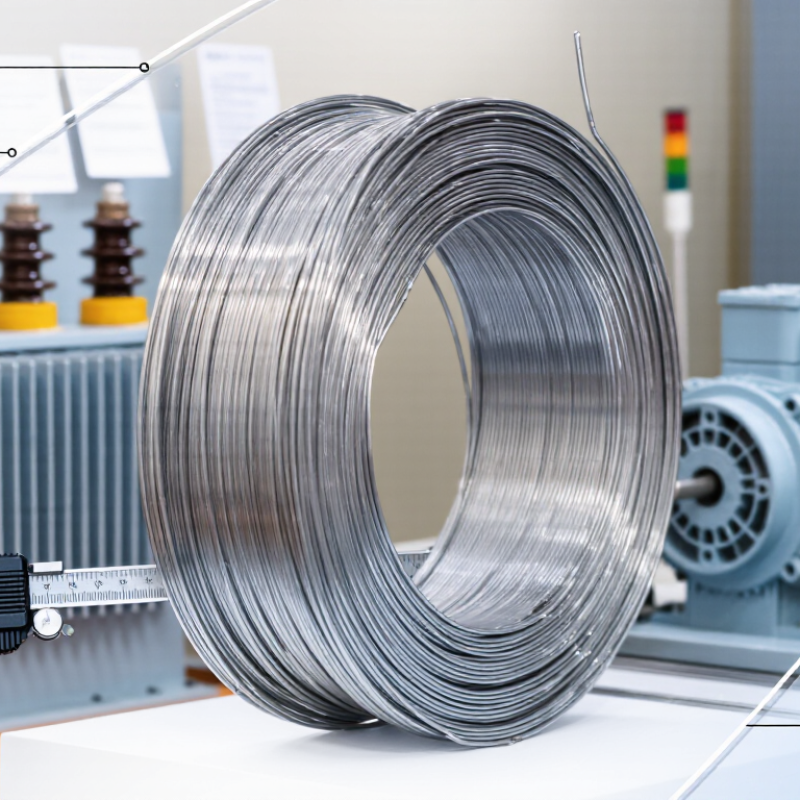
What Is Aluminium Winding Wire and Where Is It Used?
Aluminium winding wire is an insulated conductor used to create electromagnetic coils. It usually consists of an aluminium core covered with enamel or another heat-resistant insulation layer. The aluminium carries current, while the coating prevents contact between adjacent turns. Compared with copper, aluminium is lighter and often more economical. However, its electrical conductivity is lower. Engineers may need a larger conductor cross-section to achieve similar performance.
This wire is widely used in transformers, induction motors, generators, compressors, and household appliances. In a transformer, carefully wound aluminium coils transfer electrical energy between voltage levels. In motors, the wire forms stator or rotor windings that produce magnetic fields. Lightweight construction can reduce equipment weight, especially in large electrical systems. Heat class, insulation thickness, winding tension, and connection quality all affect service life. Small errors matter.
When evaluating Chinese aluminium winding wire manufacturers, buyers should inspect conductor purity, diameter tolerance, enamel adhesion, and test records. Reliable producers normally provide resistance data, thermal ratings, and batch traceability. Joint design deserves attention because aluminium oxide can increase contact resistance. Mechanical vibration and thermal expansion can also weaken poorly prepared connections. In my experience, specifications can look excellent on paper, yet winding results may differ during production. Sample testing under real temperature and load conditions is wiser than trusting a catalogue alone. There is no perfect design. The application decides the right balance.
Key Standards for Evaluating Chinese Aluminium Winding Wire Manufacturers
China Top Aluminium Winding Wire Manufacturers?
Evaluating Chinese aluminium winding wire manufacturers requires more than comparing prices. Start with technical control. Check conductor purity, diameter tolerance, elongation, resistivity, and joint quality. A reliable factory should provide recent test records, not only a polished sample. Ask for production data from the same specification you plan to purchase.
Measure the basics. Confirm compliance with relevant IEC, GB, or ASTM requirements, depending on the application and destination market. Inspect enamel thickness, insulation adhesion, thermal class, and breakdown voltage. For larger orders, request samples from different production batches. This reveals whether process control remains stable over time. It also exposes uneven surfaces, pinholes, or inconsistent winding performance.
Factory experience matters during an audit. Review calibration records, raw material traceability, corrective-action reports, and final inspection procedures. Engineers should explain how they control annealing temperature and tension during winding. Their answers should match actual equipment and records. Export documentation, packaging tests, and complaint-handling procedures also indicate operational maturity. Still, no audit is perfect. A factory may perform well during a visit and struggle during peak production. I would therefore use staged orders, independent testing, and clear acceptance limits. Cheap wire can become expensive when motor efficiency drops or insulation fails early. Ask difficult questions. Then verify the answers.
How Chinese Manufacturers Control Quality and Production
China Top Aluminium Winding Wire Manufacturers?
Chinese aluminium winding wire manufacturers increasingly manage quality through measured production, not visual inspection alone. The International Aluminium Institute reported approximately 70.6 million tonnes of global primary aluminium production in 2023. This scale makes consistent alloy control essential. Factories commonly verify chemical composition, electrical conductivity, tensile strength, elongation, and wire diameter. Each coil should carry a traceable batch number. Operators also monitor casting temperature and drawing speed because small changes can affect resistivity.
Insulation quality receives similar attention. Production lines often use automatic enamel coating, online spark testing, and controlled curing temperatures. IEC 60317 requirements guide many technical checks for enamelled winding wires. ISO 9001 systems can support document control, calibration, corrective actions, and supplier evaluation. However, certification alone proves little. Independent laboratories should confirm conductivity, breakdown voltage, coating flexibility, and thermal performance. The International Energy Agency identifies aluminium production as energy-intensive, so electricity stability and furnace efficiency also influence production consistency. Not every factory performs equally well.
Tips: Request recent test reports, inspection records, and sample coils before approval. Check whether the report matches the exact alloy, diameter, and insulation class. Ask for a factory video showing calibration and packaging controls. A useful warning: attractive samples may hide unstable batch performance. Review at least three production lots. Slight ovality, rough edges, or uneven enamel can appear only after extended drawing, and that detail is easy to miss.
How to Select the Right Aluminium Winding Wire Supplier
Selecting the right aluminium winding wire supplier requires more than comparing prices. The International Aluminium Institute reports that global aluminium demand could rise significantly by mid-century, driven by electrification. This pressure makes raw-material traceability essential. Ask where the aluminium rod is produced, how alloy composition is controlled, and whether each coil has a batch record.
Technical compliance comes next. Suppliers should provide test results aligned with IEC 60317-0-3 for enamelled round aluminium winding wires. Check conductivity, elongation, coating thickness, dielectric breakdown, and thermal-class performance. A reliable factory should explain its sampling method, calibration schedule, and corrective-action process. Request recent reports, not empty promises. Small details matter.
Production experience is visible on the factory floor. Look for controlled drawing tension, clean coating lines, sealed packaging, and moisture protection during shipment. The International Energy Agency reported nearly 14 million electric car sales in 2023, increasing demand for efficient motor components. That growth can expose weak suppliers quickly. Ask for samples, winding trials, and temperature-rise data before signing a large contract. Delivery capacity should be verified through equipment lists, lead-time records, and realistic monthly output. One overlooked issue is aluminium’s lower conductivity than copper. Designs may need a larger conductor cross-section. This is where a technically honest supplier becomes valuable. Cheap wire can become expensive after failed motor tests.
China Top Aluminium Winding Wire Manufacturers? How to Select the Right Aluminium Winding Wire Supplier
Thermal class is a key specification when evaluating enamelled aluminium winding wire suppliers. The chart shows the internationally used temperature classes for electrical winding-wire insulation systems. Select a supplier that can provide the required thermal class together with conductor-size tolerance, electrical conductivity, insulation breakdown voltage, adhesion, elongation, and batch traceability.
Reference: IEC 60317 series thermal classes commonly used for enamelled winding wires. Higher thermal class indicates a higher maximum rated temperature for the insulation system; it does not by itself indicate better overall wire quality.





