


A lead rubber sheet is a flexible material used to reduce exposure to X-rays and other forms of ionizing radiation. It combines lead, which attenuates radiation, with rubber that can make the sheet easier to handle and fit around equipment. You may find it in protective curtains, movable screens, equipment covers, or barriers in medical, dental, and industrial imaging environments. It is practical. But it is not a universal shield.
The protection a sheet provides depends on its lead-equivalence rating, thickness, radiation energy, and how it is installed. Gaps at seams or around openings can weaken a barrier, even when the material itself is suitable. A qualified radiation-safety professional should assess the application and confirm that the product meets the required specifications. Follow the manufacturer’s handling and inspection guidance, too. Rubber may crack, wear, or deform over time. That detail is easy to overlook. This guide explains common uses of lead rubber sheet, how to compare product specifications, and what to consider before installation. The right choice depends on the actual exposure conditions, not just a product label.
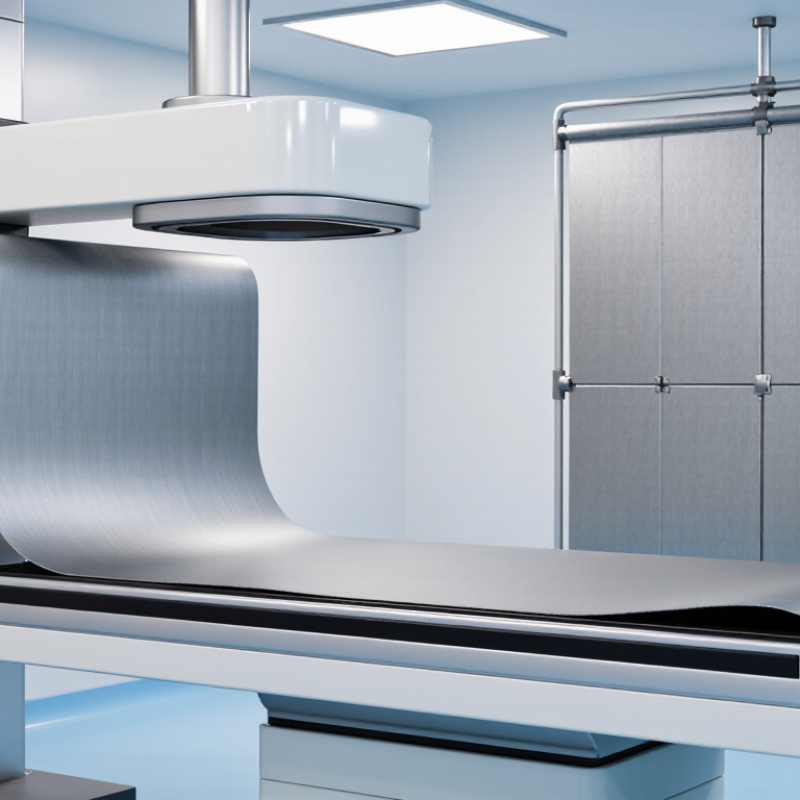
What a Lead Rubber Sheet Is
A lead rubber sheet is a flexible shielding material made by combining lead with an elastomer, such as rubber. The lead may be incorporated as a layer or dispersed through the material, depending on its design. This gives the sheet some flexibility while allowing it to reduce exposure to X-rays and other forms of ionizing radiation. It is not ordinary rubber with a protective coating.
Its shielding performance is commonly described by lead equivalence, which indicates how its attenuation compares with a stated thickness of lead under specified conditions. The correct rating depends on the radiation source, energy, and intended application. These details matter. A sheet used for a protective curtain or equipment enclosure may not suit a different setup. Gaps, damaged edges, and poorly joined seams can also weaken shielding, even when the sheet itself has an adequate rating.
The material is heavy. It can feel awkward to position, especially in larger panels, and unsupported sheets may sag over time. Lead-containing products also need careful handling: avoid cutting, sanding, or burning them, since these actions can release hazardous material. Installation, inspection, and disposal should follow qualified advice and applicable requirements. The name sounds simple, but choosing the right sheet takes more than checking its thickness.
Lead rubber sheets are flexible radiation-shielding materials used in applications such as protective curtains and equipment covers. Their shielding depends on the sheet’s lead equivalence and the radiation energy.
How to read this chart: It shows estimated primary 662 keV gamma-ray transmission through lead-equivalent thicknesses, using a narrow-beam exponential attenuation model and an approximate lead linear attenuation coefficient of 1.25 cm⁻¹. Real-world shielding performance varies with radiation spectrum, sheet construction, and scattered radiation; consult product specifications for actual lead equivalence.
A lead rubber sheet combines a dense lead layer with a flexible rubber covering. The lead attenuates X-rays and other penetrating photon radiation by absorbing and scattering some of its energy. The rubber helps protect the sheet and makes it easier to fit around corners, doors, or equipment. It is commonly used as a lining or movable barrier where a rigid lead panel would be awkward.
It sounds simple. In practice, details matter. Shielding performance depends on the lead thickness, radiation energy, and how the sheet is installed. For example, a narrow uncovered gap beside a door can weaken an otherwise substantial barrier. Overlapping edges and secure fixings help limit these weak points. Flexibility is useful, but repeated bending can wear the material or damage its covering, so it needs regular inspection.
A sheet does not make a space automatically safe. The appropriate thickness and layout should be selected for the specific source and expected use, with guidance from a qualified radiation protection professional. Measurements and local shielding requirements may also affect the design. One detail is easy to overlook: lead rubber is designed mainly for photon shielding, not as a universal barrier against every type of radiation.
Lead rubber sheets are commonly used to reduce exposure to X-rays in medical and dental imaging areas. They may line walls, doors, viewing windows, or protective screens, depending on the room’s design. Flexible sheets can also cover irregular surfaces where rigid panels are difficult to fit. Seams matter. Gaps around edges can weaken a barrier, even when the sheet itself has the specified thickness.
Mobile imaging units and veterinary clinics may use lead rubber curtains or panels to shield nearby staff. In industrial radiography, sheets can serve as temporary shielding around inspection zones, when a qualified assessment confirms they suit the radiation source. Some protective garments also contain lead rubber material, though their design and coverage vary. A sheet is not a universal shield. Its effectiveness depends on lead equivalence, radiation energy, installation, and condition. That last point is easy to overlook: cracks, worn areas, or poorly joined panels may reduce protection. Check product specifications and have shielding requirements reviewed by a radiation protection professional before installation.
Lead rubber sheet is commonly used as flexible shielding around X-ray equipment, inspection areas, or enclosed processes. Its usefulness depends on the radiation type, energy, and required protection, not just its appearance. Choose a sheet with documented lead equivalence and test information for the intended application. I would not select by thickness alone; that shortcut feels simple, but it can mislead. Ask a qualified radiation-safety professional to confirm the specification and how the sheet will be installed. Fit matters. Seams, edges, and openings can leave gaps, so plan their coverage before cutting or mounting.
Check the sheet for cracks, tears, or separating layers when it arrives and during routine inspections. Lead-loaded rubber can be heavy, so support it evenly and avoid dragging it across rough floors or sharp edges. Keep it intact whenever possible. If cutting or drilling is unavoidable, use suitable dust controls and protective equipment, and follow the supplier’s handling guidance. Do not sand or heat the material. Wash hands after handling, especially before eating. Small gaps count. A sheet that looks sound may still need replacement if its shielding layer is exposed or damaged; inspection records help catch that, though they are easy to neglect.
It combines lead with a flexible material, such as rubber, to reduce exposure to X-rays. It is not ordinary rubber.
It compares the sheet’s shielding performance with a stated thickness of lead under specific conditions. The rating depends on radiation energy and intended use.
They may shield walls, doors, viewing windows, screens, or mobile imaging areas. Veterinary clinics and industrial inspection zones may also use them.
Check documented lead equivalence and test information for your application. Ask a qualified radiation-safety professional to review the specification and installation.
No. Radiation type, energy, installation, and condition matter too. I would not guess from appearance.
Gaps around edges or poorly joined seams can weaken shielding. Plan coverage before mounting. Small gaps count.
Support it evenly; lead-loaded sheets can be heavy. Check for cracks, tears, or separating layers, and avoid dragging it over rough floors.
Damage or an exposed shielding layer may mean it needs replacement. Keep inspection records, though they are easy to neglect. Follow qualified advice.



For those larger-sized parts, or smaller quantity runs, we have 2 independent powder coat booths and ovens. The quality, durability and affordability of today’s powder coating finishes make this the process of choice for world-class companies.
Powder coating advantages over other forms of coating are many. Materials used in the Powder coating process can be metals and non-metals that come in a multitude of thicknesses, textures, colors, etc. Another of Powder coating’s biggest advantages over conventional coatings is its ability to create finishes in many different textures. Powder Coating Booths allow us the ability to apply these advantages to large products.
Tri-State Fabricators runs a full-service conveyor line for painting. Wet painting can provide protection or decoration to many different part styles. From start to finish, every project is easier to undergo random and point-based inspection by our skilled painting team.
Advantages to our Wet Paint Line are these lines start with product prep and ends with a thorough inspection of a high quality finished product. Our ability to complete large and small projects with a superior finish and doing so in a timely and economical fashion. This passes along the savings in production to our customers. When powder coating ins not an option, our Wet Paint Line gets the job done right the first time.
When the parts get big and heavy we roll-out our custom paint racks and oversize booth. By utilizing our partnerships with all the major paint brands, we can match virtually any color with wet paint.
The advantages of having access to a Wet Paint Booth are many. Large projects of many different shapes can be loaded into the booth. The Wet Paint Booth offers an environment that is much more controlled than a typical parts painting operation.
Not only are they used because of their controlled environment, but they’re are also advantageous when it comes to applying paint to parts that are needed in industries that require specialty coatings such as medical, aerospace, etc.
Our military forces have some very high standards when it comes to the finish of their vehicles and equipment. From the first pre-treatment step to final coat, it takes a great deal of knowledge and experience to protect the men and women of our armed forces. They deserve only the best, and Tri-State Fabricators provides it.
All of our processes are closely monitored by our staff and management teams. Both of which are highly trained in the processes of metal fabrication and finishing. Tri-State Fabricators’ goal is to always fully satisfy each and every customer, including the military. We will always put a 110% into what we do.
Abrasive media blasting is an excellent way to remove old paint, rust, and increase the paint/powder adhesion. Glass beads produce a much smoother and brighter finish than angular abrasives; leaving the part clean yet without any dimensional change. Chemically inert and environmentally friendly, we can recycle our beads approximately 30 times; making them a more preferred method of metal cleaning or surface finishing.
Advantages to Glass Bead Blasting are many. Glass bead blast media is used when a project is needing rough surfaces need to become smooth for applications of coatings such as paint. It is typically used to clean paint and rust from a product surface without deforming the surface it is being used on. Overall, compared to many other blasting media, Glass Bead Blasting is a very economical choice and those savings are always passed on to our customers.
Tri-State Fabricators utilize a zinc phosphate wash to clean and etch the material to ensure the best paint adhesion possible. The unique design of our 3-stage wash system does the work like a 5-stage. From Cleaning and rinsing to conversion coating and post-treatment, Our Part Washing process is a complete service and works throughout the fabrication service and the finishing service.
Along with the previously mentioned benefits, Curing is a vital chemical reaction that leaves the product finish hard and relatively safe from mild abrasion and aggressive corrosion. This process can be done in more than one way; ambient air-dry or in curing ovens at temps that exceed 240°.
From fixing paint mistakes (someone else’s of course) to simply cleaning our paint line hooks, our burn-off oven is put to good use. After a quick burn-off, a little clean up, and a fresh coat of paint, your parts will look better than new.
Why does our Burn-Off Oven work so well? Because super heating the air around parts turns the materials into ashes. From paint and powder coatings to rubber and machining oils, high temps do the job without degrading the integrity of the part.
Masking is a vital part of producing high quality products. We have die-cut masking patterns to protect machined surfaces as well as a wide range of plugs and caps to protect threaded holes and bolts. We provide permanent and temporary masking.
Masking allows the selected sections of a product to be protected from a fabrication or finishing service. This can be with both chemicals when etching and tapes, paints when only finishing just a section of the product. Masking is great in aiding the customization process of a project.
Screen printing is a photographic process that transfers artwork onto a porous nylon screen which allows colored ink to flow through the screen and be deposited on an aluminum or plastic component. We can generally have just about any design created onto a screen for your parts.
Some of the advantages of Screen Printing are, brand recognition for your business displaying on your products, assembly instructions, product warnings/hazards, etc. Tri-State Fabricators produces Screen Printing of the highest quality so you know it’s durable.
Metal Finishing is the art of treating the exterior portion of product, often metal but can also be made of other materials, so that the surface is clean and free of any debris. Then the process of applying coats or either paint of powder coat takes place. This coating process improves the quality of the product in both appearance and resistance to wear and corrosion.
Tri-State Fabricators, Inc., understands that a project typically isn’t complete until a high-quality finish has been added to your product. This is why our painting and powder coating teams continuously inspect the products throughout the Metal Finishing process.