


What Is a Laser Tube Cutter and How Does It Work?

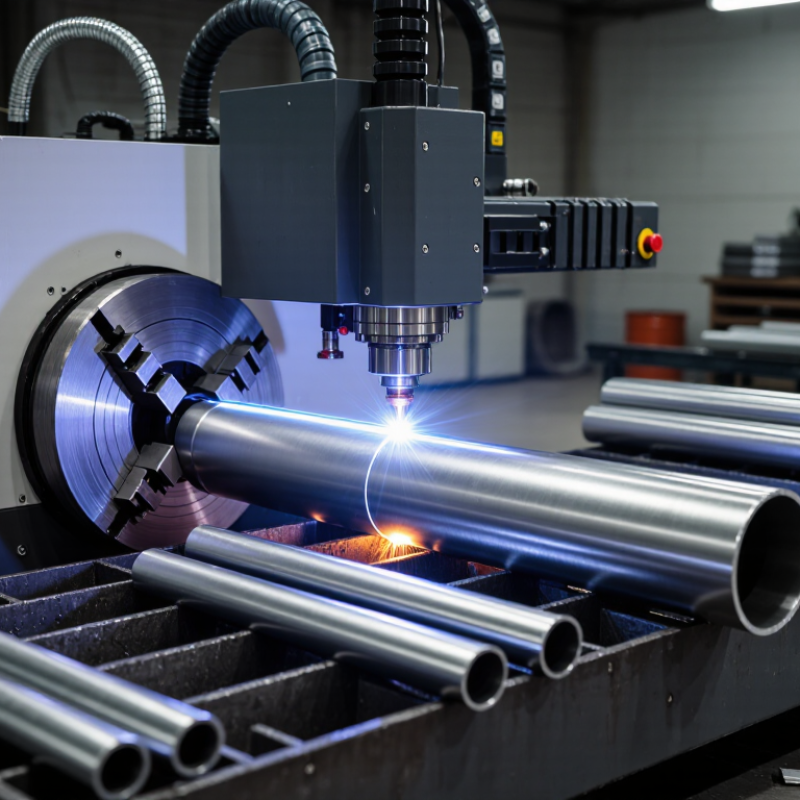
A Laser Tube Cutter shapes round, square, and rectangular metal profiles with a focused beam. It can cut openings, slots, and angled ends without changing tools for every feature. In a workshop, the process may begin with a steel tube resting in a loading rack. A chuck grips and rotates it as the cutting head follows the programmed path. The beam melts or vaporizes a narrow strip of material, while assist gas clears the cut. Small details matter: tube alignment, wall thickness, and focus can all affect edge quality.

The machine combines a laser source, motion controls, a rotary chuck, and software that interprets the part design. Laser technology expert Dr. Reinhart Poprawe is known for his work in laser processing. A verified, topic-specific quotation from him was not available for this introduction, so I will not invent one. A useful summary of the engineering principle is this: precision depends on coordinating energy, motion, and material response. That is a paraphrase, not a direct quotation.

The next sections explain how the machine handles a tube, turns a digital design into tool movement, and produces each cut. They also cover practical limits, including material choice, tube geometry, and setup quality. Not every cut comes out perfect. Burrs, heat marks, or slight dimensional variation can still appear, especially when settings or fixtures are poorly matched. Understanding the process helps buyers and operators ask better questions before production begins.
What Is a Laser Tube Cutter and How Does It Work?

What Is a Laser Tube Cutter?

A laser tube cutter is a computer-controlled machine that cuts hollow metal sections with a focused laser beam. It can process round, square, and rectangular tubes, along with some custom profiles. A chuck grips and rotates the tube while the cutting head follows programmed paths. The beam heats a small area until the material separates, and assist gas helps clear molten metal. The machine can create holes, slots, notches, and angled ends without changing tools for each feature. It is not magic. Material type, wall thickness, focus, and setup all affect the cut.

In practice, an operator loads the tube, checks its dimensions, and enters or imports a cutting layout. Sensors and software can help locate the workpiece, but a bent or dented tube may still cause errors. That detail is easy to underestimate. Tube cutting can reduce manual measuring and trimming, though parts still need inspection. It is especially useful when several features must line up accurately along one piece.

Tips: Check the tube’s actual size and wall thickness before cutting. Secure it firmly, and test unfamiliar settings on a short offcut. Inspect for burrs and heat discoloration before assembly.


What Are the Main Components of a Laser Tube Cutter?

A laser tube cutter combines a focused beam with a system that holds and rotates hollow metal sections. Its components work together to keep the beam aligned as the tube moves. That coordination matters.

The laser source generates the energy used to cut, while the cutting head focuses it through a lens and directs it toward the tube. A nozzle surrounds the beam and delivers assist gas to clear molten material from the cut. The head must stay at a suitable distance from the surface; even a small gap change can affect cut quality. Not just the laser.

A chuck or clamping unit grips the tube and rotates it, while a support bed limits sagging along longer pieces. The motion system moves the head or tube along programmed paths. A controller coordinates these movements and adjusts settings such as speed and power. Sensors may detect the tube’s position or help maintain focus. An extraction system removes smoke and fine particles from the cutting area.

Each machine arranges these parts a little differently. In practice, setup still matters: a poorly supported tube can wobble, leaving uneven edges. Small details count. Operators should check alignment, clamps, and consumables before cutting, since component wear can change results over time.

What Is a Laser Tube Cutter and How Does It Work?

Main Components in the Cutting Workflow

A CNC controller coordinates the tube chuck and motion system with the laser. The laser source generates the beam, which travels through beam-delivery optics to the cutting head. The focused beam and assist gas cut the tube. The numbers show functional workflow order, not component performance; several systems operate together during cutting.

How Does a Laser Tube Cutter Process Tubes Step by Step?

What Is a Laser Tube Cutter and How Does It Work?

How Does a Laser Tube Cutter Process Tubes Step by Step?

A laser tube cutter uses a focused beam to cut profiles into metal tubing. The operator loads a straight tube onto support rollers and secures it in a chuck. The cutting program usually comes from a CAD drawing. Before cutting, the operator checks the tube’s material, diameter, and wall thickness. These details affect focus, speed, and power settings. Small errors matter.

The machine aligns the tube and positions the cutting head. Depending on its design, the chuck rotates the tube, or a feed system moves it through the machine. The laser pierces the wall, then follows the programmed path to create slots, holes, or shaped ends. Assist gas clears molten material from the cut. Sensors may monitor positioning, but they cannot correct every setup problem. A test cut can expose issues that looked fine on screen.

Tips: Check that the tube is seated evenly before starting. Remove scale or oil near the cutting area when needed. Inspect the first cut for burrs and rough edges. If results differ across the tube, pause and recheck alignment and settings. A perfect drawing does not guarantee a perfect part.

Which Tube Materials and Shapes Can It Cut?

A laser tube cutter can process many common metals, but the result depends on the laser source, power, wall thickness, and setup. Mild steel and stainless steel are frequent choices. Aluminum, brass, and copper can also be cut on suitable systems, though reflective metals need careful process control. Not every tube behaves alike. A thin stainless tube may cut cleanly, while a thicker section of the same alloy can need slower settings and more heat management.

The shape matters too. Round, square, and rectangular tubing are widely used, and some machines can handle oval or other formed profiles. A chuck rotates the tube as the cutting head follows the programmed path. This allows holes, slots, and angled ends to be cut without moving the workpiece by hand. Fit matters. Tubes must be held securely and aligned; otherwise, features can land slightly off position.

Open profiles and unusual shapes may be possible, but compatibility depends on the machine’s chuck and support system. Small-diameter tubes can flex, while long sections may sag if they lack support. Cut quality also varies with alloy, surface finish, and assist-gas settings.

A sample cut is worth the time. It can reveal burrs, heat marks, or distortion before a full production run. A material list alone rarely tells the whole story.

Where Are Laser Tube Cutters Commonly Used?

A laser tube cutter uses a focused beam and programmed movement to cut round, square, or rectangular metal profiles. The machine can also make slots and holes before a tube is assembled. This helps shops produce repeatable parts with fewer manual cutting steps. The exact result depends on tube thickness, material, machine setup, and how securely the tube is held.

These cutters are common in furniture manufacturing, where steel or aluminum frames need clean joints and accurately placed openings. A chair leg, for example, may require an angled end and a mounting hole in the same section of tube. Automotive suppliers use cut profiles for seat structures, exhaust components, and other formed assemblies. Fitness equipment makers also use them for frames, handles, and support bars. Small details matter.

Construction and agricultural equipment manufacturers cut tubes for railings, structural supports, and machine frames. In each case, accurate cuts can reduce fitting and welding adjustments later. Less rework. Still, a laser cutter does not guarantee a perfect assembly. Thin walls can deform, and poorly chosen settings may leave rough edges or excess heat marks. Operators need to check sample parts and adjust the program when the material or design changes. Not every shop needs one. It is most useful when production involves many tube parts or repeated, precise features.

What Is a Laser Tube Cutter and How Does It Work? — Where Are Laser Tube Cutters Commonly Used?

Category Typical Material or Profile How It Works or Common Cutting Operations Common Parts and Applications Why Laser Tube Cutting Is Used
Basic process Metal tubes and structural profiles, including round, square, and rectangular sections A focused laser beam melts or vaporizes material along a programmed path. Assist gas helps clear molten material from the cut. The tube is positioned and rotated so the beam can cut around its surface. Cut-to-length sections, openings, slots, miters, and shaped ends It can produce precise features in multiple sides of a tube without requiring a separate tool for each profile.
Construction and structural fabrication Commonly carbon steel and stainless steel tubes; round, square, and rectangular profiles Cutting to length, angled ends, bolt holes, slots, and connection features Frames, supports, railings, trusses, and structural assemblies Accurate, repeatable cuts can help prepare profiles for fitting and welding.
Automotive and transport equipment Steel, stainless steel, and aluminum tubes or formed profiles Cutting holes, notches, contours, and end shapes in production components Seat structures, chassis-related parts, exhaust components, and vehicle frames Programmed cutting supports consistent part geometry and can reduce secondary machining for suitable designs.
Furniture and display products Steel, stainless steel, or aluminum round and rectangular tubing Cutting leg angles, joints, mounting holes, and decorative openings Chair and table frames, shelving, display stands, and store fixtures Complex joints and openings can be cut directly into the tube, supporting efficient assembly.
HVAC and fluid-handling equipment Metal tubes and profiles selected for the system and operating environment Cutting branch openings, ports, slots, and tube ends Duct supports, equipment frames, manifolds, and piping-related components Accurate openings can help components align during fabrication; application suitability depends on the material and design.
Agricultural and construction machinery Often carbon steel tubing and structural profiles Cutting reinforced joints, mounting holes, notches, and angled ends Machine frames, guards, booms, and equipment supports It is useful for producing repeatable features in robust tubular components.
Fitness and recreation equipment Steel or aluminum tubing, including round and oval profiles Cutting frame joints, adjustment holes, slots, and end contours Exercise equipment frames, bicycle components, and recreational structures Precisely cut joints can simplify fit-up and help maintain consistency across batches.
Material considerations Commonly cut metals include carbon steel, stainless steel, and aluminum; some systems can process other suitable metals Cut quality depends on material type, wall thickness, profile geometry, laser power, assist gas, and machine setup. Applications range from light-gauge components to heavier fabricated parts, within the machine’s rated capacity Material and thickness limits vary by machine, so cutting parameters should be selected for the specific job.

Powder Coat Booths

For those larger-sized parts, or smaller quantity runs, we have 2 independent powder coat booths and ovens. The quality, durability and affordability of today’s powder coating finishes make this the process of choice for world-class companies.

Powder coating advantages over other forms of coating are many. Materials used in the Powder coating process can be metals and non-metals that come in a multitude of thicknesses, textures, colors, etc. Another of Powder coating’s biggest advantages over conventional coatings is its ability to create finishes in many different textures. Powder Coating Booths allow us the ability to apply these advantages to large products.

Wet Paint Line

Tri-State Fabricators runs a full-service conveyor line for painting. Wet painting can provide protection or decoration to many different part styles. From start to finish, every project is easier to undergo random and point-based inspection by our skilled painting team.

Advantages to our Wet Paint Line are these lines start with product prep and ends with a thorough inspection of a high quality finished product. Our ability to complete large and small projects with a superior finish and doing so in a timely and economical fashion. This passes along the savings in production to our customers. When powder coating ins not an option, our Wet Paint Line gets the job done right the first time.

Wet Paint Booths

When the parts get big and heavy we roll-out our custom paint racks and oversize booth. By utilizing our partnerships with all the major paint brands, we can match virtually any color with wet paint.

The advantages of having access to a Wet Paint Booth are many. Large projects of many different shapes can be loaded into the booth. The Wet Paint Booth offers an environment that is much more controlled than a typical parts painting operation.

Not only are they used because of their controlled environment, but they’re are also advantageous when it comes to applying paint to parts that are needed in industries that require specialty coatings such as medical, aerospace, etc.

Military CARC

Our military forces have some very high standards when it comes to the finish of their vehicles and equipment. From the first pre-treatment step to final coat, it takes a great deal of knowledge and experience to protect the men and women of our armed forces. They deserve only the best, and Tri-State Fabricators provides it.

All of our processes are closely monitored by our staff and management teams. Both of which are highly trained in the processes of metal fabrication and finishing. Tri-State Fabricators’ goal is to always fully satisfy each and every customer, including the military. We will always put a 110% into what we do.

Glass-Bead Blasting

Abrasive media blasting is an excellent way to remove old paint, rust, and increase the paint/powder adhesion. Glass beads produce a much smoother and brighter finish than angular abrasives; leaving the part clean yet without any dimensional change. Chemically inert and environmentally friendly, we can recycle our beads approximately 30 times; making them a more preferred method of metal cleaning or surface finishing.

Advantages to Glass Bead Blasting are many. Glass bead blast media is used when a project is needing rough surfaces need to become smooth for applications of coatings such as paint. It is typically used to clean paint and rust from a product surface without deforming the surface it is being used on. Overall, compared to many other blasting media, Glass Bead Blasting is a very economical choice and those savings are always passed on to our customers.

Part Washing

Tri-State Fabricators utilize a zinc phosphate wash to clean and etch the material to ensure the best paint adhesion possible. The unique design of our 3-stage wash system does the work like a 5-stage. From Cleaning and rinsing to conversion coating and post-treatment, Our Part Washing process is a complete service and works throughout the fabrication service and the finishing service.

Along with the previously mentioned benefits, Curing is a vital chemical reaction that leaves the product finish hard and relatively safe from mild abrasion and aggressive corrosion. This process can be done in more than one way; ambient air-dry or in curing ovens at temps that exceed 240°.

Burn-Off Oven

From fixing paint mistakes (someone else’s of course) to simply cleaning our paint line hooks, our burn-off oven is put to good use. After a quick burn-off, a little clean up, and a fresh coat of paint, your parts will look better than new.

Why does our Burn-Off Oven work so well? Because super heating the air around parts turns the materials into ashes. From paint and powder coatings to rubber and machining oils, high temps do the job without degrading the integrity of the part.

Masking

Masking is a vital part of producing high quality products. We have die-cut masking patterns to protect machined surfaces as well as a wide range of plugs and caps to protect threaded holes and bolts. We provide permanent and temporary masking.

Masking allows the selected sections of a product to be protected from a fabrication or finishing service. This can be with both chemicals when etching and tapes, paints when only finishing just a section of the product. Masking is great in aiding the customization process of a project.

Screen Printing

Screen printing is a photographic process that transfers artwork onto a porous nylon screen which allows colored ink to flow through the screen and be deposited on an aluminum or plastic component. We can generally have just about any design created onto a screen for your parts.

Some of the advantages of Screen Printing are, brand recognition for your business displaying on your products, assembly instructions, product warnings/hazards, etc. Tri-State Fabricators produces Screen Printing of the highest quality so you know it’s durable.

Metal Finishing

Metal Finishing is the art of treating the exterior portion of product, often metal but can also be made of other materials, so that the surface is clean and free of any debris. Then the process of applying coats or either paint of powder coat takes place. This coating process improves the quality of the product in both appearance and resistance to wear and corrosion.

Tri-State Fabricators, Inc., understands that a project typically isn’t complete until a high-quality finish has been added to your product. This is why our painting and powder coating teams continuously inspect the products throughout the Metal Finishing process.
