


A shipping carton can look sturdy on a bench and still arrive crushed, shifted, or opened after a rough route. That gap between appearance and performance is why package testing matters. ISTA Series Test Equipment for Packages Test helps businesses reproduce common distribution stresses, including vibration, impact, compression, and repeated handling. The aim is practical: reveal weaknesses before products enter the supply chain.
With the right test configuration, teams can observe how a box, cushioning, and product interact under controlled conditions. A vibration test may expose movement inside a package. A drop test can show whether a corner or seam needs attention. Compression testing can help assess stacking performance. Results are most useful when teams record sample details, test settings, and visible damage, then compare findings across design changes. Small details matter.
ISTA-based testing can support more consistent evaluation, but equipment alone does not guarantee reliable conclusions. Operators need suitable procedures, calibrated instruments, and samples that represent real packaging. A test that is too severe or poorly matched to the shipping environment may lead to unnecessary redesign. That choice deserves review.
This guide explains why companies choose ISTA series test equipment, what capabilities to consider, and how testing can inform package improvements. It also recognizes a common limitation: laboratory conditions cannot reproduce every journey. Real transit data and careful retesting still have a role. The goal is not a perfect prediction, but better evidence and fewer avoidable surprises.
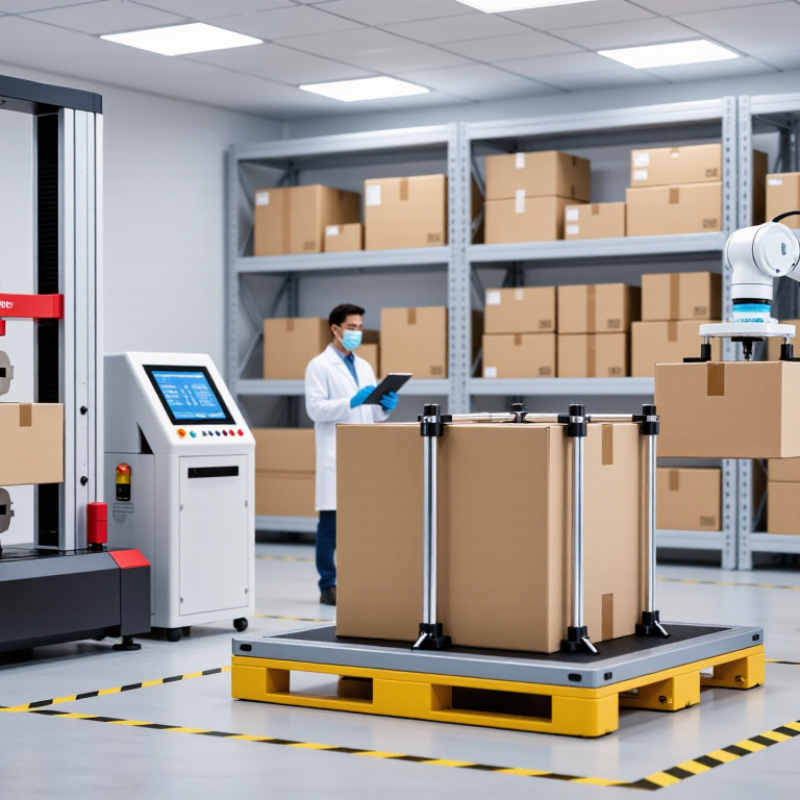
A package may pass through a conveyor, a delivery van, and several hands before reaching its destination. The journey is rough. Package testing recreates common distribution hazards, including drops, vibration, compression, and changes in temperature or humidity. These trials help reveal whether a carton, cushioning, and closure work together to protect the product.
UNCTAD’s 2021 report estimated global e-commerce sales at 26.7 trillion US dollars in 2019, across business-to-business and business-to-consumer transactions. That scale makes avoidable damage more than a warehouse problem: it can mean replacement shipments, customer complaints, and wasted materials. Small flaws matter. A loose corner or a few millimeters of excess movement can let a glass item strike the box wall during repeated handling.
The World Economic Forum’s 2020 report, The Future of the Last-Mile Ecosystem, projected a 78% rise in urban last-mile delivery demand by 2030. More deliveries mean more varied routes and handling conditions, so controlled package tests can help teams compare designs before shipping at scale. Test results are useful, not perfect. A laboratory drop cannot reproduce every curb, weather shift, or hurried handoff; real shipment feedback should still inform design changes.
Package testing helps assess whether a packaged product can withstand distribution hazards while protecting the product and keeping the package fit for its intended purpose. ISTA procedures specify test sequences and conditions; the applicable procedure depends on the shipment and package.
| Test dimension | Typical test equipment | Distribution risk represented | What the test can reveal | Relevant ISTA procedure context |
|---|---|---|---|---|
| Drop and impact | Package drop tester or controlled impact equipment | Accidental drops, handling impacts, and package-to-package contact | Damage to corners, edges, closures, cushioning, or the product after impact | Drop or shock testing appears in several ISTA procedures; the sequence and conditions vary by procedure and package type. |
| Vibration | Electrodynamic or mechanical vibration system | Repeated motion during vehicle transport and handling | Product movement, abrasion, loosening, fatigue, or loss of cushioning performance | Vibration is included in many simulation procedures, including ISTA 3A for applicable individual parcel shipments. |
| Compression and stacking | Compression tester or load frame | Stacked loads and pressure from packages or freight above | Carton deformation, loss of stack strength, closure failure, or product contact with the package wall | Compression testing is specified where required by the selected procedure; requirements are not identical across ISTA procedures. |
| Incline or horizontal impact | Incline impact tester or horizontal impact system | Sudden movement and collisions during freight handling | Package integrity and the ability of internal protection to limit product movement | Impact methods and applicability depend on the distribution environment and the selected test procedure. |
| Atmospheric conditioning | Temperature-and-humidity conditioning chamber | Exposure to specified temperature and humidity conditions before or during testing | Changes in packaging material performance, dimensions, or product condition under the stated conditioning environment | Conditioning requirements are procedure-specific and should follow the current applicable test protocol. |
| Unit-load handling | Pallet or unit-load test equipment, where required | Handling and transport of grouped packages secured as a unit load | Load stability, package movement, and the performance of the unitized load during the prescribed tests | ISTA 3E addresses unitized loads of similar packaged products moving through a full-truckload distribution environment. |
| Package and product inspection | Inspection tools, measurement devices, and documented visual checks | Damage or loss of function identified during and after the test sequence | Whether the package remains intact and whether the product meets predefined acceptance criteria | Acceptance criteria should be established for the product and package; a test result does not guarantee performance in every distribution route. |
Selection note: ISTA 1 Series procedures are non-simulation integrity tests, while ISTA 2 and 3 Series procedures include partial or general simulation elements. Confirm the current procedure, package scope, conditioning requirements, test sequence, and acceptance criteria before selecting equipment or evaluating results.

ISTA standards guide packaging tests by matching test methods to likely distribution conditions. A small parcel may face repeated drops and vibration, while a palletized load may need compression testing. The selected procedure depends on the package, product, and shipping environment—not just the box dimensions. This makes test selection important.
A test sequence may include conditioning, vibration, impact, or compression. Conditioning exposes materials to controlled temperature and humidity before other tests. Vibration can reveal loose components or shifting contents. Drop tests help assess corners, edges, and faces. Inspect the product and packaging after each stage, and record damage, movement, and test settings. Follow the applicable procedure carefully; changing the order or severity can affect results. No lab sequence reproduces every route. That limitation deserves attention.
Tips: Start with the actual shipping configuration, including cushioning and closure method. Photograph the package before and after testing. If results seem inconsistent, check setup and handling before changing the design.
ISTA series test equipment evaluates how a packaged product responds to distribution hazards.
Vibration tests simulate movement during transport through controlled frequencies and durations.
Drop tests reproduce handling impacts on corners, edges, and faces.
Compression tests apply measured loads to cartons, revealing crushing or stacking weaknesses.
Short, repeatable cycles matter. The exact sequence depends on the selected procedure and package type.
Some programs include incline impact, horizontal impact, or rotational drop tests.
Temperature and humidity conditioning can reveal weakened seals, warped materials, or changes in cushioning before mechanical testing begins.
Calibrated settings help make results comparable, but sample setup still matters. A poorly secured package can distort results. Easy to overlook.
Tips: Record package dimensions, product mass, closure method, and conditioning time before testing.
Photograph damage after each sequence, not just at the end. Keep a matched control package when practical.
Review damage alongside the test order; a cracked corner may suggest cushioning or pack-out issues, but it does not prove the cause. Small details count.
ISTA series test equipment helps teams evaluate how packaged goods respond to handling, vibration, drops, and compression. Controlled settings make results easier to compare across package designs and production batches. That matters. A carton that looks sturdy on a workbench may loosen after hours of vibration or split at a corner after a measured drop.
Repeatable test sequences can reveal weak seams, shifting inserts, and insufficient cushioning before shipments reach customers. Recorded settings and observations also make reports clearer, linking design changes to test results rather than guesswork. Small details count. A few millimeters of movement may let a glass container strike the box wall.
Still, laboratory testing is a model, not a perfect copy of every delivery route; loading, weather, and handling vary. Teams should select procedures that reflect the product and its distribution risks, inspect samples consistently, and review failures rather than treating a pass as proof of zero risk. Early testing can expose problems while packaging adjustments are still manageable.
Selecting ISTA series test equipment starts with the package and its journey. A small carton shipped by parcel may face repeated drops, vibration, and pressure from stacked loads. A palletized shipment has different risks. Start with the route. Review the intended test procedure, package dimensions, gross weight, product fragility, and distribution method before choosing equipment.
A vibration table must accommodate the load securely, while a compression tester needs enough capacity for the expected stacking force. Drop equipment should match the package’s size and test requirements.
Check that the equipment can perform the required sequence, not just one impressive test. Environmental conditioning may matter for moisture-sensitive materials, and fixtures must hold packages without changing how forces reach them. Small details matter. Verify measurement accuracy, calibration records, safety features, and service support. Ask for demonstrations using a representative package, including the heaviest or most awkward configuration. That practical check can reveal setup problems early.
It is tempting to buy for the toughest imaginable case, but oversized or mismatched equipment can waste space and budget. A clear test plan helps.
Still, packaging and routes change, so review equipment needs when materials, suppliers, or shipping conditions shift. One selection rarely stays perfect forever.


For those larger-sized parts, or smaller quantity runs, we have 2 independent powder coat booths and ovens. The quality, durability and affordability of today’s powder coating finishes make this the process of choice for world-class companies.
Powder coating advantages over other forms of coating are many. Materials used in the Powder coating process can be metals and non-metals that come in a multitude of thicknesses, textures, colors, etc. Another of Powder coating’s biggest advantages over conventional coatings is its ability to create finishes in many different textures. Powder Coating Booths allow us the ability to apply these advantages to large products.
Tri-State Fabricators runs a full-service conveyor line for painting. Wet painting can provide protection or decoration to many different part styles. From start to finish, every project is easier to undergo random and point-based inspection by our skilled painting team.
Advantages to our Wet Paint Line are these lines start with product prep and ends with a thorough inspection of a high quality finished product. Our ability to complete large and small projects with a superior finish and doing so in a timely and economical fashion. This passes along the savings in production to our customers. When powder coating ins not an option, our Wet Paint Line gets the job done right the first time.
When the parts get big and heavy we roll-out our custom paint racks and oversize booth. By utilizing our partnerships with all the major paint brands, we can match virtually any color with wet paint.
The advantages of having access to a Wet Paint Booth are many. Large projects of many different shapes can be loaded into the booth. The Wet Paint Booth offers an environment that is much more controlled than a typical parts painting operation.
Not only are they used because of their controlled environment, but they’re are also advantageous when it comes to applying paint to parts that are needed in industries that require specialty coatings such as medical, aerospace, etc.
Our military forces have some very high standards when it comes to the finish of their vehicles and equipment. From the first pre-treatment step to final coat, it takes a great deal of knowledge and experience to protect the men and women of our armed forces. They deserve only the best, and Tri-State Fabricators provides it.
All of our processes are closely monitored by our staff and management teams. Both of which are highly trained in the processes of metal fabrication and finishing. Tri-State Fabricators’ goal is to always fully satisfy each and every customer, including the military. We will always put a 110% into what we do.
Abrasive media blasting is an excellent way to remove old paint, rust, and increase the paint/powder adhesion. Glass beads produce a much smoother and brighter finish than angular abrasives; leaving the part clean yet without any dimensional change. Chemically inert and environmentally friendly, we can recycle our beads approximately 30 times; making them a more preferred method of metal cleaning or surface finishing.
Advantages to Glass Bead Blasting are many. Glass bead blast media is used when a project is needing rough surfaces need to become smooth for applications of coatings such as paint. It is typically used to clean paint and rust from a product surface without deforming the surface it is being used on. Overall, compared to many other blasting media, Glass Bead Blasting is a very economical choice and those savings are always passed on to our customers.
Tri-State Fabricators utilize a zinc phosphate wash to clean and etch the material to ensure the best paint adhesion possible. The unique design of our 3-stage wash system does the work like a 5-stage. From Cleaning and rinsing to conversion coating and post-treatment, Our Part Washing process is a complete service and works throughout the fabrication service and the finishing service.
Along with the previously mentioned benefits, Curing is a vital chemical reaction that leaves the product finish hard and relatively safe from mild abrasion and aggressive corrosion. This process can be done in more than one way; ambient air-dry or in curing ovens at temps that exceed 240°.
From fixing paint mistakes (someone else’s of course) to simply cleaning our paint line hooks, our burn-off oven is put to good use. After a quick burn-off, a little clean up, and a fresh coat of paint, your parts will look better than new.
Why does our Burn-Off Oven work so well? Because super heating the air around parts turns the materials into ashes. From paint and powder coatings to rubber and machining oils, high temps do the job without degrading the integrity of the part.
Masking is a vital part of producing high quality products. We have die-cut masking patterns to protect machined surfaces as well as a wide range of plugs and caps to protect threaded holes and bolts. We provide permanent and temporary masking.
Masking allows the selected sections of a product to be protected from a fabrication or finishing service. This can be with both chemicals when etching and tapes, paints when only finishing just a section of the product. Masking is great in aiding the customization process of a project.
Screen printing is a photographic process that transfers artwork onto a porous nylon screen which allows colored ink to flow through the screen and be deposited on an aluminum or plastic component. We can generally have just about any design created onto a screen for your parts.
Some of the advantages of Screen Printing are, brand recognition for your business displaying on your products, assembly instructions, product warnings/hazards, etc. Tri-State Fabricators produces Screen Printing of the highest quality so you know it’s durable.
Metal Finishing is the art of treating the exterior portion of product, often metal but can also be made of other materials, so that the surface is clean and free of any debris. Then the process of applying coats or either paint of powder coat takes place. This coating process improves the quality of the product in both appearance and resistance to wear and corrosion.
Tri-State Fabricators, Inc., understands that a project typically isn’t complete until a high-quality finish has been added to your product. This is why our painting and powder coating teams continuously inspect the products throughout the Metal Finishing process.

