What Is an Iron Inductor and What Is It Used For?
An Iron Inductor stores energy in a magnetic field and helps control changes in electrical current. Its iron-based core concentrates magnetic flux, while a coil of wire carries the current. Together, these parts make a compact component for filtering, energy conversion, and noise reduction. The idea is simple. The design choices are not.
You may find an Iron Inductor in a power supply, motor drive, or audio circuit. In a power supply, it can smooth current as switching circuits rapidly turn on and off. In a motor drive, it can help limit current changes that affect operation. Core size, wire thickness, switching frequency, and heat all matter. A small detail: an iron core can saturate when magnetic flux becomes too high. Then, inductance may drop, and current can rise more than expected. Not ideal. Dr. Charles R. Sullivan is a researcher in power magnetics. A practical design reminder, offered here as an editorial summary rather than a verified verbatim quotation, is: “Choose an inductor for its real current waveform, not its name alone.” That distinction matters because “iron inductor” covers designs with different core materials and performance limits. The term can be a little imprecise. A careful selection starts with the circuit’s current, frequency, and temperature—not just the component label.
What an Iron Inductor Is
What an Iron Inductor Is
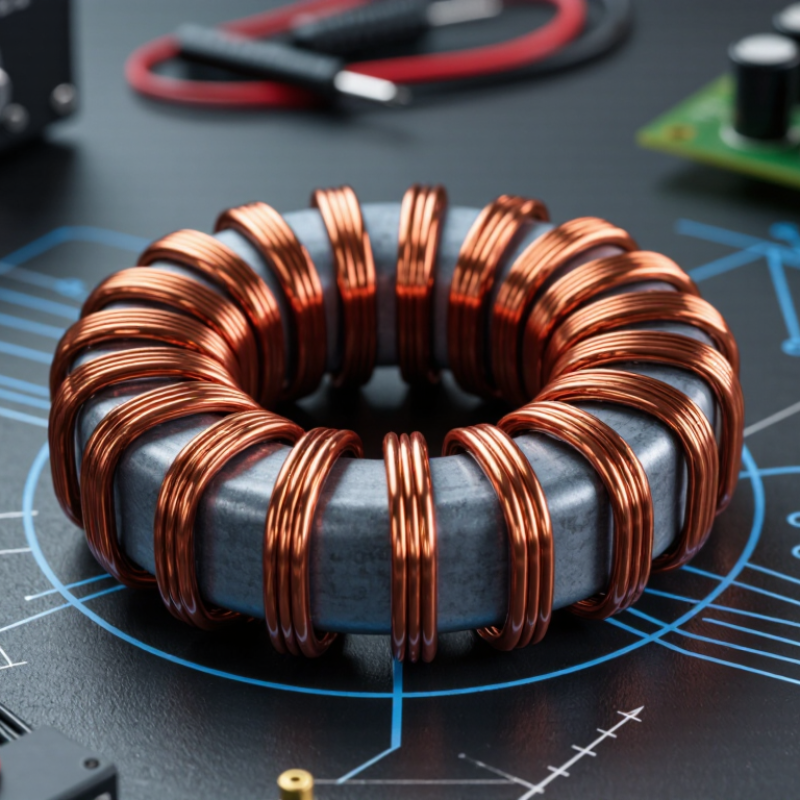
An iron inductor is a passive electrical component that stores energy in a magnetic field. It usually consists of insulated wire wound around an iron core. When current flows through the coil, the core concentrates the magnetic field and increases the coil’s inductance. In practical terms, the component resists rapid changes in current. The effect is measurable: a meter can check inductance, while a circuit test can reveal how the part behaves under load.
The iron core may be made from laminated sheets or powdered material, depending on the design. Laminations help reduce eddy-current losses, which otherwise produce unwanted heat. At a workbench, a small inductor may feel cool during light use, then grow warm if current or frequency pushes it beyond its intended range. Too much current can saturate the core. Then inductance falls, and current may rise sharply. That detail is easy to overlook.
Iron inductors appear in power supplies, filters, and other circuits that smooth current or limit electrical noise. Their size and performance depend on the core, number of wire turns, and operating conditions. Iron is not automatically the best choice for every circuit; it can introduce losses, especially at higher frequencies. Specifications help, but real conditions are imperfect. Measuring temperature and current in the finished circuit can expose problems that a parts list will not.
Core Components and Materials
An iron inductor contains a magnetic core, a copper winding, insulation, and connection terminals. The core guides magnetic flux; the winding stores energy in that field. Laminated electrical steel uses thin sheets to reduce circulating currents and heat. Powdered iron uses insulated particles and binder, helping distribute gaps through the core. That structure can suit designs facing changing current. Small details matter. A bobbin supports the winding, while varnish helps prevent wire movement and abrasion.
Material choice changes inductance, saturation behavior, and heat loss. The U.S. Department of Energy’s industrial motor-system assessment estimates that motor-driven systems use about 69% of U.S. manufacturing electricity, making magnetic losses a practical design concern. IEC 60404-2 describes testing electrical steel’s magnetic properties with an Epstein frame; common test conditions include 50 Hz and 1.5 tesla. Those figures help engineers compare steel grades, but they do not predict every inductor’s performance. A real core also depends on shape, air gap, winding, and operating frequency. I would not call one material universally best. Powdered iron can handle distributed gaps, yet may provide lower permeability than steel. That trade-off is easy to overlook.
How an Iron Core Stores Magnetic Energy
An iron inductor stores energy in the magnetic field created when electric current passes through its coil. The iron core gives that field an easier path, concentrating magnetic flux through the coil. Its high magnetic permeability lets the inductor produce a stronger field with less current than an air-core coil may need. The energy is not simply packed inside the iron. It resides in the magnetic field around and within the core. That distinction matters. A field-line drawing helps, but it can make the process look more tidy than it is.
When current rises, the field grows and energy is stored; when current falls, the field collapses and releases energy back into the circuit. In a power supply, this action can help smooth changes in current. Iron cores have limits, though. If the magnetic field becomes too strong, the core may saturate, and the inductor’s behavior changes. Some energy also becomes heat through core losses, especially as the magnetic field repeatedly changes direction. Laminated iron can reduce certain losses by interrupting circulating currents. Engineers weigh these trade-offs when choosing a core. The details are easy to overlook, and a simple “energy storage” explanation leaves some of the real behavior out.
Types and Key Electrical Characteristics
Iron inductors store energy in a magnetic field, with an iron-based core concentrating that field. Their core construction shapes how they behave. Laminated steel cores use thin insulated sheets to reduce eddy-current losses, making them useful in lower-frequency power circuits. Powdered-iron cores contain tiny insulated particles. The small gaps between particles help the core resist saturation.
There are trade-offs. Laminated cores can be bulky, while powdered-iron versions often suit switching circuits that need a stable inductance across changing currents. Ferrite cores, made from iron oxide and ceramic materials, are also common at higher frequencies. They are related, but their magnetic and loss characteristics differ from solid iron. The term “iron inductor” can be a little imprecise.
Check the inductance rating, usually given in microhenries or millihenries, and the saturation current. Above that current, inductance may drop sharply. Not ideal. DC resistance causes winding heat and voltage loss, while core loss rises with frequency and magnetic flux. A small coil may feel cool at light load, then warm near its rated current. Compare operating frequency, temperature rise, and ripple current—not just the printed inductance value. One detail is easy to miss: actual inductance can shift with current and temperature.
Common Uses of Iron Inductors
Iron inductors are commonly used in power supplies, where they help smooth current and reduce voltage ripple. In a bench supply, an iron-core choke can sit near the rectifier, helping steady the output before it reaches sensitive circuits. They also store energy in many switching converters. Core material and shape matter. Iron handles strong magnetic fields well, but it can saturate if current rises beyond its design range. That matters.
Another common use is filtering unwanted electrical noise in industrial equipment and household appliances. Iron-core chokes can help limit current changes in motor drives, lighting circuits, and low-frequency audio equipment. Laminated iron cores reduce some energy losses from changing magnetic fields, while powdered-iron cores suit different frequency and energy needs. The details are easy to overlook. An inductor that works well at a steady load may heat up or perform poorly when current pulses become larger. Designers therefore check operating frequency, current, temperature, and core losses together, rather than choosing a part by inductance alone. A little margin helps.
What Is an Iron Inductor and What Is It Used For?
An iron-core inductor stores energy in a magnetic field and is commonly used in power supplies, filters, and current-smoothing circuits.
Example: This idealized RL step response shows the current when a 10 V step is applied to a 100 mH inductor in a circuit with 10 Ω total resistance. The time constant is 10 ms and the final current is 1 A. Real iron cores may show different behavior due to core losses and saturation.





