Why Invest in Hydraulic Pumps for Your Business Needs?
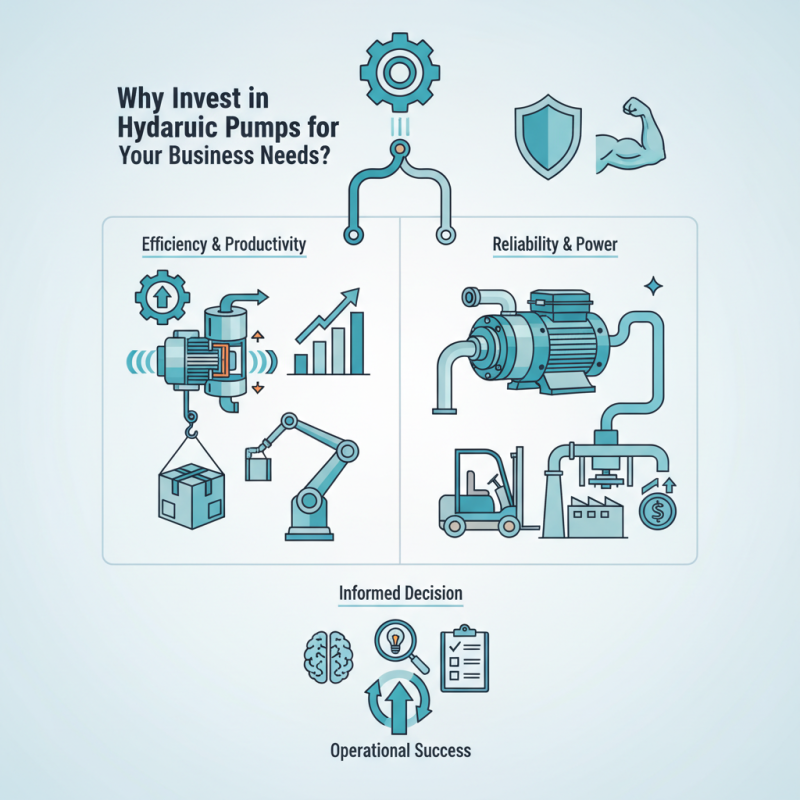
Hydraulic Pumps play a crucial role in various industries. Investing in these pumps can enhance efficiency and productivity within your business. businesses that rely on hydraulic systems can benefit significantly from high-quality hydraulic pumps. They offer reliability and power, making them indispensable for operations requiring heavy lifting and precise movements.
Hydraulic pumps convert mechanical energy into hydraulic energy. This conversion allows machines to perform complex tasks with ease. Selecting the right hydraulic pump can directly affect your business's operational success. Poor choices can lead to frequent breakdowns and costly repairs.
Choosing a high-performance hydraulic pump may appear challenging. However, understanding your specific needs helps in making an informed decision. The right pump not only saves costs but also improves productivity. Therefore, investing in hydraulic pumps could be one of the best decisions for your business.
Understanding Hydraulic Pumps: Basic Principles and Functionality
Hydraulic pumps are essential components in various industrial applications. They convert mechanical energy into hydraulic energy, powering equipment like forklifts and excavators. Understanding their basic principles is crucial for making informed investment decisions. These pumps rely on the movement of hydraulic fluid to exert force. This allows them to perform heavy lifting efficiently.
The functionality of hydraulic pumps can be complex. They operate using Pascal's law, which states that pressure applied to a confined fluid is transmitted undiminished. This principle enables precise control of operational movements. However, challenges exist. For instance, wear and tear on pumps can lead to inefficiencies. Regular maintenance is necessary, yet it can be overlooked, resulting in costly downtimes.
Investing in hydraulic pumps means understanding these dynamics. Choosing the right pump depends on your specific needs. Considerations like flow rate and pressure are critical. Assessing your operational requirements can guide you. Embracing the learning curve is part of the process. With time, businesses can optimize their use of hydraulic technology to enhance productivity and reliability.
Key Benefits of Investing in Hydraulic Pumps for Business Operations
Hydraulic pumps play a crucial role in various industries, offering key benefits for business operations. One significant advantage is their efficiency in power transmission. According to a report by the Hydraulic Institute, hydraulic systems can transmit power with a 90% efficiency rate. This competency minimizes energy consumption and reduces overall operational costs. However, the initial investment can be high. Businesses must consider whether the long-term savings justify the upfront expenses.
Reliability is another critical factor. Hydraulic systems typically require less maintenance compared to mechanical systems. Data from the National Fluid Power Association indicates that properly maintained hydraulic systems can last up to 20 years. Yet, improper use can lead to costly failures. It's vital for businesses to invest time in staff training and system maintenance to maximize lifespan and reliability.
Additionally, hydraulic pumps offer versatility. They can operate in challenging environments, making them ideal for construction, manufacturing, and agriculture sectors. However, businesses should assess their specific applications. Misalignment between system capabilities and business requirements may result in inefficiencies. Investing in the right solution is essential for optimizing productivity and enhancing overall operational workflow.
Benefits of Investing in Hydraulic Pumps for Business Operations
Factors to Consider When Choosing the Right Hydraulic Pump for Your Needs
When selecting a hydraulic pump for your business, several factors come into play. The pump's capacity should align with your operational demands. Assess your machinery to determine how much power is needed for efficient performance. Different tasks require different pump sizes and designs. Oversizing or undersizing can lead to inefficiencies.
Another important factor is the type of hydraulic fluid you plan to use. Compatibility with fluids is crucial for durability. Not all pumps handle all fluids well. This could lead to significant maintenance issues. Look into the conditions in which the pump will operate. High temperatures or variable pressures can affect performance. Many pumps are rated for specific environments.
Cost is also a vital consideration. While cheaper options may seem appealing, they could incur higher long-term expenses. Repair costs, energy consumption, and lifespan should all be considered. Investing more upfront might save you from future frustrations. Make sure to consult with experts in the field to gain insights. Each decision impacts your operational efficiency and productivity. A well-informed choice can set you on the path to success.
Why Invest in Hydraulic Pumps for Your Business Needs?
| Factor | Description | Example Application | Consideration |
| Pump Type | Determine the type of hydraulic pump that best suits your application (gear, vane, piston, etc.). | Excavators, forklifts, or industrial machinery. | Evaluate the specific needs and flexibility required. |
| Flow Rate | Assess the flow rate needed for ensuring optimal operation. | Hydraulic systems in assembly lines. | Match flow rate to system requirements to avoid underperformance. |
| Pressure Rating | Select a pump that can handle the required pressure levels. | Pressing operations in manufacturing. | Ensure the pump's pressure rating meets or exceeds system requirements. |
| Energy Efficiency | Choose pumps designed for energy savings to reduce operational costs. | Construction equipment and material handling. | Look for hydraulic pumps with high efficiency ratings. |
| Maintenance Requirements | Evaluate the ease of maintenance and serviceability of the pump. | Agricultural machinery or factory automation systems. | Consider long-term maintenance costs and necessary downtime. |
Cost Efficiency and Maintenance of Hydraulic Pumps in Industrial Settings
Hydraulic pumps are crucial in enhancing cost efficiency across various industrial sectors. According to the Hydraulic Institute, proper maintenance can extend the life of these pumps significantly. Regular checks can reduce unexpected breakdowns by up to 30%. This not only saves money on repairs but also minimizes downtime, which can be costly.
In terms of maintenance, some studies indicate that unplanned downtime can cost businesses over $250,000 per hour. By investing in hydraulic pumps, companies can implement scheduled maintenance practices. Such practices help detect issues before they escalate. Additionally, proper training for staff on these systems can optimize their performance.
However, the initial investment can be daunting for some businesses. Understanding total cost of ownership is vital. Analyze both short-term and long-term savings. Failing to do so may lead to poor decisions. Consider the balance between upfront costs and operational savings. Investing in hydraulic pumps requires careful thought and planning, but it can yield significant long-term benefits.
Future Trends in Hydraulic Pump Technology and Their Impact on Businesses
The future of hydraulic pump technology is promising, marked by innovations that can transform business operations. Smart pumps are emerging, equipped with sensors for real-time monitoring. These pumps enhance efficiency by adapting to system requirements. Integrating artificial intelligence helps predict maintenance needs, reducing downtime significantly. Businesses can save money and improve productivity through such advancements.
Another trend to note is the shift towards energy-efficient designs. Modern hydraulic pumps utilize less energy, helping companies lower their operating costs. These designs not only benefit the bottom line but also align with sustainability goals. However, adapting to these new technologies may require investment and careful planning.
Many businesses face challenges in implementing these trends. Staff may need training to operate advanced systems effectively. Additionally, not all companies can afford the initial investment for high-tech pumps. Balancing immediate needs with future capabilities can be tricky. Still, those who adapt will likely find themselves ahead in the competitive landscape.





