


What Is an Industrial Chain Conveyor and How Does It Work?

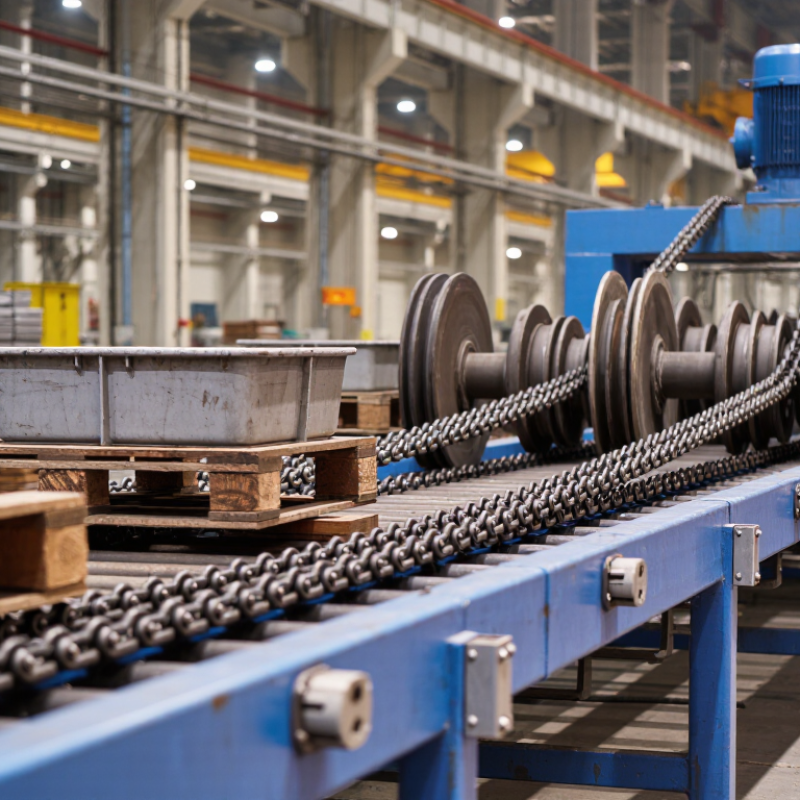
An Industrial Chain Conveyor is a powered handling system built to move heavy, repetitive loads through factories, warehouses, and processing lines. It uses linked chains, sprockets, a drive motor, and a supporting frame. Unlike a belt conveyor, it can carry pallets, bins, steel parts, and products with uneven or abrasive surfaces.

Industrial conveyor engineer H. A. Alspaugh once offered a practical principle: “Design the conveyor around the material, not the other way around.” That advice remains useful. A chain’s pitch, strength, speed, and surface must match the load. A pallet may travel smoothly across steel strands, while a small container could vibrate, tilt, or stop between links. Small details matter.

The motor turns the drive sprocket. The sprocket engages the chain and creates a controlled pulling motion. Flights, rollers, or attachments then support and guide the product. Return rails carry the chain beneath the working surface. Lubrication reduces friction, but excessive lubricant can attract dust and create maintenance problems.

The system looks simple.

It is not always simple.

Poor alignment can produce noise, wear, and uneven movement. An overloaded chain may stretch before failure becomes visible. Experienced technicians inspect sprocket teeth, chain tension, bearings, and transfer points during routine checks. They also listen for changes in sound. Field experience often reveals problems that a specification sheet misses.

This guide explains how an Industrial Chain Conveyor works, where it performs best, and which design decisions influence reliability, safety, and operating cost. It also considers limitations, because no conveyor suits every material or production environment.
What Is an Industrial Chain Conveyor and How Does It Work?

What Is an Industrial Chain Conveyor?

What Is an Industrial Chain Conveyor?

An industrial chain conveyor moves products with linked chains driven by powered sprockets. The chain travels along a steel frame, carrying pallets, containers, or heavy components. Some systems use one chain strand, while others use parallel strands for balanced support. Flights, slats, or attachments can hold products in position. A motor and gearbox provide controlled movement. As the sprockets rotate, they pull the chain forward. The return section then guides the chain back beneath the conveying surface.

Tips: Match the chain type to the load, speed, temperature, and working environment. Check sprocket alignment during installation. Even small misalignment can create noise, vibration, and uneven wear. Keep guards in place around moving parts, and follow qualified safety procedures during inspection.

The conveyor’s performance depends on more than motor power. Product weight, transfer spacing, incline angle, and surface friction all affect reliable operation. Regular checks should include chain tension, lubrication requirements, guide rails, and unusual sounds. A practical mistake is choosing a stronger chain without reviewing the frame or drive system. The conveyor may carry the load, but its structure may not. Dust, moisture, and repeated shock can also shorten service life. A design that looks efficient on paper may need adjustment after real production begins. That is why measured testing and careful maintenance remain essential.

What Is an Industrial Chain Conveyor and How Does It Work?

Data Dimension Typical Information How It Relates to Operation
Basic Definition A powered conveying system that uses one or more endless chains to move products, pallets, fixtures, or bulk materials. The chain forms a continuous loop and transfers mechanical force from the drive unit to the conveyed load.
Main Drive Components Electric motor, gearbox, drive shaft, sprocket, chain, return sprocket, and supporting frame. The motor rotates the gearbox and drive shaft; the sprocket engages the chain rollers or bushings to produce linear movement.
Common Conveyor Arrangements Single-strand, double-strand, multiple-strand, tabletop chain, drag chain, slat chain, and overhead chain configurations. The arrangement is selected according to product size, load distribution, orientation, and whether the conveyor runs horizontally, vertically, or on an incline.
Typical Conveyor Speed Approximately 0.05–1.5 m/s for many industrial applications; some specialized systems operate outside this range. Speed depends on product stability, chain type, payload, transfer requirements, noise limits, and the required production rate.
Load Capacity From a few kilograms per meter to several tonnes per meter, depending on chain size, number of strands, frame strength, and support spacing. The allowable load must include the product weight, pallets or fixtures, friction, acceleration forces, and any incline-related forces.
Chain Pitch Common industrial chain pitches include approximately 25.4 mm, 38.1 mm, 50.8 mm, 76.2 mm, and 101.6 mm. A larger pitch generally supports heavier loads and larger sprockets, while a smaller pitch can provide smoother movement and tighter transfer spacing.
Chain Materials Carbon steel, stainless steel, nickel-plated steel, and engineered polymer components are commonly used. Material selection depends on tensile strength, corrosion exposure, hygiene requirements, temperature, wear, and operating environment.
Conveyed Products Pallets, cartons, containers, drums, metal parts, automotive components, wooden products, and bulk materials. Flights, slats, attachments, carriers, or a pan can be added to improve product support and prevent slipping or shifting.
Typical Conveyor Width Approximately 150–2,000 mm for many packaged-product and pallet-handling systems. Width is determined by the product footprint, required clearance, number of chains, side guides, and loading method.
Operating Temperature Standard systems commonly operate around −10°C to 80°C; high-temperature designs can be engineered for substantially higher temperatures. Temperature affects lubricant performance, chain elongation, material strength, seals, and the suitability of polymer components.
Incline Capability Horizontal conveying is most common; inclines are often designed up to approximately 15°–30°, depending on the product and chain attachment. Inclined conveying requires sufficient traction, product containment, and additional power to overcome the component of gravity acting along the conveyor.
Tensioning Method Adjustable take-up units, tensioning screws, spring take-ups, or automatic tensioning devices. Correct tension prevents excessive sag, tooth skipping, vibration, accelerated wear, and unnecessary bearing loads.
Power Requirement Small conveyors may use motors below 1 kW, while heavy-duty systems may require several kilowatts or more. Motor sizing is based on load, conveyor length, speed, friction, acceleration, incline angle, and the efficiency of the drive system.
Advantages High load-handling capability, positive engagement, reliable indexing, durable construction, and suitability for harsh environments. The positive drive reduces belt slippage and allows controlled movement of heavy, hot, wet, abrasive, or irregular products.
Limitations Higher noise, greater weight, more lubrication requirements, and potentially higher maintenance than some belt conveyors. Poor alignment, inadequate lubrication, excessive tension, or contamination can increase wear and reduce chain and sprocket life.
Routine Maintenance Inspect chain elongation, sprocket teeth, guides, bearings, fasteners, guards, lubrication, and motor or gearbox condition. Regular inspection helps identify wear, misalignment, abnormal noise, overheating, and unsafe operating conditions before failure occurs.
Common Applications Assembly lines, pallet handling, packaging, material transfer, heat-treatment lines, automotive production, warehousing, and mining. The conveyor can be configured for accumulation, indexing, continuous transport, transfer between workstations, or controlled positioning.

Note: The values shown are representative industrial ranges. Actual specifications should be confirmed through load calculations, operating conditions, safety requirements, and conveyor design standards.


What Are the Main Components of a Chain Conveyor?

An industrial chain conveyor moves loads through a powered chain loop. Its performance depends on several parts working together. The conveyor chain carries the load and transfers pulling force along the line. It may use rollers, slats, or attachments for cartons, pallets, bins, or metal components. The correct chain type depends on load weight, speed, temperature, and surface conditions.

Sprockets engage the chain and guide its movement. One sprocket connects to a drive shaft, while another supports the return end. A motor and gearbox provide controlled torque, allowing steady movement under changing loads. The frame supports the entire assembly and must resist twisting. Guide rails keep the chain aligned, especially near transfers and curves. Bearings support rotating shafts and reduce friction. Small errors matter.

A tensioning device removes excessive slack and helps prevent skipped teeth. Wear strips or rollers reduce contact friction between the chain and frame. Guards cover moving sprockets and pinch points, while sensors can stop the conveyor during a jam. Operators should inspect lubrication, chain stretch, fasteners, and unusual noise. A dry chain may create heat and wear quickly. An over-tightened chain can damage bearings and increase energy use. The component list may look complete, yet real installations often reveal overlooked details, such as poor access for cleaning or an unsuitable transfer height. These practical issues deserve review before final installation.

How Does an Industrial Chain Conveyor Work?

An industrial chain conveyor moves materials by using a continuous chain loop. The chain passes around powered and idle sprockets. A geared motor turns the drive sprocket. Its teeth pull the chain forward.

Attached slats, rollers, flights, or carriers support the load during movement. Guide rails keep the chain aligned, while a frame carries the working load. The chain then travels back underneath the conveyor. This return path reduces floor space and keeps the system organized. Speed depends on motor output, sprocket size, and control settings. Heavy pallets may move slowly, while smaller containers can travel faster. A conveyor can look simple. Its alignment is not.

During maintenance inspections, loose chains and poor lubrication often cause noise, vibration, and uneven movement. Correct tension matters, but excessive tension can damage bearings and shafts. Operators should check sprockets, chain joints, guards, and emergency stops before regular production. Sensors can detect blocked loads and stop the drive. This prevents product damage and reduces injury risks. Still, sensors need testing. A neglected sensor can create false confidence.

Tips:

Keep the chain clean and lubricated according to the equipment instructions. Watch for stretched links, unusual heat, and repeated stoppages. Record inspection findings, because small changes often reveal larger mechanical problems.

What Types of Chain Conveyors Are Used in Industry?

Industrial chain conveyors move loads through linked chains, sprockets, and a powered drive.

Their design suits heavy, hot, oily, or irregular materials. Unlike belt systems, chains tolerate sharper loading and controlled positioning. Yet they need correct tension, lubrication, guarding, and alignment. A small alignment error can create noise, wear, and uneven tracking within weeks.

Roller chain conveyors use rollers mounted between chain strands. They handle cartons, totes, pallets, and fabricated parts. Accumulation is possible when zones are controlled separately.

Drag chain conveyors pull bulk materials through a trough. Flights push chips, scrap, grain, or other loose material. They are rugged, but abrasive material can shorten chain life quickly.

Slat chain conveyors carry products on linked metal or plastic slats. They work well around washing, filling, and packaging operations. Overhead chain conveyors suspend parts from carriers, saving floor space during painting or assembly.

Bucket chain conveyors lift measured loads vertically. Selection is not always obvious.

Engineers should check load weight, speed, temperature, incline, sanitation needs, and maintenance access before choosing a type. A cheaper conveyor may become expensive when cleaning and repairs are ignored.

What Are the Benefits and Limitations of Chain Conveyors?

What Is an Industrial Chain Conveyor and How Does It Work?

An industrial chain conveyor moves materials with linked metal chains driven by sprockets and a motor. The chains pull pallets, bins, or heavy components along a fixed route. Guides support the load and keep movement controlled. In factories, this design handles harsh conditions better than many belt systems.

The main benefit is strength. Chain conveyors can carry heavy loads, tolerate high temperatures, and manage oily or dirty environments. Their positive drive also reduces slipping during starts and stops. They suit assembly lines, storage areas, and transfer points. However, they are not perfect. Metal contact creates noise and requires regular lubrication. Poor alignment can cause vibration, uneven wear, or sudden downtime. Chains may also mark fragile products. Energy use can rise when the conveyor is overloaded or poorly maintained. It is easy to overstate their durability.

Tips: Match the chain type to the load, speed, temperature, and surface condition. Check sprockets, pins, guides, and tension during scheduled inspections. Keep guards in place around moving parts. A small misalignment can become an expensive repair. Do not ignore unusual rattling. It often appears before a failure. In practice, maintenance records are valuable, but operators should still trust careful observation. Testing an empty conveyor first may reveal problems that a loaded trial hides.

Powder Coat Booths

For those larger-sized parts, or smaller quantity runs, we have 2 independent powder coat booths and ovens. The quality, durability and affordability of today’s powder coating finishes make this the process of choice for world-class companies.

Powder coating advantages over other forms of coating are many. Materials used in the Powder coating process can be metals and non-metals that come in a multitude of thicknesses, textures, colors, etc. Another of Powder coating’s biggest advantages over conventional coatings is its ability to create finishes in many different textures. Powder Coating Booths allow us the ability to apply these advantages to large products.

Wet Paint Line

Tri-State Fabricators runs a full-service conveyor line for painting. Wet painting can provide protection or decoration to many different part styles. From start to finish, every project is easier to undergo random and point-based inspection by our skilled painting team.

Advantages to our Wet Paint Line are these lines start with product prep and ends with a thorough inspection of a high quality finished product. Our ability to complete large and small projects with a superior finish and doing so in a timely and economical fashion. This passes along the savings in production to our customers. When powder coating ins not an option, our Wet Paint Line gets the job done right the first time.

Wet Paint Booths

When the parts get big and heavy we roll-out our custom paint racks and oversize booth. By utilizing our partnerships with all the major paint brands, we can match virtually any color with wet paint.

The advantages of having access to a Wet Paint Booth are many. Large projects of many different shapes can be loaded into the booth. The Wet Paint Booth offers an environment that is much more controlled than a typical parts painting operation.

Not only are they used because of their controlled environment, but they’re are also advantageous when it comes to applying paint to parts that are needed in industries that require specialty coatings such as medical, aerospace, etc.

Military CARC

Our military forces have some very high standards when it comes to the finish of their vehicles and equipment. From the first pre-treatment step to final coat, it takes a great deal of knowledge and experience to protect the men and women of our armed forces. They deserve only the best, and Tri-State Fabricators provides it.

All of our processes are closely monitored by our staff and management teams. Both of which are highly trained in the processes of metal fabrication and finishing. Tri-State Fabricators’ goal is to always fully satisfy each and every customer, including the military. We will always put a 110% into what we do.

Glass-Bead Blasting

Abrasive media blasting is an excellent way to remove old paint, rust, and increase the paint/powder adhesion. Glass beads produce a much smoother and brighter finish than angular abrasives; leaving the part clean yet without any dimensional change. Chemically inert and environmentally friendly, we can recycle our beads approximately 30 times; making them a more preferred method of metal cleaning or surface finishing.

Advantages to Glass Bead Blasting are many. Glass bead blast media is used when a project is needing rough surfaces need to become smooth for applications of coatings such as paint. It is typically used to clean paint and rust from a product surface without deforming the surface it is being used on. Overall, compared to many other blasting media, Glass Bead Blasting is a very economical choice and those savings are always passed on to our customers.

Part Washing

Tri-State Fabricators utilize a zinc phosphate wash to clean and etch the material to ensure the best paint adhesion possible. The unique design of our 3-stage wash system does the work like a 5-stage. From Cleaning and rinsing to conversion coating and post-treatment, Our Part Washing process is a complete service and works throughout the fabrication service and the finishing service.

Along with the previously mentioned benefits, Curing is a vital chemical reaction that leaves the product finish hard and relatively safe from mild abrasion and aggressive corrosion. This process can be done in more than one way; ambient air-dry or in curing ovens at temps that exceed 240°.

Burn-Off Oven

From fixing paint mistakes (someone else’s of course) to simply cleaning our paint line hooks, our burn-off oven is put to good use. After a quick burn-off, a little clean up, and a fresh coat of paint, your parts will look better than new.

Why does our Burn-Off Oven work so well? Because super heating the air around parts turns the materials into ashes. From paint and powder coatings to rubber and machining oils, high temps do the job without degrading the integrity of the part.

Masking

Masking is a vital part of producing high quality products. We have die-cut masking patterns to protect machined surfaces as well as a wide range of plugs and caps to protect threaded holes and bolts. We provide permanent and temporary masking.

Masking allows the selected sections of a product to be protected from a fabrication or finishing service. This can be with both chemicals when etching and tapes, paints when only finishing just a section of the product. Masking is great in aiding the customization process of a project.

Screen Printing

Screen printing is a photographic process that transfers artwork onto a porous nylon screen which allows colored ink to flow through the screen and be deposited on an aluminum or plastic component. We can generally have just about any design created onto a screen for your parts.

Some of the advantages of Screen Printing are, brand recognition for your business displaying on your products, assembly instructions, product warnings/hazards, etc. Tri-State Fabricators produces Screen Printing of the highest quality so you know it’s durable.

Metal Finishing

Metal Finishing is the art of treating the exterior portion of product, often metal but can also be made of other materials, so that the surface is clean and free of any debris. Then the process of applying coats or either paint of powder coat takes place. This coating process improves the quality of the product in both appearance and resistance to wear and corrosion.

Tri-State Fabricators, Inc., understands that a project typically isn’t complete until a high-quality finish has been added to your product. This is why our painting and powder coating teams continuously inspect the products throughout the Metal Finishing process.
