


Chicken products can appear clean while hiding a sharp bone fragment beneath the surface. A small piece may remain near a joint, breast edge, or mechanically separated meat. This makes chicken bone x-ray inspection an important safety step for modern food processors. It helps manufacturers detect hazards that visual checks may miss.
An X-ray system passes controlled energy through packaged or unpackaged products. Dense materials, including bones, create visible differences in the image. Trained operators can review these signals and remove suspicious items before distribution. The technology also supports documented quality checks, traceability, and consistent production standards. In busy plants, it can inspect products without opening every package.
The process is not perfect. Product thickness, moisture, packaging layers, and bone density can affect detection performance. Calibration matters. So does operator training. A poorly maintained system may create false confidence, which is a serious concern. Manufacturers should combine X-ray inspection with supplier controls, sanitation procedures, metal detection, and careful visual assessment. Real production experience shows that one tool rarely solves every risk. Still, reliable chicken bone x-ray inspection can reduce preventable incidents and protect consumer trust. It gives quality teams clearer evidence when investigating complaints or adjusting equipment. The goal is not merely finding bones. It is building a safer, more transparent process.
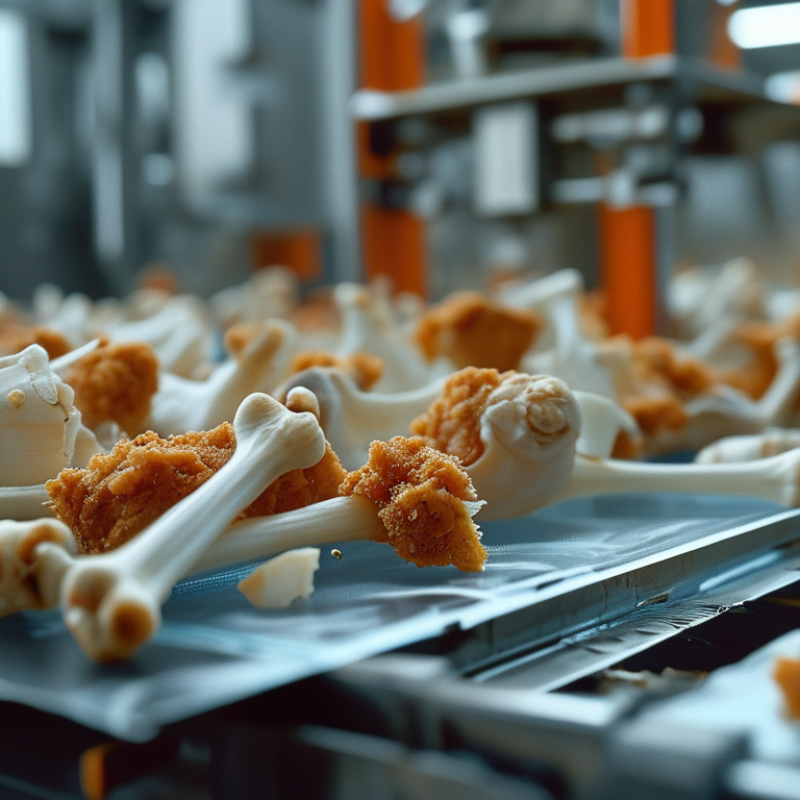
Chicken bone X-ray inspection is a non-destructive food safety process. It uses controlled X-ray energy to examine packaged chicken products. Dense materials, such as bone fragments, absorb more energy than meat. The inspection system detects this contrast in the resulting image. It can identify whole bones, sharp splinters, and other dense foreign materials. The product usually moves through the inspection area on a conveyor. If a suspicious image appears, the system can remove the affected package.
This process is more than taking a picture. Trained technicians adjust sensitivity for product thickness, packaging, moisture, and natural bone structures. They also check calibration with certified test pieces at scheduled intervals. A small bone fragment may look different in minced chicken than in a whole fillet. That difference matters. Poor positioning, overlapping products, or a dirty inspection window can reduce detection accuracy. Careful records help verify that inspections remain consistent during production.
X-ray inspection supports, but does not replace, good processing controls. Deboning, trimming, equipment maintenance, and staff training still influence the final result. No inspection method is flawless. That limitation deserves honest attention. False alarms may slow production, while missed fragments can create serious safety concerns. Regular testing, image review, and practical operator judgment help balance both risks. In a busy facility, even a brief calibration mistake can affect thousands of packages.

During poultry processing, bone fragments can hide inside meat, especially near joints and uneven cuts. X-ray inspection helps detect them without opening every product. The system sends low-energy X-rays through the food while it moves along a conveyor. Bone absorbs more radiation than muscle, creating a visible contrast on the detector.
The software studies each image for unusual dense shapes, edges, and shadows. A trained operator also checks flagged images because bones may overlap with packaging folds or thick meat. Tiny fragments remain difficult to detect. Results depend on product height, moisture, speed, and image quality. Calibration matters every shift. Poor settings can create false alarms or missed fragments, which deserves careful review. X-ray inspection is powerful, but it is not magic.
Tips: Use certified test pieces during routine checks. Keep the product presentation consistent. Clean the inspection window often, since dust can reduce image clarity. Review rejected items by hand and record recurring locations. Operators should question unexpected results instead of trusting software blindly. A fragment near a joint may appear clearly one moment and partially disappear under a thicker cut. That imperfect detail is worth investigating.
Why Is Chicken Bone X Ray Inspection Important?
Bone detection matters because a small fragment can injure a customer or trigger a costly product recall. Chicken bones may break into thin, pale pieces during cutting, deboning, or grinding. Some fragments are difficult to see during a fast visual check. X-ray inspection can identify many of these hidden pieces before products leave the facility.
In practical food production, inspection teams examine chilled portions, prepared meals, and sealed packs. A tray moving through the system may contain chicken, sauce, film, and a small bone fragment. The X-ray image helps distinguish the fragment from surrounding ingredients. It also supports documented quality checks and hazard-control procedures. Operators should verify the system with suitable test pieces and follow written inspection routines. Small details matter.
No system is perfect.
Detection performance can change with product thickness, packaging, moisture, and machine settings. It is tempting to trust one clear result too quickly. A reliable program combines X-ray inspection with careful deboning, equipment maintenance, staff training, and regular verification. When an alarm occurs, teams should isolate the affected product, investigate the cause, and record the response. These records provide evidence of control and reveal patterns that may otherwise remain unnoticed. An occasional false alarm can slow production, but ignoring repeated alarms creates a greater safety risk.
Why Is Chicken Bone X Ray Inspection Important?
Chicken bone X-ray inspection helps detect hard fragments before products reach consumers. It supports safer production and reduces costly recalls. In practice, accuracy depends on more than the machine itself. Bone size, shape, and position can change the image significantly. A thin rib fragment may appear clearly in one tray but fade beneath dense meat. Product thickness matters too. Uneven portions create different levels of X-ray absorption. Moisture, seasoning, and packaging materials can also affect image contrast.
Line speed is another important factor. Fast movement may reduce the number of useful images. Poor calibration can create missed detections or unnecessary rejections. Regular testing with suitable reference samples provides stronger evidence than visual checks alone. However, reference samples may not represent every real production condition. That limitation deserves attention. Operators should review rejected products, inspect image quality, and record changing patterns. Training also matters, because tired or inexperienced staff may overlook weak signals.
Tips: Keep product height consistent, clean inspection windows, and verify calibration during each shift. Test different bone sizes and positions. Review false rejects weekly. Adjust settings carefully, not aggressively. A highly sensitive setting can slow production and increase waste. In my experience, accuracy improves when technical controls and human judgment support each other. No system is perfect. Even a well-maintained process needs honest review after unusual batches, equipment changes, or packaging adjustments.
In modern chicken processing, X-ray inspection checks products after cutting, deboning, seasoning, or packing. The system creates an image from differences in material density. Chicken tissue appears differently from bone fragments, metal, glass, or dense plastic. This allows trained operators to identify hazards that visual checks may miss.
A typical line moves sealed trays through an X-ray unit on a conveyor. The equipment scans each package without opening it. Software compares the image with inspection settings for product size, density, and packaging. If a suspicious area appears, an automatic reject device removes the package. Staff then examine the rejected item and record the cause. This information can reveal problems with broken blades, damaged tools, or incomplete deboning.
Calibration matters.
Operators use test pieces at scheduled intervals. They also check belt speed, product spacing, and image quality during production. Wet meat, overlapping portions, and thick packaging can make detection more difficult. X-ray inspection does not replace careful deboning or sanitation controls. It adds another protective layer. Mistakes can still happen, especially when settings are copied from a different product. Regular verification and realistic test conditions are essential. A practical review should ask whether the system detects the smallest bone fragment that the process could reasonably create.


For those larger-sized parts, or smaller quantity runs, we have 2 independent powder coat booths and ovens. The quality, durability and affordability of today’s powder coating finishes make this the process of choice for world-class companies.
Powder coating advantages over other forms of coating are many. Materials used in the Powder coating process can be metals and non-metals that come in a multitude of thicknesses, textures, colors, etc. Another of Powder coating’s biggest advantages over conventional coatings is its ability to create finishes in many different textures. Powder Coating Booths allow us the ability to apply these advantages to large products.
Tri-State Fabricators runs a full-service conveyor line for painting. Wet painting can provide protection or decoration to many different part styles. From start to finish, every project is easier to undergo random and point-based inspection by our skilled painting team.
Advantages to our Wet Paint Line are these lines start with product prep and ends with a thorough inspection of a high quality finished product. Our ability to complete large and small projects with a superior finish and doing so in a timely and economical fashion. This passes along the savings in production to our customers. When powder coating ins not an option, our Wet Paint Line gets the job done right the first time.
When the parts get big and heavy we roll-out our custom paint racks and oversize booth. By utilizing our partnerships with all the major paint brands, we can match virtually any color with wet paint.
The advantages of having access to a Wet Paint Booth are many. Large projects of many different shapes can be loaded into the booth. The Wet Paint Booth offers an environment that is much more controlled than a typical parts painting operation.
Not only are they used because of their controlled environment, but they’re are also advantageous when it comes to applying paint to parts that are needed in industries that require specialty coatings such as medical, aerospace, etc.
Our military forces have some very high standards when it comes to the finish of their vehicles and equipment. From the first pre-treatment step to final coat, it takes a great deal of knowledge and experience to protect the men and women of our armed forces. They deserve only the best, and Tri-State Fabricators provides it.
All of our processes are closely monitored by our staff and management teams. Both of which are highly trained in the processes of metal fabrication and finishing. Tri-State Fabricators’ goal is to always fully satisfy each and every customer, including the military. We will always put a 110% into what we do.
Abrasive media blasting is an excellent way to remove old paint, rust, and increase the paint/powder adhesion. Glass beads produce a much smoother and brighter finish than angular abrasives; leaving the part clean yet without any dimensional change. Chemically inert and environmentally friendly, we can recycle our beads approximately 30 times; making them a more preferred method of metal cleaning or surface finishing.
Advantages to Glass Bead Blasting are many. Glass bead blast media is used when a project is needing rough surfaces need to become smooth for applications of coatings such as paint. It is typically used to clean paint and rust from a product surface without deforming the surface it is being used on. Overall, compared to many other blasting media, Glass Bead Blasting is a very economical choice and those savings are always passed on to our customers.
Tri-State Fabricators utilize a zinc phosphate wash to clean and etch the material to ensure the best paint adhesion possible. The unique design of our 3-stage wash system does the work like a 5-stage. From Cleaning and rinsing to conversion coating and post-treatment, Our Part Washing process is a complete service and works throughout the fabrication service and the finishing service.
Along with the previously mentioned benefits, Curing is a vital chemical reaction that leaves the product finish hard and relatively safe from mild abrasion and aggressive corrosion. This process can be done in more than one way; ambient air-dry or in curing ovens at temps that exceed 240°.
From fixing paint mistakes (someone else’s of course) to simply cleaning our paint line hooks, our burn-off oven is put to good use. After a quick burn-off, a little clean up, and a fresh coat of paint, your parts will look better than new.
Why does our Burn-Off Oven work so well? Because super heating the air around parts turns the materials into ashes. From paint and powder coatings to rubber and machining oils, high temps do the job without degrading the integrity of the part.
Masking is a vital part of producing high quality products. We have die-cut masking patterns to protect machined surfaces as well as a wide range of plugs and caps to protect threaded holes and bolts. We provide permanent and temporary masking.
Masking allows the selected sections of a product to be protected from a fabrication or finishing service. This can be with both chemicals when etching and tapes, paints when only finishing just a section of the product. Masking is great in aiding the customization process of a project.
Screen printing is a photographic process that transfers artwork onto a porous nylon screen which allows colored ink to flow through the screen and be deposited on an aluminum or plastic component. We can generally have just about any design created onto a screen for your parts.
Some of the advantages of Screen Printing are, brand recognition for your business displaying on your products, assembly instructions, product warnings/hazards, etc. Tri-State Fabricators produces Screen Printing of the highest quality so you know it’s durable.
Metal Finishing is the art of treating the exterior portion of product, often metal but can also be made of other materials, so that the surface is clean and free of any debris. Then the process of applying coats or either paint of powder coat takes place. This coating process improves the quality of the product in both appearance and resistance to wear and corrosion.
Tri-State Fabricators, Inc., understands that a project typically isn’t complete until a high-quality finish has been added to your product. This is why our painting and powder coating teams continuously inspect the products throughout the Metal Finishing process.

