How to Weld 304 Stainless Steel Properly in 2026?

Welding 304 Stainless Steel requires more than choosing the correct filler rod and turning on the machine. This widely used austenitic stainless grade resists corrosion, but its clean appearance can hide serious welding problems. Excessive heat may cause distortion, heavy heat tint, or reduced corrosion resistance near the joint. A reliable process begins with material identification, clean tools, and a controlled welding procedure.

In practical work, I have found that preparation often decides the result before the arc starts. Remove oil, paint, moisture, and carbon-steel particles from the joint. Use a stainless-only wire brush and dedicated grinding wheels. Fit the parts evenly, then use short tack welds to control movement. Argon shielding must remain stable around the weld pool and the hot backside. Even a small draft can create gray, porous weld metal. It happens quickly.

TIG welding offers precise control for thin 304 sheet, while MIG welding can improve productivity on thicker sections. Select 308L filler for many 304 applications, but confirm compatibility through the approved welding procedure. Keep the interpass temperature controlled, and avoid lingering in one area. A blue or dark oxide layer is not merely cosmetic; it may signal excessive heat or inadequate shielding. After welding, remove discoloration and inspect the bead for cracks, undercut, porosity, and incomplete fusion. Experienced welders still make mistakes, especially when production pressure increases. That is why procedure qualification, inspection records, and appropriate personal protective equipment remain essential. This guide explains practical methods for producing cleaner, stronger, and more consistent 304 stainless steel welds in 2026.
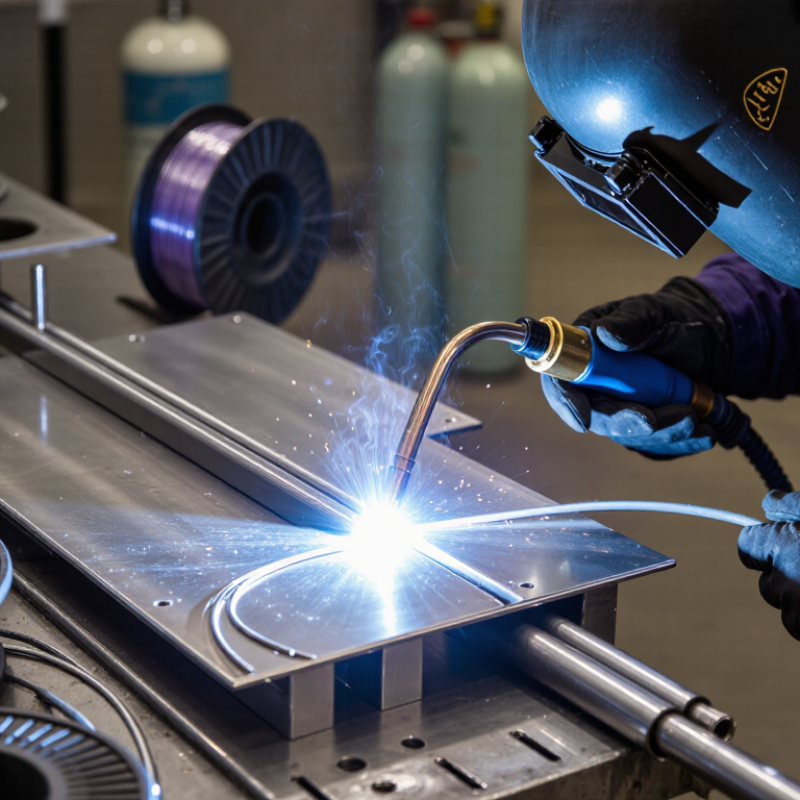
How to Weld 304 Stainless Steel Properly in 2026?

304 Stainless Steel: Properties That Affect Welding

304 stainless steel is an austenitic alloy with strong corrosion resistance and good ductility. Its chromium forms a thin, protective oxide layer. Keep it clean.

However, 304 transfers heat less efficiently than carbon steel. Heat stays near the arc, while the metal expands noticeably. This combination can cause distortion, wide weld pools, and uneven penetration. In practical shop work, tack welds and balanced passes help control movement. Excessive heat can also create chromium carbides between 425°C and 850°C. Corrosion resistance may then decline near the weld. Use controlled heat input and avoid lingering at the joint.

Surface contamination is another serious concern. Iron particles from ordinary steel tools can later produce rust stains. Dedicated stainless brushes, clean gloves, and degreased edges reduce this risk. For pipe or sheet joints, shielding the root with an inert gas prevents heavy oxidation. A dull, sugary root signals poor protection. Do not ignore it.

A low-carbon 304 grade is often more tolerant of prolonged heating. Still, it is not immune to distortion or contamination. Filler selection should match the base metal, service environment, and qualified welding procedure. Inspect fit-up before striking the arc. Small gaps change penetration quickly. Welders sometimes chase appearance and add unnecessary heat; that habit deserves honest review. A smooth bead is not automatically a sound bead. Check penetration, undercut, discoloration, and distortion after cooling.

Essential Tools, Materials, and Safety Preparations

Welding 304 stainless steel properly starts before the arc is struck. Choose a stable TIG power source with high-frequency start, adjustable amperage, and post-flow control. For thin sheet, a sharp 1.6 or 2.4 mm tungsten supports better arc control. Use ER308L filler metal for most 304 joints. Confirm the material grade before welding.

Keep a dedicated stainless brush, lint-free wipes, acetone, clamps, and a shaded welding helmet nearby. Never use carbon-steel tools on the joint. Iron particles can create rust spots later. Clean both sides of the seam, then allow the solvent to evaporate fully. For pipe or heavy sections, argon back-purging protects the inside from sugaring. A flowmeter and leak-tested hoses matter more than excessive gas flow.

Wear flame-resistant clothing, insulated gloves, safety boots, and suitable eye protection. Provide local ventilation, especially when cleaning agents or coatings are present. Remove combustible materials from the work area and keep an appropriate fire extinguisher accessible. Check the safety data sheets for every chemical used. Stainless steel reflects heat, and the weld may look harmless while remaining extremely hot. I still find that rushed fit-up causes more defects than poor machine settings. Tack evenly, control heat input, and pause if the color becomes dark or the joint starts pulling out of alignment.

How to Weld 304 Stainless Steel Properly in 2026?

Typical shielding-gas flow ranges for common 304 stainless-steel welding processes. Use the applicable qualified welding procedure and adjust the flow for joint design, torch or nozzle size, and workshop airflow.

Before welding, remove oil, paint, and moisture; use dedicated stainless-steel brushes and abrasives; verify the shielding-gas supply; provide local exhaust ventilation; and wear a welding helmet, gloves, flame-resistant clothing, and suitable eye and respiratory protection.

How to Prepare and Fit 304 Stainless Steel Parts

How to Weld 304 Stainless Steel Properly in 2026?

How to Prepare and Fit 304 Stainless Steel Parts

Good welding starts before the arc. Clean 304 stainless steel with a dedicated stainless brush and solvent. Remove oil, fingerprints, oxide, and carbon-steel dust. Even small contamination can cause porosity or surface rust. World Stainless reported about 58.4 million tonnes of stainless steel production in 2023, showing the material’s broad industrial importance. Its popularity does not make poor preparation acceptable.

Check every edge with a steel rule and feeler gauge. Keep the root gap consistent, usually around 1.5–2.0 mm for thin sheet, depending on the joint design. Published ASM material data places 304’s thermal expansion near 17.2 µm/m·°C. It moves noticeably during heating. Use copper backing, short tack welds, and alternating sides to control distortion. Do not force a badly aligned part into place. That shortcut often creates hidden stress. I still measure twice after tacking; experience proves that visual alignment can be misleading.

Tips: Keep parts dry. Use clean gloves. Grind only with stainless-dedicated abrasives. Place tacks evenly, then recheck the gap. Avoid excessive clamping force. A perfect-looking fit can still shift after the first pass. Record the final gap and cleaning method for traceability. That habit feels slow, but it prevents repeated repairs.

Step-by-Step Welding Procedure for 304 Stainless Steel

How to Weld 304 Stainless Steel Properly in 2026?

Start by confirming the material is 304 or 304L stainless steel. Check the mill certificate when available. Remove oil, scale, and fingerprints with a clean stainless-only brush and approved solvent. Do not use carbon-steel tools. They can embed iron and create rust spots. Fit the joint tightly, then use short tack welds to control distortion. The ASM Handbook reports thermal expansion near 17.2 µm/m·°C for austenitic stainless steel, so gaps can change quickly during heating.

For GTAW, use DCEN, high-purity argon, and a flow rate near 8–12 L/min. An ER308L filler is commonly selected for 304 joints. Keep the arc short and travel steadily. Excessive heat can cause warping and chromium-carbide sensitization between about 450°C and 850°C, as described in the Welding Handbook. Preheating is usually unnecessary. Keep interpass temperature controlled, preferably below 150°C unless the qualified procedure states otherwise. I clean each pass and inspect the root before continuing. That extra minute prevents buried defects. Still, this step is easy to rush.

Use a calibrated thermometer when the weld is critical. AWS guidance emphasizes qualified procedures, suitable filler selection, and visual inspection before service. The completed weld should show smooth ripples, full fusion, and no dark oxide beyond the heat-affected zone. Purge the backside with argon for open-root joints. Poor purging leaves heavy oxidation. That mistake deserves a second inspection. Final acceptance should follow the project code, approved welding procedure, and trained inspector’s judgment.


How to Inspect, Clean, and Improve the Finished Weld

How to Weld 304 Stainless Steel Properly in 2026?

A finished 304 stainless steel weld needs more than a bright appearance. Begin with visual inspection under strong, clean lighting. Check the bead for cracks, undercut, overlap, pinholes, and uneven width. Examine the start and stop points carefully. These areas often reveal incomplete fusion or excessive heat. A weld can look acceptable and still contain hidden defects.

Remove heat tint, oxide, oil, and loose contamination before judging the surface. Use a clean stainless-steel brush and a suitable solvent-free wiping method. Do not use tools previously used on carbon steel. Embedded iron particles may later create rust stains. For critical joints, liquid penetrant testing can reveal surface-breaking cracks that visual inspection misses. Follow the qualified welding procedure and have inspection performed by trained personnel.

Tips: Keep records of weld location, inspection results, and repair actions. If discoloration is heavy, review heat input, travel speed, shielding coverage, and back purging. Excessive tint often signals reduced corrosion resistance, but appearance alone is not proof of failure. I have seen clean-looking welds fail inspection because the root was poorly protected. That detail is easy to overlook. Rework should remove the defect completely, not simply cover it with another pass. Inspect again after grinding, cleaning, and any approved chemical treatment. Thin sections can distort quickly, so improvement may require less heat rather than more polishing.

Powder Coat Booths

For those larger-sized parts, or smaller quantity runs, we have 2 independent powder coat booths and ovens. The quality, durability and affordability of today’s powder coating finishes make this the process of choice for world-class companies.

Powder coating advantages over other forms of coating are many. Materials used in the Powder coating process can be metals and non-metals that come in a multitude of thicknesses, textures, colors, etc. Another of Powder coating’s biggest advantages over conventional coatings is its ability to create finishes in many different textures. Powder Coating Booths allow us the ability to apply these advantages to large products.

Wet Paint Line

Tri-State Fabricators runs a full-service conveyor line for painting. Wet painting can provide protection or decoration to many different part styles. From start to finish, every project is easier to undergo random and point-based inspection by our skilled painting team.

Advantages to our Wet Paint Line are these lines start with product prep and ends with a thorough inspection of a high quality finished product. Our ability to complete large and small projects with a superior finish and doing so in a timely and economical fashion. This passes along the savings in production to our customers. When powder coating ins not an option, our Wet Paint Line gets the job done right the first time.

Wet Paint Booths

When the parts get big and heavy we roll-out our custom paint racks and oversize booth. By utilizing our partnerships with all the major paint brands, we can match virtually any color with wet paint.

The advantages of having access to a Wet Paint Booth are many. Large projects of many different shapes can be loaded into the booth. The Wet Paint Booth offers an environment that is much more controlled than a typical parts painting operation.

Not only are they used because of their controlled environment, but they’re are also advantageous when it comes to applying paint to parts that are needed in industries that require specialty coatings such as medical, aerospace, etc.

Military CARC

Our military forces have some very high standards when it comes to the finish of their vehicles and equipment. From the first pre-treatment step to final coat, it takes a great deal of knowledge and experience to protect the men and women of our armed forces. They deserve only the best, and Tri-State Fabricators provides it.

All of our processes are closely monitored by our staff and management teams. Both of which are highly trained in the processes of metal fabrication and finishing. Tri-State Fabricators’ goal is to always fully satisfy each and every customer, including the military. We will always put a 110% into what we do.

Glass-Bead Blasting

Abrasive media blasting is an excellent way to remove old paint, rust, and increase the paint/powder adhesion. Glass beads produce a much smoother and brighter finish than angular abrasives; leaving the part clean yet without any dimensional change. Chemically inert and environmentally friendly, we can recycle our beads approximately 30 times; making them a more preferred method of metal cleaning or surface finishing.

Advantages to Glass Bead Blasting are many. Glass bead blast media is used when a project is needing rough surfaces need to become smooth for applications of coatings such as paint. It is typically used to clean paint and rust from a product surface without deforming the surface it is being used on. Overall, compared to many other blasting media, Glass Bead Blasting is a very economical choice and those savings are always passed on to our customers.

Part Washing

Tri-State Fabricators utilize a zinc phosphate wash to clean and etch the material to ensure the best paint adhesion possible. The unique design of our 3-stage wash system does the work like a 5-stage. From Cleaning and rinsing to conversion coating and post-treatment, Our Part Washing process is a complete service and works throughout the fabrication service and the finishing service.

Along with the previously mentioned benefits, Curing is a vital chemical reaction that leaves the product finish hard and relatively safe from mild abrasion and aggressive corrosion. This process can be done in more than one way; ambient air-dry or in curing ovens at temps that exceed 240°.

Burn-Off Oven

From fixing paint mistakes (someone else’s of course) to simply cleaning our paint line hooks, our burn-off oven is put to good use. After a quick burn-off, a little clean up, and a fresh coat of paint, your parts will look better than new.

Why does our Burn-Off Oven work so well? Because super heating the air around parts turns the materials into ashes. From paint and powder coatings to rubber and machining oils, high temps do the job without degrading the integrity of the part.

Masking

Masking is a vital part of producing high quality products. We have die-cut masking patterns to protect machined surfaces as well as a wide range of plugs and caps to protect threaded holes and bolts. We provide permanent and temporary masking.

Masking allows the selected sections of a product to be protected from a fabrication or finishing service. This can be with both chemicals when etching and tapes, paints when only finishing just a section of the product. Masking is great in aiding the customization process of a project.

Screen Printing

Screen printing is a photographic process that transfers artwork onto a porous nylon screen which allows colored ink to flow through the screen and be deposited on an aluminum or plastic component. We can generally have just about any design created onto a screen for your parts.

Some of the advantages of Screen Printing are, brand recognition for your business displaying on your products, assembly instructions, product warnings/hazards, etc. Tri-State Fabricators produces Screen Printing of the highest quality so you know it’s durable.

Metal Finishing

Metal Finishing is the art of treating the exterior portion of product, often metal but can also be made of other materials, so that the surface is clean and free of any debris. Then the process of applying coats or either paint of powder coat takes place. This coating process improves the quality of the product in both appearance and resistance to wear and corrosion.

Tri-State Fabricators, Inc., understands that a project typically isn’t complete until a high-quality finish has been added to your product. This is why our painting and powder coating teams continuously inspect the products throughout the Metal Finishing process.



