How to Find Top China Sandstone Stone Suppliers?
Finding reliable China Sandstone Stone suppliers requires more than browsing attractive online catalogs. The right supplier must prove material quality, production capability, and consistent communication. Product photographs can look impressive. They can also hide color variation, filled cracks, or uneven finishing. A serious buyer should request quarry details, recent project samples, technical specifications, and clear inspection records.
Start by comparing suppliers with relevant sandstone experience. Review their factory location, cutting equipment, export history, and customer references. Ask whether they control the quarry or purchase blocks from outside sources. This difference may affect color stability, lead times, and replacement support. Request physical samples before approving a large order. Check the surface under natural light. Run basic tests for water absorption, compressive strength, and frost resistance when outdoor use is planned. Small details matter.
A reliable supplier should explain tolerances, packaging methods, loading procedures, and expected delivery risks. Independent inspections can provide additional confidence, especially for large commercial projects. However, no supplier is perfect. Even an experienced factory may face quarry changes or seasonal production delays. That uncertainty deserves an honest discussion, not a polished promise. Compare written quotations carefully, including thickness, finish, packing, shipping terms, and quality remedies. A lower price may reflect weaker grading or limited after-sales support. Good sourcing is not simply finding the cheapest stone. It is building a traceable, practical, and dependable supply chain. Take time to verify. Mistakes become expensive once the containers leave the port.
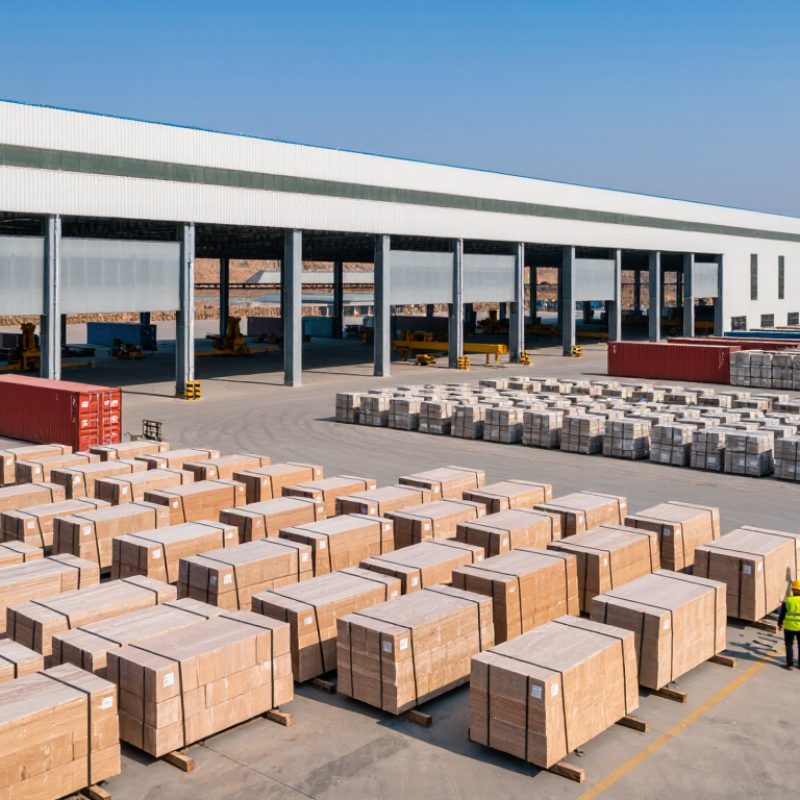
Define Sandstone Requirements: Grade, Finish, Size, and ASTM C616 Criteria
When searching for top China sandstone suppliers, define the stone before comparing quotations. Specify the grade, intended use, color range, and acceptable variation. A paving project needs different performance from an interior wall. Ask for quarry samples, not only polished showroom pieces. Natural stone changes across blocks. That matters.
Describe the finish precisely, such as sawn, honed, brushed, flamed, or split-face. Include surface texture, edge treatment, thickness, length, width, and dimensional tolerance. A vague request for “large slabs” invites inconsistent pricing and production. State the required size in millimeters. Also identify the installation method, expected traffic, freeze-thaw exposure, and drainage conditions. These details help a supplier recommend a suitable sandstone grade.
Use ASTM C616/C616M as a verification framework when the project requires quartz-based dimension stone. Request independent test results for water absorption, density, compressive strength, and flexural strength. Check whether the tested material matches the proposed quarry and finish. It sounds obvious, but paperwork can describe a different lot. Confirm the current ASTM edition and project-specific thresholds with the engineer. Ask for test dates, specimen directions, and conditioning methods. A finish may affect slip resistance and weathering, so test the finished surface when possible. One overlooked issue remains color consistency. Review several samples under daylight, because indoor lighting can hide iron staining and veining. Mistakes happen. A careful specification makes them easier to detect.
How to Find Top China Sandstone Stone Suppliers?
Define sandstone requirements by checking grade, finish, size, and ASTM C616/C616M performance criteria before comparing suppliers.
Grade Request consistent color, mineral composition, density, absorption, and strength data for each quarry lot.
Finish Specify honed, polished, flamed, bush-hammered, sawn, or natural cleft finishes and approve a physical sample.
Size Define slab or tile length, width, thickness, dimensional tolerances, edge profile, and packaging requirements.
ASTM C616/C616M Reference Common sandstone thresholds include maximum absorption of 8%, minimum density of 125 lb/ft³, minimum compressive strength of 8,000 psi, and minimum modulus of rupture of 800 psi.
Map China’s Quarry Regions and Compare Block Sizes and Output Data
How to Find Top China Sandstone Stone Suppliers?
China’s sandstone resources are distributed across several quarry regions. Shandong is known for consistent construction-grade sandstone and established processing networks. Fujian offers varied colors and textures, often suited to decorative applications. Sichuan and Inner Mongolia also provide sandstone, but transport distances can affect landed cost. Regional mapping should include quarry location, port access, road conditions, and seasonal delivery risks.
Do not compare suppliers by price alone. Request block-size records from the latest six to twelve months. Useful details include average length, width, height, usable volume, fractured-block percentage, and monthly output. A quarry may advertise large blocks, yet regularly produce smaller pieces. For a fair comparison, use the same measurement standard. For example, compare blocks above 2.0 cubic meters, not total quarry production.
Physical inspection remains essential. Examine fresh quarry faces, stockyards, lifting equipment, and drainage conditions. Ask for dated production sheets and shipment records. Independent testing can verify absorption, compressive strength, density, and frost resistance. These figures matter more than polished sample photos.
Be careful with capacity claims. Some output data reflects an entire quarry zone, not one supplier’s actual production. This is easy to miss. I would also record rejected blocks and delayed orders, not only successful shipments. A regional map is useful, but it cannot replace evidence from recent inspections and consistent data checks.
Check ASTM C616 Tests: ≤8% Absorption and ≥27.6 MPa Compression
How to Find Top China Sandstone Stone Suppliers?
When evaluating China sandstone suppliers, begin with documented ASTM C616/C616M compliance. The key screening figures are clear: water absorption should not exceed 8%, while compressive strength should reach at least 27.6 MPa. These limits matter on outdoor walls, paving, and steps. Lower absorption usually means fewer pores for rainwater and freeze-thaw damage. Higher compression offers better resistance under concentrated loads.
Ask for reports from an accredited, independent laboratory, not only a factory spreadsheet. ASTM C97 covers absorption testing, while ASTM C170 measures compressive strength for natural stone. Check the specimen dimensions, conditioning method, test date, and quarry lot number. The U.S. Geological Survey’s Mineral Commodity Summaries treats dimension stone as a distinct mineral-material category, but production statistics cannot prove one supplier’s quality. Test evidence must remain project-specific.
Request samples from the exact quarry and finish. A polished piece may hide open pores. A freshly cut edge often shows them better. Compare three specimens, not one. I would also inspect color variation, bedding planes, and visible clay seams. One report can be incomplete. Retesting is sensible when results sit near 8% absorption or 27.6 MPa compression. Suppliers with traceable batch records, consistent packaging, and clear corrective procedures deserve greater confidence, even when their quoted price is not the lowest.
Audit Supplier Credentials: ISO 9001, Export Records, and Factory Capacity
A credible China sandstone supplier should pass a document audit before offering samples. ISO’s Survey 2022 recorded more than 1.26 million ISO 9001 certificates worldwide. However, certification alone does not prove stable stone quality. Check the certificate number, issuing body, scope, and expiry date. The scope should cover quarrying, processing, or stone manufacturing. Ask for recent corrective-action records. Small details matter.
Export records reveal whether a supplier regularly serves overseas buyers. Use customs data, bills of lading, and commercial invoices where legally available. UN Comtrade data can help compare China’s trade activity under relevant worked-stone HS classifications. Request three recent shipments with buyer details masked. Compare product descriptions, quantities, destinations, and shipment dates. A polished export story may still hide weak capacity.
Factory capacity needs physical evidence. Review cutting machines, polishing lines, slab inventory, loading areas, and monthly production logs. A useful audit compares claimed output with machine hours, workers, and electricity consumption. For example, a supplier claiming 20,000 square meters monthly should explain its equipment schedule clearly. Visit during production, not only during a prepared tour. Stone shade variation is often underestimated. One imperfect inspection may expose more than a perfect presentation. Keep a written scorecard covering ISO credentials, export history, quarry access, quality controls, and delivery performance. Supplier data can change quickly; verify it again before signing.
Compare FOB Pricing, MOQ, Lead Times, and Total Landed Cost
How to Find Top China Sandstone Stone Suppliers?
Finding reliable China sandstone suppliers requires more than comparing a low quotation. Request an itemized FOB price for the exact stone, finish, thickness, and packing method. A polished 20-millimeter slab is not comparable to a split-face 30-millimeter tile. Confirm the loading port and the agreed Incoterms rule. FOB pricing usually excludes ocean freight, insurance, destination charges, import duties, and local delivery.
MOQ can change the project’s economics quickly. Ask whether the minimum applies per color, size, or container. A supplier may accept 100 square meters, but mixed finishes could require separate production runs. Lead times should include sample approval, production, inspection, packing, and port handling. I once treated a 25-day estimate as production time only. The shipment arrived nearly two weeks later. That mistake affected installation planning.
Calculate total landed cost in a spreadsheet, not from the FOB figure alone. Include freight, customs valuation, duty, broker fees, terminal handling, pallet disposal, inland transport, and possible breakage. Request recent packing photos and a replacement policy for damaged crates. Independent inspection can check color variation, dimensions, moisture, and surface defects before loading. Suppliers who provide quarry details, test reports, clear payment terms, and traceable production records are easier to evaluate. Still, documents are not proof of consistent quality. Keep a retained sample from the approved batch. Supplier performance can change.
How to Find Top China Sandstone Stone Suppliers? - Compare FOB Pricing, MOQ, Lead Times, and Total Landed Cost
| Supplier Profile | Production Region | Typical Sandstone Products | FOB Price Range
(USD/m²) | MOQ | Standard Thickness | Estimated Lead Time | Indicative Monthly Capacity | Estimated Freight & Charges
(USD/m²) | Estimated Total Landed Cost
(USD/m²) | Best Suited For | Commercial Rating |
| Supplier Profile A | Fujian, China | Cut-to-size sandstone tiles, honed slabs, stair treads | $18–$25 | 300 m² | 18–30 mm | 25–35 days | 8,000–12,000 m² | $8.50 | $26.50–$33.50 | Residential and hospitality projects requiring consistent sizing | ★★★★☆ |
| Supplier Profile B | Shandong, China | Natural cleft paving, wall panels, landscaping stone | $11–$17 | 500 m² | 20–40 mm | 20–30 days | 12,000–18,000 m² | $7.90 | $18.90–$24.90 | Outdoor paving, garden walls, and large-volume developments | ★★★★☆ |
| Supplier Profile C | Sichuan, China | Yellow sandstone slabs, waterjet-cut pieces, custom profiles | $22–$32 | 200 m² | 20–50 mm | 35–50 days | 5,000–8,000 m² | $10.80 | $32.80–$42.80 | Premium façades, feature walls, and custom architectural work | ★★★★★ |
| Supplier Profile D | Hebei, China | Split-face walling, rough sandstone blocks, garden edging | $9–$14 | 800 m² | 25–60 mm | 18–28 days | 15,000–22,000 m² | $7.40 | $16.40–$21.40 | Cost-sensitive landscaping and commercial external works | ★★★☆☆ |
| Supplier Profile E | Guangdong, China | Polished slabs, large-format tiles, CNC edge profiles | $24–$36 | 150 m² | 15–30 mm | 30–45 days | 6,000–10,000 m² | $8.90 | $32.90–$44.90 | Interior floors, countertops, retail, and bespoke applications | ★★★★☆ |
| Supplier Profile F | Inner Mongolia, China | Rustic sandstone slabs, paving flags, landscape boulders | $13–$20 | 400 m² | 20–50 mm | 30–42 days | 7,000–11,000 m² | $9.70 | $22.70–$29.70 | Large outdoor projects where natural color variation is acceptable | ★★★☆☆ |
| Supplier Profile G | Hubei, China | Flamed sandstone tiles, modular paving, pool coping | $16–$24 | 300 m² | 20–35 mm | 25–40 days | 9,000–14,000 m² | $8.30 | $24.30–$32.30 | Hotels, pool areas, public plazas, and slip-resistant surfaces | ★★★★☆ |
Cost assumptions: Indicative figures are benchmark ranges for standard commercial orders. Total landed cost is calculated as FOB price plus estimated ocean freight, export handling, documentation, insurance, and destination-port charges for a full-container shipment to a major European port. Import duty, VAT, inland delivery, installation, taxes, and project-specific packaging are excluded. Final pricing depends on stone grade, color selection, surface finish, dimensions, packing method, seasonality, and shipping route.





