


Choosing a Regenerative Thermal Oxidizer is a practical engineering decision, not a contest to find the highest advertised destruction efficiency. The right system must match the exhaust stream, operating schedule, and site constraints. A unit sized for the wrong flow can waste fuel, struggle with temperature swings, or require costly changes later.
Start with measured process data. Record normal and peak airflow, contaminant types, concentration ranges, moisture, and temperature. Note whether production runs continuously or in batches. These details shape chamber design, heat recovery, burner demand, and valve selection. Small differences matter. A coating line that surges during product changes may need a different operating strategy from a steady process.
This guide compares the factors that influence RTO selection: treatment performance, thermal efficiency, pressure drop, materials, controls, footprint, and maintenance access. It also explains what to ask suppliers and how to evaluate lifecycle costs alongside purchase price. Look closely at guarantees, assumptions, and service support.
One point needs care: no verified expert quotation or source material was provided for this request. Rather than invent a specialist’s name or words, this introduction avoids a false attribution. A trustworthy selection process deserves evidence, not a polished but unsupported quote. Before choosing a Regenerative Thermal Oxidizer, confirm that proposed performance claims reflect your actual operating conditions.
How to Choose a Regenerative Thermal Oxidizer
How a Regenerative Thermal Oxidizer Works
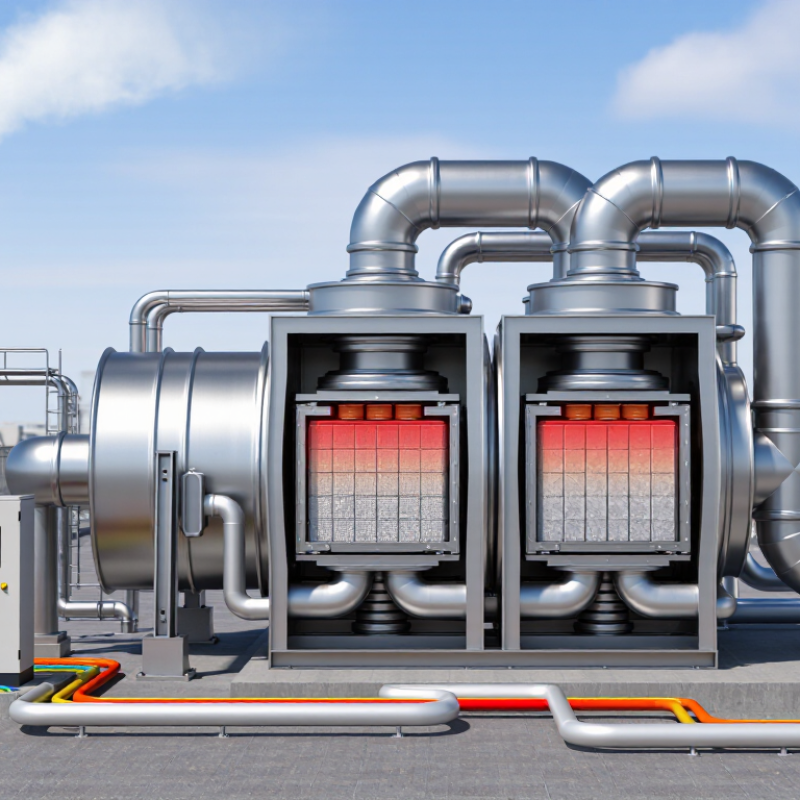
A regenerative thermal oxidizer destroys certain pollutants in industrial exhaust by exposing them to high temperatures. Inside the unit, a burner heats a combustion chamber. Exhaust passes through a ceramic bed, which absorbs heat from treated gas leaving the system. A switching valve then directs incoming exhaust through the warmed bed. This preheating reduces the fuel needed to reach operating temperature. The cleaned, hot gas transfers much of its remaining heat to another ceramic bed before exiting. Valves periodically reverse the flow, so the beds alternate between heating and storing heat.
Tips: Ask for performance data at your actual airflow, pollutant concentration, and operating schedule. Check how the unit handles startup, shutdown, and changing exhaust conditions. Inspect access points for ceramic media and valves; maintenance details matter. A design that looks efficient on paper may need adjustments in a real plant.
When choosing equipment, compare expected destruction efficiency, pressure drop, fuel use, and turndown range. Also consider whether the process produces sticky dust or compounds that could foul the beds. Request clear assumptions behind any energy estimates. Small changes in exhaust temperature can affect performance. And real operations are messy. Leave room for monitoring and tuning after installation, because actual plant conditions may not match the design case exactly.
An RTO destroys volatile organic compounds (VOCs) by heating contaminated air in a combustion chamber. Ceramic heat-transfer beds recover heat from treated exhaust and use it to preheat incoming process air. The figures below are general planning ranges; actual requirements depend on the gas composition, operating conditions, and applicable permit.
| Selection Dimension | What to Evaluate | Typical Planning Range or Consideration | Why It Matters |
|---|---|---|---|
| Exhaust airflow | Minimum, normal, and maximum flow; temperature; pressure; and expected variation during production. | Industrial systems commonly handle thousands to hundreds of thousands of standard cubic feet per minute (scfm); sizing must use the site’s measured design flow. | Undersizing can cause excessive pressure drop or inadequate treatment capacity; oversizing can increase capital and operating costs. |
| VOC concentration and composition | Identify each major compound, concentration range, variability, and any hazardous or corrosive constituents. | Concentrations are commonly expressed in parts per million by volume (ppmv) or milligrams per cubic metre (mg/m³). Compare the mixture with its lower explosive limit (LEL). | Composition affects destruction performance, supplemental fuel demand, materials selection, safety controls, and permit compliance. |
| Destruction performance | Required outlet limits, destruction and removal efficiency (DRE), test method, and permit conditions. | Many RTO designs are specified for approximately 95% or higher heat-recovery efficiency and high VOC DRE; required values are application- and permit-specific. | Performance guarantees should match the regulated compounds and the conditions under which compliance will be demonstrated. |
| Operating temperature and residence time | Determine the temperature and gas residence time needed for the target compounds and required destruction level. | Thermal oxidation often operates around 760–870°C (1,400–1,600°F), but the appropriate setpoint depends on the process gas and design. | Temperature and residence time affect destruction performance, fuel use, and thermal stress on equipment. |
| Heat recovery and fuel use | Review heat-recovery efficiency, startup fuel, steady-state support fuel, and expected operating hours. | Regenerative heat recovery can substantially reduce the energy needed to reheat incoming air. Actual fuel demand depends on VOC heating value, airflow, inlet temperature, and heat loss. | Energy performance is a major driver of lifecycle cost, particularly for systems that operate continuously. |
| Pressure drop and fan capacity | Check system pressure drop across ceramic media, ductwork, dampers, filters, and other process equipment. | Request pressure-drop data at minimum, normal, and maximum design airflow rather than relying on a single operating point. | Pressure drop determines fan power requirements and can affect the performance of upstream process ventilation. |
| Particulates, moisture, and contaminants | Assess dust loading, condensable compounds, water vapour, acids, and compounds that may foul or damage ceramic media. | There is no universal acceptable loading limit; pretreatment and media selection should be based on measured gas characteristics. | Fouling, corrosion, or plugging can increase pressure drop, reduce heat transfer, and require more frequent maintenance. |
| Safety and controls | Review LEL monitoring, purge sequences, flame safeguards, temperature interlocks, emergency shutdowns, and applicable codes. | Control and protection requirements depend on the process, fuel train, jurisdiction, and hazard assessment. | Appropriate safeguards help prevent unsafe mixtures and support reliable, compliant operation. |
| Turndown and production changes | Consider shifts, batch cycles, idle periods, changing airflow, and planned future production capacity. | Evaluate the full operating envelope, including startup, shutdown, low-flow, and peak-flow conditions. | A system suited only to normal production may operate inefficiently or require additional controls during off-design conditions. |
| Maintenance and lifecycle cost | Compare access to ceramic beds, valve and actuator maintenance, burner service, inspection needs, and spare-parts availability. | Include energy, maintenance, downtime, testing, and expected component replacement in lifecycle-cost estimates. | Purchase price alone does not show the long-term cost or operational reliability of an RTO. |

How to Choose a Regenerative Thermal Oxidizer
Assess Your Emissions and Operating Conditions
Start with a representative emissions profile, not a single grab sample. Record VOC species, concentration ranges, exhaust flow, temperature, moisture, and particulate loading across shifts and production changes. These details affect chamber sizing, heat recovery, and whether pretreatment is needed. The U.S. EPA’s Regenerative Incinerator fact sheet (EPA-452/F-03-021, 2003) reports typical destruction efficiencies of 95–99% and heat-recovery efficiencies of 85–95%. These are reported ranges, not guarantees. Actual performance depends on design, operating temperature, residence time, and mixing. Ask vendors to model your lowest and highest expected loads, including startup and shutdown conditions.
Tips: Take samples during both steady production and short, high-emission tasks. Check whether cleaning cycles add moisture or solvent spikes. Small details matter. Also assess pressure drop, available plot space, and the plant’s operating schedule; a unit sized only for average flow may struggle during peaks. I’d be cautious about treating historical averages as the whole story—production often changes before emissions records do. Have an environmental engineer verify the data and define measurable acceptance criteria, such as outlet concentration and destruction efficiency, before comparing proposals.
Start with measured exhaust flow, not the largest number on an old equipment schedule. Record normal and peak flow in actual cubic feet per minute, temperature, moisture, and VOC concentration. A paint-line exhaust may surge during cleanup, while a drying oven runs steadily. Size for credible operating peaks, but check whether oversized capacity could reduce stable operating performance.
The EPA’s Air Pollution Control Technology Fact Sheet for regenerative incinerators reports typical VOC destruction efficiencies above 95%, with thermal energy recovery commonly around 85–95%. These are reference ranges, not guarantees for every stream. Important detail.
Set a required destruction efficiency from the applicable permit target and verified inlet conditions. Ask vendors to state the guaranteed outlet concentration or destruction efficiency, test method, and operating conditions. EPA’s air pollution control cost guidance also treats flow rate, inlet loading, and required control level as key design inputs. Compare results at the same conditions. A high removal percentage can still leave substantial emissions if inlet loading is high.
I would not rely on a single lab sample; production cycles and intermittent vents can change the average. That uncertainty deserves attention. Include duct leakage and capture efficiency, since an oxidizer cannot destroy pollutants that never reach it. Get representative stack and process data before final sizing.
When comparing regenerative thermal oxidizers, start with the heat recovery design. A multi-chamber system stores heat in ceramic media, then switches airflow through the chambers to preheat incoming exhaust. This can deliver strong thermal efficiency, but switching valves and seals need careful attention. Small leaks matter.
A rotary design moves heat-transfer media continuously between hot and cold sections. It may provide steady flow and reduce valve switching, though the rotating assembly adds mechanical parts to inspect. Compare expected operating hours, maintenance access, and the cost of replacing media. Ask for performance data at your actual flow rate and contaminant concentration, not only ideal conditions. Numbers can look better on paper.
System features also shape day-to-day results. Review burner turndown, startup energy, pressure drop, controls, and how the unit handles changing exhaust conditions. A compact footprint may complicate media removal or routine inspection. Request a clear maintenance schedule and confirm which operating assumptions support the quoted efficiency.
No design wins in every plant. The right choice depends on stable operating data, available utilities, and the people who will maintain the equipment.
Choosing a regenerative thermal oxidizer means checking more than its quoted removal efficiency. The U.S. Environmental Protection Agency’s Air Pollution Control Cost Manual reports that regenerative systems can recover roughly 85–95% of exhaust heat; actual performance depends on design and operating conditions. The manual also describes typical thermal oxidation destruction efficiencies around 95–99%. Treat those figures as reference points, not guarantees. Ask vendors to model your actual gas flow, VOC concentration, moisture, and temperature swings. A cold morning startup can behave differently from a steady production run.
Installation constraints shape lifecycle costs. Measure duct routes, roof loading, crane access, and space for maintenance before equipment is specified. A unit that fits on paper may still require costly structural work or longer duct runs. Request an estimate that separates capital cost from fuel, electricity, media replacement, labor, and planned downtime. Compare scenarios using your facility’s operating hours and fuel prices; generic payback claims can mislead. EPA’s cost methodology likewise evaluates annualized costs, rather than purchase price alone. Verify compliance against the permit conditions that apply to your process, and require a test plan for proving performance after startup. One detail is easy to miss: production changes can alter exhaust flow enough to undermine an otherwise sound design. Revisit the assumptions.


For those larger-sized parts, or smaller quantity runs, we have 2 independent powder coat booths and ovens. The quality, durability and affordability of today’s powder coating finishes make this the process of choice for world-class companies.
Powder coating advantages over other forms of coating are many. Materials used in the Powder coating process can be metals and non-metals that come in a multitude of thicknesses, textures, colors, etc. Another of Powder coating’s biggest advantages over conventional coatings is its ability to create finishes in many different textures. Powder Coating Booths allow us the ability to apply these advantages to large products.
Tri-State Fabricators runs a full-service conveyor line for painting. Wet painting can provide protection or decoration to many different part styles. From start to finish, every project is easier to undergo random and point-based inspection by our skilled painting team.
Advantages to our Wet Paint Line are these lines start with product prep and ends with a thorough inspection of a high quality finished product. Our ability to complete large and small projects with a superior finish and doing so in a timely and economical fashion. This passes along the savings in production to our customers. When powder coating ins not an option, our Wet Paint Line gets the job done right the first time.
When the parts get big and heavy we roll-out our custom paint racks and oversize booth. By utilizing our partnerships with all the major paint brands, we can match virtually any color with wet paint.
The advantages of having access to a Wet Paint Booth are many. Large projects of many different shapes can be loaded into the booth. The Wet Paint Booth offers an environment that is much more controlled than a typical parts painting operation.
Not only are they used because of their controlled environment, but they’re are also advantageous when it comes to applying paint to parts that are needed in industries that require specialty coatings such as medical, aerospace, etc.
Our military forces have some very high standards when it comes to the finish of their vehicles and equipment. From the first pre-treatment step to final coat, it takes a great deal of knowledge and experience to protect the men and women of our armed forces. They deserve only the best, and Tri-State Fabricators provides it.
All of our processes are closely monitored by our staff and management teams. Both of which are highly trained in the processes of metal fabrication and finishing. Tri-State Fabricators’ goal is to always fully satisfy each and every customer, including the military. We will always put a 110% into what we do.
Abrasive media blasting is an excellent way to remove old paint, rust, and increase the paint/powder adhesion. Glass beads produce a much smoother and brighter finish than angular abrasives; leaving the part clean yet without any dimensional change. Chemically inert and environmentally friendly, we can recycle our beads approximately 30 times; making them a more preferred method of metal cleaning or surface finishing.
Advantages to Glass Bead Blasting are many. Glass bead blast media is used when a project is needing rough surfaces need to become smooth for applications of coatings such as paint. It is typically used to clean paint and rust from a product surface without deforming the surface it is being used on. Overall, compared to many other blasting media, Glass Bead Blasting is a very economical choice and those savings are always passed on to our customers.
Tri-State Fabricators utilize a zinc phosphate wash to clean and etch the material to ensure the best paint adhesion possible. The unique design of our 3-stage wash system does the work like a 5-stage. From Cleaning and rinsing to conversion coating and post-treatment, Our Part Washing process is a complete service and works throughout the fabrication service and the finishing service.
Along with the previously mentioned benefits, Curing is a vital chemical reaction that leaves the product finish hard and relatively safe from mild abrasion and aggressive corrosion. This process can be done in more than one way; ambient air-dry or in curing ovens at temps that exceed 240°.
From fixing paint mistakes (someone else’s of course) to simply cleaning our paint line hooks, our burn-off oven is put to good use. After a quick burn-off, a little clean up, and a fresh coat of paint, your parts will look better than new.
Why does our Burn-Off Oven work so well? Because super heating the air around parts turns the materials into ashes. From paint and powder coatings to rubber and machining oils, high temps do the job without degrading the integrity of the part.
Masking is a vital part of producing high quality products. We have die-cut masking patterns to protect machined surfaces as well as a wide range of plugs and caps to protect threaded holes and bolts. We provide permanent and temporary masking.
Masking allows the selected sections of a product to be protected from a fabrication or finishing service. This can be with both chemicals when etching and tapes, paints when only finishing just a section of the product. Masking is great in aiding the customization process of a project.
Screen printing is a photographic process that transfers artwork onto a porous nylon screen which allows colored ink to flow through the screen and be deposited on an aluminum or plastic component. We can generally have just about any design created onto a screen for your parts.
Some of the advantages of Screen Printing are, brand recognition for your business displaying on your products, assembly instructions, product warnings/hazards, etc. Tri-State Fabricators produces Screen Printing of the highest quality so you know it’s durable.
Metal Finishing is the art of treating the exterior portion of product, often metal but can also be made of other materials, so that the surface is clean and free of any debris. Then the process of applying coats or either paint of powder coat takes place. This coating process improves the quality of the product in both appearance and resistance to wear and corrosion.
Tri-State Fabricators, Inc., understands that a project typically isn’t complete until a high-quality finish has been added to your product. This is why our painting and powder coating teams continuously inspect the products throughout the Metal Finishing process.

