How to Choose an Oscillating Granulator?
Choosing an Oscillating Granulator is not simply a matter of comparing motor power or purchase price. The better decision begins with the material, target particle size, production volume, and cleaning requirements. A wet pharmaceutical mass may need different screen openings than a dry, fragile blend. That difference matters.
Professor Peter Kleinebudde, a recognized pharmaceutical granulation researcher, has stated, “Granulation is not an end in itself; it must improve the properties required for the next processing step.” This principle offers a practical starting point. An Oscillating Granulator should produce consistent granules without creating excessive heat, dust, fines, or material loss. Inspect the rotor design, screen area, contact materials, and speed adjustment. Stainless steel construction may support hygiene, but surface finish and access for cleaning deserve equal attention.
Think about the real production floor. Operators may change screens between batches. Wet material may cling around the housing. A compact machine may fit the room yet restrict maintenance access. These details are easy to overlook. They should not be.
Capacity claims also require careful interpretation. Rated output can change with formulation, moisture, screen size, and feeding method. Ask for trials using your actual material. Review particle-size distribution, yield, noise, and cleaning time. No machine is perfect. A supplier who admits limitations may be more trustworthy than one promising universal performance.
This guide explains how to compare an Oscillating Granulator through measurable criteria, practical experience, and long-term operating value. The final choice should support product quality, operator safety, reliable maintenance, and repeatable production—not merely an attractive specification sheet.
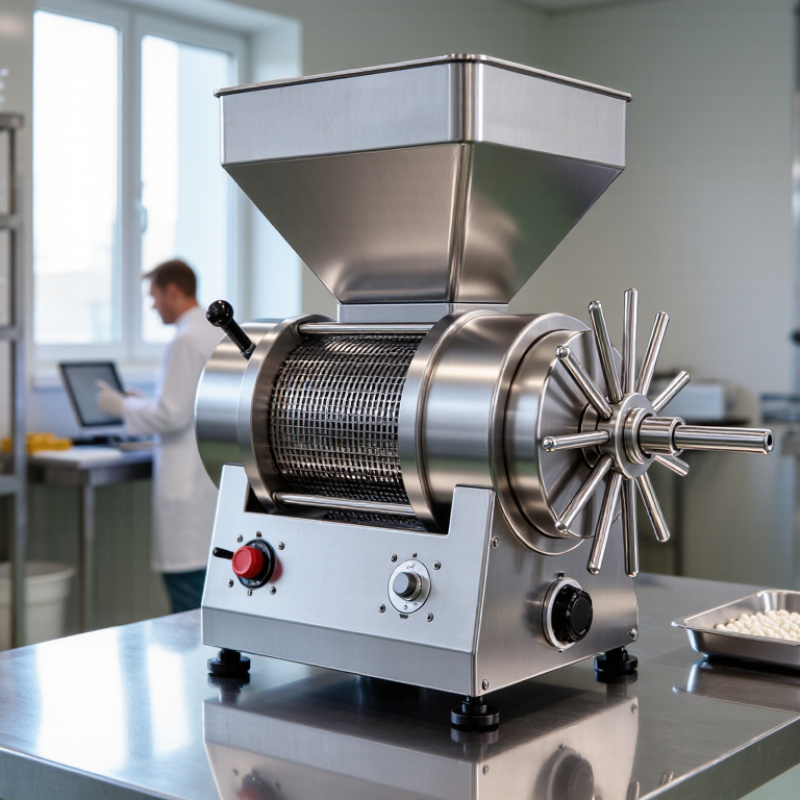
Define the Target: Granule Size, Bulk Density, Moisture, and Throughput
Choosing an oscillating granulator starts with a defined target, not a machine brochure. Record the desired granule size, bulk density, moisture, and throughput before trials. ASTM E11-24 recognizes sieve openings such as 500 µm, 1.00 mm, and 2.00 mm. Use these sizes when building a practical screen specification. Do not guess.
Bulk density affects feeding, capsule filling, and packaging volume. Measure both loose and tapped density under USP–NF General Chapter <616>. A material changing from 0.45 to 0.60 g/mL may alter feeder settings significantly. The target should include an acceptable range, not one attractive laboratory number.
Moisture needs equal attention. Measure loss on drying or another validated method, then connect it with screen loading and granule strength. ICH Q8(R2) recommends linking critical material attributes with process performance. For throughput, record kilograms per hour, screen condition, impeller speed, and batch temperature. FDA’s Process Validation guidance supports collecting process data across representative operating ranges, rather than proving performance at one setting. A sensible pilot window might test 50%, 75%, and 100% of the intended rate. The first setting is rarely right. Product temperature can rise unexpectedly, and a dense batch may reduce output without obvious visual warning. Keep the raw data, including failed runs. That is where the useful decisions often begin.
How to Choose an Oscillating Granulator? - Define the Target: Granule Size, Bulk Density, Moisture, and Throughput
| Process Target | Typical Granule Size | Typical Bulk Density | Typical Moisture Content | Indicative Throughput | Suggested Screen Opening | Selection Considerations |
| Fine granules for capsule filling | 0.30–0.80 mm | 0.45–0.65 g/mL | 1.5–3.0% w/w | 50–250 kg/h | 0.8–1.5 mm | Use a smaller screen opening and moderate rotor speed to limit fines and heat generation. |
| Standard tablet granules | 0.50–1.20 mm | 0.50–0.75 g/mL | 1.5–3.5% w/w | 100–500 kg/h | 1.0–2.0 mm | A balanced screen area and oscillation speed usually provide good flowability and compressibility. |
| High-flow granules for rapid tableting | 0.80–1.60 mm | 0.60–0.85 g/mL | 1.0–2.5% w/w | 250–800 kg/h | 1.5–3.0 mm | Prioritize adequate screen area, low recirculation, and a feed system capable of maintaining a uniform bed depth. |
| Wet mass sizing before drying | 1.00–3.00 mm | 0.45–0.70 g/mL | 15–30% w/w | 100–600 kg/h | 2.0–4.0 mm | Select corrosion-resistant contact parts and sufficient torque to prevent screen blinding or excessive compaction. |
| Moisture-sensitive formulation | 0.50–1.50 mm | 0.40–0.70 g/mL | Typically below 2.0% w/w | 50–400 kg/h | 1.0–2.5 mm | Use short residence time, controlled feed, low-friction contact surfaces, and temperature monitoring where required. |
| Large granules for improved drainage | 1.50–3.00 mm | 0.55–0.85 g/mL | 1.0–3.0% w/w | 200–900 kg/h | 2.5–4.0 mm | Confirm that the product can pass through the selected screen without excessive breakage or broad particle-size distribution. |
| Pilot-scale development batch | 0.50–2.00 mm | 0.40–0.80 g/mL | 1.0–30% w/w, depending on process stage | 5–100 kg/h | 1.0–3.0 mm | Choose adjustable speed, interchangeable screens, and easy cleaning so process parameters can be mapped efficiently. |
Note: The values above are typical engineering starting ranges for pharmaceutical, nutraceutical, food, and chemical granulation processes. Actual performance depends on formulation, binder system, feed rate, screen geometry, rotor speed, granule strength, and the required particle-size distribution. Final equipment selection should be confirmed through material trials and process validation.
Select Screen Aperture: Match 0.5–3 mm Openings to the Required PSD
How to Choose an Oscillating Granulator?
Select Screen Aperture: Match 0.5–3 mm Openings to the Required PSD
Screen aperture directly influences the particle size distribution (PSD) produced by an oscillating granulator. A 0.5 mm screen suits fine granules for applications requiring tight dosage control. Openings near 1–2 mm often support common tablet and capsule processing needs. A 3 mm screen creates coarser granules and may improve throughput. Do not treat these values as guaranteed particle sizes. Material elasticity, moisture, rotor speed, and screen wear also affect the result.
Begin with the target PSD, not the machine’s maximum capacity. If most particles must remain between 0.8 and 1.5 mm, test a suitable aperture near that range. Collect samples from the beginning, middle, and end of a batch. Then compare them through sieve analysis. This practical check reveals whether fines or oversized particles are increasing. It also exposes problems hidden by a single sample.
Material behavior matters. Damp powder can smear across a 1 mm screen, while brittle material may create excessive fines. I have seen a larger aperture reduce blockages but produce an unacceptable PSD. That trade-off deserves careful review. Keep operating conditions consistent during trials, including feed rate and oscillation speed. Record every adjustment. A small change can shift the distribution more than expected. Recheck the screen after cleaning, because damage or stretching can alter its effective opening.
Size Capacity: Compare Typical 20–1,500 kg/h Rates with Batch Demand
How to Choose an Oscillating Granulator?
Size Capacity: Compare Typical 20–1,500 kg/h Rates with Batch Demand
Capacity should match your real batch demand, not the largest number on a specification sheet. Industry equipment surveys commonly place oscillating granulator rates between 20 and 1,500 kg/h, depending on screen area, material properties, and moisture level. A 100 kg/h model may suit a small formulation line, while a 1,000 kg/h unit may support larger production. However, these figures are usually measured under ideal conditions. Actual output can fall when the wet mass becomes sticky or uneven.
Review your batch records from the previous six to twelve months. Calculate kilograms processed per hour, including loading, screen changes, cleaning, and short stoppages. ISPE’s Baseline Guide on solid dosage manufacturing stresses that equipment qualification should reflect commercial operating conditions, not only laboratory performance. That point is easy to overlook. A machine rated at 500 kg/h may deliver only 320 kg/h in daily production. Oversizing also deserves caution. Excessive speed can create heat, inconsistent granule size, or unnecessary dust.
Tips: Leave a practical capacity margin of 15–25%. Ask suppliers for test data using your material, screen size, and target moisture. Record both peak and average demand. A short trial often reveals more than a polished brochure. Also question the test method; “kilograms per hour” can hide preparation time and cleaning delays.
Set Operating Conditions: Evaluate 20–60 Oscillation Cycles per Minute
Choosing an oscillating granulator requires more than comparing machine size or output claims. The operating range matters greatly. A useful starting point is 20–60 oscillation cycles per minute. Lower speeds usually provide gentler cutting and better control over fragile, dry granules. Higher speeds can improve throughput when the material is cohesive and resistant to breakage.
Material behavior should guide the setting.
Check moisture, bulk density, particle strength, and the desired final size. At 20 cycles per minute, observe whether granules pass through the screen smoothly. At 40 cycles, inspect flow and particle uniformity. At 60 cycles, watch for excess fines, heat, or screen blockage. Use a clean sample tray and record the results after each adjustment. Small changes can reveal important differences.
20 cycles per minute
observe whether granules pass through the screen smoothly.
40 cycles
inspect flow and particle uniformity.
60 cycles
watch for excess fines, heat, or screen blockage.
Do not assume the fastest setting is the most efficient. It may increase output while reducing usable yield. A first trial can be misleading if the feed rate changes. Keep the feed rate, screen type, and batch size consistent during testing.
Listen for rattling, inspect the granules by hand, and measure the particle distribution when accuracy matters. There is no perfect setting. In practice, 30–45 cycles per minute often offers a workable balance, but that range is not universal.
Humidity, formulation changes, and screen wear can shift the result. Recheck the conditions whenever the material changes.
Verify GMP Compliance: 316L Steel, Ra ≤0.8 μm, and Cleaning Access
Choosing an oscillating granulator requires more than checking output capacity and motor power. GMP compliance begins with the product-contact surfaces. Specify 316L stainless steel, because it resists corrosion and supports routine pharmaceutical cleaning. However, material grade alone does not prove hygienic design. Request material certificates, weld documentation, and surface-finish records before approval.
A polished surface should meet Ra ≤0.8 μm, measured with calibrated equipment at representative points. Inspect welds, corners, screens, and discharge areas carefully. Rough spots can retain powder and complicate cleaning validation. Ask whether the measurement includes welded zones, not only flat panels. That detail is often missed.
Cleaning access deserves equal attention. Operators should reach the chamber, rotor, screen, and seals without awkward tools or hidden gaps. Quick access helps, but careless disassembly can still create contamination risks. Check for dead legs, threaded recesses, and areas where powder may collect. A small flashlight can reveal problems during a factory inspection.
Review cleaning procedures using the actual granulator configuration. Water, detergent, drying time, and inspection methods should match the equipment’s materials. Do not rely only on a supplier’s statement that cleaning is easy. Ask to observe access points and examine a dismantled unit. Some designs look excellent in drawings but feel less practical on the production floor. Allow room for this uncomfortable finding.





