How to Choose the Right Machinery Gasket
Choosing the right Machinery Gasket is a practical reliability decision, not just a matter of matching a catalog number. A seal that looks correct on a workbench may leak once pressure, heat, vibration, or chemical exposure enters the picture. Even a small mismatch can leave oil around a pump flange or cause air loss in a compressor line. Details matter.
Start with the equipment maker’s specifications, then confirm the operating conditions at the actual sealing point. Record the fluid, normal and peak temperatures, pressure, flange dimensions, surface condition, and available bolt load. A gasket material must suit the medium and the conditions together; temperature ratings alone do not tell the whole story. Check whether the joint is static or experiences movement, and inspect the old gasket for compression, cracking, or uneven contact. These clues can help identify a problem, but they are not a substitute for verified specifications.
Material choice is only one part of a dependable fit. Thickness, inside and outside diameter, flange alignment, and installation method can all affect sealing. A neat catalog match can still be wrong. That is worth remembering, especially when equipment has been modified or its service history is incomplete. When records conflict, pause and confirm dimensions and limits with the machine manufacturer or a qualified gasket supplier. Follow the specified tightening sequence and torque values, and never compensate for a poor fit by overtightening. The right choice protects equipment, reduces avoidable downtime, and gives maintenance teams a clearer basis for inspection. There is no universal answer; careful measurement and honest review of uncertain details make the decision more reliable.
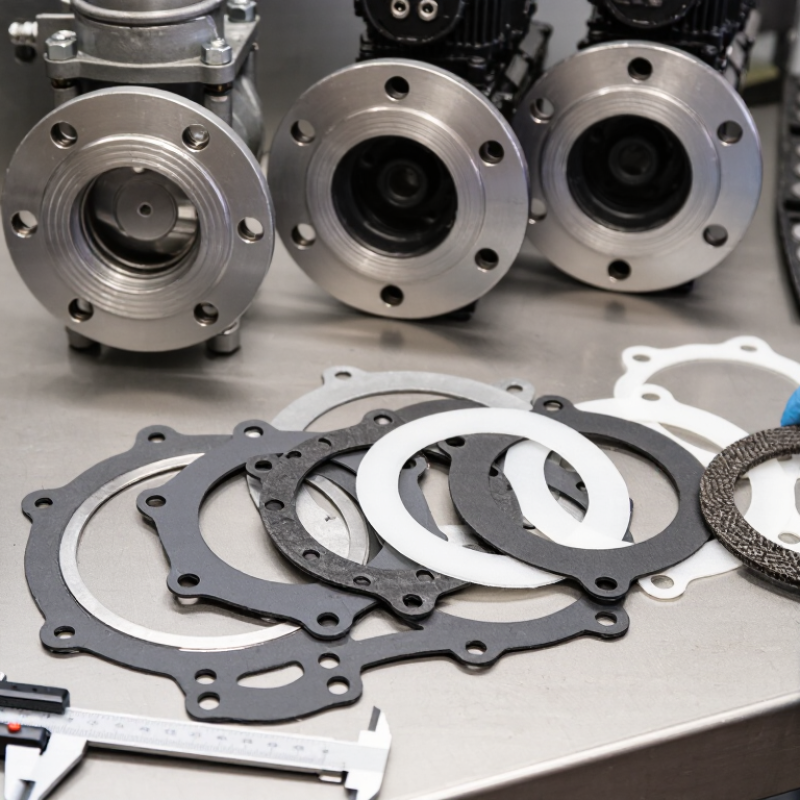
Identify the Machinery’s Operating Conditions and Sealing Requirements
How to Choose the Right Machinery Gasket
Identify the Machinery’s Operating Conditions and Sealing Requirements
Start with the real operating envelope, not just the machine’s nameplate rating. Record normal and peak temperature, pressure, fluid, speed, vibration, and start-stop frequency. A pump handling cold water has different sealing demands from a compressor facing hot, pulsating gas. Small details matter. Note whether the joint is exposed to chemicals, washdown, or repeated thermal cycling.
Use reliable reference data to test assumptions. IAPWS steam-property data place saturated steam near 10 bar absolute at 180°C, compared with roughly 1 bar at 100°C. That change can sharply increase the demands on a gasketed joint. Confirm the actual pressure and temperature at the flange; upstream readings may not describe conditions at the seal. ASME PCC-1 guidance also emphasizes controlled flange assembly, since uneven bolt loading can cause leakage even when the gasket material is suitable.
Then match the gasket to the fluid and joint: check chemical compatibility, temperature limits, pressure, flange surface, and required bolt load. ASTM F36 provides a recognized method for measuring gasket compressibility and recovery, useful when comparing material data sheets. Ask suppliers for test conditions behind published values. A number without test context can mislead. Leave room for uncertainty: worn flanges, installation variation, and unexpected pressure surges may affect performance, so inspect the joint and verify conditions before final selection.
Compare Gasket Materials for Heat, Pressure, and Chemical Exposure
How to Choose the Right Machinery Gasket
Compare Gasket Materials for Heat, Pressure, and Chemical Exposure
Heat narrows the options quickly. Expanded PTFE is commonly rated for service from about -200°C to 260°C, while flexible graphite can suit hotter duties, subject to oxidation and construction limits. These are screening ranges, not guarantees. Check the exact compound’s technical data against the equipment’s operating temperature and start-up peaks. A brief heat spike can matter.
Pressure depends on more than the gasket material. Flange condition, bolt load, gasket thickness, and assembly quality all affect sealing. ASME PCC-1-2019 provides guidance for bolted-flange assembly; ASTM F36 and F37 methods measure compressibility and sealability. For chemical exposure, confirm compatibility with the actual fluid, concentration, and temperature. A gasket that tolerates a chemical at room temperature may swell or weaken when heated.
Tips: Write down peak temperature, operating pressure, and every fluid that contacts the gasket. Compare those conditions with test data for the exact material grade, then verify the required bolt load. If the flange is scratched or uneven, material choice alone may not stop a leak. Check the surface, too.
How to Choose the Right Machinery Gasket
Compare typical upper continuous-use temperatures, then check chemical compatibility and the gasket’s pressure rating for your specific assembly.
Temperature guide: Values are approximate and vary by grade, construction, fluid, and operating conditions. Flexible graphite is shown at about 450°C for oxidizing service; its limit may be higher in non-oxidizing environments.
Pressure and Chemical Exposure
| Material | Typical chemical compatibility | Pressure considerations |
| NBR (nitrile) | Often used with oils and fuels; generally unsuitable for strong oxidizers. | Depends on sheet grade, flange condition, and bolt load. |
| EPDM | Often suitable for water, steam, and dilute acids or alkalis; generally unsuitable for oils and hydrocarbons. | Confirm the grade and assembly rating for the service. |
| Silicone | Useful for heat and weather exposure; compatibility with oils and solvents is limited. | Select by design and compression requirements, not temperature alone. |
| PTFE | Resistant to many chemicals; check compatibility with highly reactive substances and specific service conditions. | Account for creep and relaxation; modified or filled grades may perform differently. |
| Flexible graphite | Broad chemical resistance in many services; strong oxidizers and the service atmosphere require special attention. | Reinforcement, gasket style, flange condition, and bolt load affect pressure capability. |
There is no universal pressure limit for a gasket material alone. Verify the finished gasket’s rating and compatibility with the actual fluid, temperature, flange, and bolting conditions.
Verify Gasket Dimensions, Compatibility, and Applicable Standards
How to Choose the Right Machinery Gasket
Verify Gasket Dimensions, Compatibility, and Applicable Standards
Start with the equipment drawing, then measure the existing gasket if it is safe and practical to remove. Check the inner and outer diameters, thickness, bolt-hole spacing, and sealing-face shape. Small errors matter. A gasket that looks close may cover a passage or sit unevenly. A nominal-size match can still be wrong; it is easy to overlook wear or distortion in an old part.
Confirm that the gasket material suits the fluid, operating temperature, pressure, and vibration in your machinery. Check the equipment manual and procurement specification for required material properties and applicable industry standards. Standards can define dimensions, tolerances, or test methods, but the relevant requirements depend on the equipment and service conditions. When details conflict, pause and ask a qualified maintenance or engineering professional. Guessing is not verification.
Tips: Compare the gasket with a dimensioned drawing, not just a photo. Record measurements and material requirements before ordering. Inspect the sealing surfaces for scratches, corrosion, or residue; a perfect gasket may still leak on a damaged face. Recheck your assumptions—especially when replacing an older part.
Check Installation Requirements and Expected Service Life
How to Choose the Right Machinery Gasket
Check Installation Requirements and Expected Service Life
A gasket that fits on paper may still fail if the joint is poorly prepared. Confirm the flange dimensions, surface condition, and required gasket thickness before ordering. Scratches, corrosion, or uneven faces can create leak paths, even with a suitable material. Clean both surfaces and check for warping under good light. Small details matter.
Match the gasket to the actual operating conditions, not just the machine’s typical temperature. Note pressure changes, fluid exposure, vibration, and frequent start-stop cycles. These factors affect compression and wear over time. Follow the equipment maker’s installation instructions for bolt sequence and tightening load; excessive force can damage a gasket or distort a flange. I’ve found that maintenance records are useful, but they can be incomplete. Treat past service life as a clue, not a guarantee. If the equipment has no reliable history, ask a qualified engineer or gasket supplier to review the application. Inspect the joint at planned service intervals, especially after an initial run or a process change. Don’t assume a leak means the gasket alone is at fault.





