


A hose clamp looks simple until a leak appears under pressure. The right choice depends on hose material, outside diameter, operating pressure, temperature, vibration, and exposure to moisture or chemicals. A clamp that fits a workbench sample may loosen after repeated heat cycles. Small details matter.
Grand View Research’s Hose Clamp Market Size, Share & Trends Analysis Report tracks demand across automotive and industrial applications. This broader market view highlights why dependable clamping remains relevant as equipment and fluid systems evolve. Market growth, however, does not tell you which clamp suits a specific connection. For that, technical details matter more. SAE J1508 provides a recognized framework for evaluating many worm-drive hose clamps, including performance-related requirements. Always confirm that a product’s design and rated range match the application; not every clamp follows the same construction or standard.
This guide explains how to choose a Hose Clamp by comparing clamp styles, materials, sizing, and installation needs. It also considers practical conditions, such as a rubber hose warming beside an engine or a stainless-steel line exposed to washdown water. Measure the hose where the clamp will sit, then check the manufacturer’s recommended diameter range and tightening guidance. Avoid relying on appearance alone. A familiar band can still be the wrong fit, and that is easy to overlook. Product data sheets and application testing provide better evidence than guesswork, though real-world conditions can still reveal surprises.
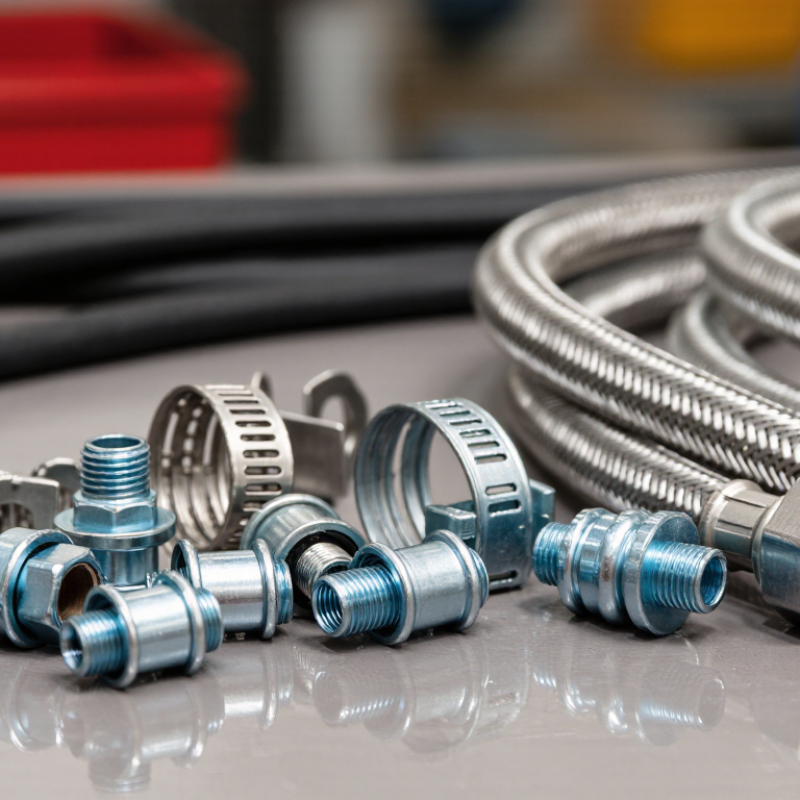
Choosing a hose clamp starts with understanding how it creates pressure. A worm-drive clamp tightens a slotted metal band as its screw turns. It is adjustable, but overtightening can deform soft hose or cut into its surface. Spring clamps use elastic steel to maintain radial force as hose dimensions shift with temperature. They suit compatible assemblies with repeated heat cycles. T-bolt clamps use a bolt and nut to pull a wider band together. They can provide strong, even compression on larger hoses, but need careful sizing and specified tightening torque. A useful distinction: clamp style alone does not guarantee a leak-free joint.
For automotive applications, SAE J1508 provides a technical reference for hose-clamp specifications and performance evaluation. ISO 9227 describes controlled salt-spray corrosion testing, useful when a clamp will face moisture or road splash. These standards help compare measurable properties; they do not choose the right clamp for every hose. Check hose material, outside diameter, pressure, vibration, and service temperature. Then inspect the joint after installation for pinching, gaps, or hose bulging. A torque value should come from the clamp or equipment specification, not guesswork. Even a correctly selected clamp can fail when the hose is aged, mismatched, or poorly seated. That part is easy to overlook.
| Clamp Type | Operating Principle | Typical Uses | Advantages | Considerations | Selection Guidance |
|---|---|---|---|---|---|
| Worm-drive clamp | A screw engages slots or perforations in a band. Tightening the screw draws the band smaller around the hose. | General-purpose connections in automotive, plumbing, irrigation, and equipment service. | Adjustable, removable, and widely available in a range of diameters. | Perforated bands can press unevenly on soft hoses. Excessive tightening may damage the hose or cause the band to distort. | Choose a size whose stated diameter range includes the assembled hose-and-fitting outside diameter. Tighten to the hose or equipment maker’s guidance. |
| T-bolt clamp | A bolt draws the band ends together through a T-shaped bolt-and-nut assembly, applying circumferential clamping force. | Larger-diameter or demanding connections, such as charge-air, coolant, and industrial hose assemblies, when the application specifies this style. | Typically provides a robust, relatively uniform band contact compared with many lightweight perforated clamps. | Requires correct sizing and tightening; it may be unsuitable for small or delicate hoses. Performance depends on clamp design and installation. | Use when the hose assembly and operating conditions call for a heavy-duty clamp. Confirm the diameter range and any specified tightening procedure. |
| Constant-tension spring clamp | A formed spring band applies force as it is fitted. Its elastic movement helps maintain pressure as the hose diameter changes with temperature. | Factory-style coolant and other connections subject to repeated temperature changes, where the hose and fitting are designed for this clamp. | Can compensate for some hose expansion, contraction, and material relaxation without routine screw adjustment. | Installation can require dedicated pliers. It must be matched to the hose and connection; it is not a universal replacement for adjustable clamps. | Prefer the specified size and location for the assembly. Check that the clamp can move freely into position and is not overextended. |
| Ear clamp | One or more raised ears are compressed with a suitable tool, reducing the band diameter to create a fixed clamp. | Production assemblies and compact connections where a permanent, low-profile installation is appropriate. | Compact and tamper-resistant after installation, with no protruding screw housing. | Usually needs a dedicated installation tool and is not readily adjustable or reusable. The correct ear compression method matters. | Choose the clamp from the measured installed diameter and follow the tool and assembly instructions. Replace rather than reuse if the clamp is designed for one-time installation. |
| Wire clamp | One or more shaped wire loops contract around the hose as a screw or fastener is tightened. | Some molded, ribbed, or shaped hose connections where the clamp geometry is designed to fit the hose. | The wire form can provide concentrated clamping at defined contact lines and may fit certain shaped assemblies well. | Contact is less continuous than with a full-width band. Incorrect placement or use on a soft hose can create local stress. | Use only where the hose or equipment design calls for a wire-style clamp. Position it as specified and avoid substituting it solely based on appearance. |
| Quick-release clamp | A lever, latch, or over-center mechanism opens and closes the band, often without repeatedly turning a screw. | Equipment requiring frequent hose removal, inspection, or cleaning, when the connection is designed for this mechanism. | Faster to operate than a conventional screw clamp and convenient for repeated access. | Fit, locking security, and allowable service conditions vary by design. It may not suit high-vibration or high-pressure service unless specifically rated for it. | Check the manufacturer’s specifications for diameter, pressure, temperature, and vibration requirements; make sure the latch fully engages. |
Practical tip: Measure the outside diameter of the hose after it is fitted over the connection, then select a clamp whose working range includes that measurement. Clamp choice and tightening method should also match the hose material, fluid, temperature, pressure, vibration, and equipment instructions.

Choosing a hose clamp by appearance alone is easy, and often wrong. The fluid, temperature, and surrounding air all matter. Start with compatibility. A clamp exposed to salt spray or frequent washdowns may corrode faster than one used indoors. Stainless steel is often suitable for damp settings, while 316 stainless offers stronger resistance to chloride exposure than 304. It is not immune to every chemical, though; check the fluid and cleaning-agent compatibility.
For dry, sheltered equipment, zinc-plated steel can be a practical choice. Its protective coating may wear at the screw housing or band edge, especially after repeated adjustments. Once bare steel is exposed, rust can begin. Small details count. Match the clamp material to the weakest part of the assembly, not just the band. A stainless band with a dissimilar-metal screw can still create a corrosion concern in wet conditions.
Temperature and vibration deserve equal attention. Heat can affect nearby hose materials, while repeated vibration may loosen a clamp that was initially secure. Check the manufacturer’s temperature range, recommended tightening torque, and hose specifications. Avoid overtightening: a band can cut into soft hose, even when it feels firmly seated. Inspect for leaks, rust, and hose deformation after installation. One detail is easy to miss: real service conditions rarely stay constant, so allow for cleaning, seasonal exposure, and occasional maintenance when selecting materials.
How to Choose the Right Hose Clamp?
Measuring Hose and Fitting Sizes for a Secure Fit
Measure the hose after it is pushed fully onto the fitting. The clamp sits around the hose’s outside diameter, not its printed size or inside diameter. Take the measurement where the clamp will rest, usually just behind the fitting’s raised ridge. A caliper works well, but use light pressure so a soft hose does not flatten. No caliper? Wrap a flexible tape around the hose and divide the circumference by 3.14 to estimate its diameter.
Check the measurement twice. A small difference matters when a clamp is near the edge of its working range. Choose a size range that includes the measured diameter, ideally near the middle, so there is room to tighten without forcing the clamp closed. A common mistake is measuring the hose before fitting it; the installed hose may stretch slightly over a barb. Snug is enough. Tightening too hard can cut into the hose or distort it, even if the connection still looks secure. After tightening, inspect the hose for bulges or pinching, then check the joint again after use. Soft hoses can settle. A little uncertainty is normal, so follow the clamp maker’s sizing guidance when measurements fall between sizes.
Measure the hose’s outside diameter with it seated on the fitting. If you measure around it with a flexible tape, use circumference ÷ π to estimate the diameter.
Circumferences are calculated as C = π × diameter and rounded to one decimal place. Values are illustrative, not product specifications. Choose a clamp whose stated adjustment range includes the measured outside diameter; do not size it from the hose’s nominal inside diameter alone.
How to Choose the Right Hose Clamp?
Selecting Clamp Width, Range, and Tightening Mechanism
Clamp width affects both grip and hose protection. A wider band spreads pressure across more rubber, which can help prevent cutting or distortion on soft hose. But it must fit the available space and sit flat. Measure the hose over its fitting, then choose a clamp range that includes that installed diameter without reaching either end of its adjustment. A clamp near its limit may be difficult to tighten evenly. Check the hose and fitting specifications, too.
Tips: Measure twice. Center the clamp over the fitting’s sealing area, not the hose edge. Tighten gradually, then check for leaks under the intended operating conditions. Do not assume tighter is safer; excessive force can damage the hose or fitting.
Choose the tightening mechanism for the job. A screw-driven clamp is easy to adjust with common hand tools and suits many general connections. For assemblies exposed to changing temperatures or vibration, consider a design intended to maintain more consistent pressure. Follow its installation instructions and specified torque, if provided. A quick visual check helps, but it cannot confirm a secure seal by itself. Honestly, clamp selection can still involve some trial and inspection; hose condition and fitting shape change how pressure behaves. Replace cracked or hardened hose rather than trying to compensate with extra tightening.
Choose a clamp that matches the hose’s outside diameter and the working conditions. A clamp that is too large may bottom out before it grips; one that is too small can crush the hose. Check the hose and clamp instructions for the correct type and tightening method. Before installation, inspect the hose for cracks, soft spots, or a damaged end. Replace doubtful hose rather than asking the clamp to compensate.
Slide the clamp over the hose, then push the hose fully onto the fitting. Position the clamp behind the fitting’s raised bead, with its band sitting evenly around the hose. Keep it square. Tighten gradually, using the specified torque when one is provided. It is tempting to tighten harder when a joint feels uncertain, but excess force can cut the hose or deform the fitting. Not too tight. After installation, run the system under its normal conditions and check for seepage, hose movement, or a shifted clamp. Let the assembly cool or depressurize before touching it. Recheck the joint after its first operating cycle; small changes in hose shape can loosen an initially sound connection. A dry exterior is useful evidence, but it is not proof that every part of the joint is correctly seated.


For those larger-sized parts, or smaller quantity runs, we have 2 independent powder coat booths and ovens. The quality, durability and affordability of today’s powder coating finishes make this the process of choice for world-class companies.
Powder coating advantages over other forms of coating are many. Materials used in the Powder coating process can be metals and non-metals that come in a multitude of thicknesses, textures, colors, etc. Another of Powder coating’s biggest advantages over conventional coatings is its ability to create finishes in many different textures. Powder Coating Booths allow us the ability to apply these advantages to large products.
Tri-State Fabricators runs a full-service conveyor line for painting. Wet painting can provide protection or decoration to many different part styles. From start to finish, every project is easier to undergo random and point-based inspection by our skilled painting team.
Advantages to our Wet Paint Line are these lines start with product prep and ends with a thorough inspection of a high quality finished product. Our ability to complete large and small projects with a superior finish and doing so in a timely and economical fashion. This passes along the savings in production to our customers. When powder coating ins not an option, our Wet Paint Line gets the job done right the first time.
When the parts get big and heavy we roll-out our custom paint racks and oversize booth. By utilizing our partnerships with all the major paint brands, we can match virtually any color with wet paint.
The advantages of having access to a Wet Paint Booth are many. Large projects of many different shapes can be loaded into the booth. The Wet Paint Booth offers an environment that is much more controlled than a typical parts painting operation.
Not only are they used because of their controlled environment, but they’re are also advantageous when it comes to applying paint to parts that are needed in industries that require specialty coatings such as medical, aerospace, etc.
Our military forces have some very high standards when it comes to the finish of their vehicles and equipment. From the first pre-treatment step to final coat, it takes a great deal of knowledge and experience to protect the men and women of our armed forces. They deserve only the best, and Tri-State Fabricators provides it.
All of our processes are closely monitored by our staff and management teams. Both of which are highly trained in the processes of metal fabrication and finishing. Tri-State Fabricators’ goal is to always fully satisfy each and every customer, including the military. We will always put a 110% into what we do.
Abrasive media blasting is an excellent way to remove old paint, rust, and increase the paint/powder adhesion. Glass beads produce a much smoother and brighter finish than angular abrasives; leaving the part clean yet without any dimensional change. Chemically inert and environmentally friendly, we can recycle our beads approximately 30 times; making them a more preferred method of metal cleaning or surface finishing.
Advantages to Glass Bead Blasting are many. Glass bead blast media is used when a project is needing rough surfaces need to become smooth for applications of coatings such as paint. It is typically used to clean paint and rust from a product surface without deforming the surface it is being used on. Overall, compared to many other blasting media, Glass Bead Blasting is a very economical choice and those savings are always passed on to our customers.
Tri-State Fabricators utilize a zinc phosphate wash to clean and etch the material to ensure the best paint adhesion possible. The unique design of our 3-stage wash system does the work like a 5-stage. From Cleaning and rinsing to conversion coating and post-treatment, Our Part Washing process is a complete service and works throughout the fabrication service and the finishing service.
Along with the previously mentioned benefits, Curing is a vital chemical reaction that leaves the product finish hard and relatively safe from mild abrasion and aggressive corrosion. This process can be done in more than one way; ambient air-dry or in curing ovens at temps that exceed 240°.
From fixing paint mistakes (someone else’s of course) to simply cleaning our paint line hooks, our burn-off oven is put to good use. After a quick burn-off, a little clean up, and a fresh coat of paint, your parts will look better than new.
Why does our Burn-Off Oven work so well? Because super heating the air around parts turns the materials into ashes. From paint and powder coatings to rubber and machining oils, high temps do the job without degrading the integrity of the part.
Masking is a vital part of producing high quality products. We have die-cut masking patterns to protect machined surfaces as well as a wide range of plugs and caps to protect threaded holes and bolts. We provide permanent and temporary masking.
Masking allows the selected sections of a product to be protected from a fabrication or finishing service. This can be with both chemicals when etching and tapes, paints when only finishing just a section of the product. Masking is great in aiding the customization process of a project.
Screen printing is a photographic process that transfers artwork onto a porous nylon screen which allows colored ink to flow through the screen and be deposited on an aluminum or plastic component. We can generally have just about any design created onto a screen for your parts.
Some of the advantages of Screen Printing are, brand recognition for your business displaying on your products, assembly instructions, product warnings/hazards, etc. Tri-State Fabricators produces Screen Printing of the highest quality so you know it’s durable.
Metal Finishing is the art of treating the exterior portion of product, often metal but can also be made of other materials, so that the surface is clean and free of any debris. Then the process of applying coats or either paint of powder coat takes place. This coating process improves the quality of the product in both appearance and resistance to wear and corrosion.
Tri-State Fabricators, Inc., understands that a project typically isn’t complete until a high-quality finish has been added to your product. This is why our painting and powder coating teams continuously inspect the products throughout the Metal Finishing process.

