


How to Choose the Right FRP Pipe for Your Project?

Choosing the right Frp Pipe is not a simple matter of selecting the largest diameter or lowest price. Every project creates different demands. A chemical plant may require strong corrosion resistance. A municipal water line may prioritize pressure performance and long service life. An underground installation must also withstand soil movement, traffic loads, and poor bedding conditions.

Dr. Vistasp M. Karbhari, a recognized authority in fiber-reinforced polymer composites, offers a useful principle: “Durability must be designed, not assumed.” This idea should guide every Frp Pipe decision. The pipe’s resin system, reinforcement structure, pressure rating, stiffness class, temperature range, and joint design must match the actual operating environment. A pipe that performs well in clean water may fail prematurely when exposed to solvents, heat, or repeated pressure changes. Small details matter.

Experience also shows that specifications can be incomplete. Designers sometimes focus on corrosion resistance while overlooking installation quality. Contractors may choose familiar fittings without checking compatibility. These gaps deserve honest review. The right Frp Pipe should be evaluated through manufacturer data, recognized standards, field experience, and project-specific calculations. Ask practical questions. What chemicals will flow through the pipe? What pressure will it experience? Will sunlight, freezing, vibration, or buried loads affect performance?

This guide explains the main selection factors clearly. It also examines common mistakes, because even experienced teams can make them. A careful choice protects budgets, reduces maintenance, and supports dependable service for years.

How to Choose the Right FRP Pipe for Your Project?

Project Conditions and FRP Pipe Performance Requirements

How to Choose the Right FRP Pipe for Your Project?

Project conditions should guide every FRP pipe decision. Start by recording the fluid, concentration, temperature, pressure, and flow rate. Temperature peaks matter more than average readings. Do not size from flow alone. Check whether the line faces vacuum, water hammer, or frequent cycling. These conditions can expose weaknesses that normal calculations overlook.

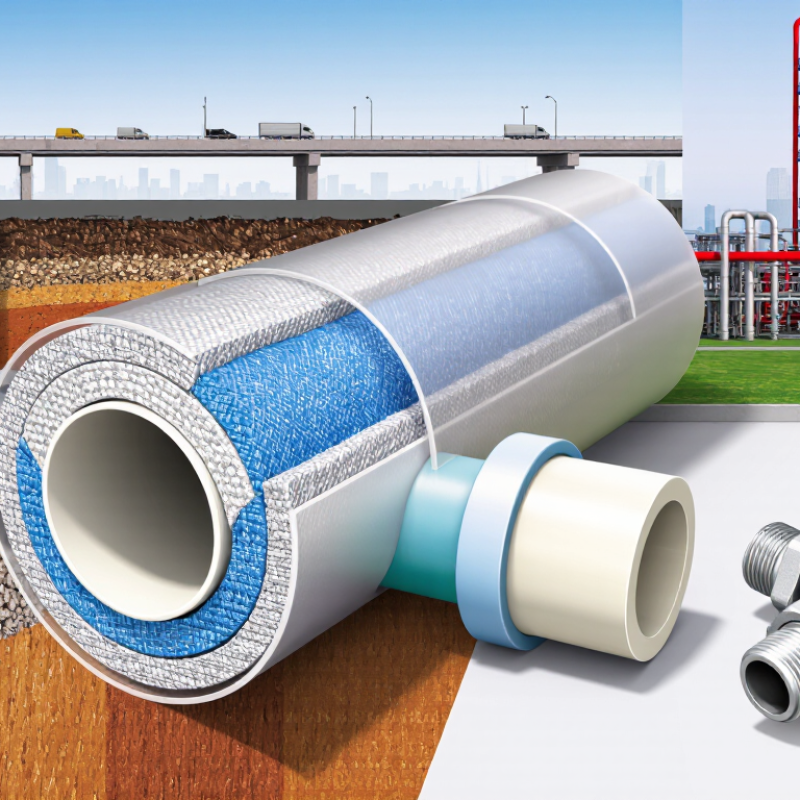
An experienced engineer will also review installation conditions. Buried pipes need suitable stiffness, soil support, and controlled backfill. Above-ground systems require correct supports, spacing, and allowance for thermal movement. Sunlight, moisture, chemicals, and nearby equipment may affect long-term performance. Resin selection must match the fluid and operating temperature. A corrosion-resistant liner can protect the structural wall, but its thickness and workmanship still matter. Verify pressure ratings, joint design, deflection limits, and applicable testing requirements before approval.

Small details often decide whether a system performs well. Inspect cut edges, flange faces, and connection surfaces during installation. Keep unsupported spans within the engineered limits. I have seen projects focus heavily on chemical resistance while overlooking support spacing. That mistake is easy to repeat. A neat calculation can still miss field reality. Require clear drawings, material certificates, inspection records, and pressure-test evidence. If site conditions change, recalculate the pipe system rather than relying on the original selection.

Compare FRP Pipe Materials, Liners, and Manufacturing Methods

How to Choose the Right FRP Pipe for Your Project?

Choosing an FRP pipe starts with the fluid, temperature, pressure, and installation environment. I review these conditions before comparing resin materials or wall designs. Polyester resin suits many mild chemical and water applications. Vinyl ester resin offers stronger resistance to aggressive chemicals and higher temperatures. Epoxy systems can provide excellent mechanical performance, but they often require tighter process control and higher costs. Small details matter. A cold, damp site can affect curing quality.

The liner protects the pipe’s inner surface from chemical attack and abrasion. A resin-rich liner may work well for clean liquids with moderate wear. For slurry, brine, or oxidizing chemicals, the liner should match the actual service conditions. Do not judge it by resin type alone. Thickness, glass content, curing, and joint design also influence reliability. I always request chemical concentration, operating temperature, and expected flow velocity. Missing one value can distort the entire selection.

Manufacturing method affects consistency and strength. Filament winding supports controlled fiber placement and strong pressure performance. Centrifugal casting can produce a smooth inner surface and uniform dimensions. Hand lay-up may suit custom shapes, yet quality depends heavily on worker skill and inspection. That weakness deserves attention. Factory records, laminate specifications, dimensional checks, and hydrostatic testing provide stronger evidence than attractive samples. A pipe that looks perfect may still hide poor curing or uneven reinforcement. Review the data, then question the assumptions.

Select the Correct Pipe Diameter, Pressure Rating, and Wall Thickness

How to Choose the Right FRP Pipe for Your Project?

Select the Correct Pipe Diameter, Pressure Rating, and Wall Thickness

Selecting an FRP pipe starts with actual flow demand, not the existing connection size. Calculate required flow, velocity, friction loss, and future capacity. A narrow pipe may reduce purchase cost. It can increase pumping energy, noise, and water-hammer risk. An oversized pipe lowers velocity, but may raise material and support costs. For wastewater, chemicals, or slurry, confirm viscosity and solids content. Those details change the hydraulic calculation. Keep it practical.

Pressure rating needs more than the pump’s normal discharge pressure. Include startup surges, valve closure, elevation differences, vacuum conditions, and operating temperature. FRP strength can change with heat and chemical exposure. Select a rating above the calculated maximum. Then verify the safety factor in certified design data. Do not rely on a catalog value without checking its test basis. Pressure class and stiffness class are different. This is often missed.

Wall thickness must resist internal pressure and external loads. Buried lines may need stiffness for soil pressure, traffic, groundwater, and installation conditions. Aboveground systems need adequate support spacing and resistance to wind or vibration. Ask for laminate construction, joint details, dimensional tolerances, and inspection records. A qualified engineer should review unusual temperatures, vacuum service, or unsupported spans. Field measurements matter; drawings are not always accurate. Site reviews sometimes find replacement sections do not fit because actual dimensions differ slightly. Recheck them before fabrication. Small errors become expensive.


Evaluate Chemical Resistance, Temperature Limits, and Service Life

How to Choose the Right FRP Pipe for Your Project?

Chemical resistance should be evaluated before pressure rating. FRP performance depends on resin chemistry, liner construction, concentration, temperature, and exposure time. A pipe may resist dilute sulfuric acid but fail under hotter, concentrated service. Request test data for the exact chemical mixture. Generic compatibility charts are useful screening tools, not final approval.

Temperature quietly changes the entire design. Higher temperatures can reduce stiffness, accelerate resin degradation, and lower allowable pressure. ISO 14692-2:2017 requires temperature, pressure, and degradation factors in GRP system design. AWWA M45, Fiberglass Pipe Design, presents 50-year design considerations for water applications. That figure is a design basis, not a guarantee. Check continuous and upset temperatures separately. Brief heat spikes can matter.

Think about service life. The pipe must survive installation loads, cyclic pressure, ultraviolet exposure, and maintenance chemicals. Ask for hydrostatic qualification results, joint testing, and documented inspection procedures. I have seen projects focus on corrosion resistance while overlooking support spacing. That mistake can create local stress and premature cracking. Measure the real operating conditions, including cleaning cycles and seasonal changes. Then compare the manufacturer’s verified data with independent engineering review. The datasheet is not enough.

How to Choose the Right FRP Pipe for Your Project?

Evaluate chemical resistance, temperature limits, and expected service life before selecting the pipe resin system.

Chemical resistance
Polyester FRP is commonly used for many dilute aqueous services. Vinyl ester generally provides broader resistance to acids and oxidizing chemicals. Epoxy FRP is often selected for alkaline solutions and many solvents. Always verify the exact chemical, concentration, temperature, and permeation requirements.
Temperature limits
The chart shows representative upper continuous operating temperatures for generic resin systems. Short-term excursions, thermal cycling, liner construction, and mechanical loading can reduce the allowable limit.
Service life
The service-life values are typical planning estimates of approximately 25–35 years under properly specified conditions. Actual life depends on installation quality, pressure, abrasion, UV exposure, supports, and chemical compatibility.

Indicative engineering screening values for generic FRP systems; final selection must be confirmed against the pipe manufacturer's tested design data and the project process conditions.

Check Installation Methods, Standards, Costs, and Supplier Support

How to Choose the Right FRP Pipe for Your Project?

Installation conditions should guide your FRP pipe selection. Above-ground systems may use flanged or butt-and-wrap joints. Buried lines need suitable bedding, controlled backfill, and careful alignment. Keep lifting straps wide to prevent surface damage. During site work, check pipe ovality, joint cleanliness, and adhesive curing temperature. Small mistakes can create leaks later.

Review the required pressure, temperature, chemical resistance, and stiffness class before ordering. Match the pipe with applicable industry standards and local project specifications. Request test reports, dimensional data, resin details, and traceable quality records. A pipe can meet pressure requirements but still fail in aggressive wastewater. That detail is easy to miss. Independent inspection may be valuable for critical pipelines.

Compare total cost, not only the quoted pipe price. Include fittings, supports, freight, installation labor, testing, and future maintenance. Supplier support should include layout drawings, installation procedures, joint training, and technical responses during construction. Ask whether field supervision and replacement parts are available. In my experience, delivery delays often cost more than a slightly higher material price. I would also confirm packaging details, because damaged pipe may look usable until pressure testing. Supplier claims deserve verification through documents and site references.

Powder Coat Booths

For those larger-sized parts, or smaller quantity runs, we have 2 independent powder coat booths and ovens. The quality, durability and affordability of today’s powder coating finishes make this the process of choice for world-class companies.

Powder coating advantages over other forms of coating are many. Materials used in the Powder coating process can be metals and non-metals that come in a multitude of thicknesses, textures, colors, etc. Another of Powder coating’s biggest advantages over conventional coatings is its ability to create finishes in many different textures. Powder Coating Booths allow us the ability to apply these advantages to large products.

Wet Paint Line

Tri-State Fabricators runs a full-service conveyor line for painting. Wet painting can provide protection or decoration to many different part styles. From start to finish, every project is easier to undergo random and point-based inspection by our skilled painting team.

Advantages to our Wet Paint Line are these lines start with product prep and ends with a thorough inspection of a high quality finished product. Our ability to complete large and small projects with a superior finish and doing so in a timely and economical fashion. This passes along the savings in production to our customers. When powder coating ins not an option, our Wet Paint Line gets the job done right the first time.

Wet Paint Booths

When the parts get big and heavy we roll-out our custom paint racks and oversize booth. By utilizing our partnerships with all the major paint brands, we can match virtually any color with wet paint.

The advantages of having access to a Wet Paint Booth are many. Large projects of many different shapes can be loaded into the booth. The Wet Paint Booth offers an environment that is much more controlled than a typical parts painting operation.

Not only are they used because of their controlled environment, but they’re are also advantageous when it comes to applying paint to parts that are needed in industries that require specialty coatings such as medical, aerospace, etc.

Military CARC

Our military forces have some very high standards when it comes to the finish of their vehicles and equipment. From the first pre-treatment step to final coat, it takes a great deal of knowledge and experience to protect the men and women of our armed forces. They deserve only the best, and Tri-State Fabricators provides it.

All of our processes are closely monitored by our staff and management teams. Both of which are highly trained in the processes of metal fabrication and finishing. Tri-State Fabricators’ goal is to always fully satisfy each and every customer, including the military. We will always put a 110% into what we do.

Glass-Bead Blasting

Abrasive media blasting is an excellent way to remove old paint, rust, and increase the paint/powder adhesion. Glass beads produce a much smoother and brighter finish than angular abrasives; leaving the part clean yet without any dimensional change. Chemically inert and environmentally friendly, we can recycle our beads approximately 30 times; making them a more preferred method of metal cleaning or surface finishing.

Advantages to Glass Bead Blasting are many. Glass bead blast media is used when a project is needing rough surfaces need to become smooth for applications of coatings such as paint. It is typically used to clean paint and rust from a product surface without deforming the surface it is being used on. Overall, compared to many other blasting media, Glass Bead Blasting is a very economical choice and those savings are always passed on to our customers.

Part Washing

Tri-State Fabricators utilize a zinc phosphate wash to clean and etch the material to ensure the best paint adhesion possible. The unique design of our 3-stage wash system does the work like a 5-stage. From Cleaning and rinsing to conversion coating and post-treatment, Our Part Washing process is a complete service and works throughout the fabrication service and the finishing service.

Along with the previously mentioned benefits, Curing is a vital chemical reaction that leaves the product finish hard and relatively safe from mild abrasion and aggressive corrosion. This process can be done in more than one way; ambient air-dry or in curing ovens at temps that exceed 240°.

Burn-Off Oven

From fixing paint mistakes (someone else’s of course) to simply cleaning our paint line hooks, our burn-off oven is put to good use. After a quick burn-off, a little clean up, and a fresh coat of paint, your parts will look better than new.

Why does our Burn-Off Oven work so well? Because super heating the air around parts turns the materials into ashes. From paint and powder coatings to rubber and machining oils, high temps do the job without degrading the integrity of the part.

Masking

Masking is a vital part of producing high quality products. We have die-cut masking patterns to protect machined surfaces as well as a wide range of plugs and caps to protect threaded holes and bolts. We provide permanent and temporary masking.

Masking allows the selected sections of a product to be protected from a fabrication or finishing service. This can be with both chemicals when etching and tapes, paints when only finishing just a section of the product. Masking is great in aiding the customization process of a project.

Screen Printing

Screen printing is a photographic process that transfers artwork onto a porous nylon screen which allows colored ink to flow through the screen and be deposited on an aluminum or plastic component. We can generally have just about any design created onto a screen for your parts.

Some of the advantages of Screen Printing are, brand recognition for your business displaying on your products, assembly instructions, product warnings/hazards, etc. Tri-State Fabricators produces Screen Printing of the highest quality so you know it’s durable.

Metal Finishing

Metal Finishing is the art of treating the exterior portion of product, often metal but can also be made of other materials, so that the surface is clean and free of any debris. Then the process of applying coats or either paint of powder coat takes place. This coating process improves the quality of the product in both appearance and resistance to wear and corrosion.

Tri-State Fabricators, Inc., understands that a project typically isn’t complete until a high-quality finish has been added to your product. This is why our painting and powder coating teams continuously inspect the products throughout the Metal Finishing process.
