


Choosing a Checkweigher Online starts with the product, not the price tag. A machine that handles small cartons at a steady pace may struggle with soft pouches, sticky containers, or bottles arriving with uneven spacing. Before comparing models, note your product’s weight range, dimensions, line speed, and the conditions around the conveyor. A few minutes spent measuring sample packs can prevent an expensive mismatch.
Accuracy matters, but it is only part of the decision. Ask how the system performs at your actual operating speed, how quickly operators can change product settings, and what support is available after installation. Look closely at the weighing range, conveyor dimensions, data functions, and cleaning requirements. A checkweigher placed beside a washdown area, for example, may need different construction from one checking sealed cartons in a dry room. Request a demonstration using your product when possible; a polished specification sheet cannot show every real-world wrinkle.
A practical rule is: “Choose for the product and the line you run—not the ideal conditions in a brochure.” No source was provided for a named industry expert’s verified quotation, so attributing those words to a person would be misleading. This guide instead focuses on checkable details: what to measure, which specifications to compare, and what to confirm with the supplier before ordering. Some needs may remain uncertain until testing. That is worth admitting. A careful purchase begins with evidence, clear questions, and realistic expectations.
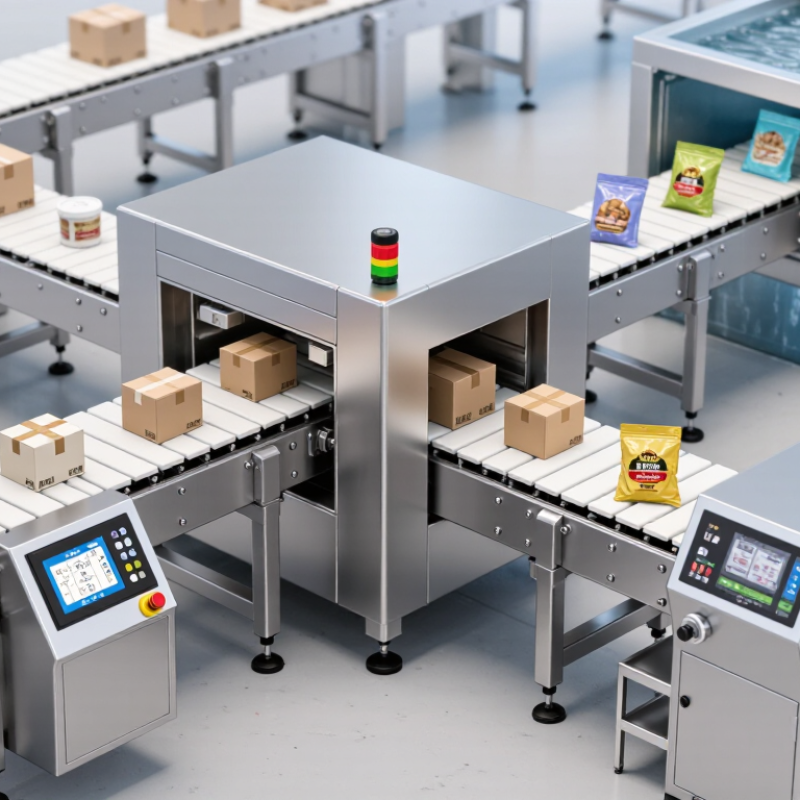
Start with the product, not the machine. Record the lightest and heaviest pack, including normal variation between batches. Note its length, width, height, and how it sits on a moving belt. A soft pouch may wobble; a rigid carton may arrive skewed. Small details matter.
Measure the actual production line. Document target packs per minute, belt spacing, product temperature, and packaging material. Then define the acceptable weight range and what should happen to underweight or overweight packs. Leave room for real variation. A short trial with representative products can reveal sticking, bouncing, or unstable readings. It can also expose gaps in your assumptions.
For a technical benchmark, OIML R 51:2006, Automatic Catchweighing Instruments, specifies accuracy classes and maximum permissible errors for automatic weighing. Use its requirements alongside your target weight and operating conditions when reviewing specifications. Ask suppliers to explain the proposed accuracy at your product’s actual speed, not only under ideal test conditions. Checkweighers can behave differently on a busy line. One easily missed detail: collect samples from several shifts, not just a carefully prepared morning run. That extra work is imperfect, but it gives a more honest picture of product variation.

An online checkweigher weighs each pack while it moves along a conveyor. A static scale checks items one at a time, usually off-line or at a sampling station. In-motion systems suit continuous lines; multi-lane units weigh products traveling in parallel. The core sequence is simple: space the packs, capture load-cell readings, compare each weight with preset limits, then trigger a reject device when needed. Timing matters.
Compare operating principles, not just advertised speed. A belt checkweigher depends on stable product spacing and a short, vibration-controlled weighing zone. OIML R 51-1:2006, a technical recommendation for automatic catchweighers, divides X-class error assessment into load bands around 500e, 2,000e, and 10,000e, where e is the verification scale interval. That framework helps buyers ask how accuracy changes across their actual pack-weight range. Check the stated class and test conditions.
Match the design to the product. A small pouch may need gentle transfers and careful belt-speed control; a rigid carton can tolerate a firmer reject. Verify performance using real products, line speed, and environmental conditions. Ask for results at minimum, typical, and maximum weights, not just a single ideal test. One detail is easy to miss: a fast reject mechanism cannot correct unstable weighing. A trial run often reveals this.
Choose a checkweigher against the product and line you actually run. Record target weight, package dimensions, product variation, and peak packages per minute. Then ask for accuracy results at that speed, using your own products and packaging. Test it live. OIML R 51-1:2006 sets out accuracy classes and metrological tests for automatic catchweighing instruments; use its framework to discuss verification with suppliers. Also compare reject performance: a fast belt is not useful if it triggers excessive false rejects. Ask how results change with vibration, uneven spacing, or damp packaging.
Integration can make or break the purchase. Confirm how the unit exchanges weight, reject, and fault data with your line controls and production records. Check available interfaces, data formats, alarm handling, and what happens after a network interruption. Deloitte and The Manufacturing Institute estimated that 2.1 million U.S. manufacturing jobs could go unfilled by 2030 in their 2021 study. That is a reason to consider simple operator workflows, not a reason to buy maximum speed. A rushed choice may look efficient on paper, then disappoint on a noisy, crowded line. Request a site trial and document the agreed test conditions; otherwise, comparing supplier accuracy claims can be misleading.
When comparing online checkweigher suppliers, assess evidence, not polished product photos. Request a live video test using packages close to your own weight, dimensions, and line speed. Ask for sample inspection records, calibration procedures, reject confirmation, and data-export formats. Ask for proof. A capable supplier should explain how product changes affect accuracy and throughput, rather than promise one figure for every application.
Compliance needs specifics. Ask which requirements apply in your market and whether the model meets relevant OIML R 51 requirements for automatic catchweighing instruments. Do not assume one certificate covers every configuration. Confirm software version, scale interval, operating range, and recordkeeping in writing. Deloitte and MAPI’s 2024 Smart Manufacturing Survey found that 86% of surveyed manufacturing executives viewed smart manufacturing as a competitiveness driver within five years. Connectivity matters, but a dashboard is not a compliance plan.
Support becomes visible after installation. Check service hours, remote diagnostics, spare-part lead times, training, and escalation steps. Ask for a sample service report and a recovery plan for a failed reject test. For food lines, discuss washdown exposure, enclosure ratings, and cleaning routines. Small details matter. Online demos cannot reproduce vibration, operator habits, or every product shift. Put acceptance tests and service commitments in the quote before comparing prices.
| Evaluation Area | What to Assess Online | Evidence or Questions to Request | Good Sign | Priority |
|---|---|---|---|---|
| Product and package fit | Check the stated weighing range, package dimensions, conveyor arrangement, and whether the machine is designed for the product type and packaging material. | Ask for a written specification confirming your minimum and maximum package weights, dimensions, and product characteristics. | The supplier confirms suitability against your actual product and packaging details rather than relying only on a general product description. | Essential |
| Throughput and weighing performance | Review rated speed and performance information, and check the conditions under which those figures apply. Line speed alone does not establish weighing accuracy. | Request a product-specific test plan that states the intended line speed, test conditions, and how weighing results will be evaluated. | Performance claims include their operating conditions and can be checked using representative products before purchase. | Essential |
| Compliance and intended use | Determine whether the checkweigher will be used for process control, legal-for-trade transactions, or both. Requirements depend on the country and application. | Ask which regulations and standards apply at your installation site and request relevant declarations, certificates, or type-approval documentation where applicable. | The supplier explains the distinction between general production use and regulated weighing, and identifies documents relevant to your jurisdiction. | Essential |
| Hygiene and environment | Review construction materials, cleanability, ingress-protection information, and suitability for the actual washdown, dust, temperature, or humidity conditions. | Share your cleaning methods and operating environment; ask for the applicable enclosure rating and cleaning instructions. | Environmental and hygiene claims are supported by specifications, and the supplier confirms compatibility with your cleaning routine. | High |
| Integration with the production line | Check conveyor height and direction, available space, electrical requirements, communications, and interfaces to upstream or downstream equipment. | Request installation drawings, utility requirements, and a list of supported communication or signal options for your line. | The supplier reviews a layout or line survey and identifies integration work and responsibilities before quoting. | High |
| Reject system and traceability | Assess how out-of-tolerance packs are detected and removed, and whether rejection status and weighing records can be monitored or retained. | Ask about reject confirmation, reject-bin monitoring, alarms, data export, user access, and record-retention options. | The proposed configuration explains how rejected packages are handled and how results can be reviewed by authorized staff. | High |
| Supplier transparency | Review the completeness and consistency of online specifications, manuals, product images, warranty terms, and quotation details. | Request a formal quotation with the exact configuration, included accessories, exclusions, delivery terms, and warranty conditions. | Specifications and commercial terms are written clearly, and the supplier answers technical questions without making unsupported guarantees. | High |
| Installation and commissioning | Check whether the purchase includes installation, setup, calibration checks, operator training, and production acceptance testing. | Ask for a commissioning scope, site-readiness checklist, training plan, and written acceptance criteria. | Responsibilities, required site preparations, and the method for confirming operation are agreed before delivery. | High |
| Service and ongoing support | Assess support hours, response channels, service coverage for your location, spare-parts availability, and remote-support arrangements. | Request support terms, service contact details, expected response process, and information about recommended spare parts. | Support coverage and any service commitments are documented and suitable for your operating schedule. | High |
| Total cost of ownership | Consider the complete cost beyond the equipment price, including installation, line modifications, training, maintenance, calibration, and consumables. | Ask for an itemized quote and clarification of recurring service costs and any optional features needed for your application. | The supplier separates included items from optional or recurring costs, making quotations easier to compare fairly. | Medium |
Before ordering a checkweigher online, compare the specifications with your actual production line. Check the weight range, stated accuracy, belt speed, and product dimensions. A machine rated for small cartons may struggle with wide, unstable packages. Ask whether accuracy figures were measured under conditions similar to yours. Details matter.
Request a written quotation that separates the machine price from installation, freight, training, and optional equipment. Confirm the currency, taxes, payment schedule, and quotation expiry date. A low headline price can hide costs for commissioning or replacement parts. Ask what the warranty covers, how long it lasts, and who handles service calls. Get those answers in writing.
Purchase terms deserve the same attention as technical data. Verify the delivery window, acceptance procedure, return conditions, and process for resolving damage in transit. Ask for a sample inspection report or test procedure, and check which product samples are needed before final setup. Read the documents carefully. One detail is easy to miss: a promised accuracy may depend on product spacing, vibration, or temperature. If the seller cannot explain those limits plainly, pause and request clarification. Online listings rarely show every practical constraint, and it is tempting to trust a neat specification table too quickly.


For those larger-sized parts, or smaller quantity runs, we have 2 independent powder coat booths and ovens. The quality, durability and affordability of today’s powder coating finishes make this the process of choice for world-class companies.
Powder coating advantages over other forms of coating are many. Materials used in the Powder coating process can be metals and non-metals that come in a multitude of thicknesses, textures, colors, etc. Another of Powder coating’s biggest advantages over conventional coatings is its ability to create finishes in many different textures. Powder Coating Booths allow us the ability to apply these advantages to large products.
Tri-State Fabricators runs a full-service conveyor line for painting. Wet painting can provide protection or decoration to many different part styles. From start to finish, every project is easier to undergo random and point-based inspection by our skilled painting team.
Advantages to our Wet Paint Line are these lines start with product prep and ends with a thorough inspection of a high quality finished product. Our ability to complete large and small projects with a superior finish and doing so in a timely and economical fashion. This passes along the savings in production to our customers. When powder coating ins not an option, our Wet Paint Line gets the job done right the first time.
When the parts get big and heavy we roll-out our custom paint racks and oversize booth. By utilizing our partnerships with all the major paint brands, we can match virtually any color with wet paint.
The advantages of having access to a Wet Paint Booth are many. Large projects of many different shapes can be loaded into the booth. The Wet Paint Booth offers an environment that is much more controlled than a typical parts painting operation.
Not only are they used because of their controlled environment, but they’re are also advantageous when it comes to applying paint to parts that are needed in industries that require specialty coatings such as medical, aerospace, etc.
Our military forces have some very high standards when it comes to the finish of their vehicles and equipment. From the first pre-treatment step to final coat, it takes a great deal of knowledge and experience to protect the men and women of our armed forces. They deserve only the best, and Tri-State Fabricators provides it.
All of our processes are closely monitored by our staff and management teams. Both of which are highly trained in the processes of metal fabrication and finishing. Tri-State Fabricators’ goal is to always fully satisfy each and every customer, including the military. We will always put a 110% into what we do.
Abrasive media blasting is an excellent way to remove old paint, rust, and increase the paint/powder adhesion. Glass beads produce a much smoother and brighter finish than angular abrasives; leaving the part clean yet without any dimensional change. Chemically inert and environmentally friendly, we can recycle our beads approximately 30 times; making them a more preferred method of metal cleaning or surface finishing.
Advantages to Glass Bead Blasting are many. Glass bead blast media is used when a project is needing rough surfaces need to become smooth for applications of coatings such as paint. It is typically used to clean paint and rust from a product surface without deforming the surface it is being used on. Overall, compared to many other blasting media, Glass Bead Blasting is a very economical choice and those savings are always passed on to our customers.
Tri-State Fabricators utilize a zinc phosphate wash to clean and etch the material to ensure the best paint adhesion possible. The unique design of our 3-stage wash system does the work like a 5-stage. From Cleaning and rinsing to conversion coating and post-treatment, Our Part Washing process is a complete service and works throughout the fabrication service and the finishing service.
Along with the previously mentioned benefits, Curing is a vital chemical reaction that leaves the product finish hard and relatively safe from mild abrasion and aggressive corrosion. This process can be done in more than one way; ambient air-dry or in curing ovens at temps that exceed 240°.
From fixing paint mistakes (someone else’s of course) to simply cleaning our paint line hooks, our burn-off oven is put to good use. After a quick burn-off, a little clean up, and a fresh coat of paint, your parts will look better than new.
Why does our Burn-Off Oven work so well? Because super heating the air around parts turns the materials into ashes. From paint and powder coatings to rubber and machining oils, high temps do the job without degrading the integrity of the part.
Masking is a vital part of producing high quality products. We have die-cut masking patterns to protect machined surfaces as well as a wide range of plugs and caps to protect threaded holes and bolts. We provide permanent and temporary masking.
Masking allows the selected sections of a product to be protected from a fabrication or finishing service. This can be with both chemicals when etching and tapes, paints when only finishing just a section of the product. Masking is great in aiding the customization process of a project.
Screen printing is a photographic process that transfers artwork onto a porous nylon screen which allows colored ink to flow through the screen and be deposited on an aluminum or plastic component. We can generally have just about any design created onto a screen for your parts.
Some of the advantages of Screen Printing are, brand recognition for your business displaying on your products, assembly instructions, product warnings/hazards, etc. Tri-State Fabricators produces Screen Printing of the highest quality so you know it’s durable.
Metal Finishing is the art of treating the exterior portion of product, often metal but can also be made of other materials, so that the surface is clean and free of any debris. Then the process of applying coats or either paint of powder coat takes place. This coating process improves the quality of the product in both appearance and resistance to wear and corrosion.
Tri-State Fabricators, Inc., understands that a project typically isn’t complete until a high-quality finish has been added to your product. This is why our painting and powder coating teams continuously inspect the products throughout the Metal Finishing process.

