How to Choose the Right Ceramic Rod for Your Needs?
Choosing the right Ceramic Rod begins with the working environment, not the product label. A rod used inside a furnace faces different demands from one used in an electrical assembly. Temperature, load, chemical exposure, electrical insulation, and dimensional accuracy all matter.
W. David Kingery, a leading authority on ceramic materials, wrote, “Ceramics are inorganic, nonmetallic materials.” That definition sounds simple. The engineering consequences are not. Alumina may suit high-temperature insulation, while zirconia can offer greater toughness in demanding mechanical applications. Silicon carbide may perform well where heat transfer and thermal shock resistance are important. Each option has limits.
A practical selection process should examine diameter, length, surface finish, tolerances, porosity, and mounting method. A 10-millimeter difference can affect alignment. A small surface flaw may become a failure point under repeated heating. Ask for technical data, test conditions, and batch consistency. Certification helps, but it does not replace application testing.
Real-world use can expose weaknesses that a catalog hides. Maybe the rod is strong enough, yet too brittle during installation. Maybe the thermal rating looks impressive, but the connector fails first. These details deserve attention.
There is no perfect choice.
This guide explains how to compare Ceramic Rod materials, dimensions, and performance requirements. It also highlights common purchasing mistakes, practical inspection steps, and questions worth asking suppliers. Some recommendations will remain conditional. That is honest engineering. The best Ceramic Rod is the one that survives your actual temperature, force, environment, and maintenance routine.
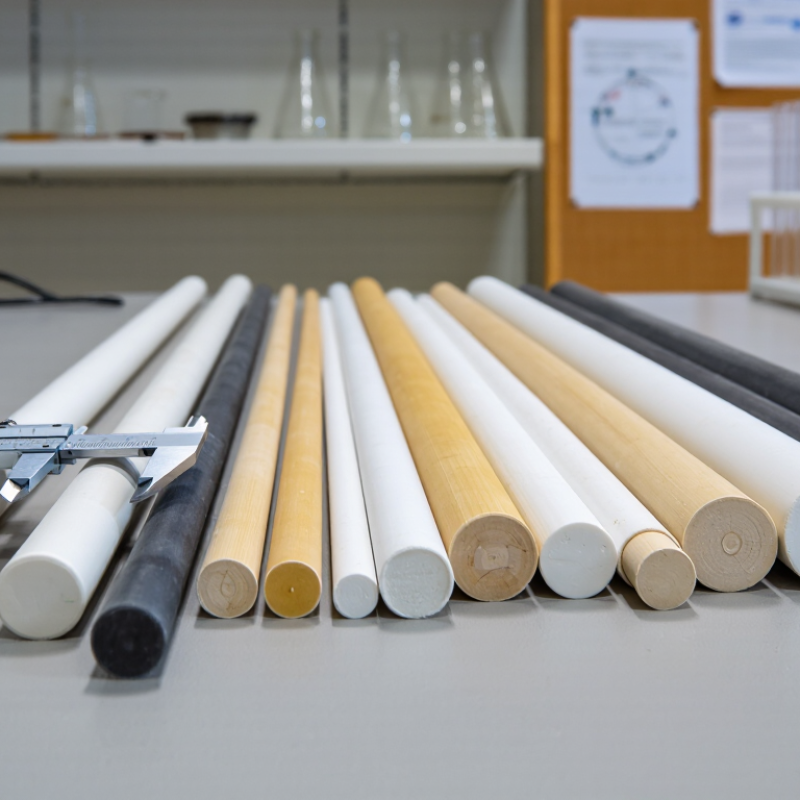
Define the Purpose and Working Conditions of the Ceramic Rod
Choosing a ceramic rod starts with its purpose, not its appearance. Define the load, temperature, motion, electrical role, and chemical exposure. A support rod may need stiffness, while an insulating rod must control voltage leakage and surface tracking. According to technical reviews from the U.S. Department of Energy’s Advanced Manufacturing Office, alumina commonly provides thermal conductivity near 20–30 W/m·K and very high hardness. These figures are useful, but they do not predict performance under every condition.
Working temperature changes the decision quickly. Alumina suits many high-temperature fixtures, yet rapid heating can create damaging thermal gradients. Zirconia offers higher fracture toughness, often reported around 6–10 MPa√m in engineering literature, but its thermal conductivity is lower. Silicon nitride can be valuable where thermal shock and moderate mechanical loading occur. Check test methods carefully. Results measured under ASTM C1161 or ISO 14705 conditions may not match your assembly.
Small details matter. Measure the rod’s unsupported length, clamping pressure, surface finish, and actual contact points. Chemical exposure deserves a written compatibility check, especially with molten salts or alkaline solutions. A neat specification can still fail. I would request a sample and cycle it through the real temperature range before approving production. This step feels slow, but field replacement usually costs more. Include tolerances, inspection frequency, and the required safety factor in the drawing.”
Compare Ceramic Rod Materials and Their Key Properties
How to Choose the Right Ceramic Rod for Your Needs?
Ceramic rod materials behave differently under heat, pressure, and electrical stress. Alumina is a practical choice for insulation, wear resistance, and general laboratory fixtures. It handles high temperatures well, but sudden temperature changes can cause cracking. Zirconia offers higher fracture toughness and better resistance to impact. However, it is usually heavier and may cost more. Silicon nitride combines low density, strong thermal shock resistance, and reliable performance near moving components. Its surface finish and machining quality still matter.
The rod’s diameter, length, purity, and tolerance should match the application. A thin rod may work inside a sensor, while a thicker one suits a support fixture. Ask for verified test data, not only impressive temperature claims. I once treated thermal resistance as the main priority. That was too narrow. Electrical insulation, moisture exposure, mounting pressure, and cleaning methods can change the result. No material wins everywhere.
Tips: Sketch the working conditions before choosing. Note temperature changes, load direction, contact materials, and expected service hours. Compare alumina, zirconia, and silicon nitride using the same criteria. Check whether the rod needs grinding or drilling after delivery. Small surface defects can become failure points under repeated stress. When uncertain, test a sample under realistic conditions. A short trial may reveal weaknesses that a datasheet misses.
Select the Correct Rod Size, Shape, and Surface Finish
Choosing a ceramic rod starts with its working load, temperature, span, and contact geometry. A 6 mm rod may suit a light guide, while a 12 mm rod resists bending better over a longer span. Diameter alone is not enough. Support spacing matters greatly. ASTM C1161 testing data shows that ceramic flexural strength can vary widely with material, surface condition, and specimen size.
Shape controls contact pressure and alignment. Round rods work well in bearings, guides, and electrical supports. Flat or rectangular rods offer better mounting stability, but sharp corners can concentrate stress. For sliding contact, specify a controlled diameter and low taper. For compression fixtures, a flat face may be more useful than a polished cylinder. In practice, I have seen drawings fail because the rod fit was correct, but the end geometry was ignored.
Surface finish deserves equal attention. ISO 21920 defines modern methods for measuring surface texture, including Ra and Rz values. A rough finish can increase friction and collect particles; an overly polished surface may reduce grip during bonding. According to the MarketsandMarkets 2024 advanced ceramics report, the sector is projected to grow from about 11.8 billion dollars in 2024 to 17.8 billion dollars by 2029. That growth reflects tighter performance demands, not a universal need for mirror polishing. Ask for measured values, not vague terms like “smooth.” Recheck them. The specification may still be too optimistic.
Check Performance, Compatibility, and Expected Service Life
How to Choose the Right Ceramic Rod for Your Needs?
Performance starts with the working environment, not the catalog title. Alumina rods commonly provide flexural strength around 300–500 MPa, while zirconia can offer higher fracture toughness, often near 6–10 MPa√m. These values come from technical data compiled under ASTM C1161 testing. Actual performance may differ after machining, heating, or surface damage.
Check compatibility carefully. For furnace fixtures, compare the rod’s maximum continuous temperature with your real operating temperature, including short thermal spikes. Thermal shock matters too; ASTM C1525 evaluates resistance to sudden temperature changes. A rod exposed to moisture, acids, or molten materials also needs chemical compatibility data. A small mismatch can cause cracking.
Expected service life is harder to predict. Review density, porosity, dimensional tolerances, and batch test certificates. Ceramic Industry market reports show advanced ceramics continue expanding across thermal, electrical, and wear applications, but market growth does not guarantee durability in your setup. I have seen rods fail early because clamping stress was ignored. That detail is easy to miss.
Use a safety margin of at least 20% for temperature and load when practical. Record operating cycles, discoloration, chips, and diameter changes during inspections. Manufacturer estimates can help, but they are not a substitute for application testing. Sometimes, the “stronger” ceramic lasts less time because its thermal expansion conflicts with nearby metal parts.
How to Choose the Right Ceramic Rod for Your Needs
Typical flexural strength and maximum continuous-use temperature of common technical ceramic materials.
Alumina
Good electrical insulation, wear resistance, and chemical stability. Commonly selected for general-purpose high-temperature applications.
Zirconia
Offers the highest toughness and flexural strength among these materials, making it suitable for wear and impact-prone applications.
Mullite
Provides low thermal expansion and good thermal-shock resistance, but generally has lower mechanical strength than alumina or zirconia.
Silicon Carbide
Combines high-temperature capability, high thermal conductivity, and strong wear resistance for demanding thermal environments.
Values are representative typical ranges for dense technical ceramics and can vary with purity, porosity, manufacturing process, rod diameter, atmosphere, and loading conditions. Confirm chemical compatibility and service-life requirements with the material datasheet and application test results.
Evaluate Manufacturing Quality, Cost, and Supplier Reliability
How to Choose the Right Ceramic Rod for Your Needs?
Manufacturing quality should be checked before comparing prices. Ask for material certificates, dimensional reports, and batch-level traceability. Test the ends. They should show clean grinding, consistent diameter, and no visible chips. The ISO Survey 2022 recorded more than 1.2 million ISO 9001 certificates worldwide, but certification alone cannot prove rod performance. Request test data for flexural strength, hardness, porosity, and thermal stability. A supplier that cannot provide these records may still produce acceptable parts, but the risk becomes yours.
Cost requires more than a unit-price comparison. Include machining, inspection, breakage, packaging, and replacement expenses. USGS Mineral Commodity Summaries 2024 reported approximately 140 million metric tons of alumina production in 2023. That scale supports material availability, yet it does not guarantee consistent ceramic-grade quality. Ask whether the quoted price covers custom tolerances and surface finishing. Cheap is not cheap. In my experience, a slightly higher price can reduce line stoppages, although this assumption needs confirmation through a small trial order. Supplier reliability also deserves measurable evidence. The World Bank’s Logistics Performance Index 2023 surveyed logistics professionals across 139 economies and assessed shipment reliability. Review lead-time history, safety stock practices, response times, and corrective-action records. Ask for evidence. A dependable supplier should explain delays clearly, not hide behind vague promises.





