How to Choose the Right Center Joint for Your Needs?
Choosing the right Center Joint is a small decision with major consequences for excavator performance. This component transfers hydraulic oil between the upper structure and undercarriage while allowing continuous rotation. A poor match can create leakage, pressure loss, abnormal heat, and unexpected downtime.
Industry data supports careful selection. Off-Highway Research’s global construction equipment reports consistently identify fleet utilization and replacement demand as important market drivers. The 2024 Global Construction Equipment Market analysis by Fortune Business Insights also highlights maintenance efficiency and equipment reliability as purchasing priorities. These findings matter because a Center Joint failure can stop more than one machine. It can delay excavation, loading, and site coordination.
Start with the machine’s exact make, model, serial range, and hydraulic configuration. Confirm port size, circuit count, rated pressure, rotation requirements, sealing materials, and mounting dimensions. Service technicians often find that similar-looking joints are not interchangeable. A few millimeters can matter.
The operating environment deserves equal attention. Mud, abrasive dust, freezing temperatures, and frequent slewing each challenge seals differently. An excavator working beside a wet trench needs stronger contamination protection than one operating indoors. Check the OEM service manual, maintenance history, and supplier test documentation before ordering.
A neat specification sheet can still mislead. Compatibility is not proven by appearance alone. Ask for pressure-test results, material details, warranty terms, and replacement guidance. ISO-based quality systems may support reliability, but they do not replace model-specific verification. The safest choice balances fit, duty cycle, service support, and total operating cost. Price is only one variable. Uptime is the real measure.
Define the Center Joint: 360° Rotation, 2–12 Hydraulic Ports
How to Choose the Right Center Joint for Your Needs?
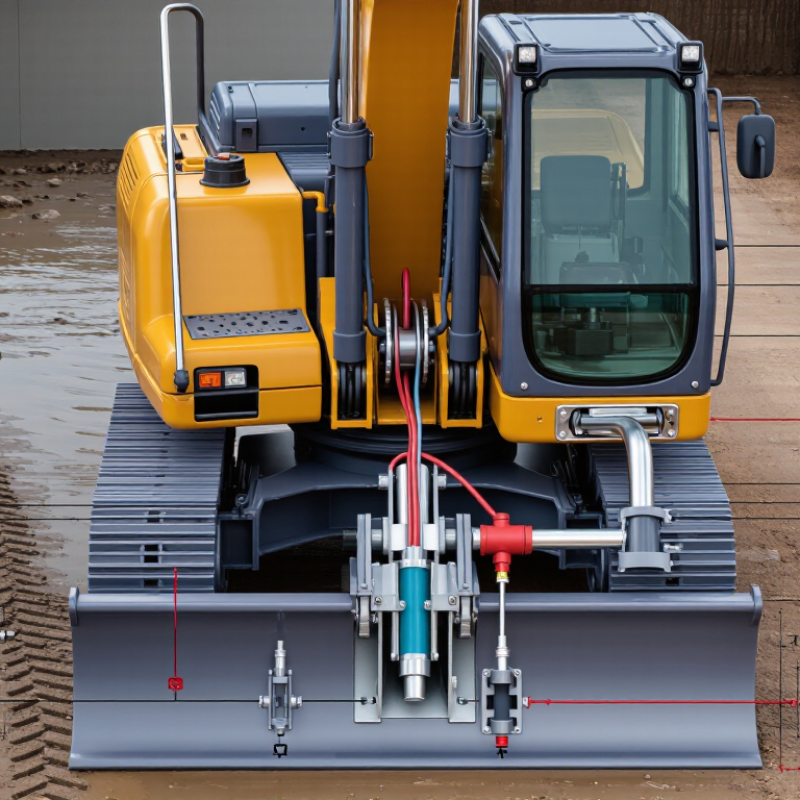
A center joint enables 360° rotation while transferring hydraulic oil between stationary and moving assemblies. Its port count commonly ranges from 2 to 12, depending on the machine’s circuits. Two ports may support simple travel functions. Twelve ports can manage travel, attachments, pilot lines, and auxiliary controls.
Port count is not everything. Check working pressure, peak pressure, flow rate, rotation speed, and port orientation. A joint with twelve ports may look capable, yet restrict flow if internal passages are too narrow.
According to Grand View Research’s Hydraulic Equipment Market report, the global market was valued at about USD 49.7 billion in 2023. This scale reflects rising demand for compact, reliable hydraulic systems, where small leakage can create expensive downtime.
Inspectors should compare seal materials with oil type, temperature, and contamination levels. ISO 4413 provides useful hydraulic safety and system-design guidance, while ISO 3601 supports proper O-ring sizing. I have seen specifications fail because engineers counted ports but ignored hose bending during rotation. That mistake is easy to make. Measure the installation space, confirm mounting tolerances, and review the joint’s allowable rotation speed. A practical test should check leakage after repeated rotation, not only during static pressure testing. Data sheets help, but real operating conditions remain less predictable.
Match Pressure and Flow: Typical Ratings of 210–350 bar and 20–300 L/min
Choosing the right center joint starts with matching pressure and flow to actual working conditions. Typical ratings range from 210 to 350 bar and 20 to 300 L/min. These figures are not interchangeable. A joint rated for 350 bar may still perform poorly when oil flow exceeds its recommended limit. Check continuous pressure, peak pressure, and operating temperature separately.
For example, a compact excavator circuit running at 230 bar and 45 L/min needs different performance from a high-flow attachment using 300 bar and 180 L/min. Port size also matters. Narrow passages can create pressure loss, heat, and sluggish actuator movement.
In field checks, I measure pressure near the center joint rather than relying only on the pump gauge. The readings can differ more than expected.
Seal material, rotation speed, contamination control, and installation alignment deserve equal attention. A joint may tolerate 350 bar on paper, yet repeated pressure spikes can shorten its service life. Real systems are rarely perfect. A clean spreadsheet can still mislead.
Leave practical margin below the maximum rating, especially when the machine works on uneven ground or cycles rapidly. Review return-line flow too, because back pressure can affect sealing. Confirm the data sheet, inspect the mounting face, and verify hose routing before installation. Small alignment errors are easy to dismiss, but they often become expensive wear points.
Verify Size and Port Standards: SAE and ISO Connections for Proper Fit
Choosing the right center joint begins with accurate measurements, not appearance. In field inspections, technicians often find that two joints look identical but use different port standards. Measure the joint body, shaft diameter, mounting width, and port size with clean calipers. Record each value before ordering.
Check whether the connection follows SAE or ISO specifications. SAE ports commonly use defined thread forms, sealing surfaces, and dimensional tolerances. ISO connections may use different threads, angles, or sealing methods. A similar thread can start smoothly and still fail under pressure. It may leak later.
Look closely at the sealing area. Some ports seal with an O-ring, while others depend on a tapered seat or bonded washer. Never force a fitting into a mismatched port. The threads may cross, and internal damage can remain hidden. Clean both connection surfaces before comparison. Dirt can create a false measurement.
Pressure and temperature ratings also matter. A correct size is not enough if the joint cannot handle the system’s working conditions. Confirm the maximum pressure, rotation speed, fluid type, and allowable temperature from reliable technical drawings. If the specification is unclear, pause the installation. Guessing feels efficient, but it often creates expensive rework. In practice, a written measurement sheet prevents small errors, although it is easy to overlook one port dimension.
How to Choose the Right Center Joint for Your Needs?
Verify size and port standards before selection. The chart compares common SAE dash-size tube outside diameters with ISO metric tube sizes. Equivalent-looking sizes are reference points only; threads, sealing methods, and connection geometry must also match.
SAE dash sizes are based on sixteenths of an inch, while ISO hydraulic tube sizes are specified in millimetres. Do not assume SAE and ISO ports are interchangeable without checking the applicable standard and manufacturer specifications.
Compare Materials and Seals: −40°C to 100°C Operating Temperature Ranges
How to Choose the Right Center Joint for Your Needs?
A center joint must handle more than movement. It must also survive changing temperatures, pressure, and working fluids. For applications near −40°C, choose materials that remain tough without becoming brittle. High-strength steel is often suitable for the body, but the seal material needs closer attention. A hardened seal may leak when cold.
At temperatures approaching 100°C, heat resistance becomes critical. Some elastomers soften, swell, or lose elasticity after long exposure. Match the seal to the fluid, pressure, and duty cycle. Do not judge temperature performance from the label alone. Thermal cycling can cause repeated expansion and contraction, which may loosen a poor fit. In field inspections, small leaks often appear after several cold-start and hot-running cycles.
Tips: Check the full operating range, not the average temperature. Confirm fluid compatibility with the seal supplier. Inspect shaft finish and alignment before installation. Keep contamination away from open ports. Simple details matter.
A reliable selection should include a safety margin below −40°C and above 100°C when conditions fluctuate. However, wider ratings can increase cost or reduce flexibility. That trade-off deserves review. A technically correct joint may still fail if installation is careless. Record actual temperatures, pressure peaks, and maintenance findings. Real operating data is more useful than assumptions.





