


How to Choose the Right Alloy Steel?

Choosing the right Alloy Steel is not a matter of selecting the hardest grade on a chart. The right choice depends on the part’s working conditions, manufacturing route, and failure risks. A shaft carrying repeated loads may need fatigue resistance and toughness, while a gear’s teeth may need a hard, wear-resistant surface. The labels can look similar. Their performance may not be.

Metallurgist John D. Verhoeven’s teaching offers a useful principle, paraphrased here: “Match the steel to its service conditions, not merely its grade label.” This guide uses that idea to examine the factors behind a sound selection: strength, toughness, wear, temperature, corrosion, weldability, heat treatment, and availability. Small details matter. A thin section may cool differently from a thick one; a component that is easy to machine may still distort during hardening. The best grade on paper can become a poor choice on the shop floor.

Start with the actual duty cycle, then compare candidate grades against drawings, processing limits, and supplier documentation. Check required mechanical properties and applicable specifications, and confirm critical assumptions through testing or a qualified materials specialist. A certificate helps, but it does not describe every service condition. There is rarely one perfect answer. Even careful selection leaves trade-offs—and that deserves a second look before the order is placed.
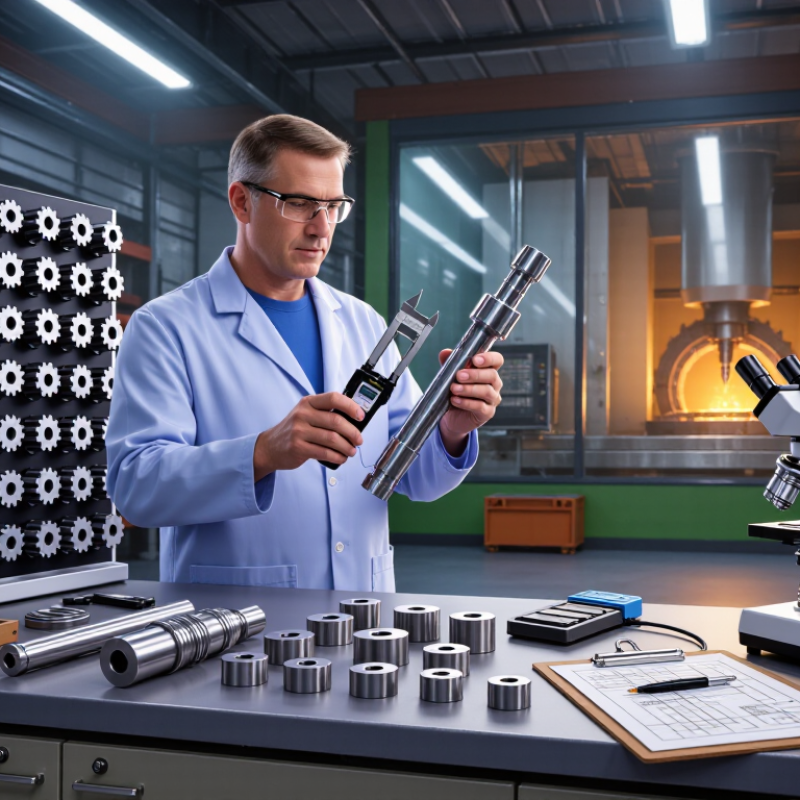
How to Choose the Right Alloy Steel?

What Alloy Steel Is and How Its Composition Affects Its Properties

Alloy steel is iron-based steel with added elements that change how it behaves. Carbon affects hardness and strength, while chromium can improve hardenability and, in suitable grades, corrosion resistance. Nickel often supports toughness, especially at lower temperatures. Molybdenum can help steel retain strength during demanding service. Small additions matter. The exact effect depends on the full composition and processing, not one element alone.

A gear tooth faces repeated contact, while a long shaft may need toughness and resistance to fatigue. These parts may call for different alloy steels, even when both need high strength. Heat treatment also changes the result: quenching and tempering can raise hardness, but poorly controlled treatment may cause distortion or brittleness. Composition tables are useful, yet they do not tell the whole story. Check the grade specification, product form, and intended operating conditions. For a real selection, review test certificates and ask how the steel was heat-treated. I would also consider the environment; moisture, temperature, and wear can change which property matters most. A hardness reading alone can mislead. Probe the actual requirement.


Define the Application’s Mechanical and Environmental Requirements

Before comparing alloy grades, write down the loads, temperature range, and service life the part must withstand. Record peak stress, cyclic loading, impact risk, and the minimum operating temperature. Yield strength alone is not enough. A shaft exposed to repeated torque may need fatigue data, while a pressure-bearing component may require toughness testing at its coldest service temperature. Check whether published values apply to the product form and heat treatment you will actually buy. Small details matter.

Then describe the environment at the metal surface: moisture, chlorides, acids, abrasion, and temperature swings. NACE International’s 2016 IMPACT study estimated corrosion costs at US$2.5 trillion worldwide, or 3.4% of global GDP. It also reported that improved corrosion management could save 15–35% of those costs. That is a strong reason to assess exposure early, not an automatic case for a more expensive alloy. For a coastal bracket, for example, salt spray and crevices may matter more than brief contact with clean water. I would still treat handbook data as a starting point; real welds, coatings, and maintenance intervals can change performance. Define test conditions with a materials engineer, then compare candidate alloys against both the mechanical limits and the actual exposure.

Compare Alloying Elements, Grades, and Heat-Treatment Options

Choosing alloy steel starts with the service conditions: load, wear, impact, temperature, and section thickness. SAE J404 chemistry data lists 4140 steel at 0.38–0.43% carbon, 0.80–1.10% chromium, and 0.15–0.25% molybdenum by weight. Chromium and molybdenum support hardenability, but they do not guarantee a particular finished hardness. For comparison, 8620 is a low-carbon nickel-chromium-molybdenum grade often selected for carburized parts that need a hard surface and a tougher core. Check the applicable grade specification and material certificate; labels alone can conceal chemistry and supply differences. Small details matter.

Heat treatment changes the outcome. Normalizing can refine structure, while quenching and tempering can balance strength and toughness in grades such as 4140. Carburizing is more suited to low-carbon case-hardening grades such as 8620. The ASM Handbook’s heat-treating guidance emphasizes that time, temperature, and cooling conditions affect the final properties; a thick shaft may not respond like a thin test coupon. Specify the required hardness range, test location, and section size with the supplier. I would also review the part’s failure risks before choosing a treatment. A harder surface may resist wear, yet excessive hardness can reduce impact tolerance. Check dimensions after treatment, too. Some distortion is possible.

Evaluate Strength, Durability, Machinability, and Corrosion Resistance

How to Choose the Right Alloy Steel?
Evaluate Strength, Durability, Machinability, and Corrosion Resistance

Choosing alloy steel starts with the loads and conditions the part will face. Check tensile strength, hardness, and impact toughness in the supplier’s technical data. These values can change with heat treatment, so compare materials in their intended condition. A strong grade may still be a poor choice if repeated impacts make it brittle.

Tips: Write down the operating temperature, expected load, and exposure to water, salt, or chemicals. Ask for test certificates, and confirm whether the stated properties apply to the finished part. Small details matter.

Durability depends on more than strength. A shaft that runs continuously may need wear resistance, while a machined bracket may benefit from a grade that cuts cleanly and holds tight tolerances. Consider machining time, tool wear, and the extra steps required after cutting. Alloy steel is not automatically corrosion-proof; coatings or regular maintenance may be necessary in damp settings. One easy mistake is choosing the highest-strength option on paper. It can cost more to machine and may add no real value. Compare the whole job, then test a sample when failure would be costly.

How to Choose the Right Alloy Steel? - Evaluate Strength, Durability, Machinability, and Corrosion Resistance

Steel Grade Typical Condition Strength Durability and Toughness Machinability Corrosion Resistance Common Applications
AISI 4130 Normalized or quenched and tempered Moderate to high; properties vary substantially with heat treatment and section size. Good toughness and fatigue performance when properly heat-treated; weldable with suitable procedures. Generally good in the annealed condition; harder heat-treated conditions require more effort. Low; requires a protective coating or other corrosion-control measures in wet or outdoor service. Aircraft tubing, structural components, pressure-related parts, and welded fabrications.
AISI 4140 Annealed, normalized, or quenched and tempered High in the quenched-and-tempered condition; strength depends on tempering temperature and section size. Good combination of strength, wear resistance, and toughness for general engineering use. Fair to good when annealed; more difficult to machine as hardness and strength increase. Low; chromium in this grade does not make it stainless steel. Shafts, gears, bolts, tooling, and other highly stressed machine components.
AISI 4340 Usually quenched and tempered for high-strength applications Very high potential strength; heat treatment and component size must be specified for reliable values. High strength with good toughness when correctly heat-treated; suitable for demanding cyclic loads. Fair in the annealed condition; challenging to machine at higher hardness levels. Low; surface protection is normally needed where moisture or chemicals are present. Heavy-duty shafts, landing-gear components, gears, and high-stress fasteners.
AISI 8620 Carburized and case-hardened, with a relatively tough core High surface hardness after carburizing; core strength is lower and depends on the treatment and section. Excellent wear resistance at the case with a tough core that helps resist impact loading. Good before case hardening; finishing after hardening may require grinding or specialized processes. Low; the hardened case does not provide stainless-level corrosion protection. Gears, pinions, cams, and components needing a hard wear surface and a tougher core.
AISI 52100 Hardened bearing steel, commonly used at high hardness Very high hardness and compressive strength after hardening; tensile properties depend on processing and test method. Excellent rolling-contact fatigue and wear resistance; less suitable for severe impact than tougher, lower-hardness grades. Good in the annealed condition; difficult to machine after hardening. Low; careful storage, lubrication, or a protective coating may be needed to prevent rust. Rolling-element bearings, races, rollers, and wear-resistant parts.

Selection note: These are qualitative comparisons, not guaranteed specification values. Mechanical properties depend on product form, section size, heat treatment, and applicable standards. None of the listed grades should be assumed corrosion-resistant in the way stainless steel is; confirm the required properties and environment with the material specification before selection.

Verify Standards, Product Forms, Availability, and Total Cost

Choosing alloy steel starts with the service conditions, but paperwork deserves equal attention. Check the governing standard and grade designation on the mill test report, not just the sales description. Confirm that chemistry, heat treatment, tensile properties, and impact requirements match the drawing and operating temperature. Similar grade names can conceal important differences.


Verify the product form: plate, bar, tube, forging, or a machined blank. Availability matters. Ask whether the quoted material is in stock, cut to size, or made to order, and request a realistic lead time. A standard grade in unsuitable dimensions can mean scrap, extra machining, or a delayed installation. Check tolerances and surface condition as well.


Compare total cost, not just price per kilogram. Include testing, certification, cutting, heat treatment, freight, inspection, and expected machining time. A cheaper bar may arrive with scale or excess machining allowance; the difference shows up later at the saw and machine. For a small order, freight can outweigh a modest material-price saving. Leave room for uncertainty: lead times and yield estimates are not guarantees. I would verify them.

Powder Coat Booths

For those larger-sized parts, or smaller quantity runs, we have 2 independent powder coat booths and ovens. The quality, durability and affordability of today’s powder coating finishes make this the process of choice for world-class companies.

Powder coating advantages over other forms of coating are many. Materials used in the Powder coating process can be metals and non-metals that come in a multitude of thicknesses, textures, colors, etc. Another of Powder coating’s biggest advantages over conventional coatings is its ability to create finishes in many different textures. Powder Coating Booths allow us the ability to apply these advantages to large products.

Wet Paint Line

Tri-State Fabricators runs a full-service conveyor line for painting. Wet painting can provide protection or decoration to many different part styles. From start to finish, every project is easier to undergo random and point-based inspection by our skilled painting team.

Advantages to our Wet Paint Line are these lines start with product prep and ends with a thorough inspection of a high quality finished product. Our ability to complete large and small projects with a superior finish and doing so in a timely and economical fashion. This passes along the savings in production to our customers. When powder coating ins not an option, our Wet Paint Line gets the job done right the first time.

Wet Paint Booths

When the parts get big and heavy we roll-out our custom paint racks and oversize booth. By utilizing our partnerships with all the major paint brands, we can match virtually any color with wet paint.

The advantages of having access to a Wet Paint Booth are many. Large projects of many different shapes can be loaded into the booth. The Wet Paint Booth offers an environment that is much more controlled than a typical parts painting operation.

Not only are they used because of their controlled environment, but they’re are also advantageous when it comes to applying paint to parts that are needed in industries that require specialty coatings such as medical, aerospace, etc.

Military CARC

Our military forces have some very high standards when it comes to the finish of their vehicles and equipment. From the first pre-treatment step to final coat, it takes a great deal of knowledge and experience to protect the men and women of our armed forces. They deserve only the best, and Tri-State Fabricators provides it.

All of our processes are closely monitored by our staff and management teams. Both of which are highly trained in the processes of metal fabrication and finishing. Tri-State Fabricators’ goal is to always fully satisfy each and every customer, including the military. We will always put a 110% into what we do.

Glass-Bead Blasting

Abrasive media blasting is an excellent way to remove old paint, rust, and increase the paint/powder adhesion. Glass beads produce a much smoother and brighter finish than angular abrasives; leaving the part clean yet without any dimensional change. Chemically inert and environmentally friendly, we can recycle our beads approximately 30 times; making them a more preferred method of metal cleaning or surface finishing.

Advantages to Glass Bead Blasting are many. Glass bead blast media is used when a project is needing rough surfaces need to become smooth for applications of coatings such as paint. It is typically used to clean paint and rust from a product surface without deforming the surface it is being used on. Overall, compared to many other blasting media, Glass Bead Blasting is a very economical choice and those savings are always passed on to our customers.

Part Washing

Tri-State Fabricators utilize a zinc phosphate wash to clean and etch the material to ensure the best paint adhesion possible. The unique design of our 3-stage wash system does the work like a 5-stage. From Cleaning and rinsing to conversion coating and post-treatment, Our Part Washing process is a complete service and works throughout the fabrication service and the finishing service.

Along with the previously mentioned benefits, Curing is a vital chemical reaction that leaves the product finish hard and relatively safe from mild abrasion and aggressive corrosion. This process can be done in more than one way; ambient air-dry or in curing ovens at temps that exceed 240°.

Burn-Off Oven

From fixing paint mistakes (someone else’s of course) to simply cleaning our paint line hooks, our burn-off oven is put to good use. After a quick burn-off, a little clean up, and a fresh coat of paint, your parts will look better than new.

Why does our Burn-Off Oven work so well? Because super heating the air around parts turns the materials into ashes. From paint and powder coatings to rubber and machining oils, high temps do the job without degrading the integrity of the part.

Masking

Masking is a vital part of producing high quality products. We have die-cut masking patterns to protect machined surfaces as well as a wide range of plugs and caps to protect threaded holes and bolts. We provide permanent and temporary masking.

Masking allows the selected sections of a product to be protected from a fabrication or finishing service. This can be with both chemicals when etching and tapes, paints when only finishing just a section of the product. Masking is great in aiding the customization process of a project.

Screen Printing

Screen printing is a photographic process that transfers artwork onto a porous nylon screen which allows colored ink to flow through the screen and be deposited on an aluminum or plastic component. We can generally have just about any design created onto a screen for your parts.

Some of the advantages of Screen Printing are, brand recognition for your business displaying on your products, assembly instructions, product warnings/hazards, etc. Tri-State Fabricators produces Screen Printing of the highest quality so you know it’s durable.

Metal Finishing

Metal Finishing is the art of treating the exterior portion of product, often metal but can also be made of other materials, so that the surface is clean and free of any debris. Then the process of applying coats or either paint of powder coat takes place. This coating process improves the quality of the product in both appearance and resistance to wear and corrosion.

Tri-State Fabricators, Inc., understands that a project typically isn’t complete until a high-quality finish has been added to your product. This is why our painting and powder coating teams continuously inspect the products throughout the Metal Finishing process.
