


Choosing the right Air Valve begins with understanding what happens inside a real pipeline. Water may look steady, yet trapped air can gather at high points, narrow passages, and sudden changes in elevation. It can increase head loss, create inaccurate flow readings, and produce sharp pressure surges during filling or draining. Small details matter.
Hydraulic engineer John M. Tullis observed, “Air in a pipeline is never merely empty space; it changes how the system behaves.” This practical view remains useful when selecting an Air Valve for water networks, wastewater systems, irrigation lines, or industrial piping. A reliable choice depends on more than pipe diameter. Engineers should examine operating pressure, expected flow rate, pipeline profile, fluid quality, installation position, and maintenance access. A kinetic valve may release large air volumes during filling. An automatic valve can remove smaller air pockets during normal operation. A combination valve may be necessary when both functions are important.
Do not choose by price alone.
Field experience often reveals what catalogues hide. A valve exposed to muddy water may need corrosion-resistant materials and a protected discharge outlet. A buried valve may require a chamber that prevents flooding. Oversizing can also create unstable operation, while undersizing may leave dangerous air trapped in the line. The decision is not always perfect. Site data may be incomplete, and operating conditions can change after installation. Careful calculations, manufacturer testing, and inspection records make the final selection more dependable. The best Air Valve is the one matched to the pipeline’s actual behavior, not merely its printed specifications.
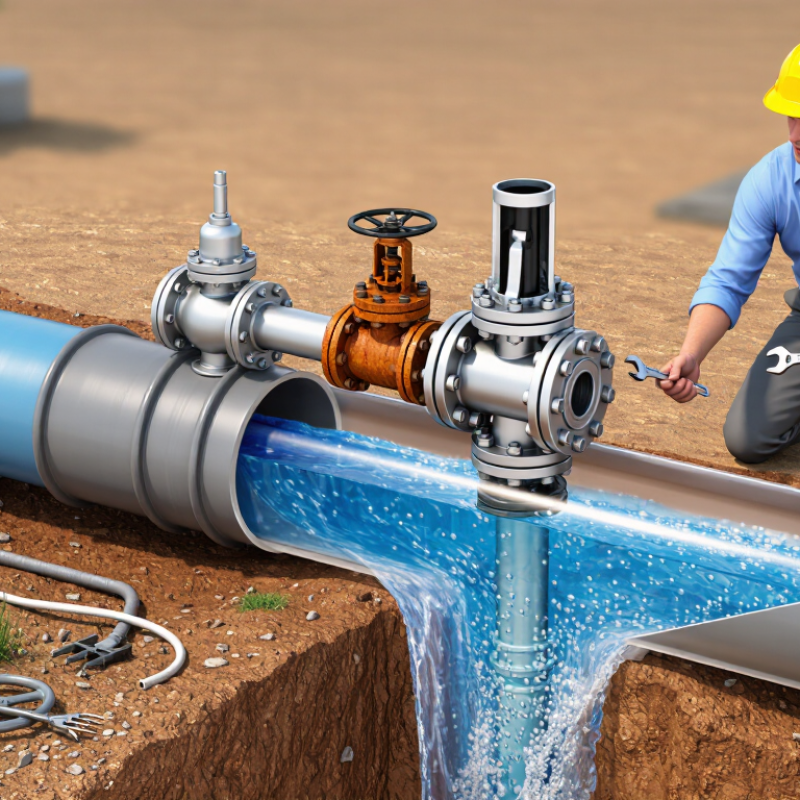
Air valves protect pipelines by managing trapped air during filling, operation, and draining. Three common types serve different needs. An air-release valve removes small air pockets while the line operates under pressure. An air-and-vacuum valve releases large air volumes during filling and admits air during draining. A combination valve performs both functions in one assembly.
The operating principle is simple but important. Inside the body, a float moves with the water level. When air enters, the float drops and opens the outlet. As water rises, the float lifts and closes it. Pressure, flow rate, pipe diameter, and installation height affect valve behavior. A valve that is too small may release air slowly. A poorly placed valve may miss the highest point where air collects.
Selection should begin with actual pipeline conditions, not only the connection size. Check working pressure, surge pressure, temperature, fluid quality, and the expected filling and draining speed.
Corrosive water may require carefully selected body and internal materials. In field inspections, engineers often find valves blocked by dirt, paint, or mineral deposits. Maintenance access matters. So does a visible discharge path. One detail is easy to overlook: the valve needs correct orientation and isolation facilities for safe servicing.
A specification can look perfect on paper, yet performance may disappoint. Rechecking the design against real operating conditions is wise.

How to Choose the Right Air Valve?
Before selecting an air valve, define the system’s actual requirements. Start with operating pressure, temperature, flow rate, and pipe size. The conveyed medium also matters. Clean air, wastewater, steam, and chemically active fluids require different materials and sealing methods. A valve exposed to outdoor moisture may need stronger corrosion protection. Small details can change the decision.
Consider where air may collect, enter, or escape. High points in pipelines often need air release during normal operation. Large air pockets may require rapid air evacuation during filling. Vacuum protection can also prevent pipe deformation during draining. Choose the valve’s connection type and installation position carefully. Field inspections often reveal poor access for maintenance. That mistake is easy to make.
Tips: Write the operating range, not only the average value. Check pressure surges, temperature changes, and unexpected shutdowns. Confirm the valve’s rated capacity with measured system data. Ask whether the valve should fail open, fail closed, or remain stable. Keep the answer practical.
Review material compatibility, sealing performance, and applicable technical standards. Then compare the valve’s expected service life with maintenance conditions. A compact valve may fit the drawing but perform poorly in a dirty environment. I have seen specifications copied from older projects without checking current conditions. That shortcut can create noise, leakage, or repeated repairs. Test the selection against realistic start-up and shutdown scenarios. Numbers alone are not enough.
| Air Valve Type | Primary Function | Typical Installation Location | System Condition | Key Sizing Requirement | Important Selection Criteria |
|---|---|---|---|---|---|
| Kinetic Air and Vacuum Valve | Discharges large volumes of air during pipeline filling and admits air during draining or negative-pressure events. | High points, long ascending sections, downstream of pumps, and locations where vacuum may develop. | Pipeline filling, draining, pump start-up, pump shut-down, or water-column separation. | Required air-flow rate at the allowable pressure differential; vacuum-breaker capacity during draining. | Vacuum protection, shut-off behavior, maximum operating pressure, valve-orifice size, and surge-control requirements. |
| Automatic Air-Release Valve | Continuously releases small air pockets that accumulate while the pipeline is operating under pressure. | High points and local summits where dissolved or entrained air can collect. | Normal operation with the pipeline filled and pressurized. | Small-orifice air-release capacity at the normal operating pressure. | Minimum operating pressure, float mechanism, leakage resistance, air-release performance, and resistance to fouling. |
| Combination Air Valve | Combines large-volume air admission and discharge with continuous small-volume air release. | Water-main high points, pumping systems, long pipelines, and locations exposed to filling and draining cycles. | Filling, normal pressurized operation, draining, and transient conditions. | Both the large-orifice flow capacity and the small-orifice release capacity must be checked. | Pressure range, air-flow curves, surge risk, water quality, maintenance access, and drainage arrangements. |
| Pressure-Vacuum Air Valve | Admits or exhausts large air volumes to prevent excessive vacuum or pressure caused by water movement. | Large-diameter pipelines, pump discharge lines, and systems with rapid flow changes. | Rapid filling, rapid draining, pump trip, emergency shut-down, or severe transient events. | Transient-analysis results, maximum allowable vacuum, and required air-admission or air-discharge rate. | Closing speed, surge interaction, discharge protection, structural strength, and compatibility with the pipeline profile. |
| Air/Vacuum Breaker | Admits atmospheric air when internal pressure falls below the surrounding pressure, helping protect against pipe collapse or siphoning. | Suction lines, siphon systems, elevated pipelines, and sections requiring rapid vacuum relief. | Negative pressure, pipe draining, pump stoppage, or siphon-break conditions. | Air-admission capacity at the expected vacuum level and required response time. | Vacuum rating, full-flow area, closure behavior, protection against contamination, and discharge routing. |
| Requirement | Data to Confirm | Why It Matters |
|---|---|---|
| Fluid and Water Quality | Fluid type, temperature, suspended solids, corrosiveness, and potable-water requirements. | Determines body, float, seal, coating, and internal-component material compatibility. |
| Operating Pressure | Minimum pressure, normal pressure, maximum working pressure, and possible transient pressure. | Ensures the valve seals correctly during operation and remains structurally safe during pressure events. |
| Pipeline Profile | Pipe diameter, high points, slopes, length, elevation, and locations of pumps or control valves. | Identifies where air will accumulate and where vacuum protection may be required. |
| Filling and Draining Conditions | Filling rate, draining rate, pump capacity, and expected air volume. | Provides the basis for sizing the large air-admission and air-discharge orifice. |
| Transient Conditions | Pump trip, rapid valve closure, water-hammer analysis, and possible water-column separation. | Prevents the valve from creating excessive pressure surges or failing to protect against damaging vacuum. |
| Connection and Maintenance | Nominal connection size, flange or threaded connection, isolation valve, access clearance, and drainage. | Supports safe installation, inspection, cleaning, testing, and future replacement. |
| Applicable Standards | Project specifications, local regulations, pressure-class requirements, and relevant valve test standards. | Confirms that design, materials, testing, and installation comply with the project’s technical requirements. |
Note: Air-flow capacity, pressure ratings, and valve dimensions must be verified against the manufacturer’s certified performance curves and the project’s hydraulic or transient analysis.
Choosing the right air valve requires more than matching the connection size. The valve material must suit the air quality, moisture level, and surrounding environment. Brass may work well in clean, dry systems, while stainless steel offers stronger corrosion resistance near washdown areas. Seal materials also matter. EPDM, NBR, and PTFE behave differently under heat, oil exposure, and repeated cycling. Check the technical datasheet, not only the product description.
Size the valve according to required airflow and pressure loss. A valve with the same pipe diameter may still restrict flow if its internal passage is small. Review the flow rate, connection type, operating pressure, and available installation space. Pressure ratings must cover normal operation and possible surges. Temperature ratings should include both the compressed air temperature and nearby heat sources. A workshop line beside a compressor can become surprisingly hot.
Tips:
Keep a small safety margin, but avoid oversizing without evidence. Oversized valves may respond slowly or cost more. Confirm compatibility with the actual medium, including lubricated or humid air. I have seen selections fail because ambient temperature was ignored. That detail is easy to miss. Before installation, compare the valve rating with the system’s real conditions, then recheck the decision with maintenance staff who understand daily use.
Installation method affects both downtime and lifetime cost. Threaded air valves usually install quickly on small pipelines. Flanged connections suit larger lines and allow easier removal during inspection. Welded connections reduce leak paths, but repairs become slower and more disruptive. AWWA Manual M51 recommends placing air-release and air/vacuum valves at high points, where trapped air can restrict flow or create damaging pressure changes. Ignoring that detail is an expensive mistake.
Maintenance needs vary with water quality, pressure, and operating cycles. Choose a valve with accessible internal parts, visible discharge, and replaceable seals. The U.S. Department of Energy reports that compressed-air leaks can waste 20–30% of compressor output. That figure concerns entire systems, but it shows why small valve leaks deserve attention. A practical cost review should include labor, isolation equipment, water loss, energy use, and replacement intervals—not only the purchase price. The “cheapest” valve can become costly after repeated shutdowns.
Tips: Record pressure, flow, fluid quality, and installation space before selection. Compare five-year ownership costs. Schedule visual checks, gasket inspections, and functional tests. Keep a spare seal kit nearby. It saves time. Still, maintenance schedules should be adjusted after real operating data is collected, because standard intervals can be too generous or unnecessarily cautious.
Choosing the right air valve starts with verified performance, not a catalog photograph. Measure working pressure, flow demand, temperature, and cycling frequency at the installation point. A valve rated for 10 bar may still perform poorly if its flow coefficient is too low. The U.S. Department of Energy’s Improving Compressed Air System Performance sourcebook reports that leaks can waste 20–30% of compressed-air production. Small leakage matters.
Check test evidence carefully. Ask for pressure, leakage, endurance, and response-time data under conditions close to your system. ISO 5208 provides industrial valve pressure-testing methods, while ISO 4414 addresses safety requirements for pneumatic systems. Compliance depends on the complete installation, not the valve alone. Confirm the required safety margin, isolation method, exhaust direction, and protection against accidental actuation. A silencer may reduce noise, but it can also restrict exhaust flow.
Compatibility is more than thread size. Match seal materials with oil, moisture, chemicals, and temperature. Confirm whether the valve handles dry air, lubricated air, or contaminated air. In water pipelines, air-release valves require different sizing and surge considerations. I have seen selection errors caused by copying an old specification without checking changed operating conditions. That shortcut is tempting. It is also risky. Review maintenance access, spare-part availability, and failure behavior before approval. Record the actual site conditions, because published laboratory data may not represent dusty workshops, outdoor cabinets, or frequent pressure fluctuations.
Verify performance, safety standards, and application compatibility before selection.


For those larger-sized parts, or smaller quantity runs, we have 2 independent powder coat booths and ovens. The quality, durability and affordability of today’s powder coating finishes make this the process of choice for world-class companies.
Powder coating advantages over other forms of coating are many. Materials used in the Powder coating process can be metals and non-metals that come in a multitude of thicknesses, textures, colors, etc. Another of Powder coating’s biggest advantages over conventional coatings is its ability to create finishes in many different textures. Powder Coating Booths allow us the ability to apply these advantages to large products.
Tri-State Fabricators runs a full-service conveyor line for painting. Wet painting can provide protection or decoration to many different part styles. From start to finish, every project is easier to undergo random and point-based inspection by our skilled painting team.
Advantages to our Wet Paint Line are these lines start with product prep and ends with a thorough inspection of a high quality finished product. Our ability to complete large and small projects with a superior finish and doing so in a timely and economical fashion. This passes along the savings in production to our customers. When powder coating ins not an option, our Wet Paint Line gets the job done right the first time.
When the parts get big and heavy we roll-out our custom paint racks and oversize booth. By utilizing our partnerships with all the major paint brands, we can match virtually any color with wet paint.
The advantages of having access to a Wet Paint Booth are many. Large projects of many different shapes can be loaded into the booth. The Wet Paint Booth offers an environment that is much more controlled than a typical parts painting operation.
Not only are they used because of their controlled environment, but they’re are also advantageous when it comes to applying paint to parts that are needed in industries that require specialty coatings such as medical, aerospace, etc.
Our military forces have some very high standards when it comes to the finish of their vehicles and equipment. From the first pre-treatment step to final coat, it takes a great deal of knowledge and experience to protect the men and women of our armed forces. They deserve only the best, and Tri-State Fabricators provides it.
All of our processes are closely monitored by our staff and management teams. Both of which are highly trained in the processes of metal fabrication and finishing. Tri-State Fabricators’ goal is to always fully satisfy each and every customer, including the military. We will always put a 110% into what we do.
Abrasive media blasting is an excellent way to remove old paint, rust, and increase the paint/powder adhesion. Glass beads produce a much smoother and brighter finish than angular abrasives; leaving the part clean yet without any dimensional change. Chemically inert and environmentally friendly, we can recycle our beads approximately 30 times; making them a more preferred method of metal cleaning or surface finishing.
Advantages to Glass Bead Blasting are many. Glass bead blast media is used when a project is needing rough surfaces need to become smooth for applications of coatings such as paint. It is typically used to clean paint and rust from a product surface without deforming the surface it is being used on. Overall, compared to many other blasting media, Glass Bead Blasting is a very economical choice and those savings are always passed on to our customers.
Tri-State Fabricators utilize a zinc phosphate wash to clean and etch the material to ensure the best paint adhesion possible. The unique design of our 3-stage wash system does the work like a 5-stage. From Cleaning and rinsing to conversion coating and post-treatment, Our Part Washing process is a complete service and works throughout the fabrication service and the finishing service.
Along with the previously mentioned benefits, Curing is a vital chemical reaction that leaves the product finish hard and relatively safe from mild abrasion and aggressive corrosion. This process can be done in more than one way; ambient air-dry or in curing ovens at temps that exceed 240°.
From fixing paint mistakes (someone else’s of course) to simply cleaning our paint line hooks, our burn-off oven is put to good use. After a quick burn-off, a little clean up, and a fresh coat of paint, your parts will look better than new.
Why does our Burn-Off Oven work so well? Because super heating the air around parts turns the materials into ashes. From paint and powder coatings to rubber and machining oils, high temps do the job without degrading the integrity of the part.
Masking is a vital part of producing high quality products. We have die-cut masking patterns to protect machined surfaces as well as a wide range of plugs and caps to protect threaded holes and bolts. We provide permanent and temporary masking.
Masking allows the selected sections of a product to be protected from a fabrication or finishing service. This can be with both chemicals when etching and tapes, paints when only finishing just a section of the product. Masking is great in aiding the customization process of a project.
Screen printing is a photographic process that transfers artwork onto a porous nylon screen which allows colored ink to flow through the screen and be deposited on an aluminum or plastic component. We can generally have just about any design created onto a screen for your parts.
Some of the advantages of Screen Printing are, brand recognition for your business displaying on your products, assembly instructions, product warnings/hazards, etc. Tri-State Fabricators produces Screen Printing of the highest quality so you know it’s durable.
Metal Finishing is the art of treating the exterior portion of product, often metal but can also be made of other materials, so that the surface is clean and free of any debris. Then the process of applying coats or either paint of powder coat takes place. This coating process improves the quality of the product in both appearance and resistance to wear and corrosion.
Tri-State Fabricators, Inc., understands that a project typically isn’t complete until a high-quality finish has been added to your product. This is why our painting and powder coating teams continuously inspect the products throughout the Metal Finishing process.

