


How to Choose the Best Truck Ratchet Straps?

Choosing Truck Ratchet Straps is not just a matter of picking the widest webbing or the highest advertised capacity. A strap can feel solid in the hand and still be wrong for the load, anchor points, or trip conditions. The Federal Motor Carrier Safety Administration’s cargo securement rules provide a useful technical baseline: the combined working load limit of a vehicle’s tiedowns must generally equal at least half the cargo’s weight. That requirement makes capacity a calculation, not a guess. Check the strap label, confirm its working load limit, and match it to the cargo and securement plan.

Details matter. A rough-edged pallet can abrade webbing; rain can complicate handling; a ratchet placed against a sharp corner may damage the strap. Fit, condition, and correct tension all matter. So does inspection. A frayed edge or unreadable capacity label is a reason to pause, not improvise. FMCSA guidance is a starting point, not a substitute for checking current requirements or the equipment manufacturer’s instructions.

There is no single best strap for every truck. That’s the slightly inconvenient part. This guide compares capacity, length, webbing, hardware, and durability, while explaining what to inspect before use. The goal is practical: choose Truck Ratchet Straps that suit the load, then verify the setup before the vehicle moves. A quick visual check can catch problems, though it cannot guarantee a perfect securement.
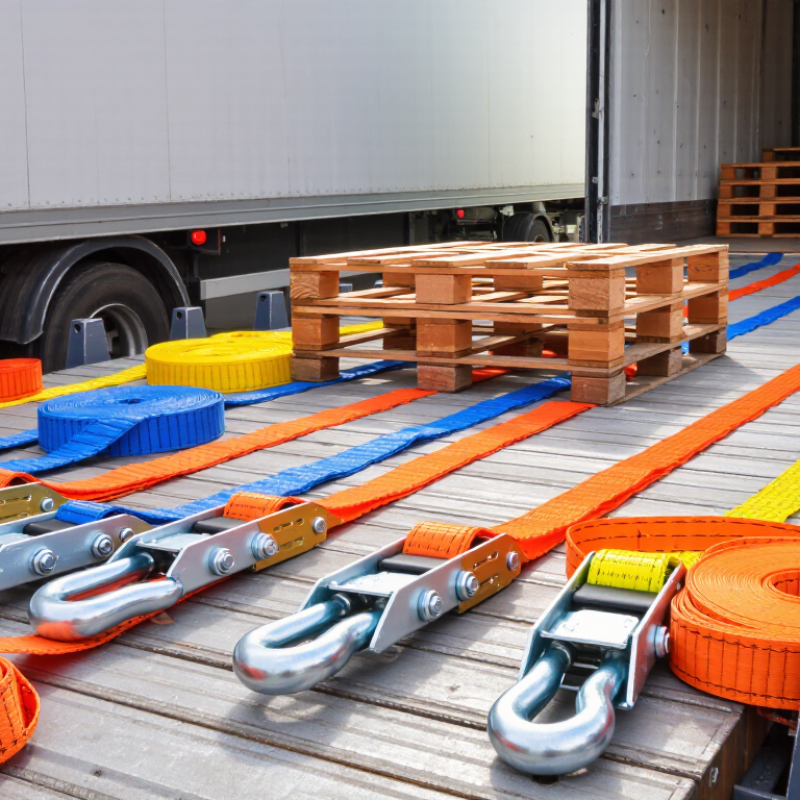
How to Choose the Best Truck Ratchet Straps?

Understanding How Truck Ratchet Straps Secure Cargo

How to Choose the Best Truck Ratchet Straps?

Understanding How Truck Ratchet Straps Secure Cargo

A ratchet strap holds cargo by creating tension between secure anchor points. As you operate the handle, the mechanism winds webbing around its spindle and tightens the load. That pressure helps limit shifting, but it does not make poorly balanced cargo safe. The load should sit evenly, with straps placed across strong, stable sections. Check that each hook is fully seated and each anchor point can handle the pull.

Small details matter. Keep the webbing flat, not twisted, so tension spreads across its width. Protect it from sharp corners with edge guards; a cut can weaken a strap quickly. Choose straps with a working load limit suited to the cargo, and never judge strength by webbing width alone. Inspect the stitching, hooks, and ratchet before use. Fraying, bent hardware, or a sticking mechanism are reasons to replace or repair the strap. Do not improvise.

Snug is not always secure. Tighten until the cargo is held firmly, without crushing fragile items or distorting the load. After driving a short distance, stop somewhere safe and check the tension again; settling can loosen a strap. I have found that this check is easy to skip when everything looks tidy. That’s a mistake. Keep loose webbing secured, and release the ratchet carefully when unloading, since stored tension can make the handle snap back.


Matching Strap Working Load Limits to the Cargo

A strap’s working load limit (WLL) should be matched to the cargo, not chosen by appearance or webbing width alone. Check the sewn label for the rated limit, then estimate the load’s weight and how it may shift during braking or turns. A dense pallet can be harder to restrain than a bulky, lighter load. And wet, sharp, or abrasive contact points can damage webbing. Small details matter.

For U.S. road transport, Federal Motor Carrier Safety Administration rules state that the aggregate WLL of tiedowns used to secure an article must be at least half the article’s weight. This is a baseline, not a reason to ignore load shape, tie-down angles, or the cargo’s movement.

For example, a 2,000-pound load calls for at least 1,000 pounds of aggregate WLL under that provision.

Check how each strap is routed and counted; an awkward angle can reduce restraint effectiveness. Use edge protection where straps cross sharp corners, and inspect stitching and ratchets before loading. The label may be hard to read. Replace uncertain gear rather than guessing. Real loads are messy, and a neat calculation can still miss a weak anchor point.

Choosing Strap Length, Width, Material, and Hardware

Choosing Strap Length, Width, Material, and Hardware

Match strap length to the cargo and anchor points, not just the truck bed. A strap should reach each tie-down without stretching tight around a sharp corner. Keep excess webbing short and secured; loose tails can flap against the load. For wide, heavy items, wider webbing may spread pressure better, but check that the ratchet and anchor points are rated for the load. Wider is not automatically stronger.

Material matters in rain, sun, and repeated use. Polyester webbing generally stretches less than nylon and suits many outdoor tie-down tasks. Inspect the stitching, edges, and ratchet teeth before loading. A small cut can grow under tension. Choose hardware that fits the anchor points and moves smoothly, with no bent hooks or rough burrs. I have seen straps look sound at a glance, then reveal frayed edges near a hook. Worth a closer look.

Tips: Use the strap’s working load limit, not its breaking strength, when planning a tie-down. Protect webbing from sharp edges with suitable padding, and recheck tension after the load settles. Store straps dry and out of direct sunlight. If any part looks questionable, replace it rather than hoping it holds.

Checking Ratchet Strap Quality and Safety Features

How to Choose the Best Truck Ratchet Straps?

Checking Ratchet Strap Quality and Safety Features

A reliable strap should have clearly marked working load limits, not just a breaking strength. Match that limit to the load and the number of straps used. Check the webbing for cuts, frayed edges, melted spots, or faded areas; damage can hide near the ratchet or beneath a load. Stitching should look even and secure. Pull the strap through the mechanism and test the handle. It should move smoothly, then lock without slipping. A little stiffness is normal. Grinding or sudden release is not.

Tips: Inspect hooks for cracks, bent tips, and sharp burrs. Choose hooks that sit securely on the truck’s anchor points. After tightening, the webbing should lie flat, without twists. Twists can create uneven pressure. Keep straps away from sharp cargo edges, or use edge protectors. I once missed a rough corner under a tarp; the strap showed wear after one trip. That was a useful reminder, not a method to copy.

Before driving, tug each strap and confirm the ratchet is fully closed. Recheck tension after a short distance, since cargo can settle and loosen the webbing. Retire straps with unreadable labels or questionable damage. Honestly, visual checks cannot reveal every weakness, so avoid guessing when a strap’s condition is unclear.

How to Choose the Best Truck Ratchet Straps?

Compare working load limit (WLL) with the minimum breaking strength implied by a 3:1 strength-to-WLL ratio. Choose straps whose marked WLL is suitable for the cargo and tie-down arrangement.

The breaking-strength values shown are calculated as WLL × 3; they are examples, not ratings for a particular strap. Check the labels and condition of the complete tie-down assembly, including webbing, stitching, ratchet, and end fittings. Replace straps with cuts, heavy abrasion, damaged stitching, or defective hardware.

Inspecting and Maintaining Straps for Reliable Use

How to Choose the Best Truck Ratchet Straps?

Inspecting and Maintaining Straps for Reliable Use

A strap can look sound and still hide damage beneath dirt or a folded edge. Before each trip, run your fingers along the webbing and check for cuts, fraying, melted spots, chemical stains, or stiff, brittle sections. Examine the ratchet and hooks, too. Bent parts, cracked welds, or a handle that will not lock are reasons to remove the strap from service. The Web Sling and Tie Down Association’s WSTDA-T-1 standard provides guidance for polyester tie-down design, use, and inspection. Follow the manufacturer’s instructions as well; a quick glance is not a full inspection.

Clean straps with mild soap and water, then let them dry completely before storage. Keep them away from sharp edges, sunlight, and chemicals. Small habits matter. FMCSA cargo-securement rules in 49 CFR 393.106(d) require the aggregate working load limit of tiedowns to be at least half the cargo’s weight. That figure is a minimum, not a reason to ignore wear or poor load placement. I’ve found that straps are often put away damp after a wet haul; it seems harmless, but trapped moisture and grit can shorten their useful life. Record damage, retire questionable gear, and check the load again after the first few miles.

How to Choose the Best Truck Ratchet Straps? — Inspecting and Maintaining Straps for Reliable Use
Check or Selection Factor

FAQS

How should I choose a strap length?

Match the strap to the cargo and anchor points. It should reach without stretching around sharp corners. Secure excess webbing so loose ends do not flap.

Does wider webbing always provide greater strength?

No. Wider webbing can spread pressure across a heavy load, but check the working load limits of the strap, ratchet, and anchors.

Which webbing material suits outdoor tie-downs?

Polyester generally stretches less than nylon and suits many outdoor tasks. Keep any material dry and out of direct sunlight when stored.

What signs mean a strap should be replaced?

Look for cuts, frayed edges, melted spots, chemical stains, brittle sections, or unreadable labels. A small damaged area near a hook matters.

How can I check a ratchet and its hooks?

Pull the webbing through the ratchet and test the handle. It should move smoothly and lock without slipping. Avoid cracked, bent, or rough hardware.

Why should webbing lie flat without twists?

Twists can create uneven pressure on the load. Lay the webbing flat, protect it from sharp corners, and confirm each ratchet is fully closed.

When should I recheck strap tension?

Tug each strap before driving, then check again after a short distance. Cargo can settle. A quick recheck is easy to miss.

How should straps be cleaned and stored?

Wash them with mild soap and water, then let them dry fully. Store them away from sunlight, sharp edges, and chemicals.

What does the working load limit tell me?

It is the figure to use when planning a tie-down, rather than breaking strength. The combined limit must suit the load and strap arrangement.

Can a visual inspection reveal every weakness?

No. Dirt or folded webbing can hide damage. If a strap’s condition feels uncertain, retire it instead of guessing.

Conclusion

Choosing the best Truck Ratchet Straps starts with understanding how the ratchet mechanism tightens a strap to hold cargo securely in place. Select straps with working load limits appropriate for the cargo’s weight and the demands of the trip, allowing a suitable safety margin rather than relying on appearance alone.

Consider strap length and width to suit the load and tie-down points, and choose durable material and hardware designed for the conditions in which the straps will be used. Check for secure stitching, smooth ratchet operation, reliable hooks, and clear load information. Before each use, inspect the straps for cuts, fraying, damaged stitching, corrosion, or other signs of wear. Clean and store them properly, and replace any strap that appears compromised. Careful selection and regular maintenance help keep cargo stable and make every tie-down more dependable.

Powder Coat Booths

For those larger-sized parts, or smaller quantity runs, we have 2 independent powder coat booths and ovens. The quality, durability and affordability of today’s powder coating finishes make this the process of choice for world-class companies.

Powder coating advantages over other forms of coating are many. Materials used in the Powder coating process can be metals and non-metals that come in a multitude of thicknesses, textures, colors, etc. Another of Powder coating’s biggest advantages over conventional coatings is its ability to create finishes in many different textures. Powder Coating Booths allow us the ability to apply these advantages to large products.

Wet Paint Line

Tri-State Fabricators runs a full-service conveyor line for painting. Wet painting can provide protection or decoration to many different part styles. From start to finish, every project is easier to undergo random and point-based inspection by our skilled painting team.

Advantages to our Wet Paint Line are these lines start with product prep and ends with a thorough inspection of a high quality finished product. Our ability to complete large and small projects with a superior finish and doing so in a timely and economical fashion. This passes along the savings in production to our customers. When powder coating ins not an option, our Wet Paint Line gets the job done right the first time.

Wet Paint Booths

When the parts get big and heavy we roll-out our custom paint racks and oversize booth. By utilizing our partnerships with all the major paint brands, we can match virtually any color with wet paint.

The advantages of having access to a Wet Paint Booth are many. Large projects of many different shapes can be loaded into the booth. The Wet Paint Booth offers an environment that is much more controlled than a typical parts painting operation.

Not only are they used because of their controlled environment, but they’re are also advantageous when it comes to applying paint to parts that are needed in industries that require specialty coatings such as medical, aerospace, etc.

Military CARC

Our military forces have some very high standards when it comes to the finish of their vehicles and equipment. From the first pre-treatment step to final coat, it takes a great deal of knowledge and experience to protect the men and women of our armed forces. They deserve only the best, and Tri-State Fabricators provides it.

All of our processes are closely monitored by our staff and management teams. Both of which are highly trained in the processes of metal fabrication and finishing. Tri-State Fabricators’ goal is to always fully satisfy each and every customer, including the military. We will always put a 110% into what we do.

Glass-Bead Blasting

Abrasive media blasting is an excellent way to remove old paint, rust, and increase the paint/powder adhesion. Glass beads produce a much smoother and brighter finish than angular abrasives; leaving the part clean yet without any dimensional change. Chemically inert and environmentally friendly, we can recycle our beads approximately 30 times; making them a more preferred method of metal cleaning or surface finishing.

Advantages to Glass Bead Blasting are many. Glass bead blast media is used when a project is needing rough surfaces need to become smooth for applications of coatings such as paint. It is typically used to clean paint and rust from a product surface without deforming the surface it is being used on. Overall, compared to many other blasting media, Glass Bead Blasting is a very economical choice and those savings are always passed on to our customers.

Part Washing

Tri-State Fabricators utilize a zinc phosphate wash to clean and etch the material to ensure the best paint adhesion possible. The unique design of our 3-stage wash system does the work like a 5-stage. From Cleaning and rinsing to conversion coating and post-treatment, Our Part Washing process is a complete service and works throughout the fabrication service and the finishing service.

Along with the previously mentioned benefits, Curing is a vital chemical reaction that leaves the product finish hard and relatively safe from mild abrasion and aggressive corrosion. This process can be done in more than one way; ambient air-dry or in curing ovens at temps that exceed 240°.

Burn-Off Oven

From fixing paint mistakes (someone else’s of course) to simply cleaning our paint line hooks, our burn-off oven is put to good use. After a quick burn-off, a little clean up, and a fresh coat of paint, your parts will look better than new.

Why does our Burn-Off Oven work so well? Because super heating the air around parts turns the materials into ashes. From paint and powder coatings to rubber and machining oils, high temps do the job without degrading the integrity of the part.

Masking

Masking is a vital part of producing high quality products. We have die-cut masking patterns to protect machined surfaces as well as a wide range of plugs and caps to protect threaded holes and bolts. We provide permanent and temporary masking.

Masking allows the selected sections of a product to be protected from a fabrication or finishing service. This can be with both chemicals when etching and tapes, paints when only finishing just a section of the product. Masking is great in aiding the customization process of a project.

Screen Printing

Screen printing is a photographic process that transfers artwork onto a porous nylon screen which allows colored ink to flow through the screen and be deposited on an aluminum or plastic component. We can generally have just about any design created onto a screen for your parts.

Some of the advantages of Screen Printing are, brand recognition for your business displaying on your products, assembly instructions, product warnings/hazards, etc. Tri-State Fabricators produces Screen Printing of the highest quality so you know it’s durable.

Metal Finishing

Metal Finishing is the art of treating the exterior portion of product, often metal but can also be made of other materials, so that the surface is clean and free of any debris. Then the process of applying coats or either paint of powder coat takes place. This coating process improves the quality of the product in both appearance and resistance to wear and corrosion.

Tri-State Fabricators, Inc., understands that a project typically isn’t complete until a high-quality finish has been added to your product. This is why our painting and powder coating teams continuously inspect the products throughout the Metal Finishing process.
