Choosing the right Tablet Counter can affect production speed, counting accuracy, and daily operating costs. A suitable machine should match your tablet size, shape, material, and expected output. It should also support consistent counting without damaging fragile tablets during handling.
In practical settings, operators often compare speed first. That can be a mistake. A fast machine is not useful if it produces frequent counting errors, difficult cleanups, or long changeover times. Check the counting range, hopper design, sensor technology, and control interface. Observe how easily an operator can remove dust, inspect contact parts, and adjust the machine between product batches. Small details matter. A clear display can prevent avoidable delays.
Reliability deserves careful attention. Review the manufacturer’s technical documentation, quality controls, warranty terms, and service response. Ask for test results using tablets similar to yours, rather than relying only on impressive catalog figures. Consider installation space, electrical requirements, noise, and future production growth. An experienced supplier should explain both strengths and limitations clearly. That honesty is valuable.
No single Tablet Counter suits every business. Your ideal choice depends on product characteristics, workload, hygiene expectations, and available staff. It may be tempting to choose the lowest purchase price. Yet maintenance, training, rejected batches, and downtime can cost more later. A thoughtful evaluation creates a more dependable investment, although no machine removes every operational risk. Human inspection and routine verification still matter.
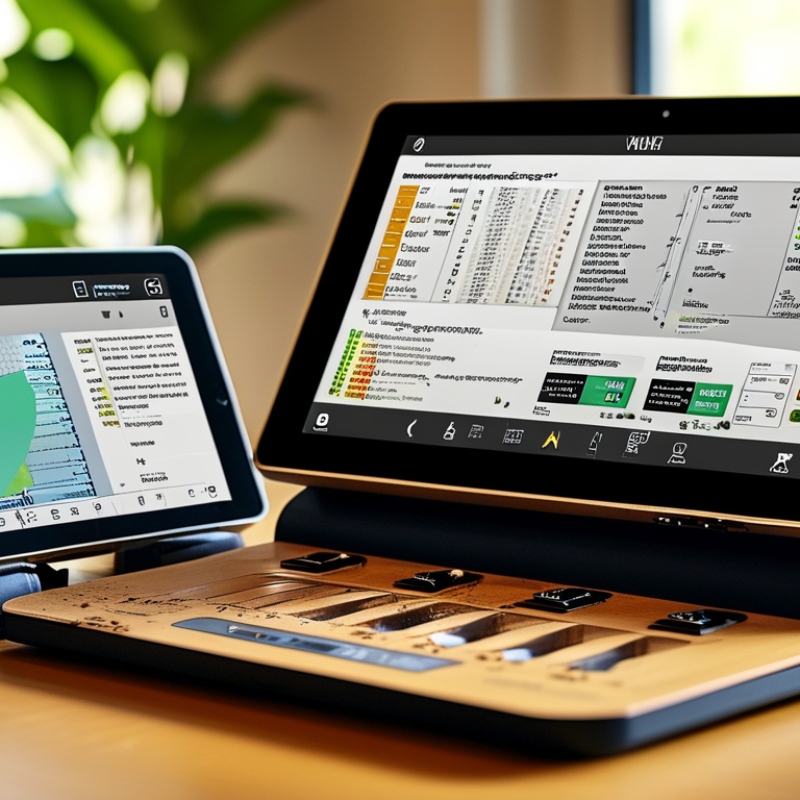
Choosing a tablet counter starts with your actual production routine, not a catalogue photo. Record batch size, tablet diameter, shape, weight, friability, and required counting speed. A small pharmacy may need accurate counting for 30 bottles per hour. A contract facility may require continuous operation, multiple formats, and rapid changeovers.
Accuracy deserves measurable targets. The World Health Organization estimates that medication errors cost about US$42 billion globally each year. Your counter should therefore support controlled counting, clear reject handling, and documented checks. Ask for repeatability data at your lowest and highest speed. Check whether dust extraction, vibration control, and gentle product handling match your tablets. A machine that counts quickly but damages fragile tablets is not efficient.
Think beyond the counter. Good systems can record batch numbers, operator actions, alarms, and verification results. These records support traceability and help during audits. FDA process-validation guidance also emphasizes documented, repeatable manufacturing controls. Review cleaning access, tool-free changeovers, and compatibility with your filling line. Plan for future products, but do not overbuy. Bigger is not always better. My practical mistake was focusing on maximum speed before measuring real changeover losses. That decision looked efficient on paper. It was not. Use production trials with your own tablets, containers, and operators before approval. Ask staff what slows them down. Their answer may challenge the specification.
Choosing the best tablet counter depends on counting accuracy, production speed, and the level of control your business needs. Manual counters suit small batches and low investment, but they rely heavily on operator attention. Semi-automatic counters use vibration channels and optical sensors to improve consistency. Fully automatic systems combine feeding, counting, filling, and inspection. They cost more, yet they reduce repeated handling. The 2023 PMMI Pharmaceutical and Medical Device Equipment Trends report highlights automation, flexibility, and data integrity as major equipment priorities.
Counting methods also deserve close comparison. Volumetric counting is fast, but tablet size changes can reduce reliability. Weight-based counting works well for stable products, although calibration is essential. Optical counting checks each tablet through sensors or cameras, making it useful for irregular shapes and mixed production schedules. The right system should record batch numbers, reject anomalies, and support easy cleaning. FDA guidance on data integrity emphasizes complete, consistent, and accurate records throughout production.
Do not judge by speed alone. Ask for documented accuracy tests at your actual tablet size, shape, coating, and target output. Grand View Research projects continued growth in pharmaceutical manufacturing equipment, driven partly by automated production and quality demands. However, market growth does not guarantee suitability. A high-speed counter may struggle with fragile tablets, dusty rooms, or frequent product changes. I would also examine changeover time, sensor access, operator training, and maintenance records. One overlooked weakness can cost more than the machine.
Accuracy should guide every tablet counter decision. A machine that misses two tablets in a small batch can create costly rechecks. Test it with different shapes, sizes, colors, and surface textures. Count samples of 100, 500, and 1,000 tablets. Compare the machine’s result with a manual verification. One perfect trial proves little. Record repeated results and inspect the error pattern, not only the average accuracy.
Speed matters when orders increase, but maximum speed can be misleading. A fast counter may require frequent stops for jams or adjustments. Ask how quickly it handles your usual batch size. Watch the hopper during operation. Tablets should move smoothly, without bouncing, clustering, or spilling. Measure real output per minute in a working environment. Marketing figures rarely reflect every product condition.
Capacity affects workflow and staff fatigue. A larger hopper can reduce refilling, but it may waste space for smaller batches. Ease of operation matters just as much. Controls should be clear, cleaning should take minutes, and settings should be simple to repeat. Check whether operators can change products without confusion. I would also inspect the display, noise level, and access to contact surfaces. Small details become important after hundreds of cycles. The best choice may not be the fastest model. It should deliver consistent counts with manageable effort.
Compatibility should guide your tablet counter decision. Confirm the machine handles your tablet sizes, shapes, coatings, and production speed. A unit may perform well with round tablets but struggle with oval or fragile ones. Ask for a practical test using your actual product samples. Check hopper capacity, counting accuracy, power requirements, and integration with existing packaging equipment. Small gaps can create expensive delays.
Maintenance affects reliability every day. Choose a design with accessible contact parts and clear cleaning instructions. Smooth surfaces reduce residue buildup around the hopper and counting channels. Inspect sensors, belts, and seals on a fixed schedule. Record each inspection, even when nothing seems wrong. That habit creates useful evidence during troubleshooting. I have seen teams replace parts too late because the machine looked clean from the outside. Appearance can mislead.
Safety depends on both equipment and behavior. Guards should remain secure, and emergency controls must be easy to reach. Dust control, stable placement, and proper electrical connections deserve close attention. User training should include setup, changeover, cleaning, fault response, and accuracy checks. Keep instructions near the machine. Use short demonstrations, then observe each operator completing the process. Training often ends too early. A signed attendance sheet does not prove understanding. Refresh skills after product changes, maintenance work, or repeated counting errors.
Choosing a tablet counter starts with total cost, not its advertised purchase price. A practical calculation includes equipment, shipping, installation, training, maintenance, calibration, electricity, and replacement parts. Then add labor savings and the cost of rejected counts. Small errors become expensive when operators repeat them all day. I once underestimated setup time by two hours. That mistake changed the first-year estimate.
Measure required output during the busiest hour, not the average shift. Record container sizes, tablet shapes, counting accuracy, changeover time, and cleaning requirements. A fast machine may be a poor choice if adjustments take thirty minutes between batches. Ask suppliers for a live demonstration using materials similar to yours. Check whether operators understand the controls without constant supervision. That detail affects training cost and daily reliability. Calculate annual cost per counted unit by dividing yearly expenses by usable output.
Include planned downtime, service visits, and realistic production losses. A lower-priced counter can work well when volumes are modest and labor costs are low. A more capable unit may pay back faster under steady, high demand. Do not trust perfect sample results alone. Request repeat tests and inspect count consistency across several container sizes. Document assumptions in a simple spreadsheet, then challenge each one. Your estimate will still be imperfect. Leave a contingency line for unexpected repairs and slower changeovers.



For those larger-sized parts, or smaller quantity runs, we have 2 independent powder coat booths and ovens. The quality, durability and affordability of today’s powder coating finishes make this the process of choice for world-class companies.
Powder coating advantages over other forms of coating are many. Materials used in the Powder coating process can be metals and non-metals that come in a multitude of thicknesses, textures, colors, etc. Another of Powder coating’s biggest advantages over conventional coatings is its ability to create finishes in many different textures. Powder Coating Booths allow us the ability to apply these advantages to large products.
Tri-State Fabricators runs a full-service conveyor line for painting. Wet painting can provide protection or decoration to many different part styles. From start to finish, every project is easier to undergo random and point-based inspection by our skilled painting team.
Advantages to our Wet Paint Line are these lines start with product prep and ends with a thorough inspection of a high quality finished product. Our ability to complete large and small projects with a superior finish and doing so in a timely and economical fashion. This passes along the savings in production to our customers. When powder coating ins not an option, our Wet Paint Line gets the job done right the first time.
When the parts get big and heavy we roll-out our custom paint racks and oversize booth. By utilizing our partnerships with all the major paint brands, we can match virtually any color with wet paint.
The advantages of having access to a Wet Paint Booth are many. Large projects of many different shapes can be loaded into the booth. The Wet Paint Booth offers an environment that is much more controlled than a typical parts painting operation.
Not only are they used because of their controlled environment, but they’re are also advantageous when it comes to applying paint to parts that are needed in industries that require specialty coatings such as medical, aerospace, etc.
Our military forces have some very high standards when it comes to the finish of their vehicles and equipment. From the first pre-treatment step to final coat, it takes a great deal of knowledge and experience to protect the men and women of our armed forces. They deserve only the best, and Tri-State Fabricators provides it.
All of our processes are closely monitored by our staff and management teams. Both of which are highly trained in the processes of metal fabrication and finishing. Tri-State Fabricators’ goal is to always fully satisfy each and every customer, including the military. We will always put a 110% into what we do.
Abrasive media blasting is an excellent way to remove old paint, rust, and increase the paint/powder adhesion. Glass beads produce a much smoother and brighter finish than angular abrasives; leaving the part clean yet without any dimensional change. Chemically inert and environmentally friendly, we can recycle our beads approximately 30 times; making them a more preferred method of metal cleaning or surface finishing.
Advantages to Glass Bead Blasting are many. Glass bead blast media is used when a project is needing rough surfaces need to become smooth for applications of coatings such as paint. It is typically used to clean paint and rust from a product surface without deforming the surface it is being used on. Overall, compared to many other blasting media, Glass Bead Blasting is a very economical choice and those savings are always passed on to our customers.
Tri-State Fabricators utilize a zinc phosphate wash to clean and etch the material to ensure the best paint adhesion possible. The unique design of our 3-stage wash system does the work like a 5-stage. From Cleaning and rinsing to conversion coating and post-treatment, Our Part Washing process is a complete service and works throughout the fabrication service and the finishing service.
Along with the previously mentioned benefits, Curing is a vital chemical reaction that leaves the product finish hard and relatively safe from mild abrasion and aggressive corrosion. This process can be done in more than one way; ambient air-dry or in curing ovens at temps that exceed 240°.
From fixing paint mistakes (someone else’s of course) to simply cleaning our paint line hooks, our burn-off oven is put to good use. After a quick burn-off, a little clean up, and a fresh coat of paint, your parts will look better than new.
Why does our Burn-Off Oven work so well? Because super heating the air around parts turns the materials into ashes. From paint and powder coatings to rubber and machining oils, high temps do the job without degrading the integrity of the part.
Masking is a vital part of producing high quality products. We have die-cut masking patterns to protect machined surfaces as well as a wide range of plugs and caps to protect threaded holes and bolts. We provide permanent and temporary masking.
Masking allows the selected sections of a product to be protected from a fabrication or finishing service. This can be with both chemicals when etching and tapes, paints when only finishing just a section of the product. Masking is great in aiding the customization process of a project.
Screen printing is a photographic process that transfers artwork onto a porous nylon screen which allows colored ink to flow through the screen and be deposited on an aluminum or plastic component. We can generally have just about any design created onto a screen for your parts.
Some of the advantages of Screen Printing are, brand recognition for your business displaying on your products, assembly instructions, product warnings/hazards, etc. Tri-State Fabricators produces Screen Printing of the highest quality so you know it’s durable.
Metal Finishing is the art of treating the exterior portion of product, often metal but can also be made of other materials, so that the surface is clean and free of any debris. Then the process of applying coats or either paint of powder coat takes place. This coating process improves the quality of the product in both appearance and resistance to wear and corrosion.
Tri-State Fabricators, Inc., understands that a project typically isn’t complete until a high-quality finish has been added to your product. This is why our painting and powder coating teams continuously inspect the products throughout the Metal Finishing process.


