How to Choose the Best Petrol Tricycle for Your Business?
Choosing the best Petrol Tricycle for your business starts with the work it must do each day. A delivery route through narrow streets has different demands from hauling produce across uneven roads. Note your typical cargo weight, journey distance, road surface, and number of daily trips. Real figures beat guesses.
An illustrative expert perspective from Petrol Tricycle adviser Alex Morgan offers this guiding principle: “Choose for the load and route you actually have, not the biggest numbers on a brochure.” Those words are a practical reminder, not a substitute for checking specifications. Compare rated payload, engine performance, fuel use, braking, and suspension. Ask a dealer to explain how the tricycle handles a full load, and whether replacement parts and routine servicing are readily available. Check the seat and controls in person, too. A long workday makes small discomforts feel large.
That sounds obvious. It is easy to miss. A low purchase price may look attractive, yet frequent repairs or poor fuel economy can raise operating costs. Ask for a clear warranty and a written maintenance schedule. If possible, take a test ride on roads similar to your regular route. Pay attention to steering, braking, engine response, and stability with a representative load. No model suits every business. The right choice is the one that fits your real workload, support needs, and budget—with enough room to reconsider if your plans change.
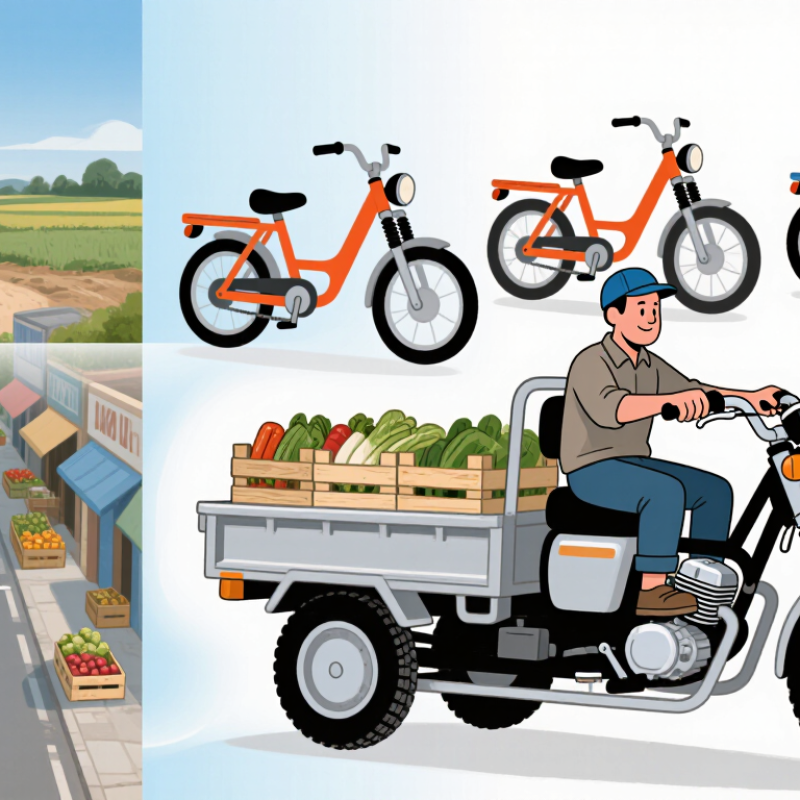
Define Your Business Needs and Typical Routes
Before comparing petrol tricycles, note what your business carries, how often it travels, and where it goes. Food crates, hardware, and landscaping tools need different cargo space and secure tie-down points. Estimate the heaviest regular load, not just an average delivery. Check the rated payload and bed dimensions carefully; excess weight can affect braking, handling, and wear. Leave room for awkward items.
Tips: Map a typical workday, including total distance, stops, slopes, and road surfaces. Note narrow lanes, rough patches, and places where the tricycle must turn or park. A route may look flat on a map, yet one steep loading-yard ramp can change what feels suitable. Test the vehicle with a realistic load, if possible.
Think about where loading happens and how long the engine may run between stops. Frequent short trips, long uphill climbs, and extended daily mileage place different demands on a vehicle. Ask a qualified dealer or mechanic to explain maintenance intervals and payload limits in writing. A common planning mistake is choosing for the busiest day alone. Still, planning around your normal workload, with a modest allowance for growth, is not always easy. A short route log can reveal patterns you might otherwise miss.
Match Payload Capacity and Cargo Design to Your Work
Choosing a petrol tricycle starts with the load your business carries on an ordinary day, not its biggest possible order. Weigh typical cargo and estimate the heaviest regular load, including tools, packaging, and the driver where specifications require it. Leave a practical margin for uneven weight and changing workloads. A machine rated close to its limit may feel adequate on level ground, then struggle on a steep lane. Check the manufacturer’s payload rating and operating guidance before comparing models. Do not treat advertised capacity as a target for every trip.
Cargo design matters just as much. A flatbed suits bulky items that need flexible loading, while enclosed sides help keep boxes stable and shield them from rain. For tall goods, measure the usable length, width, and height, then consider how they will be secured. A narrow bed can make loading awkward; a bed that is too large may be harder to maneuver in tight alleys. Think about where your team loads and unloads, too. It is easy to overlook that part. Test access to the cargo area with the actual containers you use, and check whether the load sits evenly over the wheels. Real work rarely matches a tidy specification sheet exactly.
Compare Engine Performance, Fuel Use, and Terrain Capability
Choosing a petrol tricycle starts with the work it must do each day. Compare engine torque, rated power, and payload capacity, not engine size alone. Strong low-speed torque helps when carrying goods away from a stop or climbing a ramp. Ask for fuel-use figures under a stated load; an unloaded test may not reflect delivery work. The U.S. Department of Energy’s FuelEconomy.gov reports that aggressive driving can reduce a car’s fuel economy by 10–40% in stop-and-go traffic. That figure is not a tricycle forecast, but it shows why frequent acceleration and braking matter.
Terrain changes the choice. On steep or uneven routes, check ground clearance, wheelbase, suspension, and the maker’s stated gradeability. A short test on your actual route can reveal sluggish hill starts, wheel slip, or uncomfortable vibration. Wet mud is different from firm gravel. A specification sheet cannot tell the whole story.
Tips: Carry a typical load during the test drive, then record fuel used over a fixed route. Compare results across several trips; one run can mislead. Check whether the engine maintains steady speed on your steepest regular climb. If it struggles, the cheaper option may cost more in time and fuel.
How to Choose the Best Petrol Tricycle for Your Business?
Compare representative engine classes by power, fuel use, and terrain suitability.
These indicative planning estimates compare common 150 cc, 200 cc, and 250 cc petrol tricycle classes; specifications and real-world fuel use vary by model, load, road condition, and driving style. Terrain suitability is a relative 1–5 guide: 1 is best suited to flat routes and light loads, while 5 indicates better suitability for rougher or steeper routes. Check the manufacturer’s rated payload and test the vehicle on your actual routes before buying.
Check Safety Features, Durability, and Maintenance Access
When choosing a petrol tricycle, inspect the brakes, lights, mirrors, tyres, and frame before comparing price. WHO’s Global Status Report on Road Safety 2023 estimates that 1.19 million people die in road crashes each year. That figure is not tricycle-specific, but it underlines why safety checks matter. Ask for the rated payload and test the vehicle with a realistic load. Check that it stops evenly and remains stable on a rough, gently sloped road. Small details matter. A shiny finish proves little.
Durability depends on more than thick-looking metal. Look closely at welds, suspension joints, corrosion protection, and how the cargo bed is secured. Ask where routine service points sit and whether a mechanic can reach the filter, spark plug, battery, and brake components without removing major panels. NHTSA’s 2022 motorcycle safety data notes that motorcycles made up 14% of US traffic fatalities; this is not a tricycle statistic, but it is a reminder to assess powered two-wheel-style controls carefully. Ask the seller for a written service schedule, parts lead times, and warranty terms. I would not assume parts are easy to find.
Tips: Bring a checklist. Start the engine cold, test the brakes, and inspect for fuel or oil leaks. Ask to see the maintenance manual, then confirm a local workshop can follow it. A short test ride can reveal awkward steering or hard-to-reach controls.
Calculate Total Ownership Costs and Evaluate Dealer Support
A petrol tricycle’s purchase price is only the first line on the worksheet. Estimate fuel use from your usual route, daily load, and hours in traffic, then add scheduled servicing, tires, and likely repairs. Small costs add up. A machine carrying produce over rough streets may need more frequent tire checks than one used on smooth roads. Ask the dealer for a written maintenance schedule and price estimates for common parts, such as brake shoes and filters. Use your own delivery records where possible; guessed mileage can make a low-cost option look better than it is.
Dealer support affects ownership costs too. Ask how quickly routine service can be booked, which parts are kept in stock, and what the warranty excludes. Get clear answers in writing. A nearby workshop may save travel time, but location alone does not prove dependable service. Talk with local operators if you can, and ask what happened when their vehicles needed repairs. I would also compare the dealer’s service estimate with an independent mechanic’s view. It may feel overly cautious, but one missed delivery can cost more than a minor service bill. Keep a simple monthly sheet for fuel, repairs, and downtime; the numbers may challenge your first choice.





