


How to Choose the Best Mechanic Tool Box for Your Needs?

Choosing the best Mechanic Tool Box begins with understanding how and where you work. A home garage needs different storage from a mobile repair van or a busy workshop. Before comparing brands, examine your tools, workspace, and daily routines. Count your sockets, wrenches, screwdrivers, diagnostic devices, and specialty equipment. Measure the available floor space, doorways, and vehicle storage area. A box that looks impressive online may become awkward beside a crowded workbench.

Durability matters, but it should not be judged by appearance alone. Inspect the steel thickness, drawer slides, caster quality, lock design, and weight capacity. Smooth, full-extension drawers help you reach tools without kneeling or digging through loose piles. Strong casters should roll across concrete floors without wobbling. In my experience, small details matter most after months of use. A shallow drawer can save time for sockets, while a deeper drawer may protect drills and power tools. That difference is easy to miss.

Think about security, organization, mobility, and future tool purchases. Foam inserts, drawer liners, and labeled compartments can reduce wasted movement during repairs. However, buying the largest box is not always wise. Extra space can encourage clutter and unnecessary spending. Your needs may also change as your skills develop. This guide compares practical features, materials, layouts, and price levels to help you choose with confidence. Some recommendations may require reconsideration, because no single Mechanic Tool Box suits every mechanic. The right choice should support safe work, efficient access, and dependable long-term use. Practical fit matters more than marketing claims.
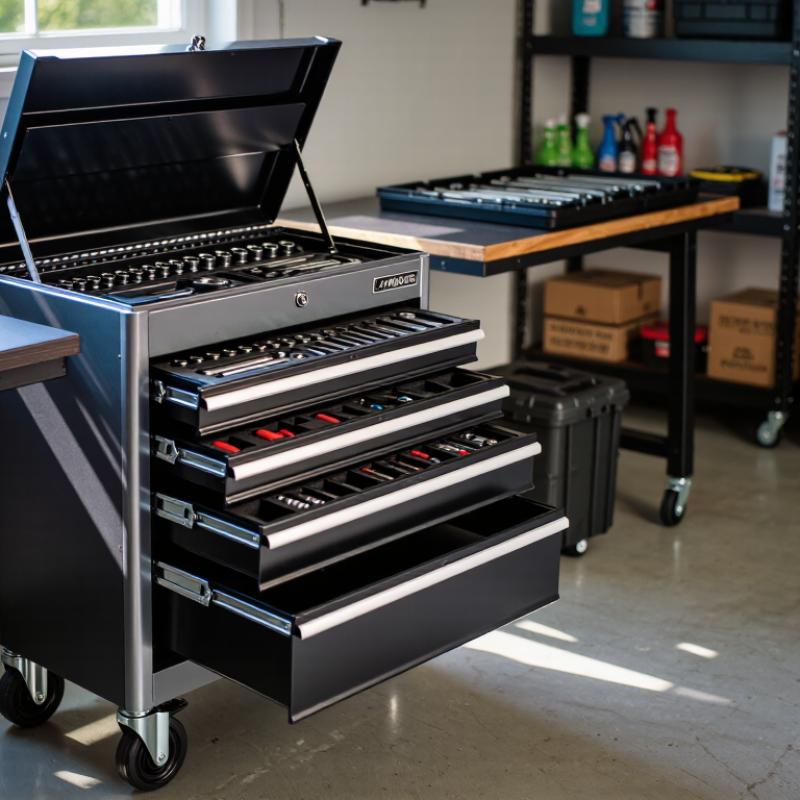
How to Choose the Best Mechanic Tool Box for Your Needs?

Understanding Mechanic Tool Box Types and Their Main Uses

Choosing a mechanic tool box begins with understanding its type and daily purpose. A portable cantilever box suits mobile repairs, with small compartments for sockets, drivers, and pliers. A rolling chest works better in a fixed garage. Its drawers separate heavy ratchets from delicate measuring tools. A modular stackable system offers flexibility when your collection keeps growing. It is convenient, though stacked cases can become awkward on uneven floors.

Tool storage is not merely about appearance. Grand View Research estimated the global hand tools market at over 25 billion dollars in 2023, showing how many tools require organized storage. A professional technician may need a deep roller cabinet for torque wrenches and impact tools. A home mechanic might need only a compact chest with removable trays. OSHA’s materials-handling guidance emphasizes reducing unnecessary lifting and keeping work areas orderly. That makes drawer layout a practical safety decision, not a luxury.

Check drawer load ratings, wheel locks, corrosion-resistant finishes, and full-extension slides before buying. Measure your workspace carefully. I once chose a box with impressive capacity, but its deep lower drawers wasted space for smaller tools. That mistake still influences my recommendations. Bigger is not always better. A good box places frequently used tools near waist height and keeps rarely used equipment safely below.


Assessing Your Tools, Workspace, and Storage Requirements

Choosing a mechanic tool box starts with an honest tool assessment. Lay out every ratchet, socket, driver, and specialty tool on a clean bench. Group them by frequency of use, not by appearance. A compact daily-use drawer should hold tools you reach for repeatedly. Large, rarely used equipment can stay in deeper storage.

Your workspace matters just as much. Measure wall clearance, aisle width, and the distance between the box and your vehicle lift or workbench. The U.S. Bureau of Labor Statistics reported 2.6 million nonfatal workplace injuries and illnesses in private industry in 2023. Crowded floors and poorly placed drawers can increase avoidable movement and handling risks. Keep heavy tools between knee and shoulder height. Lockable casters are useful, but they do not replace stable positioning.

Storage capacity should reflect your next year, not only today. Leave roughly 20 percent of each drawer open for new tools, protective equipment, or improved organization. I once selected a box by drawer count alone, then discovered that shallow drawers wasted vertical space. That was a costly mistake. Check drawer depth, load ratings, extension strength, and corrosion resistance. OSHA guidance emphasizes keeping work areas orderly and free from hazards, while NIOSH research repeatedly links better organization with safer work practices. A perfectly fitted box is unlikely. Recheck your measurements before buying.

Comparing Size, Capacity, Materials, and Construction Quality

Choosing the best mechanic tool box starts with the work, not the biggest cabinet. List your daily sockets, torque tools, meters, adapters, and safety equipment. Measure the largest case first. Leave about 20 percent spare capacity for future additions. That space feels unnecessary until a new diagnostic tool arrives.

The U.S. Bureau of Labor Statistics reported about 782,200 automotive service technician jobs in 2023. It projects 2 percent employment growth from 2023 to 2033. A flexible box may therefore serve longer than a tightly packed one. Compare usable drawer depth, slide ratings, internal volume, and working height. Capacity is not just drawer count.

Steel handles heavy shop abuse and supports rigid drawer frames. Aluminum reduces weight but may dent more easily. Polymer resists moisture, yet some designs flex under dense loads. Check weld continuity, fastener security, drawer alignment, caster ratings, and corrosion protection. BLS reported 2.6 million nonfatal workplace injuries and illnesses in private industry during 2023. NIOSH ergonomics guidance emphasizes reducing force and awkward handling. A fully loaded cabinet can undermine that goal. I once selected a deep box because its empty dimensions looked impressive. Its loaded drawers became awkward to open. Now I inspect actual drawer loads and wheel movement, not showroom appearance. That mistake still influences my buying decisions.

Evaluating Mobility, Security, Organization, and Useful Features

Choosing a mechanic’s toolbox starts with mobility, not drawer count. In a busy bay, measure doorways, lift height, and floor condition. A loaded chest can become a daily handling problem. The U.S. Bureau of Labor Statistics recorded 888,220 private-industry cases involving days away from work in 2023. That figure does not prove toolboxes caused injuries. It supports careful decisions about pushing, lifting, and reaching. Choose locking casters, a firm handle, and a load rating above your expected weight. Test the empty box over a threshold. Then test it loaded.

Security should match the workplace, not create false confidence. The Bureau of Justice Statistics estimated 13.6 million property-crime incidents against U.S. households in its 2023 National Crime Victimization Survey. This is not a workshop-specific measure, but it shows why exposed tools deserve attention. Look for a strong central lock, concealed hinges, and drawers that remain shut during movement. A lock helps. It is not a complete security plan. Consider visibility, overnight storage, and whether the box can be anchored.

Organization affects speed and mistakes. Full-extension drawers, rated slides, removable dividers, and non-slip liners keep sockets from rolling under a vehicle. Put heavy tools low and daily tools between waist and shoulder height. Small details matter. Useful features include task lighting, a power outlet, and a side handle for tight spaces. However, extra accessories can reduce drawer capacity or add failure points. I would not pay for every feature. The best choice is the box that makes the next repair obvious, secure, and physically manageable.

Selecting the Best Tool Box for Your Budget and Working Style

How to Choose the Best Mechanic Tool Box for Your Needs?

Selecting the Best Tool Box for Your Budget and Working Style

Choosing a tool box starts with your hands-on routine, not a shiny finish. In a busy repair bay, measure the tools used daily and ignore the rest. A compact chest suits mobile work and limited garage space. A rolling cabinet works better when heavy sockets, drills, and torque tools stay together. Check drawer depth with your largest ratchet before paying. That small step prevents frustrating returns.

Your budget should cover the whole setup, including liners, locks, and replacement casters. A lower-cost steel box can serve occasional weekend repairs if its drawers slide smoothly and the frame stays rigid. For daily trade work, prioritize welded corners, full-extension slides, and a stated load rating. Test one drawer with both hands. It should open evenly.

I once chose extra height over stronger slides; the box looked impressive but sagged under dense tools. That mistake changed how I compare capacity.

Match organization to your working style. Mechanics diagnosing several systems may prefer shallow drawers and labeled trays. Fabricators often need deeper storage for clamps, measuring tools, and protective equipment. If you work outdoors, inspect the seal, handle, and wheel brakes carefully. Test it empty. Leave room for future tools. I rarely get this right. Buying only for today can make a budget box expensive within a year. Before deciding, list your actual tools and estimate their combined weight.

Powder Coat Booths

For those larger-sized parts, or smaller quantity runs, we have 2 independent powder coat booths and ovens. The quality, durability and affordability of today’s powder coating finishes make this the process of choice for world-class companies.

Powder coating advantages over other forms of coating are many. Materials used in the Powder coating process can be metals and non-metals that come in a multitude of thicknesses, textures, colors, etc. Another of Powder coating’s biggest advantages over conventional coatings is its ability to create finishes in many different textures. Powder Coating Booths allow us the ability to apply these advantages to large products.

Wet Paint Line

Tri-State Fabricators runs a full-service conveyor line for painting. Wet painting can provide protection or decoration to many different part styles. From start to finish, every project is easier to undergo random and point-based inspection by our skilled painting team.

Advantages to our Wet Paint Line are these lines start with product prep and ends with a thorough inspection of a high quality finished product. Our ability to complete large and small projects with a superior finish and doing so in a timely and economical fashion. This passes along the savings in production to our customers. When powder coating ins not an option, our Wet Paint Line gets the job done right the first time.

Wet Paint Booths

When the parts get big and heavy we roll-out our custom paint racks and oversize booth. By utilizing our partnerships with all the major paint brands, we can match virtually any color with wet paint.

The advantages of having access to a Wet Paint Booth are many. Large projects of many different shapes can be loaded into the booth. The Wet Paint Booth offers an environment that is much more controlled than a typical parts painting operation.

Not only are they used because of their controlled environment, but they’re are also advantageous when it comes to applying paint to parts that are needed in industries that require specialty coatings such as medical, aerospace, etc.

Military CARC

Our military forces have some very high standards when it comes to the finish of their vehicles and equipment. From the first pre-treatment step to final coat, it takes a great deal of knowledge and experience to protect the men and women of our armed forces. They deserve only the best, and Tri-State Fabricators provides it.

All of our processes are closely monitored by our staff and management teams. Both of which are highly trained in the processes of metal fabrication and finishing. Tri-State Fabricators’ goal is to always fully satisfy each and every customer, including the military. We will always put a 110% into what we do.

Glass-Bead Blasting

Abrasive media blasting is an excellent way to remove old paint, rust, and increase the paint/powder adhesion. Glass beads produce a much smoother and brighter finish than angular abrasives; leaving the part clean yet without any dimensional change. Chemically inert and environmentally friendly, we can recycle our beads approximately 30 times; making them a more preferred method of metal cleaning or surface finishing.

Advantages to Glass Bead Blasting are many. Glass bead blast media is used when a project is needing rough surfaces need to become smooth for applications of coatings such as paint. It is typically used to clean paint and rust from a product surface without deforming the surface it is being used on. Overall, compared to many other blasting media, Glass Bead Blasting is a very economical choice and those savings are always passed on to our customers.

Part Washing

Tri-State Fabricators utilize a zinc phosphate wash to clean and etch the material to ensure the best paint adhesion possible. The unique design of our 3-stage wash system does the work like a 5-stage. From Cleaning and rinsing to conversion coating and post-treatment, Our Part Washing process is a complete service and works throughout the fabrication service and the finishing service.

Along with the previously mentioned benefits, Curing is a vital chemical reaction that leaves the product finish hard and relatively safe from mild abrasion and aggressive corrosion. This process can be done in more than one way; ambient air-dry or in curing ovens at temps that exceed 240°.

Burn-Off Oven

From fixing paint mistakes (someone else’s of course) to simply cleaning our paint line hooks, our burn-off oven is put to good use. After a quick burn-off, a little clean up, and a fresh coat of paint, your parts will look better than new.

Why does our Burn-Off Oven work so well? Because super heating the air around parts turns the materials into ashes. From paint and powder coatings to rubber and machining oils, high temps do the job without degrading the integrity of the part.

Masking

Masking is a vital part of producing high quality products. We have die-cut masking patterns to protect machined surfaces as well as a wide range of plugs and caps to protect threaded holes and bolts. We provide permanent and temporary masking.

Masking allows the selected sections of a product to be protected from a fabrication or finishing service. This can be with both chemicals when etching and tapes, paints when only finishing just a section of the product. Masking is great in aiding the customization process of a project.

Screen Printing

Screen printing is a photographic process that transfers artwork onto a porous nylon screen which allows colored ink to flow through the screen and be deposited on an aluminum or plastic component. We can generally have just about any design created onto a screen for your parts.

Some of the advantages of Screen Printing are, brand recognition for your business displaying on your products, assembly instructions, product warnings/hazards, etc. Tri-State Fabricators produces Screen Printing of the highest quality so you know it’s durable.

Metal Finishing

Metal Finishing is the art of treating the exterior portion of product, often metal but can also be made of other materials, so that the surface is clean and free of any debris. Then the process of applying coats or either paint of powder coat takes place. This coating process improves the quality of the product in both appearance and resistance to wear and corrosion.

Tri-State Fabricators, Inc., understands that a project typically isn’t complete until a high-quality finish has been added to your product. This is why our painting and powder coating teams continuously inspect the products throughout the Metal Finishing process.
