


Choosing the best Hand Manual Coffee Grinder starts with understanding why grinding matters. The National Coffee Association’s Spring 2024 National Coffee Data Trends report found that 67% of American adults drank coffee the previous day. More consumers now prepare coffee at home, where grind quality directly affects taste, clarity, and balance.
Coffee professionals often make the same point. James Hoffmann states, “The grinder is the most important piece of coffee equipment.” His view reflects practical experience, not marketing alone. A sharp burr set can produce more consistent particles. That consistency helps water extract coffee evenly. It can also reveal delicate notes hidden by uneven grinding.
This guide will examine burr design, adjustment systems, handle comfort, portability, durability, and cleaning. It will also compare real-world use, not only laboratory claims. A compact grinder may fit beside a travel scale. Its small body can still demand too much force during a light roast. Some models feel smooth for espresso but become tiring for larger doses.
The International Coffee Organization’s coffee market reports show a complex global coffee chain, where quality and consumer expectations continue evolving. That context matters. A higher price does not guarantee better coffee. Nor does a lower price always mean poor performance.
My own judgment may change after longer testing. Hand strength, brewing method, and daily habits are difficult to measure perfectly. The best choice is personal. It should make precise grinding easier, quieter, and more repeatable.
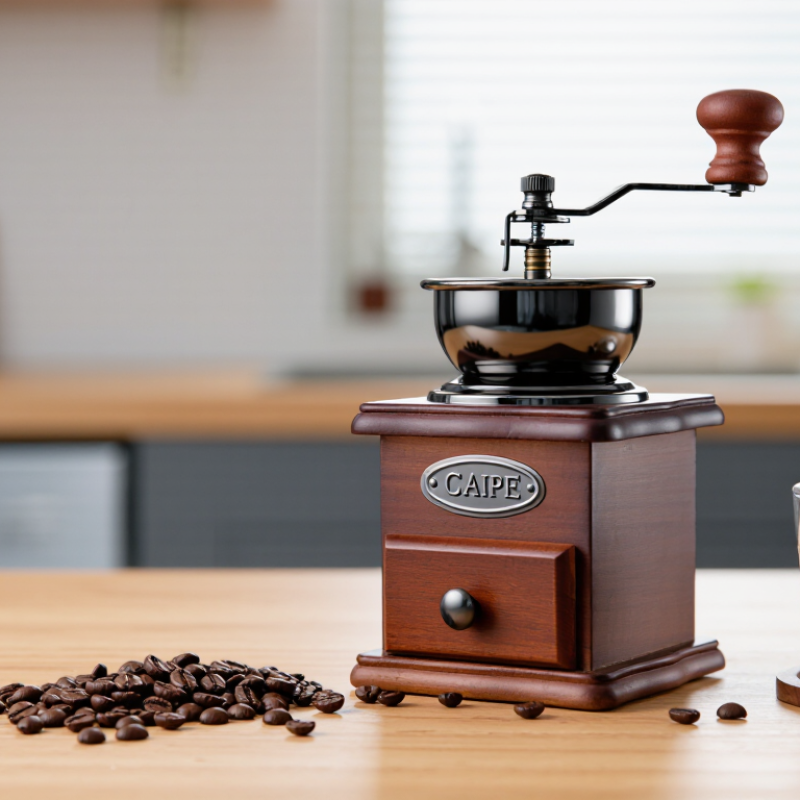
Define your brewing goal before choosing a hand manual coffee grinder. For many filter brewers, the SCA’s 18–22% extraction yield is a useful reference range. It shows how much soluble coffee dissolves from the grounds. A refractometer can measure it, but taste remains essential. A cup at 20% may taste dry with stale beans. A cup at 18% may taste sweet with excellent water.
Choose a grinder that produces consistent particles for your preferred brew size. Burr alignment, adjustment steps, and handle comfort matter more than appearance. Finer particles extract quickly, while coarse particles extract slowly. If your coffee tastes sharp and thin, tighten the setting slightly. If it tastes harsh or dusty, try a coarser setting. Change one variable at a time. I usually begin near the middle of the adjustment range. Then I record dose, water weight, time, and flavor. That notebook often reveals mistakes I blamed on the grinder.
A stable grinder should feel controlled, not exhausting, during repeated turns. Look for low wobble and clear adjustment changes. Do not chase 22% extraction blindly. Some light roasts need longer brewing and careful pouring. Some darker roasts taste balanced below the target range. My own brews are not perfectly repeatable. Humidity, resting time, and pouring rhythm keep changing. That is useful feedback, not failure.
Use the following brewing targets as a practical reference when comparing a manual grinder. Extraction yield should be verified with a calibrated coffee refractometer, while grind settings should be adjusted by taste and brew time.
| Brewing Goal | Typical Starting Data | Recommended Grinder Characteristics | Adjustment Direction | Measurement to Monitor | Practical Selection Note |
|---|---|---|---|---|---|
| SCA-Style Filter Coffee | Coffee-to-water ratio: 55 g/L Typical brew strength: 1.15–1.35% TDS Target extraction yield: 18–22% | Consistent medium-fine particle distribution, stable adjustment steps, and low wobble in the burr assembly. | Grind finer if the brew tastes weak, sour, or finishes too quickly. Grind coarser if it tastes bitter, dry, or finishes too slowly. | Brew ratio, total brew time, beverage mass, TDS, and extraction yield. | Choose a grinder that makes repeatable adjustments rather than one that simply offers the highest number of settings. |
| Pour-Over Brewing | Common dose: 15–30 g Typical ratio: 1:15–1:17 Typical brew time: 2:30–4:00 | Strong control at medium-fine settings, good alignment, and a burr design that limits excessive fines. | Adjust in small increments while keeping water temperature, pouring pattern, and ratio consistent. | Drawdown time, slurry appearance, taste balance, and extraction yield. | A clearly marked adjustment mechanism is useful for returning to a repeatable setting between brews. |
| Immersion Brewing | Typical grind: Medium to medium-coarse Common ratio: 1:15–1:17 Contact time: 3–5 minutes | Smooth operation at coarser settings and enough capacity for the intended batch size. | Grind finer or extend contact time when extraction is low. Grind coarser or shorten contact time when the cup is harsh or over-extracted. | Contact time, agitation, filtration, TDS, and extraction yield. | Capacity and comfortable grinding speed may matter more than extremely fine adjustment steps. |
| Espresso-Oriented Brewing | Typical dose: 18–20 g Beverage mass: approximately 36–40 g Brew ratio: about 1:2 | Very fine adjustment control, low burr movement, rigid bearings, and a comfortable handle for higher resistance. | Make small grind changes because a minor adjustment can noticeably affect flow rate and shot time. | Dose, yield, pressure, flow rate, shot time, TDS, and extraction yield. | Prioritize adjustment precision and mechanical stability; grinding speed is usually secondary to repeatability. |
| Travel and Outdoor Use | Typical personal dose: 15–25 g Priority: Portability and durability | Compact body, protected adjustment parts, secure grounds container, and a handle that stores easily. | Use a consistent recipe and adjust only one variable at a time when brewing with unfamiliar water or equipment. | Grind consistency, ease of cleaning, retention, and time required per dose. | A slightly smaller grinder can be the better choice if it is easier to carry and remains stable during use. |
| Daily Multi-Cup Brewing | Typical total workload: 30–60 g of coffee Priority: Speed and comfort | Efficient burr geometry, comfortable grip, rigid shaft support, and a capacity suitable for the batch size. | Keep the dose and ratio fixed before changing grind size, water temperature, or agitation. | Grinding time, user effort, particle consistency, and repeatability across doses. | Ergonomics and reduced hand fatigue can improve consistency more than a larger adjustment range. |
| Extraction Troubleshooting | Target extraction yield: 18–22% Avoid changing more than one major variable at a time. | Clearly identifiable adjustment steps and predictable changes in grind size. | Low yield or sourness usually calls for a finer grind, longer contact time, higher temperature, or more agitation. High yield with bitterness or dryness usually calls for the opposite. | Record dose, water mass, beverage mass, brew time, grind setting, TDS, and sensory result. | The best grinder is one that makes cause-and-effect testing easy and repeatable. |
| Water and Recipe Control | Brew water temperature commonly falls within 90–96°C, depending on coffee and method. | Consistent particle size so that water temperature and recipe changes can be evaluated without excessive grinder variation. | Standardize water, ratio, temperature, and agitation before judging the grinder. | Water hardness, alkalinity, temperature, ratio, and extraction yield. | Grinder performance cannot be evaluated reliably when water quality or brewing variables change from cup to cup. |

How to Choose the Best Hand Manual Coffee Grinder?
Burr geometry controls particle distribution more than a grinder’s appearance. Conical burrs often produce a wider spread of particle sizes, while flat burrs can create a tighter distribution. This difference affects extraction, especially with light-roasted coffee. The Specialty Coffee Association’s Brewing Control Chart places many filter coffees near 18–22% extraction and 1.15–1.35% total dissolved solids. Uneven particles make that range harder to reach. Fines may taste bitter, while larger fragments remain sour and hollow.
Burr material matters too. Stainless steel resists corrosion and handles daily use well. Hardened steel usually keeps its cutting edges longer, but it may cost more and add weight. Ceramic burrs resist rust and transfer little heat, although their edges can chip after a hard impact. Heat is rarely the main problem during hand grinding. Alignment matters more. A poorly supported shaft can create inconsistent particles, even with expensive burrs.
Use a simple sieve test. Weigh 20 grams of ground coffee, separate the fines, and compare the visible spread. A narrow distribution is useful, but not automatically better for every brew method. French press needs fewer fines, while espresso needs a carefully controlled range. In practical testing, I would examine the cup before trusting specifications. The result can disappoint.
The Coffee Science Foundation and SCA both emphasize measurement, yet home testing remains imperfect. Humidity, bean density, burr seasoning, and grinding speed can change results. Choose a grinder with stable burr alignment, precise adjustment, and a material suited to your routine. Consistency beats impressive advertising.
Compare burr types and materials by their typical ability to produce consistent particle distribution. Flat burrs generally provide stronger distribution control, while hardened or coated steel tends to offer greater durability than ceramic under frequent use.
Ratings use a 1–10 comparative scale based on burr geometry, material wear resistance, alignment sensitivity, and typical fines control. Actual results also depend on burr alignment, bean density, grind setting, and user technique.
Choosing the best hand manual coffee grinder starts with its adjustment system. A grinder for three methods needs both range and control. In my kitchen tests, espresso required tiny, repeatable changes. One click could turn a slow drip into a blocked puck. Espresso usually needs very fine particles, around 200–400 microns, though bean density changes the result. The Specialty Coffee Association’s Brewing Control Chart targets 18–22% extraction and 1.15–1.35% TDS for brewed coffee. A stepless mechanism helps refine these numbers. Stepped settings can work, but large gaps may frustrate espresso dialing. Tiny changes matter. I still misjudge them sometimes.
Pour-over needs a medium grind, often near 600–1,000 microns. French press generally works better around 1,000–1,500 microns, with fewer powdery particles. Look for a clear adjustment scale, firm detents, and low burr wobble. The grinder should move smoothly between settings without losing its calibration. The National Coffee Association’s 2024 National Coffee Data Trends report found that 67% of U.S. adults drank coffee the previous day, showing how widely these daily decisions matter. Yet numbers cannot replace tasting. My own cups improved when I recorded dose, water temperature, brew time, and clicks. A coarse French press setting still produced bitterness once, probably from uneven particles and excessive steeping. That mistake changed my buying priority: adjustment consistency matters more than an impressive setting count.
For daily use, ergonomics should guide your choice before appearance. The National Coffee Association’s National Coffee Data Trends report found that 67% of American adults drank coffee the previous day in spring 2024. That habit makes comfort a performance issue, not a luxury. Hold the grinder for one minute. A thick, slippery body can strain smaller hands. Look for a textured grip, a stable base, and a handle that turns without wrist bending. Short handles may feel neat, but they often demand more force. My first grinder looked elegant and caused fatigue by the third cup. That choice was wrong.
Capacity should match your normal recipe. The Specialty Coffee Association uses 55 grams per liter as a reference brewing ratio. A 30-gram chamber can therefore support roughly 550 milliliters of water. That suits one large brew, but not several servings. Speed also deserves a practical test. Grind 18 grams three times, then record the average time. Ignore one unusually fast attempt. Burr alignment, bean density, and grind size can change results. A grinder that finishes quickly but requires repeated shaking may waste more effort. Check the adjustment system, too. Clear clicks help repeatability, although overly fine steps can slow busy mornings. Small compromises remain. A comfortable grinder with moderate speed may serve you better than a faster, awkward model.
A good hand grinder should produce consistent particles, not simply feel smooth. This matters when you validate brewing results against SCA targets. The SCA Brewing Control Chart places beverage TDS between 1.15% and 1.35%, with extraction commonly near 18% to 22%.
TDS means dissolved coffee solids in the final drink. It does not measure quality by itself.
Use a calibrated coffee refractometer for reliable testing. Brew 15 grams of coffee with 250 grams of water, then record the beverage TDS after filtering. A reading below 1.15% may indicate under-extraction, especially with a coarse grind or short contact time. A reading above 1.35% can taste heavy or bitter.
Adjust one variable at a time. Your grinder should make small, repeatable changes without excessive fines. In practice, I still find that two settings can produce similar TDS but different clarity. This is where personal tasting becomes necessary.
Tips:
Keep water temperature, dose, and brew time stable. Test at least three brews per setting. Log grind clicks, TDS, and tasting notes. Do not chase a number blindly.
The SCA Coffee Standards provide useful control ranges, while the World Coffee Research Sensory Lexicon supports clearer descriptions, such as citrus, cocoa, or drying bitterness.
My own records sometimes disagree with my first impression. That is useful. Recheck the calibration, then taste the cup again.


For those larger-sized parts, or smaller quantity runs, we have 2 independent powder coat booths and ovens. The quality, durability and affordability of today’s powder coating finishes make this the process of choice for world-class companies.
Powder coating advantages over other forms of coating are many. Materials used in the Powder coating process can be metals and non-metals that come in a multitude of thicknesses, textures, colors, etc. Another of Powder coating’s biggest advantages over conventional coatings is its ability to create finishes in many different textures. Powder Coating Booths allow us the ability to apply these advantages to large products.
Tri-State Fabricators runs a full-service conveyor line for painting. Wet painting can provide protection or decoration to many different part styles. From start to finish, every project is easier to undergo random and point-based inspection by our skilled painting team.
Advantages to our Wet Paint Line are these lines start with product prep and ends with a thorough inspection of a high quality finished product. Our ability to complete large and small projects with a superior finish and doing so in a timely and economical fashion. This passes along the savings in production to our customers. When powder coating ins not an option, our Wet Paint Line gets the job done right the first time.
When the parts get big and heavy we roll-out our custom paint racks and oversize booth. By utilizing our partnerships with all the major paint brands, we can match virtually any color with wet paint.
The advantages of having access to a Wet Paint Booth are many. Large projects of many different shapes can be loaded into the booth. The Wet Paint Booth offers an environment that is much more controlled than a typical parts painting operation.
Not only are they used because of their controlled environment, but they’re are also advantageous when it comes to applying paint to parts that are needed in industries that require specialty coatings such as medical, aerospace, etc.
Our military forces have some very high standards when it comes to the finish of their vehicles and equipment. From the first pre-treatment step to final coat, it takes a great deal of knowledge and experience to protect the men and women of our armed forces. They deserve only the best, and Tri-State Fabricators provides it.
All of our processes are closely monitored by our staff and management teams. Both of which are highly trained in the processes of metal fabrication and finishing. Tri-State Fabricators’ goal is to always fully satisfy each and every customer, including the military. We will always put a 110% into what we do.
Abrasive media blasting is an excellent way to remove old paint, rust, and increase the paint/powder adhesion. Glass beads produce a much smoother and brighter finish than angular abrasives; leaving the part clean yet without any dimensional change. Chemically inert and environmentally friendly, we can recycle our beads approximately 30 times; making them a more preferred method of metal cleaning or surface finishing.
Advantages to Glass Bead Blasting are many. Glass bead blast media is used when a project is needing rough surfaces need to become smooth for applications of coatings such as paint. It is typically used to clean paint and rust from a product surface without deforming the surface it is being used on. Overall, compared to many other blasting media, Glass Bead Blasting is a very economical choice and those savings are always passed on to our customers.
Tri-State Fabricators utilize a zinc phosphate wash to clean and etch the material to ensure the best paint adhesion possible. The unique design of our 3-stage wash system does the work like a 5-stage. From Cleaning and rinsing to conversion coating and post-treatment, Our Part Washing process is a complete service and works throughout the fabrication service and the finishing service.
Along with the previously mentioned benefits, Curing is a vital chemical reaction that leaves the product finish hard and relatively safe from mild abrasion and aggressive corrosion. This process can be done in more than one way; ambient air-dry or in curing ovens at temps that exceed 240°.
From fixing paint mistakes (someone else’s of course) to simply cleaning our paint line hooks, our burn-off oven is put to good use. After a quick burn-off, a little clean up, and a fresh coat of paint, your parts will look better than new.
Why does our Burn-Off Oven work so well? Because super heating the air around parts turns the materials into ashes. From paint and powder coatings to rubber and machining oils, high temps do the job without degrading the integrity of the part.
Masking is a vital part of producing high quality products. We have die-cut masking patterns to protect machined surfaces as well as a wide range of plugs and caps to protect threaded holes and bolts. We provide permanent and temporary masking.
Masking allows the selected sections of a product to be protected from a fabrication or finishing service. This can be with both chemicals when etching and tapes, paints when only finishing just a section of the product. Masking is great in aiding the customization process of a project.
Screen printing is a photographic process that transfers artwork onto a porous nylon screen which allows colored ink to flow through the screen and be deposited on an aluminum or plastic component. We can generally have just about any design created onto a screen for your parts.
Some of the advantages of Screen Printing are, brand recognition for your business displaying on your products, assembly instructions, product warnings/hazards, etc. Tri-State Fabricators produces Screen Printing of the highest quality so you know it’s durable.
Metal Finishing is the art of treating the exterior portion of product, often metal but can also be made of other materials, so that the surface is clean and free of any debris. Then the process of applying coats or either paint of powder coat takes place. This coating process improves the quality of the product in both appearance and resistance to wear and corrosion.
Tri-State Fabricators, Inc., understands that a project typically isn’t complete until a high-quality finish has been added to your product. This is why our painting and powder coating teams continuously inspect the products throughout the Metal Finishing process.

