2026 How to Choose the Best Color Dosing Machine?

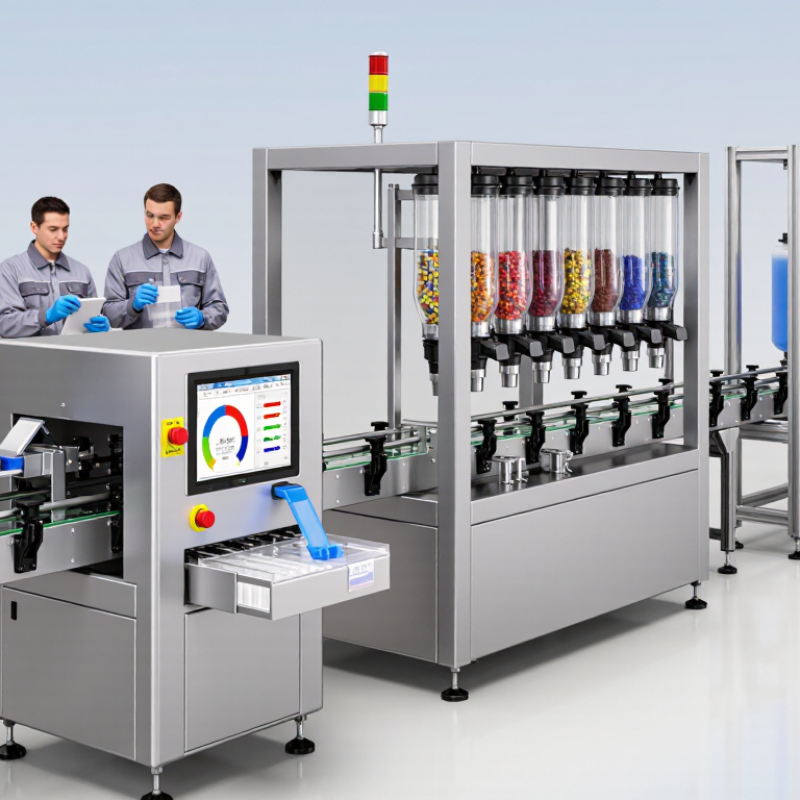
Choosing a Color Dosing Machine in 2026 is less about finding the most advanced model and more about matching equipment to your production line. A machine that works well for one resin, colorant, or output rate may struggle with another. Start with the material: pellets, powder, and liquid colorants can require different feeding methods. Then check the dosing range, expected throughput, and compatibility with your molding or extrusion process.

Look closely at repeatability, not just advertised accuracy. Ask how the supplier tests dosing performance under real operating conditions, and whether settings can be adjusted for changing production needs. A clear control interface helps operators set ratios and spot errors. Easy access to hoppers and contact surfaces can also reduce cleaning time between color changes. Small details matter. Ask about calibration procedures, spare parts, training, and local technical support before comparing prices.

The best choice is rarely universal. A compact feeder may suit a small line, while continuous production could call for a higher-capacity system. Consider installation space, integration with existing equipment, and the cost of routine maintenance. Request a material trial when possible, using your actual colorant and resin. Results may differ from a demonstration. That is worth remembering. This guide explains the main machine types, selection criteria, and questions to ask suppliers, so you can make a practical decision based on production needs rather than features alone.
2026 How to Choose the Best Color Dosing Machine?

Define the 2026 Application: Injection Molding, Extrusion, or Blow Molding

Start with the process, not the machine’s advertised capacity. In injection molding, color is usually metered into resin before the material enters the screw. Check shot size, cycle time, and how often colors change. A small press running short shots may need more precise low-rate dosing than a large machine.

Extrusion calls for steady output over long runs. The dosing unit must keep pace as screw speed or production rate changes. Watch for color streaks near startup, especially after a hopper refill. A short trial at low and high output can reveal whether the feeder stays consistent. It takes time.

Blow molding adds another variable: parison control. Uneven color can become visible across the bottle wall, even when the average dose looks correct. Match the feeder to the resin form, target addition rate, and available space above the hopper. Weighing a sample can help verify the actual feed rate. Not always. Some lines fluctuate because of bridging or inconsistent pellets, not a faulty controller. Record the resin, settings, and observed color before choosing a dosing machine.

Set the Dosing Range: Colorant Often Runs at 0.1–5% of Resin Flow

2026 How to Choose the Best Color Dosing Machine?
Set the Dosing Range: Colorant Often Runs at 0.1–5% of Resin Flow

Before comparing machines, calculate the colorant rate your process actually needs. If resin flows at 40 kg per hour, a 0.1% dose equals 40 grams per hour; a 5% dose equals 2 kilograms per hour. That is a wide operating range. A feeder suited to the upper end may struggle to control the lower end consistently. Check the machine’s usable output range, not just its maximum capacity. Small details matter.

The 0.1–5% range is a planning reference, not a universal recipe. Colorant type, resin, screw design, and desired shade can change the required setting. Confirm whether the percentage is calculated against resin flow, then verify the target with the material supplier or process specialist. Run a measured trial: weigh the colorant delivered over a fixed interval, compare it with resin throughput, and adjust the setting. Watch for bridging or pulsing in the hopper; these can disturb a low feed rate. A calculation can look tidy on paper. The line may disagree. Recheck after startup and whenever throughput changes, because a fixed feeder setting may no longer match the resin flow.

Size Capacity in kg/h to Match Line Throughput and Peak Production Rate

2026 How to Choose the Best Color Dosing Machine?

Size capacity in kg/h to match line throughput and peak production rate. Start with the production line’s actual output, not its nameplate rating. Multiply material throughput by the color concentrate’s dosing percentage to estimate the required feed rate. For example, a 400 kg/h line using a 2% concentrate needs about 8 kg/h of color. Check the calculation against the material supplier’s recommended ratio. Small errors can create visible shade changes across a long production run.

Tips: Record normal and peak throughput during real shifts. Include brief speed increases, startup conditions, and planned material changes. Check that the machine can dose accurately at both the lowest and highest required rates. Peak capacity matters.

Choose a unit that can sustain your expected peak rate, with practical headroom for process variation. Avoid sizing only for a rare short-lived spike; an oversized feeder may struggle to control low-rate dosing. Confirm capacity using the actual concentrate, since pellet shape, flow, and bulk density affect feeding. A controlled trial is more dependable than a catalog estimate. Production figures are not always tidy, so review them with the line operator before selecting a machine.


Compare Gravimetric and Volumetric Feeders for Accuracy and Repeatability

2026 How to Choose the Best Color Dosing Machine?

Compare Gravimetric and Volumetric Feeders for Accuracy and Repeatability

Choosing a color dosing machine starts with understanding how each feeder measures material. A gravimetric feeder weighs the colorant, typically using a loss-in-weight system, and adjusts delivery by mass. This can help maintain a consistent color ratio when pellet flow or bulk density changes. A volumetric feeder meters material by volume over time. It can work well when the colorant flows evenly and production conditions stay stable. Small changes matter: a dusty additive or a partly bridged hopper can affect delivery.

Repeatability is not just a specification on a screen. Check how closely the machine returns to the same dosage across several production runs, at your actual screw speed and throughput. Gravimetric systems may offer tighter control, but they need suitable calibration and setup. Volumetric systems may be simpler to run, though material variation can make the ratio less predictable. A neat datasheet can still mislead. I would test with the exact colorant and resin, then inspect the parts under consistent lighting.

Check PLC Integration, IP Protection, Calibration, and Color-Change Cleaning

2026 How to Choose the Best Color Dosing Machine?

Check PLC integration before comparing cycle speeds. Confirm the machine can exchange start commands, recipe values, status signals, and alarms with your controller. Ask whether communication uses your existing protocol, and test the handshake during a realistic production simulation. A screen that displays a recipe is not proof that the PLC can reliably run it. Small details matter.

Match IP protection to the actual environment. Fine pigment dust, occasional splashes, and routine hose-down cleaning create different demands. Check the rating for the complete unit, including connectors and access panels, not just the control cabinet. A higher rating is not automatically better if it complicates maintenance. Ask how seals are inspected and replaced.

Calibration should use the material and dosing range you expect to run. Compare commanded output with weighed samples, then repeat the check at low and high rates. Record the results and define when recalibration is needed.

Test it cold. Color-change cleaning also deserves a practical trial: inspect hoses, valves, and dead spaces for retained pigment, then measure how much material is needed to reach an acceptable new shade. The first trial may reveal more residue than expected. That is useful evidence, not a reason to hide the result. Request the cleaning procedure and verify it with your own pigments before finalizing the machine.

Powder Coat Booths

For those larger-sized parts, or smaller quantity runs, we have 2 independent powder coat booths and ovens. The quality, durability and affordability of today’s powder coating finishes make this the process of choice for world-class companies.

Powder coating advantages over other forms of coating are many. Materials used in the Powder coating process can be metals and non-metals that come in a multitude of thicknesses, textures, colors, etc. Another of Powder coating’s biggest advantages over conventional coatings is its ability to create finishes in many different textures. Powder Coating Booths allow us the ability to apply these advantages to large products.

Wet Paint Line

Tri-State Fabricators runs a full-service conveyor line for painting. Wet painting can provide protection or decoration to many different part styles. From start to finish, every project is easier to undergo random and point-based inspection by our skilled painting team.

Advantages to our Wet Paint Line are these lines start with product prep and ends with a thorough inspection of a high quality finished product. Our ability to complete large and small projects with a superior finish and doing so in a timely and economical fashion. This passes along the savings in production to our customers. When powder coating ins not an option, our Wet Paint Line gets the job done right the first time.

Wet Paint Booths

When the parts get big and heavy we roll-out our custom paint racks and oversize booth. By utilizing our partnerships with all the major paint brands, we can match virtually any color with wet paint.

The advantages of having access to a Wet Paint Booth are many. Large projects of many different shapes can be loaded into the booth. The Wet Paint Booth offers an environment that is much more controlled than a typical parts painting operation.

Not only are they used because of their controlled environment, but they’re are also advantageous when it comes to applying paint to parts that are needed in industries that require specialty coatings such as medical, aerospace, etc.

Military CARC

Our military forces have some very high standards when it comes to the finish of their vehicles and equipment. From the first pre-treatment step to final coat, it takes a great deal of knowledge and experience to protect the men and women of our armed forces. They deserve only the best, and Tri-State Fabricators provides it.

All of our processes are closely monitored by our staff and management teams. Both of which are highly trained in the processes of metal fabrication and finishing. Tri-State Fabricators’ goal is to always fully satisfy each and every customer, including the military. We will always put a 110% into what we do.

Glass-Bead Blasting

Abrasive media blasting is an excellent way to remove old paint, rust, and increase the paint/powder adhesion. Glass beads produce a much smoother and brighter finish than angular abrasives; leaving the part clean yet without any dimensional change. Chemically inert and environmentally friendly, we can recycle our beads approximately 30 times; making them a more preferred method of metal cleaning or surface finishing.

Advantages to Glass Bead Blasting are many. Glass bead blast media is used when a project is needing rough surfaces need to become smooth for applications of coatings such as paint. It is typically used to clean paint and rust from a product surface without deforming the surface it is being used on. Overall, compared to many other blasting media, Glass Bead Blasting is a very economical choice and those savings are always passed on to our customers.

Part Washing

Tri-State Fabricators utilize a zinc phosphate wash to clean and etch the material to ensure the best paint adhesion possible. The unique design of our 3-stage wash system does the work like a 5-stage. From Cleaning and rinsing to conversion coating and post-treatment, Our Part Washing process is a complete service and works throughout the fabrication service and the finishing service.

Along with the previously mentioned benefits, Curing is a vital chemical reaction that leaves the product finish hard and relatively safe from mild abrasion and aggressive corrosion. This process can be done in more than one way; ambient air-dry or in curing ovens at temps that exceed 240°.

Burn-Off Oven

From fixing paint mistakes (someone else’s of course) to simply cleaning our paint line hooks, our burn-off oven is put to good use. After a quick burn-off, a little clean up, and a fresh coat of paint, your parts will look better than new.

Why does our Burn-Off Oven work so well? Because super heating the air around parts turns the materials into ashes. From paint and powder coatings to rubber and machining oils, high temps do the job without degrading the integrity of the part.

Masking

Masking is a vital part of producing high quality products. We have die-cut masking patterns to protect machined surfaces as well as a wide range of plugs and caps to protect threaded holes and bolts. We provide permanent and temporary masking.

Masking allows the selected sections of a product to be protected from a fabrication or finishing service. This can be with both chemicals when etching and tapes, paints when only finishing just a section of the product. Masking is great in aiding the customization process of a project.

Screen Printing

Screen printing is a photographic process that transfers artwork onto a porous nylon screen which allows colored ink to flow through the screen and be deposited on an aluminum or plastic component. We can generally have just about any design created onto a screen for your parts.

Some of the advantages of Screen Printing are, brand recognition for your business displaying on your products, assembly instructions, product warnings/hazards, etc. Tri-State Fabricators produces Screen Printing of the highest quality so you know it’s durable.

Metal Finishing

Metal Finishing is the art of treating the exterior portion of product, often metal but can also be made of other materials, so that the surface is clean and free of any debris. Then the process of applying coats or either paint of powder coat takes place. This coating process improves the quality of the product in both appearance and resistance to wear and corrosion.

Tri-State Fabricators, Inc., understands that a project typically isn’t complete until a high-quality finish has been added to your product. This is why our painting and powder coating teams continuously inspect the products throughout the Metal Finishing process.