


How to Choose the Best Chlorine Analyser?

Choosing a Chlorine Analyser is not a catalog exercise. It is a decision about measurement reliability, maintenance, and the water your team actually treats. A reading that drifts between service visits can affect dosing decisions. A probe that fouls quickly can turn a tidy control room into a daily troubleshooting station.

The World Health Organization’s Guidelines for Drinking-water Quality provide a practical benchmark: they recommend at least 0.2 mg/L of free chlorine at the point of delivery. For effective disinfection, the guidance describes a residual of at least 0.5 mg/L after 30 minutes of contact, at pH below 8. These figures are operating references, not universal setpoints; local water chemistry and process conditions matter. Still, they show why an analyser’s range, response time, sampling arrangement, and calibration routine deserve close scrutiny.

Look beyond the display. Ask how the instrument handles bubbles, changing flow, temperature shifts, and a dirty sample line. Check whether its measurement method suits your application, and whether operators can verify readings without specialized tools. Small details count. A clear alarm is useful. So is a service procedure that fits the shift schedule.

A named specialist quotation cannot be verified from the material provided, so I will not invent one. That limitation matters: a credible buying guide should distinguish documented guidance from opinion. The right Chlorine Analyser is the one that delivers dependable readings under real operating conditions—and remains maintainable after installation.
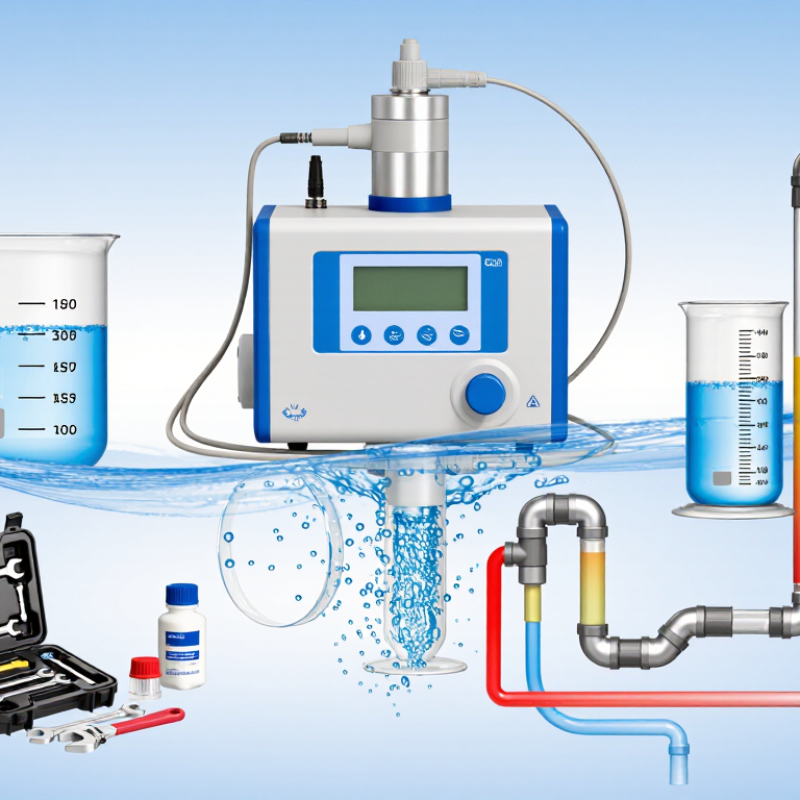
How to Choose the Best Chlorine Analyser?

Understand the Measurement Needs of Your Chlorine Monitoring Process

Before choosing a chlorine analyser, define what the process must measure. A drinking-water line may need free chlorine at a stable residual, while another process may track total chlorine. These readings are not interchangeable. Note the expected range, target limits, and response time needed when dosing changes. Small details matter.

Then examine the sample itself. Is it clear, or does it contain suspended solids, bubbles, or changing pH? Temperature and flow can also affect readings or destabilize a sample line. Match the measurement method to those conditions. Check whether it needs filtration, reagents, or a controlled flow cell. A datasheet cannot reveal every site-specific nuisance.

Plan for daily operation, not just installation. Consider calibration frequency, cleaning access, consumables, alarm outputs, and who will verify results against a trusted reference. In practice, an analyser that is awkward to service may be neglected, even when its readings look precise. It happens. Leave time for routine checks and record drift. Field conditions may disagree with initial expectations, so review the setup after commissioning.


How to Choose the Best Chlorine Analyser?

Understand the measurement needs of your chlorine monitoring process.

WHO drinking-water guidance identifies a minimum free chlorine residual of 0.2 mg/L at the point of delivery, recommends at least 0.5 mg/L after 30 minutes of contact at pH below 8, and sets a guideline value of 5 mg/L. Choose an analyser range that covers the process maximum while providing reliable measurement around the operating target. Requirements and local regulations may differ.
Source: WHO, Guidelines for Drinking-water Quality.

Compare Chlorine Analyser Types and Measurement Methods

Chlorine analysers differ mainly in what they measure and how they handle changing water conditions. Amperometric sensors measure chlorine through an electrochemical response and suit continuous monitoring. They need steady flow and routine membrane or electrolyte checks. Colorimetric instruments add a reagent, often DPD, then measure the resulting colour. They offer a clear comparison with grab samples, but reagent supply and cleaning add work. Small details matter.

The U.S. EPA’s Method 334.0 describes performance evaluation and calibration checks for online chlorine analysers. It is useful when comparing instruments, not just their advertised ranges. Free chlorine and total chlorine are different targets; select the method that matches the process requirement. ORP can indicate changing oxidising conditions, but it is not a direct chlorine concentration measurement. That distinction is easy to miss.

The World Health Organization’s Guidelines for Drinking-water Quality cite 0.5 mg/L free chlorine after 30 minutes’ contact at pH below 8 as a condition for effective disinfection. This is a treatment benchmark, not a universal analyser setpoint. Check pH, temperature, sample flow, and expected concentration range before choosing. A useful check.

Compare analyser readings against a verified reference method during commissioning and routine checks. One clean reading is not proof; that shortcut is tempting, but weak.

Evaluate Operating Conditions, Accuracy, and Response Time

Choose a chlorine analyser for the water and installation it will actually encounter. Temperature swings, changing pH, suspended solids, and air bubbles can distort readings or foul a sample line. The World Health Organization’s Guidelines for Drinking-water Quality note that effective chlorination depends on pH; they describe a free-chlorine residual of at least 0.5 mg/L after 30 minutes of contact at pH below 8. The WHO also identifies 0.2 mg/L as a minimum residual at the point of delivery. Those values make reliable measurement near operating limits essential. Small errors matter.

Check the stated accuracy across your expected measuring range, not only at one convenient calibration point. The US Environmental Protection Agency’s Method 334.0 covers online chlorine analysers and sets out performance and quality-control procedures for residual measurements. Use those procedures to assess calibration drift and compare analyser results with a suitable reference method. A tidy laboratory result can flatter an instrument; a plant’s wet, variable sample line is less forgiving.

Response time should include the whole path from water sample to displayed value. Long tubing, low flow, or a sluggish sensor can hide a fast chlorine drop. Compare the manufacturer’s response specification with a step-change test under site conditions, and record how long the reading takes to settle. A quick display is not necessarily a quick measurement. Keep the test conditions documented; otherwise, comparisons can mislead.

Check Installation, Calibration, and Maintenance Requirements

How to Choose the Best Chlorine Analyser?

Check Installation, Calibration, and Maintenance Requirements

A chlorine analyser is only useful when its sample represents the water being treated. Install the sampling point where flow is steady, avoid stagnant side-lines, and keep tubing short to reduce delay. Check the required flow, pressure, temperature, and drain arrangements before purchase. A shaded, accessible mounting position helps protect the instrument and makes routine checks less awkward. Small details matter.

The World Health Organization’s Guidelines for Drinking-water Quality cite 0.2 mg/L free chlorine as a minimum at delivery, and 0.5 mg/L after 30 minutes’ contact when pH is below 8. These figures make measurement range and alarm settings practical selection criteria, not just specification-sheet details. Confirm that the analyser can cover the site’s normal operating range and expected peaks. Local process targets may differ.

Ask how calibration is performed, how often it is recommended, and whether verification needs a laboratory reference method. The US EPA’s Method 334.0 describes checking online chlorine analysers against a reference measurement, a useful reminder that displayed readings need independent verification. Review reagent use, sensor cleaning, and replacement intervals; include these costs in the operating plan. Keep a simple log of readings and service work. It is easy to underestimate maintenance time, especially when access is cramped or shifts are busy. A tidy installation still needs attention.

How to Choose the Best Chlorine Analyser? – Check Installation, Calibration, and Maintenance Requirements
Analyser Type Best Suited For Installation Requirements Calibration and Verification Routine Maintenance Key Considerations
Amperometric, membrane-covered Continuous monitoring of free chlorine in treated water and distribution systems. Install in a representative sample line with steady flow. Keep the sensor wetted, avoid trapped air, and provide suitable sample conditioning where water contains particles or bubbles. Check whether pH compensation or a separate pH measurement is needed. Follow the instrument’s procedure for zero and span checks. Verify readings against a suitable reference method, such as DPD, at intervals set by the application and instrument instructions. Inspect and clean the sensor and flow cell; check the membrane and electrolyte where applicable. Replace consumable parts according to condition and the maintenance schedule. Responds continuously but can be affected by changes in flow, temperature, pH, and sensor condition. Confirm that the sensor is suitable for the expected chlorine range and water chemistry.
Amperometric, membrane-free Continuous free-chlorine measurement where the water and installation are compatible with the sensor design. Provide the sample flow, pressure, temperature, and mounting arrangement specified for the instrument. Ensure the sample is representative and free of conditions that may interfere with the sensing surface. Check calibration and compare results with a reference method at a frequency based on process risk, operating experience, and instrument guidance. Clean the sensing surface and flow cell as recommended. Inspect for deposits, coating, or damage that could affect response. May reduce membrane-related upkeep, but performance remains dependent on water chemistry and correct sample handling. Verify suitability before selection.
Reagent-based colorimetric (DPD) Automated measurement of free or total chlorine in drinking-water treatment, process water, and other applications requiring reagent-based analysis. Provide a representative sample line, stable sample delivery, drainage, and access for reagent containers. Protect reagents and sample tubing from conditions that could compromise their stability or delivery. Use the instrument’s calibration or verification procedure and periodically compare results with a recognized reference method. Check reagent condition and expiry when investigating unexpected readings. Replenish reagents; clean the measurement cell and sample lines; inspect pumps, tubing, and dosing components. Dispose of reagents and waste in accordance with their safety information and local requirements. Provides a direct chemical measurement but requires reagents and consumables. Sample color, turbidity, or poor reagent delivery may affect results, depending on the system.
Oxidation-reduction potential (ORP) sensor Monitoring oxidation-reduction conditions as a supplementary process indicator. Install where the sensor contacts a representative, flowing sample. Prevent fouling and ensure the sensor and reference electrode are appropriate for the water and installation. Check the probe using an appropriate ORP standard solution and follow the sensor instructions. Do not treat an ORP reading as a direct chlorine-concentration calibration. Clean the electrode; inspect the sensing surface and reference junction; replace or service the probe when its response becomes unreliable. ORP is influenced by pH, temperature, and other oxidising or reducing substances. It does not directly measure chlorine concentration and should not replace a chlorine analyser when concentration data are required.
Portable DPD reference test Spot checks, commissioning, troubleshooting, and verification of an online analyser. Collect a fresh, representative sample and test it promptly using the method’s specified procedure. Use clean equipment and observe the method’s sample-handling requirements. Check the test equipment and reagents as instructed. Use the same chlorine fraction—free or total—when comparing results with an online analyser. Store reagents correctly, check expiry dates, and clean sample cells after use. Useful as a field reference, but it is not a continuous measurement. Timing, sampling technique, reagent condition, and operator procedure can affect the result.
Selection note: Before purchase, confirm the required chlorine fraction (free or total), measurement range, water chemistry, sample conditions, data outputs, consumable availability, and service access. Set calibration and maintenance intervals using the instrument instructions, site validation results, and the consequences of an incorrect reading.

Match Analyser Features to Your Budget and System Needs

A chlorine analyser should fit the water process, not just the purchase budget. Start by identifying what must be measured: free chlorine, total chlorine, or both. Compare the expected concentration range with the instrument’s range and stated accuracy. A unit designed for a wide range may miss small changes near your operating target. Check response time, too; a slow reading can hide a brief dosing or demand shift.

For a small plant, simple calibration and available consumables may matter more than advanced diagnostics. At a remote site, consider alarm relays, data logging, and compatibility with the control system. One overlooked detail is sample conditioning. Dirty or bubbly water can make readings unstable, even with a capable sensor.

Tips: Ask for the full ownership cost, including reagents, replacement parts, calibration time, and sample-line upkeep. Confirm that the analyser uses a measurement method suited to your water.

There is no perfect specification. Compare the installed cost with maintenance effort and the consequences of unreliable readings. A cheaper analyser may be reasonable when checks are frequent and trained staff are nearby. That assumption can fail during night shifts or busy periods.

Conversely, extra features bring little value if operators cannot use them. Review the manual, service interval, and installation requirements before ordering. If possible, test a representative water sample and compare readings with a trusted reference method. Leave room for uncertainty; water quality and workloads rarely stay exactly as planned.

Powder Coat Booths

For those larger-sized parts, or smaller quantity runs, we have 2 independent powder coat booths and ovens. The quality, durability and affordability of today’s powder coating finishes make this the process of choice for world-class companies.

Powder coating advantages over other forms of coating are many. Materials used in the Powder coating process can be metals and non-metals that come in a multitude of thicknesses, textures, colors, etc. Another of Powder coating’s biggest advantages over conventional coatings is its ability to create finishes in many different textures. Powder Coating Booths allow us the ability to apply these advantages to large products.

Wet Paint Line

Tri-State Fabricators runs a full-service conveyor line for painting. Wet painting can provide protection or decoration to many different part styles. From start to finish, every project is easier to undergo random and point-based inspection by our skilled painting team.

Advantages to our Wet Paint Line are these lines start with product prep and ends with a thorough inspection of a high quality finished product. Our ability to complete large and small projects with a superior finish and doing so in a timely and economical fashion. This passes along the savings in production to our customers. When powder coating ins not an option, our Wet Paint Line gets the job done right the first time.

Wet Paint Booths

When the parts get big and heavy we roll-out our custom paint racks and oversize booth. By utilizing our partnerships with all the major paint brands, we can match virtually any color with wet paint.

The advantages of having access to a Wet Paint Booth are many. Large projects of many different shapes can be loaded into the booth. The Wet Paint Booth offers an environment that is much more controlled than a typical parts painting operation.

Not only are they used because of their controlled environment, but they’re are also advantageous when it comes to applying paint to parts that are needed in industries that require specialty coatings such as medical, aerospace, etc.

Military CARC

Our military forces have some very high standards when it comes to the finish of their vehicles and equipment. From the first pre-treatment step to final coat, it takes a great deal of knowledge and experience to protect the men and women of our armed forces. They deserve only the best, and Tri-State Fabricators provides it.

All of our processes are closely monitored by our staff and management teams. Both of which are highly trained in the processes of metal fabrication and finishing. Tri-State Fabricators’ goal is to always fully satisfy each and every customer, including the military. We will always put a 110% into what we do.

Glass-Bead Blasting

Abrasive media blasting is an excellent way to remove old paint, rust, and increase the paint/powder adhesion. Glass beads produce a much smoother and brighter finish than angular abrasives; leaving the part clean yet without any dimensional change. Chemically inert and environmentally friendly, we can recycle our beads approximately 30 times; making them a more preferred method of metal cleaning or surface finishing.

Advantages to Glass Bead Blasting are many. Glass bead blast media is used when a project is needing rough surfaces need to become smooth for applications of coatings such as paint. It is typically used to clean paint and rust from a product surface without deforming the surface it is being used on. Overall, compared to many other blasting media, Glass Bead Blasting is a very economical choice and those savings are always passed on to our customers.

Part Washing

Tri-State Fabricators utilize a zinc phosphate wash to clean and etch the material to ensure the best paint adhesion possible. The unique design of our 3-stage wash system does the work like a 5-stage. From Cleaning and rinsing to conversion coating and post-treatment, Our Part Washing process is a complete service and works throughout the fabrication service and the finishing service.

Along with the previously mentioned benefits, Curing is a vital chemical reaction that leaves the product finish hard and relatively safe from mild abrasion and aggressive corrosion. This process can be done in more than one way; ambient air-dry or in curing ovens at temps that exceed 240°.

Burn-Off Oven

From fixing paint mistakes (someone else’s of course) to simply cleaning our paint line hooks, our burn-off oven is put to good use. After a quick burn-off, a little clean up, and a fresh coat of paint, your parts will look better than new.

Why does our Burn-Off Oven work so well? Because super heating the air around parts turns the materials into ashes. From paint and powder coatings to rubber and machining oils, high temps do the job without degrading the integrity of the part.

Masking

Masking is a vital part of producing high quality products. We have die-cut masking patterns to protect machined surfaces as well as a wide range of plugs and caps to protect threaded holes and bolts. We provide permanent and temporary masking.

Masking allows the selected sections of a product to be protected from a fabrication or finishing service. This can be with both chemicals when etching and tapes, paints when only finishing just a section of the product. Masking is great in aiding the customization process of a project.

Screen Printing

Screen printing is a photographic process that transfers artwork onto a porous nylon screen which allows colored ink to flow through the screen and be deposited on an aluminum or plastic component. We can generally have just about any design created onto a screen for your parts.

Some of the advantages of Screen Printing are, brand recognition for your business displaying on your products, assembly instructions, product warnings/hazards, etc. Tri-State Fabricators produces Screen Printing of the highest quality so you know it’s durable.

Metal Finishing

Metal Finishing is the art of treating the exterior portion of product, often metal but can also be made of other materials, so that the surface is clean and free of any debris. Then the process of applying coats or either paint of powder coat takes place. This coating process improves the quality of the product in both appearance and resistance to wear and corrosion.

Tri-State Fabricators, Inc., understands that a project typically isn’t complete until a high-quality finish has been added to your product. This is why our painting and powder coating teams continuously inspect the products throughout the Metal Finishing process.
