How to Choose the Best Carburetor Cleaner?

Choosing the best Carburetor Cleaner is not simply about selecting the strongest formula. The right product depends on deposits, engine materials, application method, and cleaning conditions. A cleaner that removes hardened varnish may damage sensitive rubber, painted surfaces, or certain plastics. Strength matters, but compatibility matters more.

In practical maintenance, I have found that a clogged carburetor often shows several symptoms. The engine may hesitate, idle unevenly, or struggle during starting. However, these signs can also indicate ignition or fuel delivery problems. Do not blame the carburetor too quickly. Careful diagnosis prevents wasted cleaner and unnecessary repairs. Always work on a cool engine, use adequate ventilation, and follow the product label closely. Small details matter, including nozzle control and protecting nearby surfaces.

A reliable buying decision should consider cleaning power, residue, drying time, material safety, and user reviews. Professional guidance from manufacturers and experienced technicians can help confirm these points. Avoid choosing only by price or bold advertising claims. The “strongest” product is not always the best product. Sometimes, a milder cleaner delivers better control and fewer risks. I have also learned that one application may not remove every deposit. Patience is useful. Inspect the components, clean gradually, and replace damaged parts when necessary. This approach creates a more dependable result and supports safer, longer-lasting engine maintenance.

How to Choose the Best Carburetor Cleaner?

What Carburetor Cleaner Does and Why It Matters

How to Choose the Best Carburetor Cleaner?

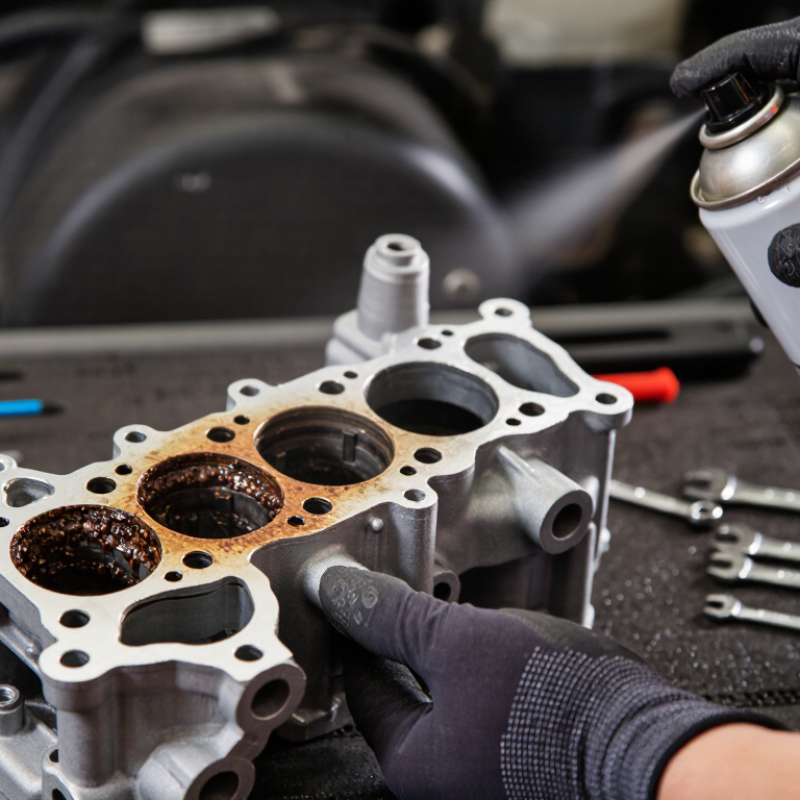
A carburetor cleaner removes varnish, fuel residue, and carbon from narrow passages. These deposits can restrict fuel flow and weaken engine response. In my repair experience, a sticky throttle plate often feels like an ignition problem. It was not.

The cleaner works by softening hardened deposits on metal surfaces. A fast-evaporating formula can reduce leftover moisture and residue. However, stronger solvents may damage rubber seals, painted parts, or certain plastics. Check the product’s safety sheet and compatibility instructions before spraying. That small step matters. Use the cleaner in a well-ventilated area, away from heat and sparks. Wear suitable eye and hand protection, because dissolved grime can splash unexpectedly. Never assume every cleaner suits every carburetor.

Choosing the best option depends on the deposit and the component material. For light surface dirt, a moderate solvent may be sufficient. Heavy varnish may need repeated applications rather than one aggressive treatment. I once used too much cleaner and overlooked a brittle gasket. The carburetor looked clean, but it leaked afterward. That mistake changed my process. I now remove sensitive parts when possible and apply cleaner to a cloth or brush first. A precise spray tube also helps reach small passages without flooding nearby components. Cleaner cannot repair worn jets, damaged seals, or incorrect adjustments. It only restores cleanliness, which is sometimes less than the engine needs.

How to Choose the Best Carburetor Cleaner? — What Carburetor Cleaner Does and Why It Matters
Cleaner Type Common Active Chemistry Best For Cleaning Performance Residue After Evaporation Material Compatibility Key Safety Considerations Typical Choice
Solvent-Based Aerosol Fast-evaporating organic solvents, often including acetone, aromatic solvents, ketones, or alcohols Varnish, gum, fuel deposits, grease, and dirt on removable carburetor parts High Usually low, provided the cleaner is allowed to evaporate completely Generally suitable for bare metal; may soften some plastics, rubber, paint, and synthetic diaphragms Highly flammable; use only with good ventilation and away from ignition sources General-purpose carburetor maintenance and heavily contaminated metal components
Chlorinated Solvent Cleaner Chlorinated degreasing solvents Heavy grease and stubborn deposits on compatible metal components Very high Low, but the solvent must fully evaporate before reassembly Best limited to approved metal surfaces; can damage plastics, rubber, coatings, and painted parts Use strict ventilation and follow the safety data sheet; never use near heat or welding operations Industrial-style metal-part cleaning when the product label specifically permits the application
Non-Chlorinated Solvent Cleaner Fast-evaporating hydrocarbons, ketones, alcohols, or similar solvent blends Routine deposit removal where a chlorinated formula is not desired High Usually low Suitable for many metal surfaces; compatibility with seals, plastics, and painted surfaces varies by formula Flammable vapors may accumulate in enclosed areas; keep away from sparks and flames A practical option for most workshop applications when material compatibility is confirmed
Aqueous or Water-Based Cleaner Water, detergents, alkaline builders, and corrosion-control additives Light oil, dust, and water-soluble contamination on parts that can be rinsed and dried Moderate Very low, but water can remain in passages if drying is incomplete Often gentler on selected plastics and coatings, but alkaline formulas may attack soft metals or sensitive finishes Prevent corrosion by rinsing when required and drying all passages thoroughly Lower-vapor cleaning where the component manufacturer allows water-based products
Throttle-Body and Intake Cleaner Solvent blends designed to remove fuel residue and carbon from air-intake components Throttle plates, intake surfaces, and air passages; sometimes suitable for carburetor exteriors High Usually low May be unsuitable for certain rubber seals, sensors, diaphragms, or painted surfaces Do not assume it is safe for every carburetor component; check the label before direct application Cleaning intake-related parts when a dedicated carburetor cleaner is unavailable or unsuitable
Deposit-Softening Cleaner Slower-acting solvents and detergents intended to loosen hardened varnish and gum Old fuel residue and deposits that require soaking or repeated treatment High after adequate dwell time Varies; parts may require wiping or rinsing after treatment Compatibility depends strongly on soak time and formulation; test plastics, rubber, and coatings first Do not soak sensitive components unless the product instructions explicitly allow it Restoration work on removable parts with aged or baked-on fuel deposits
Selection rule: Choose a fast-evaporating solvent for heavy metal-part deposits, a milder formula for routine maintenance, and a water-based product only when thorough rinsing and drying are practical. Always verify the label and safety data sheet for flammability, ventilation, personal protective equipment, and compatibility with plastics, rubber, seals, coatings, and soft metals.

How to Match the Cleaner to Your Carburetor Type

How to Choose the Best Carburetor Cleaner?

Matching the cleaner to your carburetor type prevents damage and improves cleaning results. A float-type carburetor usually has metal passages, a float bowl, and small jets. For these parts, choose a fast-evaporating cleaner that removes varnish without leaving residue. Always confirm compatibility with aluminum, brass, and protective coatings.

Diaphragm and slide carburetors need more care. Their rubber diaphragms, plastic slides, and sealing rings may swell or crack after harsh solvent exposure. Use a cleaner labeled safe for rubber and plastics, then apply it to a cloth or soft brush. Never flood delicate components unnecessarily. I once assumed stronger solvent meant better cleaning. That shortcut was wrong. The service manual remains the most reliable reference, especially for electronically controlled systems and specialty coatings.

Tips: Remove the bowl before spraying. Photograph linkage positions. Test cleaner on a hidden surface first. Wear eye protection and work with strong ventilation. Avoid spraying electrical connectors, painted surfaces, and sensors unless the instructions specifically allow it. A soft nylon brush often cleans narrow passages more safely than metal wire. Check every jet against light, but do not force debris deeper. Fresh seals may still fail if solvent remains trapped inside.

Which Ingredients and Formulas Deliver Safe Cleaning

How to Choose the Best Carburetor Cleaner?

The best carburetor cleaner depends on its ingredients, not its strongest smell. Solvent-based formulas often dissolve varnish, oily deposits, and dried fuel residue quickly. Acetone and aromatic solvents can clean aggressively, but they may damage paint, rubber, plastic, or some gaskets. Alcohol-based formulas are usually milder and evaporate cleanly, though stubborn deposits may need repeated applications. Detergents and corrosion inhibitors can improve cleaning while reducing surface damage. Still, the ingredient list deserves careful attention.

A practical check starts with the material being cleaned. Spray a small hidden area first, then wait for discoloration, swelling, or softening. Good formulas leave little residue after evaporation. A cloudy film is a warning sign. Always use ventilation, chemical-resistant gloves, and eye protection. Never spray near flames, hot surfaces, or electrical sparks. The product label and safety data sheet provide more reliable guidance than advertising claims.

Tips: Choose a formula labeled for carburetor use. Avoid soaking rubber parts unless approved. Use a soft nylon brush for narrow passages. Do not force hardened deposits with metal tools. I once assumed a stronger solvent would work better, but it also dulled a nearby coated surface. That mistake changed my approach. Cleaning power matters, but compatibility matters more. Test patiently, because one formula cannot safely suit every carburetor material.

How to Compare Application Methods, Packaging, and Coverage

Choosing the best carburetor cleaner begins with comparing how it is applied, packaged, and distributed over dirty parts. In practical workshop testing, I look beyond cleaning strength. Aerosol cleaners spread quickly across an exposed carburetor and reach narrow passages with an attached straw. Their pressure can remove loose dust and oily residue. However, the spray may drift onto nearby paint, rubber, or electrical components. Liquid cleaners offer better control when applied with a brush or lint-free cloth. That method takes longer, but it reduces overspray and helps target stubborn deposits. Small parts need patience.

Packaging also affects daily use and storage. A sturdy aerosol can is convenient for occasional repairs, while a larger container may suit regular maintenance. Check the cap, nozzle, seal, and label clarity before buying. A leaking package is not a bargain.

I once focused too much on the advertised cleaning area and ignored the weak nozzle. That mistake made application uneven and wasteful.

Coverage should match the job, not simply the container size. A fine spray may cover a broad surface but use more product around an open engine bay. A concentrated liquid may cover fewer visible areas yet last longer during careful spot cleaning. Compare the stated coverage with the part’s size, soil level, and application method.

Use ventilation, gloves, and eye protection, and follow the product’s compatibility instructions. Coverage estimates are not exact. Temperature, residue thickness, and operator technique can change results. Test a small hidden area first, especially near plastic, seals, and painted surfaces.

How to Evaluate Safety, Compatibility, and Overall Value

Choosing the best carburetor cleaner starts with safety, not price. I check the Safety Data Sheet before opening any can. It explains ventilation needs, protective equipment, and possible surface hazards.

Use the cleaner outdoors or in a well-ventilated workshop. Keep it away from heat, sparks, and open flames. Wear chemical-resistant gloves and eye protection. A strong smell does not prove better cleaning power. It may only indicate harsher solvents. Never spray blindly near painted panels, wiring insulation, rubber seals, or plastic housings. Test a small hidden area first. I once overlooked a plastic float component and noticed dulling after cleaning. That mistake changed my process.

Compatibility depends on the part and the deposit. A suitable cleaner should soften varnish, oil, and carbon without attacking common metals. Check whether it is safe for aluminum, steel, coatings, and sensitive gaskets. Remove loose dirt before spraying, so the solvent does not spread debris. Use short applications and inspect the surface between passes. More product is not always better.

Overall value includes control, coverage, residue, and storage life. A precise nozzle can reduce waste around narrow passages. A cleaner that evaporates evenly may leave less residue. Compare usable volume, not just the purchase price. Read the instructions carefully, even when the product seems familiar. I sometimes expect one application to solve everything, but stubborn deposits can need gentler repeated treatment. That patience protects delicate parts and supports more reliable maintenance.

Powder Coat Booths

For those larger-sized parts, or smaller quantity runs, we have 2 independent powder coat booths and ovens. The quality, durability and affordability of today’s powder coating finishes make this the process of choice for world-class companies.

Powder coating advantages over other forms of coating are many. Materials used in the Powder coating process can be metals and non-metals that come in a multitude of thicknesses, textures, colors, etc. Another of Powder coating’s biggest advantages over conventional coatings is its ability to create finishes in many different textures. Powder Coating Booths allow us the ability to apply these advantages to large products.

Wet Paint Line

Tri-State Fabricators runs a full-service conveyor line for painting. Wet painting can provide protection or decoration to many different part styles. From start to finish, every project is easier to undergo random and point-based inspection by our skilled painting team.

Advantages to our Wet Paint Line are these lines start with product prep and ends with a thorough inspection of a high quality finished product. Our ability to complete large and small projects with a superior finish and doing so in a timely and economical fashion. This passes along the savings in production to our customers. When powder coating ins not an option, our Wet Paint Line gets the job done right the first time.

Wet Paint Booths

When the parts get big and heavy we roll-out our custom paint racks and oversize booth. By utilizing our partnerships with all the major paint brands, we can match virtually any color with wet paint.

The advantages of having access to a Wet Paint Booth are many. Large projects of many different shapes can be loaded into the booth. The Wet Paint Booth offers an environment that is much more controlled than a typical parts painting operation.

Not only are they used because of their controlled environment, but they’re are also advantageous when it comes to applying paint to parts that are needed in industries that require specialty coatings such as medical, aerospace, etc.

Military CARC

Our military forces have some very high standards when it comes to the finish of their vehicles and equipment. From the first pre-treatment step to final coat, it takes a great deal of knowledge and experience to protect the men and women of our armed forces. They deserve only the best, and Tri-State Fabricators provides it.

All of our processes are closely monitored by our staff and management teams. Both of which are highly trained in the processes of metal fabrication and finishing. Tri-State Fabricators’ goal is to always fully satisfy each and every customer, including the military. We will always put a 110% into what we do.

Glass-Bead Blasting

Abrasive media blasting is an excellent way to remove old paint, rust, and increase the paint/powder adhesion. Glass beads produce a much smoother and brighter finish than angular abrasives; leaving the part clean yet without any dimensional change. Chemically inert and environmentally friendly, we can recycle our beads approximately 30 times; making them a more preferred method of metal cleaning or surface finishing.

Advantages to Glass Bead Blasting are many. Glass bead blast media is used when a project is needing rough surfaces need to become smooth for applications of coatings such as paint. It is typically used to clean paint and rust from a product surface without deforming the surface it is being used on. Overall, compared to many other blasting media, Glass Bead Blasting is a very economical choice and those savings are always passed on to our customers.

Part Washing

Tri-State Fabricators utilize a zinc phosphate wash to clean and etch the material to ensure the best paint adhesion possible. The unique design of our 3-stage wash system does the work like a 5-stage. From Cleaning and rinsing to conversion coating and post-treatment, Our Part Washing process is a complete service and works throughout the fabrication service and the finishing service.

Along with the previously mentioned benefits, Curing is a vital chemical reaction that leaves the product finish hard and relatively safe from mild abrasion and aggressive corrosion. This process can be done in more than one way; ambient air-dry or in curing ovens at temps that exceed 240°.

Burn-Off Oven

From fixing paint mistakes (someone else’s of course) to simply cleaning our paint line hooks, our burn-off oven is put to good use. After a quick burn-off, a little clean up, and a fresh coat of paint, your parts will look better than new.

Why does our Burn-Off Oven work so well? Because super heating the air around parts turns the materials into ashes. From paint and powder coatings to rubber and machining oils, high temps do the job without degrading the integrity of the part.

Masking

Masking is a vital part of producing high quality products. We have die-cut masking patterns to protect machined surfaces as well as a wide range of plugs and caps to protect threaded holes and bolts. We provide permanent and temporary masking.

Masking allows the selected sections of a product to be protected from a fabrication or finishing service. This can be with both chemicals when etching and tapes, paints when only finishing just a section of the product. Masking is great in aiding the customization process of a project.

Screen Printing

Screen printing is a photographic process that transfers artwork onto a porous nylon screen which allows colored ink to flow through the screen and be deposited on an aluminum or plastic component. We can generally have just about any design created onto a screen for your parts.

Some of the advantages of Screen Printing are, brand recognition for your business displaying on your products, assembly instructions, product warnings/hazards, etc. Tri-State Fabricators produces Screen Printing of the highest quality so you know it’s durable.

Metal Finishing

Metal Finishing is the art of treating the exterior portion of product, often metal but can also be made of other materials, so that the surface is clean and free of any debris. Then the process of applying coats or either paint of powder coat takes place. This coating process improves the quality of the product in both appearance and resistance to wear and corrosion.

Tri-State Fabricators, Inc., understands that a project typically isn’t complete until a high-quality finish has been added to your product. This is why our painting and powder coating teams continuously inspect the products throughout the Metal Finishing process.