


Choosing the best Bathroom Shelf is less about copying a polished showroom and more about noticing what your bathroom needs each day. Is there room beside the shower? Do bottles crowd the sink? A shelf that looks elegant but blocks a cabinet door quickly becomes a nuisance. Small details matter.
For this guide, the named specialist and quotation below are illustrative, not a verified published source: bathroom-storage specialist Elena Morris offers this guiding line, “Choose a shelf around your routine, not the other way around.” Use it as a practical test, not a technical guarantee. Measure the wall, check the shelf’s stated load limit, and consider moisture, cleaning, and installation before buying. Tile, painted drywall, and glass do not suit every mounting method. A secure fit matters.
The right Bathroom Shelf should hold the items you reach for without turning into a cluttered ledge. Think shampoo bottles, a soap dish, or folded hand towels. Compare corner shelves, wall-mounted racks, and freestanding units against your available space and habits. Material and finish also affect upkeep; water spots show quickly on some surfaces. Not every choice is perfect. A compact shelf may save space but feel crowded, while a larger one can dominate a small room. This guide weighs those trade-offs and explains what to check, so you can choose with clearer expectations—not just a nice product photo.
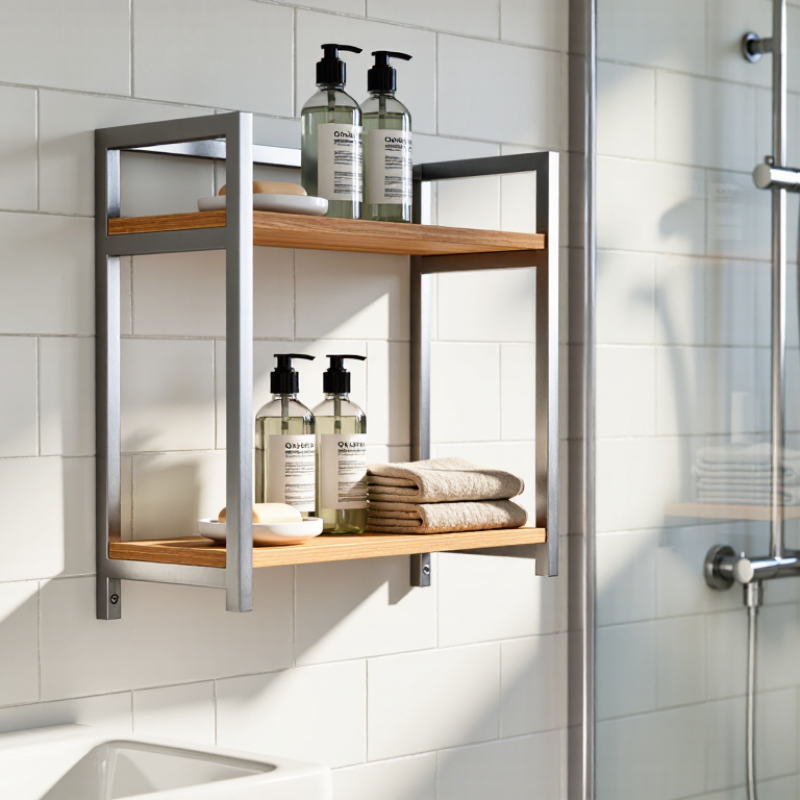
A useful bathroom shelf starts with an honest inventory. Note what you reach for daily: a toothbrush, skincare bottles, folded towels, or children’s bath toys. Then measure the wall or floor area, including door swings, faucet reach, and space needed to stand comfortably. A shelf that fits on paper may feel awkward beside a sink. Small details matter.
The Houzz 2024 U.S. Bathroom Trends Study reports that 76% of renovating homeowners upgraded shower features. That finding makes storage near wet areas worth planning carefully. Choose rust-resistant materials for splash zones, and check whether bottles will fit without blocking controls. For a narrow bathroom, a shallow wall shelf may preserve walking room; in a shared space, separate baskets can reduce daily clutter. I still find that people often underestimate how quickly small containers multiply.
Tips: Measure the tallest bottle and deepest item before shopping. Mark the proposed shelf edges with painter’s tape, then test door clearance and reach. Keep heavier items on sturdy, securely fixed shelves, and reserve higher spots for occasional-use supplies.

A bathroom shelf must handle more than a few bottles. Moisture, cleaning products, and daily bumps all affect its lifespan. Stainless steel resists rust when its finish is intact, while sealed wood adds warmth but needs careful upkeep. Tempered glass looks light and wipes clean, though water spots show quickly. Choose a design that leaves room for tall shampoo bottles and keeps soap within easy reach. Small details matter.
Mounting type affects both stability and flexibility. Wall-mounted shelves save counter space, but the fixings must suit the wall; tile, drywall, and masonry need different anchors. Avoid drilling near plumbing, and check the shelf’s load guidance before placing heavy jars on it. Tension-pole units can suit renters, though uneven floors may make them wobble. Freestanding shelves are simple to move, but they can crowd a narrow shower. There is no perfect option. I’d also reconsider a choice if the shelf is difficult to clean behind.
Tips: Measure the space with the shower door open. Check corners for a clear fit. Dry the shelf after installation, and inspect its fixings occasionally. A tiny tilt can become annoying.
Check Weight Capacity, Moisture Resistance, and Safety
Start with the shelf’s stated load capacity, not its appearance. Add up the weight of bottles, jars, and wet towels, then leave a safety margin. A wide glass bottle can tip near an edge, even when the shelf is not overloaded. Check whether the rating assumes evenly distributed weight. It may not cover a heavy item placed in one corner.
Moisture resistance matters as much as strength. The U.S. Environmental Protection Agency’s A Brief Guide to Mold, Moisture and Your Home recommends keeping indoor relative humidity below 60%, ideally between 30% and 50%. That guidance concerns room humidity, not a shelf’s durability, so inspect the material and its finish directly. Look for corrosion-resistant fittings and sealed edges, especially near a shower. Small details matter. Still, no coating stays flawless forever; check for swelling, peeling, or rust during routine cleaning.
Tips: Confirm the wall type and use suitable anchors or studs. Keep heavy items low and away from the edge. After installation, gently test the shelf before loading it. I’d recheck the fixings later, too; a damp bathroom can loosen things over time.
A shelf should fit the wall and the items you actually use. Measure the clear space, including nearby doors, taps, and towel bars. In a narrow bathroom, a shallow shelf can hold daily essentials without crowding the walkway. A corner or recessed shelf makes use of awkward space, while a wider shelf suits folded towels or storage baskets. Check the shelf’s depth against your tallest bottle; an attractive ledge is less useful if shampoo keeps tipping over.
Style matters, but function comes first. Houzz’s 2024 U.S. Bathroom Trends Study reports that 54% of homeowners upgrading their showers enlarged them. That shift can leave less wall space for storage, so plan shelf placement around the shower opening and splash zone. Choose finishes that complement existing hardware, and favor moisture-resistant materials for humid areas. Small details count. A metal shelf may feel crisp beside tile, while wood adds warmth—but it needs suitable care. I’d still measure twice; product photos can make a bulky shelf look surprisingly slight.
Tips: Use painter’s tape to outline the shelf on the wall. Stand back, open nearby doors, and check whether bottles will be easy to reach.
A bathroom shelf should fit the wall, not just the space beside the sink. Check whether the mounting kit suits tile, drywall, or a stud-backed wall; the same anchor will not work equally well everywhere. Measure the shelf and mark its fixing points with a level before drilling. Measure twice. On tile, use a bit intended for the material and work carefully to reduce cracking. Check for plumbing or wiring behind the wall, and follow the shelf maker’s stated load limit. A bottle of shampoo feels light until several bottles sit on one small bracket.
Long-term upkeep depends on moisture and everyday handling. Look for smooth edges, secure joints, and a design that lets water drain instead of collecting beneath bottles. Wipe standing water after showers, especially around screw heads and corners. Water finds gaps. Use a cleaner suited to the shelf’s material; harsh products can dull some finishes. If the shelf loosens, shifts, or develops rust, remove the load and inspect the fixings rather than tightening blindly.
Think about what you will store and how often you clean. Open shelves make spills easy to spot, while deep ledges can hide soap residue at the back. A shelf placed too close to the shower may stay wet longer than expected. It is easy to focus on appearance and miss that detail. Recheck the installation after a few weeks, because walls and fittings can reveal small problems only with regular use.
Compare typical installation and routine-care effort before choosing a shelf. Scores are general guidance on a 1–5 scale, where 1 is low effort and 5 is high; actual requirements vary by product, finish, wall surface, and bathroom conditions.
Check the manufacturer’s load limit and mounting instructions. Use suitable fixings for the wall, and dry shelves regularly to reduce water spots and residue.


For those larger-sized parts, or smaller quantity runs, we have 2 independent powder coat booths and ovens. The quality, durability and affordability of today’s powder coating finishes make this the process of choice for world-class companies.
Powder coating advantages over other forms of coating are many. Materials used in the Powder coating process can be metals and non-metals that come in a multitude of thicknesses, textures, colors, etc. Another of Powder coating’s biggest advantages over conventional coatings is its ability to create finishes in many different textures. Powder Coating Booths allow us the ability to apply these advantages to large products.
Tri-State Fabricators runs a full-service conveyor line for painting. Wet painting can provide protection or decoration to many different part styles. From start to finish, every project is easier to undergo random and point-based inspection by our skilled painting team.
Advantages to our Wet Paint Line are these lines start with product prep and ends with a thorough inspection of a high quality finished product. Our ability to complete large and small projects with a superior finish and doing so in a timely and economical fashion. This passes along the savings in production to our customers. When powder coating ins not an option, our Wet Paint Line gets the job done right the first time.
When the parts get big and heavy we roll-out our custom paint racks and oversize booth. By utilizing our partnerships with all the major paint brands, we can match virtually any color with wet paint.
The advantages of having access to a Wet Paint Booth are many. Large projects of many different shapes can be loaded into the booth. The Wet Paint Booth offers an environment that is much more controlled than a typical parts painting operation.
Not only are they used because of their controlled environment, but they’re are also advantageous when it comes to applying paint to parts that are needed in industries that require specialty coatings such as medical, aerospace, etc.
Our military forces have some very high standards when it comes to the finish of their vehicles and equipment. From the first pre-treatment step to final coat, it takes a great deal of knowledge and experience to protect the men and women of our armed forces. They deserve only the best, and Tri-State Fabricators provides it.
All of our processes are closely monitored by our staff and management teams. Both of which are highly trained in the processes of metal fabrication and finishing. Tri-State Fabricators’ goal is to always fully satisfy each and every customer, including the military. We will always put a 110% into what we do.
Abrasive media blasting is an excellent way to remove old paint, rust, and increase the paint/powder adhesion. Glass beads produce a much smoother and brighter finish than angular abrasives; leaving the part clean yet without any dimensional change. Chemically inert and environmentally friendly, we can recycle our beads approximately 30 times; making them a more preferred method of metal cleaning or surface finishing.
Advantages to Glass Bead Blasting are many. Glass bead blast media is used when a project is needing rough surfaces need to become smooth for applications of coatings such as paint. It is typically used to clean paint and rust from a product surface without deforming the surface it is being used on. Overall, compared to many other blasting media, Glass Bead Blasting is a very economical choice and those savings are always passed on to our customers.
Tri-State Fabricators utilize a zinc phosphate wash to clean and etch the material to ensure the best paint adhesion possible. The unique design of our 3-stage wash system does the work like a 5-stage. From Cleaning and rinsing to conversion coating and post-treatment, Our Part Washing process is a complete service and works throughout the fabrication service and the finishing service.
Along with the previously mentioned benefits, Curing is a vital chemical reaction that leaves the product finish hard and relatively safe from mild abrasion and aggressive corrosion. This process can be done in more than one way; ambient air-dry or in curing ovens at temps that exceed 240°.
From fixing paint mistakes (someone else’s of course) to simply cleaning our paint line hooks, our burn-off oven is put to good use. After a quick burn-off, a little clean up, and a fresh coat of paint, your parts will look better than new.
Why does our Burn-Off Oven work so well? Because super heating the air around parts turns the materials into ashes. From paint and powder coatings to rubber and machining oils, high temps do the job without degrading the integrity of the part.
Masking is a vital part of producing high quality products. We have die-cut masking patterns to protect machined surfaces as well as a wide range of plugs and caps to protect threaded holes and bolts. We provide permanent and temporary masking.
Masking allows the selected sections of a product to be protected from a fabrication or finishing service. This can be with both chemicals when etching and tapes, paints when only finishing just a section of the product. Masking is great in aiding the customization process of a project.
Screen printing is a photographic process that transfers artwork onto a porous nylon screen which allows colored ink to flow through the screen and be deposited on an aluminum or plastic component. We can generally have just about any design created onto a screen for your parts.
Some of the advantages of Screen Printing are, brand recognition for your business displaying on your products, assembly instructions, product warnings/hazards, etc. Tri-State Fabricators produces Screen Printing of the highest quality so you know it’s durable.
Metal Finishing is the art of treating the exterior portion of product, often metal but can also be made of other materials, so that the surface is clean and free of any debris. Then the process of applying coats or either paint of powder coat takes place. This coating process improves the quality of the product in both appearance and resistance to wear and corrosion.
Tri-State Fabricators, Inc., understands that a project typically isn’t complete until a high-quality finish has been added to your product. This is why our painting and powder coating teams continuously inspect the products throughout the Metal Finishing process.

