


How to Choose the Best Back Stretcher in 2026?

Choosing the best Back Stretcher in 2026 sounds simple, but the market is crowded. Many products promise fast relief, better posture, and deeper stretching. Those promises deserve careful examination. A useful device should support comfort without forcing the spine into an extreme position. It should also match your mobility, body size, and daily routine.

This guide considers practical details that are easy to overlook. We examine the stretcher’s shape, material quality, adjustment range, weight limit, and surface stability. A firm platform may feel supportive, while a softer design can feel more comfortable during longer sessions. Clear instructions matter too. A device that slides across the floor or presses sharply against the ribs may discourage regular use. Evidence from physiotherapy guidance, manufacturer specifications, and real user experiences helps create a more balanced view.

No product is perfect. Personal comfort varies.

Some people may prefer gentle support, while others need a wider arch or lower height. Existing back conditions, recent injuries, numbness, or unexplained pain require professional advice before use. This article does not replace assessment from a qualified healthcare provider. It aims to help informed shoppers ask better questions and avoid attractive but weak claims. The final choice should feel controlled, stable, and realistic for repeated use. I may overlook certain preferences, especially because comfort cannot be measured like weight or dimensions. Still, careful comparison can make the buying decision clearer and safer in 2026.
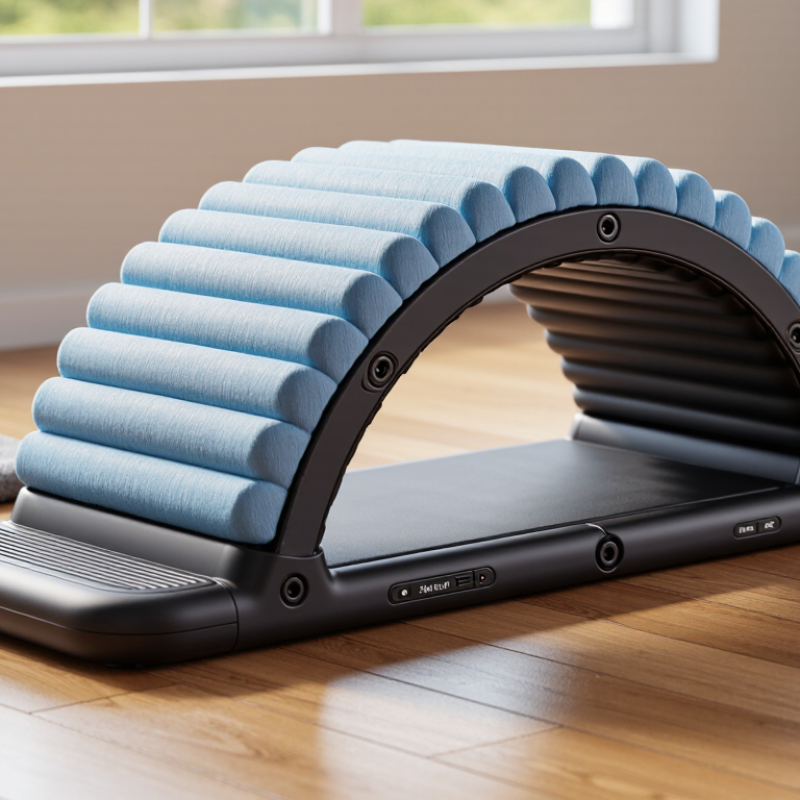
How to Choose the Best Back Stretcher in 2026?

Understanding How Back Stretchers Work

How to Choose the Best Back Stretcher in 2026?

Understanding how back stretchers work starts with simple body mechanics. Most models support the spine while gently guiding it into extension. This position may counter long hours of sitting, when the hips stay bent and the upper back rounds forward. Curved supports press against specific areas, such as the lumbar muscles or the middle back. That pressure can encourage tight muscles to relax and may improve short-term comfort.

The effect is usually passive, not a powerful spinal “decompression.” A stretcher cannot reliably pull discs apart or correct every source of back pain. I once assumed stronger pressure meant better results. That was an oversimplification. A useful device should feel firm but tolerable, with adjustable height or several support levels. Your pelvis should remain stable, and your breathing should stay easy. Small adjustments matter.

Use it on a flat surface for a short session, often five to ten minutes at first. Stop if you feel sharp pain, numbness, tingling, dizziness, or pain moving into a leg. People with recent injuries, osteoporosis, unexplained weakness, or post-surgical restrictions should ask a qualified healthcare professional before trying one. Clinical advice is especially important because similar symptoms can have very different causes. A back stretcher may support mobility work, but it should not replace strengthening, movement practice, or a proper assessment. Some users also need a gentler curve than expected.


Identifying Your Back Stretching Needs

How to Choose the Best Back Stretcher in 2026?

Identifying your back stretching needs should come before choosing any device. Notice when discomfort appears: after sitting, lifting, sleeping, or walking. Record the location, intensity, and duration for several days.

A dull ache near the lower back may need gentle mobility work, while sharp pain can require professional assessment. Do not stretch through numbness, weakness, or pain travelling down your leg.

Think about your daily routine. If you work at a desk, a mild stretcher may help open the hips and reduce stiffness after long sitting.

If your back feels tight after exercise, controlled extension or supported flexion may be more suitable.

Your height, flexibility, and spinal history also matter. A curved surface that feels comfortable for one person may feel excessive for another.

Start with low intensity and short sessions, perhaps five minutes on a stable floor. Breathe normally, and stop if symptoms increase during or after use.

A physical therapist can help identify whether your main need is mobility, relaxation, or posture support. It is easy to assume stronger stretching works faster. That is not always true.

I would reassess the choice after one week, because comfort alone does not prove that a stretcher is helping. A simple journal can reveal useful changes, including easier standing, fewer morning aches, or no improvement at all.

Comparing Back Stretcher Types and Features

How to Choose the Best Back Stretcher in 2026?

Back pain affects an enormous population. The World Health Organization reported 619 million cases of low back pain in 2020. Its forecast suggests this number could reach 843 million by 2050. The Global Burden of Disease 2021 study also identifies low back pain as a leading cause of disability worldwide. These figures make product selection important, but they do not prove that every stretcher works for everyone.

A passive arched stretcher gently encourages lumbar extension. It suits users who prefer short, controlled sessions on a firm floor. Look for adjustable height, rounded edges, and stable contact points. Foam rollers offer broader movement across the back and hips. Their uneven pressure may feel intense, especially near the ribs. Inflatable traction devices provide adjustable pressure, but fit and inflation control matter greatly. A useful check is simple: your pelvis should stay supported, without sharp pain or numbness.

In practical testing, comfort often matters more than the deepest stretch. Start with five minutes. Increase gradually. A device that forces a dramatic curve may look effective, yet it can encourage poor positioning. I would not automatically choose the strongest setting. That assumption needs reconsideration. Research evidence for consumer stretchers remains limited, and product instructions cannot replace clinical assessment. Stop if symptoms travel down the leg, weakness appears, or pain worsens after use. Examine materials, cleaning instructions, weight limits, and return policies before purchase. Safety details are easy to overlook.

How to Choose the Best Back Stretcher in 2026?

Comparing common back-stretching device types by portability, adjustability, intensity control, and setup simplicity. Ratings use a 1–5 scale based on typical product specifications and intended use, without brand-specific data.

How to read the chart: A higher score indicates more convenience or control. Foam rollers are highly portable and simple to use, while adjustable lumbar arches and traction devices generally provide more control over stretching intensity. Inversion equipment can offer strong stretching potential but usually requires more space and setup.

Checking Safety, Comfort, and Adjustability

How to Choose the Best Back Stretcher in 2026?

Safety should guide every adjustment. The World Health Organization reports that low back pain affected 619 million people in 2020. It may reach 843 million cases by 2050. This scale makes cautious product selection important. Choose a stretcher with a stable base, rounded contact points, and clear weight limits. Test it on a firm, non-slip floor. Loose hinges or sharp edges are immediate warning signs. Never chase intense pressure.

Comfort depends on body contact, not dramatic arching. A supportive surface should spread pressure across the back. It should not pinch the spine or force the neck forward. Foam padding can feel pleasant, but excessive softness may reduce stability. The WHO 2023 guideline supports exercise and self-management for chronic primary low back pain, not passive devices alone. A stretcher should complement movement, not replace professional assessment.

Adjustability is useful only when settings change gradually. Begin with the lowest curve and short sessions. Check whether your shoulders, hips, and pelvis remain aligned. Stop if numbness, sharp pain, dizziness, or unusual weakness appears. A practical mistake is trusting a high setting too quickly. I would also question fixed angle claims without independent testing data. Look for measurable positions, readable instructions, and a return policy. The safest fit may feel modest.

Choosing the Right Back Stretcher for Your Budget

Choosing the Right Back Stretcher for Your Budget

A back stretcher should match your needs, not simply your wallet. I once chose a cheap, rigid model because it looked practical. After ten minutes, its hard edges felt uncomfortable, and I stopped using it. That experience taught me an important lesson: comfort affects consistency.

Under $30, look for a stable base, smooth edges, and several gentle height settings. Basic materials can work, but inspect the hinges and support points carefully. A mid-range option, around $30 to $70, may offer better padding, stronger construction, and finer adjustment. These features can make stretching easier for people with limited mobility. Avoid paying extra for decorative features you will rarely use.

Above $70, consider adjustable designs with replaceable padding, clear weight limits, and reliable warranty terms. A higher price does not guarantee better support. Check whether the device keeps your spine comfortably aligned without forcing a deep arch. Start with short sessions, such as two or three minutes, and stop if pain, numbness, or weakness appears. People with recent injuries, osteoporosis, or unexplained back pain should ask a qualified healthcare professional before using one. The most suitable purchase may be the model you can use calmly and regularly, although I admit budget pressure can make that choice less obvious.

How to Choose the Best Back Stretcher in 2026? — Choosing the Right Back Stretcher for Your Budget
Back Stretcher Type Typical Price Range Typical Size Common Materials Adjustment Range Typical Weight Capacity Best For Main Advantages Important Limitations
Basic Foam Arch $15–$30 Approximately 30–38 cm long; 15–20 cm wide High-density foam with a fabric or synthetic-leather cover Usually fixed; one or two height positions Usually up to 100 kg First-time users and limited budgets Lightweight, inexpensive, portable, and simple to use Less precise support and usually lower durability than rigid designs
Contoured Rigid Arch $25–$55 Approximately 35–40 cm long; 18–25 cm wide ABS plastic or reinforced polymer with padded contact areas Often fixed or limited to two height settings Commonly 100–150 kg Users wanting firmer lumbar support Stable shape, easy to clean, and suitable for short daily sessions A rigid profile may feel too intense for sensitive users
Multi-Level Adjustable Stretcher $35–$75 Approximately 35–42 cm long; 20–27 cm wide Reinforced plastic, foam padding, and non-slip rubber feet Typically 3–5 height or curvature levels Commonly 100–150 kg Most users seeking adjustable intensity Offers gradual progression and better fit across different body sizes More moving parts can increase setup time and wear
Acupressure-Style Back Arch $25–$60 Approximately 35–42 cm long; 18–25 cm wide Plastic frame with molded pressure points and padded sections Usually 3–4 height positions Commonly 100–130 kg Users who prefer targeted pressure points Combines spinal extension with localized pressure along the back Pressure points may irritate sensitive skin or tender areas
Lumbar Traction Device $45–$100 Approximately 30–45 cm long; 20–30 cm wide Plastic or metal frame with foam pads, straps, or inflatable sections May include adjustable height, angle, strap tension, or air pressure Commonly 100–150 kg Users seeking more controlled lumbar traction Allows a more customized setup and can provide targeted lower-back support Requires careful adjustment; stop use if pain, numbness, or tingling occurs
Foldable Travel Stretcher $30–$70 Approximately 30–40 cm long when assembled; folds for storage Folding polymer or metal frame with foam padding Usually 2–4 positions Commonly 90–130 kg Travelers and users with limited storage space Compact storage, easy transport, and quick setup Hinges and locks should be checked regularly for stability
Premium Wood or Metal Frame $60–$120+ Approximately 35–45 cm long; 20–30 cm wide Finished wood or steel frame with padded support surfaces Commonly 3–6 positions Often 120–180 kg Frequent users prioritizing construction quality Strong frame, stable positioning, and potentially longer service life Heavier, less portable, and more expensive than basic models
Buying check: Confirm the stated weight capacity, widest body-support dimension, adjustment-lock quality, non-slip base, padding firmness, and return policy. These figures are typical market ranges rather than specifications for a particular product.

Powder Coat Booths

For those larger-sized parts, or smaller quantity runs, we have 2 independent powder coat booths and ovens. The quality, durability and affordability of today’s powder coating finishes make this the process of choice for world-class companies.

Powder coating advantages over other forms of coating are many. Materials used in the Powder coating process can be metals and non-metals that come in a multitude of thicknesses, textures, colors, etc. Another of Powder coating’s biggest advantages over conventional coatings is its ability to create finishes in many different textures. Powder Coating Booths allow us the ability to apply these advantages to large products.

Wet Paint Line

Tri-State Fabricators runs a full-service conveyor line for painting. Wet painting can provide protection or decoration to many different part styles. From start to finish, every project is easier to undergo random and point-based inspection by our skilled painting team.

Advantages to our Wet Paint Line are these lines start with product prep and ends with a thorough inspection of a high quality finished product. Our ability to complete large and small projects with a superior finish and doing so in a timely and economical fashion. This passes along the savings in production to our customers. When powder coating ins not an option, our Wet Paint Line gets the job done right the first time.

Wet Paint Booths

When the parts get big and heavy we roll-out our custom paint racks and oversize booth. By utilizing our partnerships with all the major paint brands, we can match virtually any color with wet paint.

The advantages of having access to a Wet Paint Booth are many. Large projects of many different shapes can be loaded into the booth. The Wet Paint Booth offers an environment that is much more controlled than a typical parts painting operation.

Not only are they used because of their controlled environment, but they’re are also advantageous when it comes to applying paint to parts that are needed in industries that require specialty coatings such as medical, aerospace, etc.

Military CARC

Our military forces have some very high standards when it comes to the finish of their vehicles and equipment. From the first pre-treatment step to final coat, it takes a great deal of knowledge and experience to protect the men and women of our armed forces. They deserve only the best, and Tri-State Fabricators provides it.

All of our processes are closely monitored by our staff and management teams. Both of which are highly trained in the processes of metal fabrication and finishing. Tri-State Fabricators’ goal is to always fully satisfy each and every customer, including the military. We will always put a 110% into what we do.

Glass-Bead Blasting

Abrasive media blasting is an excellent way to remove old paint, rust, and increase the paint/powder adhesion. Glass beads produce a much smoother and brighter finish than angular abrasives; leaving the part clean yet without any dimensional change. Chemically inert and environmentally friendly, we can recycle our beads approximately 30 times; making them a more preferred method of metal cleaning or surface finishing.

Advantages to Glass Bead Blasting are many. Glass bead blast media is used when a project is needing rough surfaces need to become smooth for applications of coatings such as paint. It is typically used to clean paint and rust from a product surface without deforming the surface it is being used on. Overall, compared to many other blasting media, Glass Bead Blasting is a very economical choice and those savings are always passed on to our customers.

Part Washing

Tri-State Fabricators utilize a zinc phosphate wash to clean and etch the material to ensure the best paint adhesion possible. The unique design of our 3-stage wash system does the work like a 5-stage. From Cleaning and rinsing to conversion coating and post-treatment, Our Part Washing process is a complete service and works throughout the fabrication service and the finishing service.

Along with the previously mentioned benefits, Curing is a vital chemical reaction that leaves the product finish hard and relatively safe from mild abrasion and aggressive corrosion. This process can be done in more than one way; ambient air-dry or in curing ovens at temps that exceed 240°.

Burn-Off Oven

From fixing paint mistakes (someone else’s of course) to simply cleaning our paint line hooks, our burn-off oven is put to good use. After a quick burn-off, a little clean up, and a fresh coat of paint, your parts will look better than new.

Why does our Burn-Off Oven work so well? Because super heating the air around parts turns the materials into ashes. From paint and powder coatings to rubber and machining oils, high temps do the job without degrading the integrity of the part.

Masking

Masking is a vital part of producing high quality products. We have die-cut masking patterns to protect machined surfaces as well as a wide range of plugs and caps to protect threaded holes and bolts. We provide permanent and temporary masking.

Masking allows the selected sections of a product to be protected from a fabrication or finishing service. This can be with both chemicals when etching and tapes, paints when only finishing just a section of the product. Masking is great in aiding the customization process of a project.

Screen Printing

Screen printing is a photographic process that transfers artwork onto a porous nylon screen which allows colored ink to flow through the screen and be deposited on an aluminum or plastic component. We can generally have just about any design created onto a screen for your parts.

Some of the advantages of Screen Printing are, brand recognition for your business displaying on your products, assembly instructions, product warnings/hazards, etc. Tri-State Fabricators produces Screen Printing of the highest quality so you know it’s durable.

Metal Finishing

Metal Finishing is the art of treating the exterior portion of product, often metal but can also be made of other materials, so that the surface is clean and free of any debris. Then the process of applying coats or either paint of powder coat takes place. This coating process improves the quality of the product in both appearance and resistance to wear and corrosion.

Tri-State Fabricators, Inc., understands that a project typically isn’t complete until a high-quality finish has been added to your product. This is why our painting and powder coating teams continuously inspect the products throughout the Metal Finishing process.
