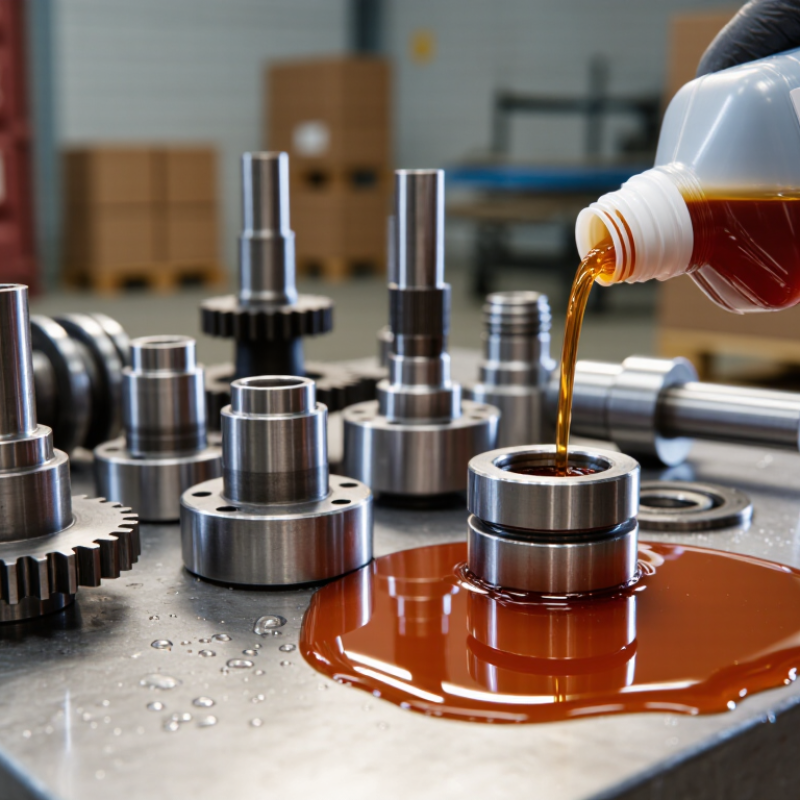
Choosing Rust Lube for global sourcing is not a simple price comparison. It is a risk-control decision involving corrosion science, transport conditions, packaging, and supplier reliability. The NACE IMPACT study estimated global corrosion costs at approximately US$2.5 trillion annually, equal to about 3.4% of global gross domestic product. That figure is older, but its warning remains relevant. Rust damage often begins invisibly, inside a container or warehouse. Salt air, condensation, fingerprints, and temperature changes can turn clean steel into a costly claim.
The UNCTAD Review of Maritime Transport 2024 confirms that ships carry more than 80% of global merchandise trade by volume. Therefore, Rust Lube should be evaluated against real shipping exposure, not only laboratory appearance. The World Bank Logistics Performance Index 2023 also highlights differences in logistics reliability, tracking, and timeliness across markets. A product that performs well in a dry factory may fail after six weeks at sea. Buyers should examine viscosity, film strength, water displacement, removal requirements, shelf life, application method, and safety documentation. Technical data sheets and safety data sheets matter.
A perfect specification does not exist.
In practice, field performance can differ from salt-spray results. This is where procurement teams need evidence, not confident promises. Ask suppliers for test methods, batch consistency records, corrosion-panel results, and references from similar climates. Check compatibility with painted surfaces, rubber seals, and downstream assembly processes. ISO 12944 can help frame corrosion environments, although it is mainly designed for protective paint systems, not lubricants. The strongest sourcing decision combines independent testing, supplier audits, transparent documentation, and a small production trial before committing globally.
Rust lube is not one universal product. Its type determines how metal receives protection.
Penetrating lube enters tight threads, hinges, and corroded joints. It loosens rust while reducing friction.
Water-displacing lube pushes moisture from steel surfaces. It suits humid warehouses and recently washed components.
Film-forming lube leaves a visible protective layer. The film can shield tools, fasteners, and machined parts during storage.
Dry-film lube creates a low-tack coating. It attracts less dust in workshops and transport packaging.
Rust converters are different. They chemically react with corrosion, but they are not always lubricants.
A practical sourcing check should examine viscosity, residue, spray control, and storage life. Apply a small amount to clean steel and exposed rust. Check whether the film remains after 24 hours. Then test the part after handling, packaging, and light moisture exposure.
A thick film may protect well, yet collect dust around moving parts. A thin film feels cleaner, but may fail during long ocean transit. This trade-off is easy to underestimate. I have seen product descriptions sound precise while leaving application conditions unclear. Ask suppliers for technical data, safety information, batch consistency, and packaging compatibility. The label should state the intended metal surfaces and removal method.
Tips:
Test three samples under identical conditions. Record odor, drying time, film thickness, and corrosion spots.
Avoid judging performance from appearance alone. Confirm whether the lube affects rubber seals, plastics, paint, or electrical contacts.
Small details matter.
Choosing rust lube for global sourcing requires more than comparing prices. Start with the metal surface. Bare steel needs strong corrosion protection, while copper, aluminum, and zinc may react with unsuitable additives. Check whether the part is machined, polished, threaded, or already coated. A thick film can protect storage parts, but it may slow assembly or attract dust. I once selected a lubricant by viscosity alone. That shortcut was wrong. Surface testing matters more than a simple specification sheet.
Climate changes the risk. Coastal warehouses expose metal to salt-laden humidity, while inland facilities may face dust and sharp temperature swings. Choose a formula that matches the expected moisture, temperature range, and transport duration. Ask suppliers for technical data, safety data, compatibility results, and recommended application thickness. Storage conditions matter too. Keep containers sealed, shaded, and away from heat sources. Rotate inventory by batch date. Recheck opened containers, because contamination can reduce performance. This step is easy to overlook.
Tips: Test the lubricant on actual metal samples before ordering at scale. Inspect parts after simulated humidity exposure. Record film weight, residue, odor, and removal effort. Use clean brushes or spray equipment. Never assume one product suits every climate. A dry warehouse may still experience condensation during container unloading. My sourcing checklist is useful, but I revise it after every shipment. Real conditions often expose weaknesses that laboratory data misses.
| Application Scenario | Metal Surface or Material | Main Corrosion Risk | Recommended Rust-Lube Type | Key Performance Characteristics | Climate and Transport Conditions | Typical Protection Target | Storage Requirements | Inspection and Sourcing Criteria |
|---|---|---|---|---|---|---|---|---|
| Indoor storage of carbon-steel parts | Clean, dry carbon steel; machined or lightly handled surfaces | Condensation, fingerprints, oxygen and humidity | Thin-film oil or water-displacing corrosion preventive | Low to medium viscosity; good surface wetting; easy removal before assembly or painting | Controlled warehouse conditions; avoid repeated movement between warm and cold areas | Short to medium-term protection, commonly several months when packaging remains dry and intact | Keep containers sealed, away from direct sunlight, ignition sources and water ingress; follow the supplier's safety data sheet | Request coating thickness, removal method, compatibility with seals and flash-point information |
| Long-term export packaging | Carbon steel, alloy steel, cast iron and finished machine components | High humidity, temperature cycling and trapped moisture inside packaging | Wax-based, petrolatum-based or heavy-film corrosion preventive | Durable barrier film; strong adhesion; resistance to humidity and handling abrasion | Suitable for sea freight only when combined with moisture-control packaging and sealed barrier materials | Medium to long-term protection; actual duration depends on film weight, packaging integrity and exposure | Store in a cool, dry, ventilated location; prevent prolonged exposure to temperatures that can soften or separate the product | Verify compatibility with polyethylene film, vapor-corrosion-inhibiting materials and wooden packaging |
| Coastal or marine atmosphere | Carbon steel, galvanized steel and exposed fasteners | Chloride deposits, salt spray, high relative humidity and wet-dry cycles | High-water-resistance grease or heavy-duty corrosion preventive | Strong salt-water resistance; persistent film; good adhesion under outdoor exposure | Use additional sealed packaging; salt-contaminated surfaces must be cleaned before application | Protection duration is highly exposure-dependent; frequent inspection is required in salt-laden air | Protect from water contamination and store in tightly closed containers; do not mix with unknown greases | Ask for salt-spray or humidity-test data, test method, film thickness and reapplication guidance |
| Tropical warehouse | Carbon steel, stainless steel and mixed-metal assemblies | High humidity, condensation, biological contamination and acidic deposits | Water-displacing corrosion preventive with a stable protective film | Rapid displacement of surface moisture; strong wetting; resistance to high humidity | Use desiccants or humidity indicators in sealed packaging; avoid packaging warm parts immediately after machining | Short to medium-term protection, subject to warehouse relative humidity and package sealing | Store below the product's specified maximum temperature and avoid repeated heating and cooling cycles | Check performance after condensation testing and confirm whether the film attracts dust during long storage |
| Cold or sub-zero logistics | Steel components, bearings and machined parts | Viscosity increase, brittle films, condensation during warm-up and delayed surface coverage | Low-temperature corrosion preventive oil or synthetic fluid formulated for cold handling | Maintains flow and film formation at the expected service temperature; low pour point is beneficial | Allow sealed packages to reach ambient temperature before opening to reduce condensation on metal | Protection must remain continuous during cold storage and subsequent temperature transitions | Prevent freezing unless the product is specifically designed for it; follow pour-point and storage-temperature limits | Request viscosity-temperature data, pour point, low-temperature stability and warm-up handling instructions |
| High-temperature industrial storage | Heat-treated steel, tooling and components stored near furnaces or hot equipment | Film evaporation, oxidation acceleration and loss of protective coverage | High-temperature-resistant synthetic oil, grease or dry-film preventive | Low volatility; oxidation stability; resistance to softening, dripping and carbonized residue | Shield from radiant heat and direct sunlight; use ventilation appropriate to the product's safety classification | Protection depends on actual metal and film temperature; reinspection intervals should be shortened | Keep within the stated storage range and away from incompatible chemicals, flames and oxidizing agents | Evaluate evaporation loss, residue formation, operating-temperature limits and cleaning requirements |
| Precision machined surfaces | Ground steel, polished steel, bearing races and close-tolerance parts | Flash rust, staining, abrasive contamination and dimensional residue | Clean, low-residue corrosion preventive oil | Uniform thin film; low particulate pickup; easy and complete removal before use | Use clean gloves and sealed packaging; avoid paper or wood that can introduce moisture or fibers | Short to medium-term protection with minimal impact on surface finish | Keep containers closed and protect the product from dust and cross-contamination | Confirm residue level, staining tendency, compatibility with cleaning solvents and effect on surface roughness |
| Aluminum and aluminum alloys | Machined or cast aluminum; aluminum joined to steel | Galvanic corrosion, alkaline residues, staining and chloride attack | Neutral, aluminum-compatible corrosion preventive | Non-staining; compatible with aluminum and common elastomers; controlled alkalinity and acidity | Keep chloride contamination low and prevent contact with wet wood, salt residues or incompatible cleaners | Protection should be validated on the specific alloy and surface finish | Store away from strong acids, alkalis and oxidizing chemicals; maintain sealed packaging | Require aluminum staining, galvanic compatibility and residue-removal test results |
| Copper, brass and bronze | Copper alloys, electrical contacts and decorative metal parts | Tarnishing, discoloration, sulfide exposure and contact corrosion | Non-staining protective oil or specialized copper-alloy corrosion inhibitor | Low odor and low residue; does not darken or attack copper-based alloys | Use sulfur-free, clean packaging materials where appearance or electrical contact is important | Protection period should be confirmed through appearance and contact-resistance testing | Keep away from sulfur-containing materials, acidic vapors and high humidity | Check color-change data, electrical-contact compatibility and removal method |
| Stainless steel | Austenitic, ferritic or martensitic stainless steel | Chloride-induced pitting, contamination from carbon steel and crevice moisture | Stainless-compatible, low-chloride protective oil or wax | Low chloride and sulfur content; non-staining; good moisture resistance | Prevent contact with carbon-steel dust, salt water and contaminated tools | Protection should be verified for the grade, finish and chloride exposure level | Use clean, dry storage; do not reuse contaminated brushes, cloths or application equipment | Request chloride content, sulfur content, stainless-steel staining data and packaging compatibility |
| Parts containing rubber or plastic seals | Steel assemblies with NBR, EPDM, FKM or other polymer components | Seal swelling, shrinkage, hardening or extraction of plasticizers | Material-compatible synthetic oil or grease selected for the seal compound | Controlled swelling behavior; stable viscosity; no harmful extraction or embrittlement | Avoid untested mixtures and prolonged high-temperature exposure | Protection and seal life must be assessed together; corrosion performance alone is insufficient | Store in the original sealed container and follow both lubricant and component storage limits | Obtain immersion-compatibility data for the exact seal material and temperature range |
| Parts requiring painting or bonding | Steel or aluminum surfaces prepared for coating, adhesive or plating | Adhesion failure caused by oily residue, silicone contamination or incomplete cleaning | Temporary low-residue corrosion preventive with a documented removal process | Easy degreasing; no persistent silicone or wax residue unless intentionally specified | Protect from dust and moisture after cleaning; minimize the time between cleaning and coating | Protection should cover the holding period without compromising subsequent surface treatment | Keep cleaning and coating areas separated from lubricant application areas | Request paint-adhesion, bonding, plating and residual-contamination test results |
| Food, pharmaceutical or clean-processing environments | Stainless steel and coated equipment in controlled processing areas | Corrosion, contamination risk and non-compliant incidental contact | Only use a product with the required regulatory or application approval for the intended environment | Low odor, controlled ingredients, clean application and traceable documentation | Follow site hygiene procedures; prevent overspray, dripping and cross-contamination | Protection must meet both corrosion and contamination-control requirements | Segregate from general industrial chemicals and maintain batch traceability | Verify current certificates, ingredient declarations, safety data and change-control procedures |
| Global sourcing and import qualification | Mixed metal parts supplied from multiple regions | Different climates, transport durations, packaging practices and application thicknesses | Choose the lightest product that meets the highest verified corrosion exposure and removal requirement | Consistent batch quality, documented specifications, stable supply and clear application instructions | Qualify for the coldest, hottest, wettest and most saline route expected in the supply chain | Use a defined target based on transport time, storage environment and inspection results rather than a generic claim | Require lot traceability, shelf-life information, packaging sizes, hazard classification and emergency procedures | Compare technical data sheets, safety data sheets, test reports, sample trials and total delivered cost |

When sourcing rust lube globally, compare more than the corrosion claim. Performance depends on metal type, humidity, salt exposure, and storage time. A reliable evaluation uses cleaned steel panels, controlled moisture, and repeated inspection. Measure rust coverage, film loss, odor, and removal effort. A lube that lasts outdoors may feel too sticky in a dusty warehouse. That trade-off matters.
Compatibility protects parts and workers handling them. Check whether the formula affects rubber seals, painted surfaces, plastics, electrical contacts, or existing grease. Ask suppliers for technical data, safety information, batch controls, and shelf-life evidence. Small sample trials should copy real use, including temperature changes and transport vibration. Do not trust one impressive test panel. It can hide poor results on coated fasteners.
Application method changes coverage and waste. Aerosol spraying reaches hinges and threads, while brushing gives better control on edges. Dipping suits repeated small components, but excess liquid needs draining. Apply a thin, even film after removing loose rust, dirt, and moisture. Record nozzle distance, coating weight, drying time, and operator skill. In practice, results vary between workers. This process is not flawless. A global purchasing decision should compare delivered cost, training needs, packaging durability, and local storage conditions, not just price per liter.
When sourcing rust lube globally, verify the evidence before comparing prices. The NACE IMPACT study estimated corrosion costs at about US$2.5 trillion annually, equal to 3.4% of global GDP. A suitable lubricant can protect metal parts, but only when its chemistry matches storage time, humidity, temperature, and application method. Ask for a current technical data sheet, batch number, viscosity range, flash point, and documented test methods.
Safety data deserves closer inspection. Under the UN Globally Harmonized System, a compliant safety data sheet contains 16 sections, including handling, exposure controls, transport, and disposal information. Check whether the document matches the exact product and production site. Generic files are a warning sign. Request recent laboratory results for salt spray, humidity resistance, and residue behavior. Small details matter.
Supplier credentials also need independent verification. Review valid ISO 9001, ISO 14001, and ISO 45001 certificates, then confirm their certificate numbers with the issuing bodies. Ask for batch traceability from raw material to shipment. An on-site audit can reveal weak labeling, uncalibrated instruments, or poor stock rotation. That evidence is more useful than polished brochures. I have seen sourcing teams overvalue certificates and undervalue consistency between samples. That is an easy mistake. Require a retained sample, written change-notification terms, and clear answers about nonconforming batches before approving a supplier.
Calculate Total Costs, Logistics Risks, and Long-Term Protection Value
In 2026, choosing rust lube requires more than comparing drum prices. Procurement teams should calculate product cost, packaging, freight, insurance, duties, and storage. A low unit price can become expensive after leakage, relabeling, or delayed customs clearance.
Request recent technical data, safety documents, batch records, and shelf-life evidence from each supplier. I also compare application trials using identical steel panels, humidity exposure, and removal methods. Small tests reveal problems that spreadsheets often miss.
Logistics risk deserves a separate calculation. Check whether the formulation is classified for transport, and confirm temperature limits during transit. Use sealed containers with secondary protection when shipments cross hot ports or cold warehouses.
Estimate lead-time variation, not only the quoted sailing schedule. A delayed container can interrupt production, while emergency local buying may cost twice as much.
This estimate is not perfect. Port congestion, currency movement, and damaged cartons can still change the result.
Long-term protection value depends on film durability, corrosion severity, labor savings, and reapplication frequency. For outdoor components, measure protection after salt exposure, condensation cycles, and handling abrasion.
Record coating weight and inspection dates, not vague claims like “long lasting.” A lube needing monthly treatment may lose against a higher-priced option lasting six months.
However, longer protection is not always better if removal creates wastewater or slows assembly. Ask operators for feedback.
Their experience can expose cleanup costs and application errors before global rollout.


For those larger-sized parts, or smaller quantity runs, we have 2 independent powder coat booths and ovens. The quality, durability and affordability of today’s powder coating finishes make this the process of choice for world-class companies.
Powder coating advantages over other forms of coating are many. Materials used in the Powder coating process can be metals and non-metals that come in a multitude of thicknesses, textures, colors, etc. Another of Powder coating’s biggest advantages over conventional coatings is its ability to create finishes in many different textures. Powder Coating Booths allow us the ability to apply these advantages to large products.
Tri-State Fabricators runs a full-service conveyor line for painting. Wet painting can provide protection or decoration to many different part styles. From start to finish, every project is easier to undergo random and point-based inspection by our skilled painting team.
Advantages to our Wet Paint Line are these lines start with product prep and ends with a thorough inspection of a high quality finished product. Our ability to complete large and small projects with a superior finish and doing so in a timely and economical fashion. This passes along the savings in production to our customers. When powder coating ins not an option, our Wet Paint Line gets the job done right the first time.
When the parts get big and heavy we roll-out our custom paint racks and oversize booth. By utilizing our partnerships with all the major paint brands, we can match virtually any color with wet paint.
The advantages of having access to a Wet Paint Booth are many. Large projects of many different shapes can be loaded into the booth. The Wet Paint Booth offers an environment that is much more controlled than a typical parts painting operation.
Not only are they used because of their controlled environment, but they’re are also advantageous when it comes to applying paint to parts that are needed in industries that require specialty coatings such as medical, aerospace, etc.
Our military forces have some very high standards when it comes to the finish of their vehicles and equipment. From the first pre-treatment step to final coat, it takes a great deal of knowledge and experience to protect the men and women of our armed forces. They deserve only the best, and Tri-State Fabricators provides it.
All of our processes are closely monitored by our staff and management teams. Both of which are highly trained in the processes of metal fabrication and finishing. Tri-State Fabricators’ goal is to always fully satisfy each and every customer, including the military. We will always put a 110% into what we do.
Abrasive media blasting is an excellent way to remove old paint, rust, and increase the paint/powder adhesion. Glass beads produce a much smoother and brighter finish than angular abrasives; leaving the part clean yet without any dimensional change. Chemically inert and environmentally friendly, we can recycle our beads approximately 30 times; making them a more preferred method of metal cleaning or surface finishing.
Advantages to Glass Bead Blasting are many. Glass bead blast media is used when a project is needing rough surfaces need to become smooth for applications of coatings such as paint. It is typically used to clean paint and rust from a product surface without deforming the surface it is being used on. Overall, compared to many other blasting media, Glass Bead Blasting is a very economical choice and those savings are always passed on to our customers.
Tri-State Fabricators utilize a zinc phosphate wash to clean and etch the material to ensure the best paint adhesion possible. The unique design of our 3-stage wash system does the work like a 5-stage. From Cleaning and rinsing to conversion coating and post-treatment, Our Part Washing process is a complete service and works throughout the fabrication service and the finishing service.
Along with the previously mentioned benefits, Curing is a vital chemical reaction that leaves the product finish hard and relatively safe from mild abrasion and aggressive corrosion. This process can be done in more than one way; ambient air-dry or in curing ovens at temps that exceed 240°.
From fixing paint mistakes (someone else’s of course) to simply cleaning our paint line hooks, our burn-off oven is put to good use. After a quick burn-off, a little clean up, and a fresh coat of paint, your parts will look better than new.
Why does our Burn-Off Oven work so well? Because super heating the air around parts turns the materials into ashes. From paint and powder coatings to rubber and machining oils, high temps do the job without degrading the integrity of the part.
Masking is a vital part of producing high quality products. We have die-cut masking patterns to protect machined surfaces as well as a wide range of plugs and caps to protect threaded holes and bolts. We provide permanent and temporary masking.
Masking allows the selected sections of a product to be protected from a fabrication or finishing service. This can be with both chemicals when etching and tapes, paints when only finishing just a section of the product. Masking is great in aiding the customization process of a project.
Screen printing is a photographic process that transfers artwork onto a porous nylon screen which allows colored ink to flow through the screen and be deposited on an aluminum or plastic component. We can generally have just about any design created onto a screen for your parts.
Some of the advantages of Screen Printing are, brand recognition for your business displaying on your products, assembly instructions, product warnings/hazards, etc. Tri-State Fabricators produces Screen Printing of the highest quality so you know it’s durable.
Metal Finishing is the art of treating the exterior portion of product, often metal but can also be made of other materials, so that the surface is clean and free of any debris. Then the process of applying coats or either paint of powder coat takes place. This coating process improves the quality of the product in both appearance and resistance to wear and corrosion.
Tri-State Fabricators, Inc., understands that a project typically isn’t complete until a high-quality finish has been added to your product. This is why our painting and powder coating teams continuously inspect the products throughout the Metal Finishing process.