


China Top Paddy Land Tractor Price How to Choose?
Choosing a Paddy Land Tractor in China requires more than comparing online prices. Wet fields punish weak machines. Mud reaches the axle, water enters exposed parts, and narrow ridges demand careful steering. A low-priced tractor may look attractive, yet repair delays can cost more than the original savings. I have seen buyers focus on horsepower and overlook tire design, transmission quality, and local service support.
Agricultural machinery specialist Dr. R. K. Naik explains, “The right tractor is not the cheapest machine; it is the one that keeps working when the field becomes difficult.” This practical view matters when evaluating Chinese manufacturers. Compare engine power, fuel use, turning radius, ground clearance, hydraulic capacity, and warranty terms. Ask for test videos from real paddy fields. Better still, inspect a working unit before placing an order.
Price depends on configuration. A compact model with basic attachments may suit small farms. Larger operations may need stronger hydraulics, reinforced axles, and rotary tiller compatibility. Confirm whether spare filters, belts, tires, and clutch parts are available near your farm. Service distance matters.
Do not trust polished photos alone.
A mistake is possible.
Some published prices exclude shipping, attachments, taxes, or commissioning. That detail can change the final budget sharply. Buyers should request a written quotation with every cost listed. They should also check operator comfort and maintenance access. This guide examines China Paddy Land Tractor prices through field performance, ownership cost, and supplier reliability, not price alone. The best choice may still require compromise. Efficiency, durability, and support rarely arrive together at the lowest price.
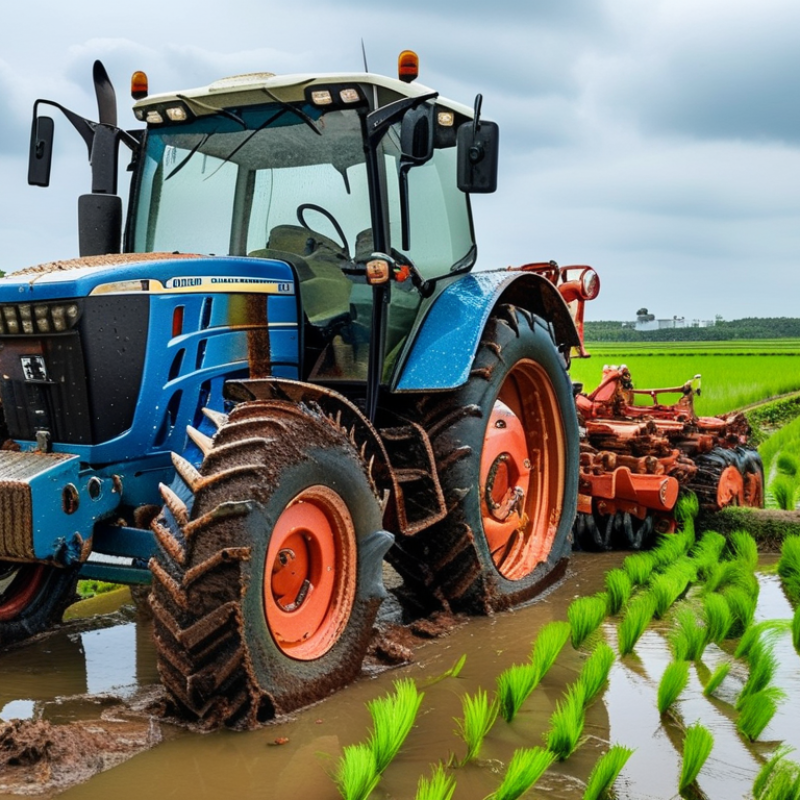
A paddy land tractor is a compact agricultural machine designed for flooded, soft, and uneven rice fields. It usually uses wide tires or tracks to reduce ground pressure and prevent deep sinking. The engine sends power through a transmission, then to the wheels or tracks. A rear power take-off can drive rotary tillers, pumps, or harvesting tools. Hydraulic controls raise and lower attached equipment with practical precision.
In wet soil, traction matters more than maximum horsepower. A strong diesel engine may still struggle if the tires spin. Look for adjustable wheel spacing, sealed bearings, corrosion-resistant parts, and a transmission with low-speed gears. During field checks, observe how smoothly the tractor turns near narrow bunds. Check the cooling system after working in muddy water. Small details often affect long-term reliability.
Price should match field conditions, workload, and local repair support. A lower purchase price can become expensive when parts are difficult to obtain. Ask for fuel consumption, rated lifting capacity, warranty terms, and service records. Test the clutch and hydraulic response before paying. I once underestimated how quickly mud could cover an exposed belt area. That mistake changed my inspection routine. Buyers should also compare transport costs, attachment prices, and operator training. The cheapest machine may not be the most economical choice.

Paddy tractors need different priorities from dry-field machines. FAOSTAT data record roughly 780 million tonnes of rice production worldwide in recent years. That scale makes field reliability important. In flooded soil, low ground pressure matters most. Choose wide lugged tires or suitable cage wheels. They reduce sinking and protect the soft soil layer. Four-wheel drive improves traction beside muddy bunds. A tractor with 18–25 horsepower may suit small plots, while larger farms need stronger hydraulic capacity. Match engine power to implements, not just acreage. Check PTO speed, lift capacity, turning radius, and fuel use. A cheaper tractor can become expensive after repeated extraction from mud.
Tips:
Ask for a wet-field demonstration. Measure wheel sinkage, turning effort, and fuel use. Inspect the clutch, hydraulic response, and underbody protection. The OECD-FAO Agricultural Outlook 2024–2033 expects rice demand to keep growing, so service access deserves attention. Select replaceable filters, common hydraulic fittings, and corrosion-resistant parts. Confirm local technicians before purchase. Four-wheel drive helps, but it cannot fix poor tire selection. I would also compare total operating cost over five seasons. Price alone is a weak guide. Even experienced buyers sometimes overlook operator comfort, which can reduce daily productivity. A clean seat and reachable controls matter. Small details matter.
Comparing paddy land tractor prices in China requires more than checking the lowest online quotation. A tractor designed for wet rice fields may need stronger traction, suitable ground clearance, and reliable sealing around the transmission. Ask suppliers to quote the same engine power, drive type, tire or track configuration, and standard attachments. Otherwise, two prices may describe completely different machines.
Request a detailed price sheet. It should separate the tractor, freight, packaging, spare parts, taxes, and optional equipment. Check the engine rating, PTO speed, hydraulic lifting capacity, fuel consumption, and turning performance. A short video is useful, but a field test gives better evidence. Watch how the tractor moves through soft mud after heavy rain. Does it sink, slip, or damage the field surface?
Service support can change the real cost. Confirm the warranty period, replacement-part availability, technician response, and operator training. Ask for maintenance records from similar working conditions. I once focused too much on the purchase price and underestimated transport and seasonal repairs. That was a poor comparison. In some cases, a slightly higher quotation includes better cooling, stronger axles, and useful spare parts. Still, higher cost does not automatically mean higher quality. Compare written specifications, inspect key components, and request references from users who operate tractors in comparable paddy soil.
| Paddy Tractor Category | Typical Engine Power | Drive Configuration | Approx. New Price in China (RMB) | Recommended Paddy Area | Main Strengths | Important Limitations | Best Value Assessment |
|---|---|---|---|---|---|---|---|
| Compact Walking Tractor | 8–15 hp | Two-wheel drive; operator-controlled | ¥5,000–¥12,000 | Small plots and narrow field sections | Low purchase cost, simple maintenance, easy transport | Low working speed and limited traction in deep mud | Lowest entry price for light-duty work |
| Small Four-Wheel Paddy Tractor | 18–25 hp | Mechanical four-wheel drive | ¥18,000–¥35,000 | Small to medium rice fields | Good maneuverability, lower fuel use, suitable for wet soil | Limited lifting capacity for heavy implements | Strong balance between price and basic field performance |
| 25–35 hp Paddy Tractor | 25–35 hp | Four-wheel drive; mechanical transmission | ¥30,000–¥55,000 | Medium-sized rice farms | Versatile for tilling, puddling, rotary cultivation, and transport | Higher purchase and operating costs than compact models | Often the most practical general-purpose range |
| 35–50 hp High-Clearance Tractor | 35–50 hp | Four-wheel drive; adjustable agricultural wheels | ¥50,000–¥85,000 | Medium to large rice operations | Higher traction, greater implement capacity, improved field productivity | May cause greater soil compaction if tires and ballast are unsuitable | Good choice when several heavy implements are required |
| 50–70 hp Rice Field Tractor | 50–70 hp | Four-wheel drive; synchronized or shuttle transmission | ¥80,000–¥140,000 | Large farms and contracting operations | Strong pulling capacity and faster operation with wide implements | Higher fuel, maintenance, and transport expenses | Cost-effective mainly when annual utilization is high |
| Tracked Paddy Tractor | 35–70 hp | Rubber or agricultural crawler tracks | ¥90,000–¥180,000 | Very soft, wet, or high-risk muddy fields | Low ground pressure and strong flotation in deep mud | Higher purchase price and more specialized undercarriage maintenance | Worth the premium where wheeled tractors frequently sink |
| Price-Comparison Factor | What to Check | Why It Matters in Paddy Fields |
|---|---|---|
| Traction and Ground Pressure | Four-wheel drive, tire pattern, track width, ballast, and operating weight | Determines whether the tractor can move through wet soil without excessive wheel slip or sinking |
| PTO and Hydraulic System | PTO speed options, lift capacity, hydraulic outlet quantity, and implement compatibility | A lower-priced tractor may cost more later if it cannot operate the required rotary tiller, puddler, trailer, or pump |
| Turning Radius and Clearance | Minimum turning radius, axle clearance, body width, and adjustable wheel spacing | Affects maneuverability in small plots, narrow bunds, and growing rice fields |
| Total Cost of Ownership | Fuel consumption, spare-parts availability, service cost, warranty, and expected resale value | The lowest purchase price does not always provide the lowest cost per cultivated hectare |
Choosing a paddy-land tractor starts with field conditions, not the advertised price. FAOSTAT data shows Asia produces more than 90% of global rice output. Many farms therefore operate in wet, narrow, and fragmented fields. Measure plot width, mud depth, turning space, and transport distance before comparing horsepower.
For small paddies, a compact 25–40 horsepower tractor may provide enough power for plowing, puddling, and light hauling. Larger fields may justify 40–60 horsepower, especially with rotary tillers or trailers. Four-wheel drive improves traction in soft mud. Adjustable wheel spacing protects seedlings and reduces crop damage. High ground clearance also matters after heavy rain. Check PTO speed, hydraulic lifting capacity, fuel use, and tire options carefully.
Price should include maintenance, spare parts, operator training, and seasonal downtime. The OECD-FAO Agricultural Outlook 2023–2032 links future rice growth mainly with productivity improvements, not unlimited land expansion. That makes reliable implements increasingly important. A cheaper tractor can become expensive when local service is weak.
I would not choose the largest engine automatically. More power may mean higher fuel costs and unnecessary soil compaction. My first comparison would still be incomplete without a real wet-field test. Ask the dealer to demonstrate turning, braking, and implement lifting in conditions resembling your farm.
China Top Paddy Land Tractor Price: How to Choose?
What Should You Check Before Buying a Paddy Land Tractor?
Buying a paddy land tractor starts with the field, not the price tag. Walk across your wettest plot and measure the mud depth. A tractor with suitable ground clearance can avoid belly drag and unnecessary soil damage. Check the engine power against your implements, not only the advertised horsepower. A rotary tiller, puddler, trailer, and pump may require different power levels.
Inspect the transmission carefully. Smooth gear changes matter when the tractor enters soft soil. Test the four-wheel drive, differential lock, hydraulic lift, and power take-off under load. The three-point hitch should raise equipment without shaking. Look beneath the chassis for oil leaks, cracked welds, and heavy rust. Small leaks become expensive during a busy planting season. I once focused too much on engine sound and missed worn hydraulic seals. That mistake changed my inspection routine.
Tire choice also affects performance. Deep-lug tires usually provide better grip in flooded fields, while narrow tires can reduce crop damage between rows. Ask for fuel use, maintenance intervals, spare-part availability, and service response time in writing. Compare the full ownership cost, including transport, attachments, repairs, and seasonal storage. A low purchase price may hide weak hydraulics or poor corrosion protection. Request a cold start and a short field test. Watch the exhaust, clutch response, steering effort, and wheel slip. Do not rely on polished photos. Wet soil reveals more.


For those larger-sized parts, or smaller quantity runs, we have 2 independent powder coat booths and ovens. The quality, durability and affordability of today’s powder coating finishes make this the process of choice for world-class companies.
Powder coating advantages over other forms of coating are many. Materials used in the Powder coating process can be metals and non-metals that come in a multitude of thicknesses, textures, colors, etc. Another of Powder coating’s biggest advantages over conventional coatings is its ability to create finishes in many different textures. Powder Coating Booths allow us the ability to apply these advantages to large products.
Tri-State Fabricators runs a full-service conveyor line for painting. Wet painting can provide protection or decoration to many different part styles. From start to finish, every project is easier to undergo random and point-based inspection by our skilled painting team.
Advantages to our Wet Paint Line are these lines start with product prep and ends with a thorough inspection of a high quality finished product. Our ability to complete large and small projects with a superior finish and doing so in a timely and economical fashion. This passes along the savings in production to our customers. When powder coating ins not an option, our Wet Paint Line gets the job done right the first time.
When the parts get big and heavy we roll-out our custom paint racks and oversize booth. By utilizing our partnerships with all the major paint brands, we can match virtually any color with wet paint.
The advantages of having access to a Wet Paint Booth are many. Large projects of many different shapes can be loaded into the booth. The Wet Paint Booth offers an environment that is much more controlled than a typical parts painting operation.
Not only are they used because of their controlled environment, but they’re are also advantageous when it comes to applying paint to parts that are needed in industries that require specialty coatings such as medical, aerospace, etc.
Our military forces have some very high standards when it comes to the finish of their vehicles and equipment. From the first pre-treatment step to final coat, it takes a great deal of knowledge and experience to protect the men and women of our armed forces. They deserve only the best, and Tri-State Fabricators provides it.
All of our processes are closely monitored by our staff and management teams. Both of which are highly trained in the processes of metal fabrication and finishing. Tri-State Fabricators’ goal is to always fully satisfy each and every customer, including the military. We will always put a 110% into what we do.
Abrasive media blasting is an excellent way to remove old paint, rust, and increase the paint/powder adhesion. Glass beads produce a much smoother and brighter finish than angular abrasives; leaving the part clean yet without any dimensional change. Chemically inert and environmentally friendly, we can recycle our beads approximately 30 times; making them a more preferred method of metal cleaning or surface finishing.
Advantages to Glass Bead Blasting are many. Glass bead blast media is used when a project is needing rough surfaces need to become smooth for applications of coatings such as paint. It is typically used to clean paint and rust from a product surface without deforming the surface it is being used on. Overall, compared to many other blasting media, Glass Bead Blasting is a very economical choice and those savings are always passed on to our customers.
Tri-State Fabricators utilize a zinc phosphate wash to clean and etch the material to ensure the best paint adhesion possible. The unique design of our 3-stage wash system does the work like a 5-stage. From Cleaning and rinsing to conversion coating and post-treatment, Our Part Washing process is a complete service and works throughout the fabrication service and the finishing service.
Along with the previously mentioned benefits, Curing is a vital chemical reaction that leaves the product finish hard and relatively safe from mild abrasion and aggressive corrosion. This process can be done in more than one way; ambient air-dry or in curing ovens at temps that exceed 240°.
From fixing paint mistakes (someone else’s of course) to simply cleaning our paint line hooks, our burn-off oven is put to good use. After a quick burn-off, a little clean up, and a fresh coat of paint, your parts will look better than new.
Why does our Burn-Off Oven work so well? Because super heating the air around parts turns the materials into ashes. From paint and powder coatings to rubber and machining oils, high temps do the job without degrading the integrity of the part.
Masking is a vital part of producing high quality products. We have die-cut masking patterns to protect machined surfaces as well as a wide range of plugs and caps to protect threaded holes and bolts. We provide permanent and temporary masking.
Masking allows the selected sections of a product to be protected from a fabrication or finishing service. This can be with both chemicals when etching and tapes, paints when only finishing just a section of the product. Masking is great in aiding the customization process of a project.
Screen printing is a photographic process that transfers artwork onto a porous nylon screen which allows colored ink to flow through the screen and be deposited on an aluminum or plastic component. We can generally have just about any design created onto a screen for your parts.
Some of the advantages of Screen Printing are, brand recognition for your business displaying on your products, assembly instructions, product warnings/hazards, etc. Tri-State Fabricators produces Screen Printing of the highest quality so you know it’s durable.
Metal Finishing is the art of treating the exterior portion of product, often metal but can also be made of other materials, so that the surface is clean and free of any debris. Then the process of applying coats or either paint of powder coat takes place. This coating process improves the quality of the product in both appearance and resistance to wear and corrosion.
Tri-State Fabricators, Inc., understands that a project typically isn’t complete until a high-quality finish has been added to your product. This is why our painting and powder coating teams continuously inspect the products throughout the Metal Finishing process.

