

Choosing an Industrial Mixing Machine in 2026 is less about buying the fastest motor and more about matching equipment to the product, process, and plant. A thick adhesive behaves differently from a low-viscosity beverage, even when both fit the same vessel. Small changes in batch size, temperature, or powder addition can alter mixing time and final consistency. Details matter.
Start with the material’s viscosity range, solids content, sensitivity to heat, and required end point. Then compare mixer types, including high-shear, planetary, ribbon, and static designs, against real operating conditions. Ask suppliers for test data using representative samples; a polished brochure cannot confirm performance in your tank. Where possible, observe a trial and record mixing time, temperature rise, and cleanout effort.
Sizing also depends on vessel geometry, fill level, available power, duty cycle, and future production plans. Check wetted-part materials, seal arrangements, guarding, maintenance access, and control options with qualified technical staff. Automation may improve repeatability, but it cannot rescue a poorly defined recipe. Not always. Total ownership cost should include installation, energy, spare parts, cleaning, and downtime—not just the purchase price. Some requirements may remain uncertain until production trials expose them. That is not a failure; it is a reason to validate assumptions before ordering. This guide offers a practical way to compare machines and ask sharper questions, so your choice fits the process rather than merely the specification sheet.
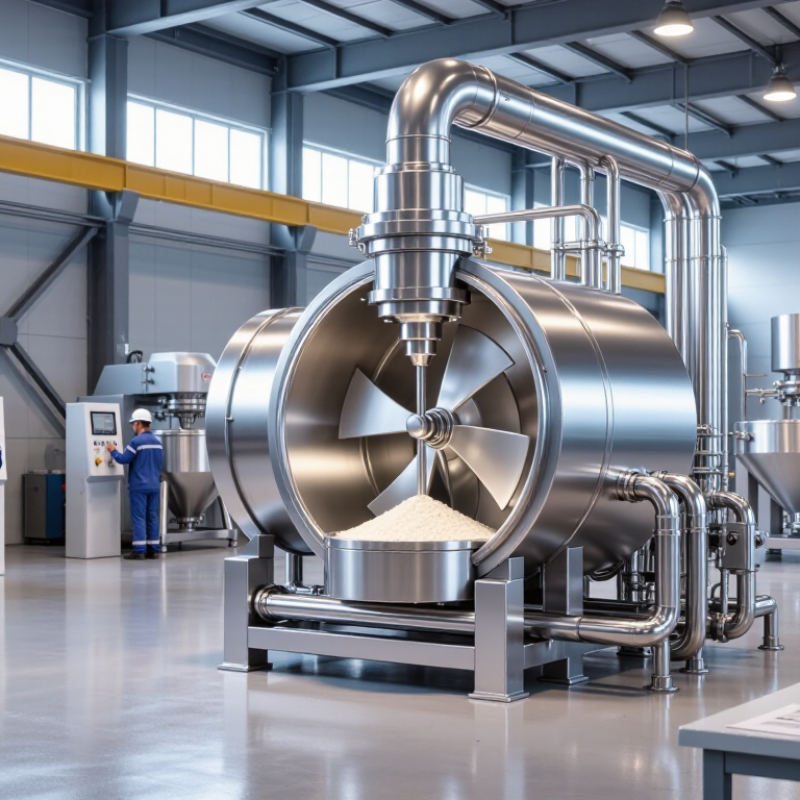
Before comparing industrial mixers in 2026, write down exactly what must be blended and what “mixed” means for the process. A free-flowing powder, a sticky paste, and a water-thin liquid behave very differently. Record particle size, bulk density, viscosity, abrasiveness, and any tendency to settle or trap air. Include operating temperature and whether ingredients are added gradually or all at once. Small details matter. For example, a dense powder may sink through a thin liquid before a standard agitator can distribute it. I still find this step easy to rush. But assumptions here can lead to a machine that mixes unevenly or takes too long.
Set measurable outcomes: target uniformity, batch size, mixing time, and acceptable temperature rise. Ask whether the goal is dissolving, dispersing, emulsifying, suspending solids, or gently combining fragile ingredients. These tasks need different flow patterns and shear levels; one machine rarely excels at every job. Check the full production range, not only the largest batch. A half-filled vessel can behave differently. If the mixture changes during processing, describe each stage, including additions and expected viscosity shifts. Then request a trial with representative materials and sample from several points in the vessel. Measure results, rather than relying on appearance alone. A glossy surface can hide unmixed material below. Some plants cannot share every recipe with suppliers, so a safe, representative test blend may be imperfect. State that limitation clearly.

Before comparing industrial mixing machines, define what the batch must do. Is the task blending free-flowing powder, dispersing pigments, dissolving solids, or emulsifying liquids? These processes need different flow patterns and shear levels. Record the material’s viscosity at operating temperature, solids content, batch volume, and sensitivity to heat or air. A thin liquid may mix quickly with a propeller, while a thick paste may need a close-clearance agitator. Small detail, big difference.
Set measurable performance targets: blend uniformity, mixing time, temperature rise, and acceptable product variation. For powders, sample from several points in the vessel; for liquids, check concentration at different depths. The U.S. Department of Energy’s 2014 Bandwidth Study on Energy Use and Potential Energy Saving Opportunities in U.S. Manufacturing estimates that motor-driven systems account for about 68% of manufacturing electricity use. This is not a mixer-specific figure, but it makes power demand and operating hours worth tracking.
Test representative material when possible. Note impeller speed, torque, and results at the actual working volume, not just in a small beaker. Scale-up is rarely a simple copy. A clean spreadsheet can still miss changes in flow or temperature, so leave room for a pilot run—and revise the specification if the product tells you to.
| Required Mixing Process | Common Mixer Type | Suitable Materials and Viscosity | Mixing Action | Key Performance Requirements | Important Selection Checks |
|---|---|---|---|---|---|
| Blending low-viscosity liquids | Propeller or axial-flow impeller | Water-like and other low-viscosity liquids; suitable when ingredients can circulate readily. | Creates strong axial circulation to move liquid through the vessel. | Uniform composition, short blending time, and adequate circulation throughout the tank. | Check tank geometry, liquid level, impeller position, and whether baffles are needed to limit vortexing. |
| Gas dispersion or liquid suspension | Turbine impeller | Liquid systems requiring gas introduction, solid suspension, or intensive bulk mixing. | Typically produces strong local turbulence and radial or mixed-flow circulation, depending on impeller design. | Gas dispersion, suspension quality, mass transfer, and consistent results at the required operating scale. | Define the gas or solids loading, particle characteristics, vessel design, and required power input. |
| Blending viscous liquids or materials that adhere to vessel walls | Anchor mixer, optionally with wall scrapers | Viscous liquids, pastes, and shear-sensitive products; performance depends on material rheology and vessel design. | Moves material around the vessel perimeter; scrapers help renew material at heat-transfer surfaces. | Uniformity, temperature control, wall-surface turnover, and avoidance of stagnant zones. | Check whether the product is shear-thinning or yield-stress, and whether heating or cooling is required. |
| Mixing viscous materials with axial circulation | Helical ribbon or screw-ribbon mixer | Highly viscous liquids, pastes, and materials that are difficult to circulate with conventional impellers. | Conveys material along the vessel while promoting circulation between the center and the wall. | Complete turnover, consistent composition, and reliable discharge without unmixed regions. | Confirm viscosity across the full process, fill level, batch size, and whether heating or cooling surfaces are needed. |
| Emulsifying, dispersing, or reducing agglomerates | Rotor-stator high-shear mixer | Liquid-liquid emulsions and solid-in-liquid dispersions where localized high shear is required. | Uses a rapidly moving rotor and stationary stator to create intense local shear. | Target droplet or particle dispersion, product uniformity, and repeatable processing time. | Assess whether the material needs a separate bulk-circulation impeller; high shear alone may not circulate an entire tank. |
| Mixing very viscous pastes, doughs, or compound materials | Planetary mixer | Heavy pastes and cohesive materials that need close-contact mixing rather than free-flowing circulation. | Mixing tools travel around the vessel while rotating, sweeping a large portion of the batch. | Uniformity, batch turnover, controlled temperature rise, and effective handling of high-torque loads. | Check torque demand, tool configuration, vessel scraping, batch size, and the method of loading and discharge. |
| Blending powders or gently mixing solids | Paddle mixer or suitable tumble blender | Dry powders, granules, or solids that need blending with limited particle damage. | Moves and folds solids through the mixing zone; action depends on equipment geometry and fill level. | Blend uniformity, acceptable mixing time, low segregation, and minimal product breakage. | Consider particle size, density, shape, moisture, fill level, and whether the product is prone to segregation. |
| Continuous inline blending | Static mixer | Pumpable fluids or compatible streams that can be processed continuously through a pipe. | Stationary internal elements repeatedly divide and recombine flowing streams; there are no moving mixing parts. | Outlet uniformity at the required flow rate, pressure drop, and stable operation across the operating range. | Verify flow rate, viscosity, available pressure, stream ratio, and whether the process requires heating or cooling. |
Selection note: Viscosity suitability is qualitative, not a fixed equipment limit. Actual performance depends on the material’s rheology, vessel geometry, batch size, impeller or tool design, speed, and operating temperature. Before specifying a machine, define the required process outcome and measure it—for example, blend uniformity, dispersion quality, suspension, throughput, mixing time, or temperature control.
Industrial mixer selection begins with material behavior, not vessel appearance. A turbine or pitched-blade impeller creates axial or radial flow, blending liquids and suspending solids. That matters. Anchor and ribbon mixers move viscous pastes slowly, often scraping near vessel walls; they suit materials that resist flow. A rotor-stator forces material through a narrow gap, producing strong shear for dispersions but often adding heat. These designs are not interchangeable.
A planetary mixer combines blade rotation with orbital travel, helping process dense doughs and pastes where a single shaft may leave dead zones. Match the flow pattern to viscosity, batch size, particle-breakup needs, and cleaning method. The U.S. Department of Energy’s 2014 report, Improving Motor and Drive System Performance, estimates motor-driven systems use about 64% of U.S. industrial electricity. That is an industry-wide figure, not mixer-specific. For a 2026 purchase, log power draw, mixing time, temperature rise, and samples from the top and bottom of a trial batch. A clean-looking surface can hide uneven concentration. Pilot tests can mislead; verify performance at full scale, where wall effects and loading may change the result.
Choosing an industrial mixing machine in 2026 starts with the batch, not the brochure. Estimate both your usual batch size and peak demand. A vessel that runs nearly empty may mix poorly, while an oversized machine can waste energy and floor space. Check working volume, not just total vessel capacity. Product viscosity and mixing time matter, too. Test with a representative sample when possible; small trials do not always predict full-scale results.
Materials deserve close inspection. Confirm that every product-contact surface suits your ingredients, cleaning method, and operating temperature. Ask for material documentation and examine welds, seals, and drain points. Hard-to-reach corners can hold residue. Controls should let operators set and repeat useful parameters, such as speed and run time, without hiding alarms behind complicated menus. Safety features may include guarded access, emergency stops, and interlocks. Verify that these match your workflow and site procedures. They are not optional details.
Tips: Bring real batch records to supplier discussions. Note volume, viscosity changes, cleaning frequency, and any uneven mixing. Ask operators to review the control layout; they often spot awkward steps quickly. Leave room for uncertainty. Production varies, and a specification sheet cannot reveal every cleaning or handling problem. A short trial and a careful site review can expose issues before installation.
Select a Machine Based on Cost, Maintenance, and Future Needs
Purchase price is only one part of a mixer’s lifetime cost. Check motor power, expected operating hours, cleaning time, and replacement-part availability. The U.S. Department of Energy’s 2014 motor-systems sourcebook estimates that motor-driven systems use 54% of U.S. manufacturing electricity. That figure covers many kinds of equipment, not mixers alone, but it shows why energy use deserves attention. Ask suppliers for power and throughput data under conditions close to your own process.
Maintenance needs show up on ordinary workdays. Consider how quickly staff can inspect seals, bearings, shafts, and agitators. A mixer that is hard to clean may extend changeovers; a common wear part with a long lead time may stop production. Record current batch sizes and material changes before comparing machine capacity. If output may rise, check whether the vessel, drive, and controls can support that growth without forcing a full replacement. Forecasts are imperfect. Leave room for that.
Tips: Request a written maintenance schedule and a sample operating-cost estimate. Compare service access, cleaning steps, and spare-part delivery times—not just quoted prices. Ask for a trial using your actual material, and note mixing time, temperature, and consistency. One test can still miss a seasonal variation, so document what it does not prove.


For those larger-sized parts, or smaller quantity runs, we have 2 independent powder coat booths and ovens. The quality, durability and affordability of today’s powder coating finishes make this the process of choice for world-class companies.
Powder coating advantages over other forms of coating are many. Materials used in the Powder coating process can be metals and non-metals that come in a multitude of thicknesses, textures, colors, etc. Another of Powder coating’s biggest advantages over conventional coatings is its ability to create finishes in many different textures. Powder Coating Booths allow us the ability to apply these advantages to large products.
Tri-State Fabricators runs a full-service conveyor line for painting. Wet painting can provide protection or decoration to many different part styles. From start to finish, every project is easier to undergo random and point-based inspection by our skilled painting team.
Advantages to our Wet Paint Line are these lines start with product prep and ends with a thorough inspection of a high quality finished product. Our ability to complete large and small projects with a superior finish and doing so in a timely and economical fashion. This passes along the savings in production to our customers. When powder coating ins not an option, our Wet Paint Line gets the job done right the first time.
When the parts get big and heavy we roll-out our custom paint racks and oversize booth. By utilizing our partnerships with all the major paint brands, we can match virtually any color with wet paint.
The advantages of having access to a Wet Paint Booth are many. Large projects of many different shapes can be loaded into the booth. The Wet Paint Booth offers an environment that is much more controlled than a typical parts painting operation.
Not only are they used because of their controlled environment, but they’re are also advantageous when it comes to applying paint to parts that are needed in industries that require specialty coatings such as medical, aerospace, etc.
Our military forces have some very high standards when it comes to the finish of their vehicles and equipment. From the first pre-treatment step to final coat, it takes a great deal of knowledge and experience to protect the men and women of our armed forces. They deserve only the best, and Tri-State Fabricators provides it.
All of our processes are closely monitored by our staff and management teams. Both of which are highly trained in the processes of metal fabrication and finishing. Tri-State Fabricators’ goal is to always fully satisfy each and every customer, including the military. We will always put a 110% into what we do.
Abrasive media blasting is an excellent way to remove old paint, rust, and increase the paint/powder adhesion. Glass beads produce a much smoother and brighter finish than angular abrasives; leaving the part clean yet without any dimensional change. Chemically inert and environmentally friendly, we can recycle our beads approximately 30 times; making them a more preferred method of metal cleaning or surface finishing.
Advantages to Glass Bead Blasting are many. Glass bead blast media is used when a project is needing rough surfaces need to become smooth for applications of coatings such as paint. It is typically used to clean paint and rust from a product surface without deforming the surface it is being used on. Overall, compared to many other blasting media, Glass Bead Blasting is a very economical choice and those savings are always passed on to our customers.
Tri-State Fabricators utilize a zinc phosphate wash to clean and etch the material to ensure the best paint adhesion possible. The unique design of our 3-stage wash system does the work like a 5-stage. From Cleaning and rinsing to conversion coating and post-treatment, Our Part Washing process is a complete service and works throughout the fabrication service and the finishing service.
Along with the previously mentioned benefits, Curing is a vital chemical reaction that leaves the product finish hard and relatively safe from mild abrasion and aggressive corrosion. This process can be done in more than one way; ambient air-dry or in curing ovens at temps that exceed 240°.
From fixing paint mistakes (someone else’s of course) to simply cleaning our paint line hooks, our burn-off oven is put to good use. After a quick burn-off, a little clean up, and a fresh coat of paint, your parts will look better than new.
Why does our Burn-Off Oven work so well? Because super heating the air around parts turns the materials into ashes. From paint and powder coatings to rubber and machining oils, high temps do the job without degrading the integrity of the part.
Masking is a vital part of producing high quality products. We have die-cut masking patterns to protect machined surfaces as well as a wide range of plugs and caps to protect threaded holes and bolts. We provide permanent and temporary masking.
Masking allows the selected sections of a product to be protected from a fabrication or finishing service. This can be with both chemicals when etching and tapes, paints when only finishing just a section of the product. Masking is great in aiding the customization process of a project.
Screen printing is a photographic process that transfers artwork onto a porous nylon screen which allows colored ink to flow through the screen and be deposited on an aluminum or plastic component. We can generally have just about any design created onto a screen for your parts.
Some of the advantages of Screen Printing are, brand recognition for your business displaying on your products, assembly instructions, product warnings/hazards, etc. Tri-State Fabricators produces Screen Printing of the highest quality so you know it’s durable.
Metal Finishing is the art of treating the exterior portion of product, often metal but can also be made of other materials, so that the surface is clean and free of any debris. Then the process of applying coats or either paint of powder coat takes place. This coating process improves the quality of the product in both appearance and resistance to wear and corrosion.
Tri-State Fabricators, Inc., understands that a project typically isn’t complete until a high-quality finish has been added to your product. This is why our painting and powder coating teams continuously inspect the products throughout the Metal Finishing process.