


How to Choose a Valve Position Monitor in 2026?

Choosing a Valve Position Monitor in 2026 requires more than comparing prices and product brochures. The right device must show whether a valve is open, closed, or moving unexpectedly. It should also provide dependable feedback in the actual operating environment. Dust, vibration, moisture, heat, and corrosive chemicals can quickly expose weak designs.

A practical evaluation begins with valve type, actuator movement, switching accuracy, and communication requirements. Rotary and linear valves may need different mounting systems. Confirm the monitor’s sensing range before installation. A few millimeters of misalignment can create unreliable signals. Check enclosure ratings, operating temperature, diagnostic functions, and cable connections. For modern plants, smart communication protocols may simplify maintenance, but they can also increase configuration work. Simple is sometimes safer.

Reliability should be proven through technical documentation, application records, and realistic testing. Ask whether the manufacturer provides calibration guidance, replacement parts, and responsive engineering support. A device that performs well in a clean workshop may struggle beside a vibrating pump or outdoor pipeline. Site trials can reveal these differences. They are worth the effort.

No selection guide is perfect. Budget pressure may favor a basic switch, while safety-critical processes may require advanced diagnostics and certified performance. The best Valve Position Monitor balances accuracy, durability, integration, and lifecycle cost. Reviewers should document their assumptions and revisit them after installation. Small oversights matter. A visible status light, secure bracket, and clear fault signal can prevent confusion during a demanding maintenance shift.
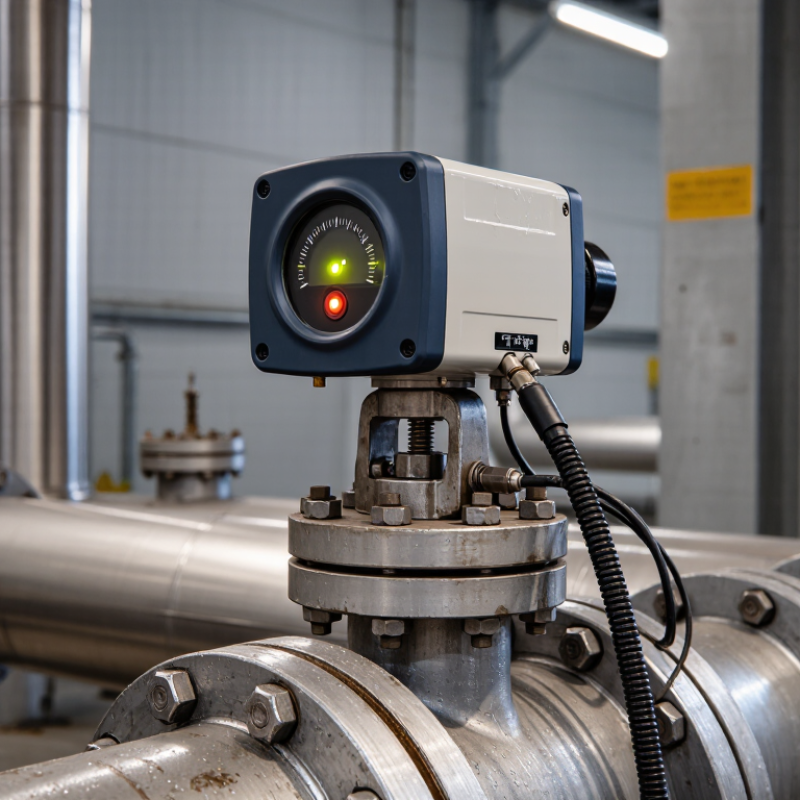
How to Choose a Valve Position Monitor in 2026?

What Is a Valve Position Monitor and How Does It Work?

A valve position monitor is a device that reports whether an industrial valve is open, closed, or somewhere between. It connects the valve’s mechanical movement with a control system, giving operators visible and electrical feedback. Inside, a cam, sensor, or rotary mechanism follows the valve shaft. When the shaft turns, the monitor changes its signal.

Common models use limit switches, proximity sensors, or continuous position transmitters. A limit switch confirms a defined endpoint, such as fully closed. A transmitter provides a changing signal, which helps track partial opening and movement speed. In a plant room, this information may appear on a control screen while a small indicator shows the local position. The best choice depends on valve type, travel range, temperature, moisture, and required accuracy.

Installation experience often reveals small weaknesses. A poorly aligned actuator can make a healthy monitor report the wrong position. Vibration may loosen mounting hardware over time. For this reason, technicians should test both end positions and compare the signal with the valve’s actual movement. A protective enclosure matters in dusty or wet locations. Communication protocols also deserve attention, because a monitor must match the control system’s input. No device is perfect. Calibration can drift, and a “closed” signal may hide mechanical damage unless inspections continue. During selection, reliability records, service access, and clear wiring diagrams deserve as much attention as the purchase price.

How to Choose a Valve Position Monitor in 2026? - What Is a Valve Position Monitor and How Does It Work?

Selection Dimension Available Option How It Works Typical Output or Rating Best-Fit Application Important Consideration
Feedback technology Mechanical limit switches A cam or actuator mechanically changes the switch contact when the valve reaches a preset position. Discrete open/closed contact signals Basic open-or-closed monitoring and simple control systems The contact arrangement, switching load, and mechanical adjustment range must match the control circuit.
Feedback technology Inductive proximity sensors A metal target is detected without physical contact as it moves into the sensor’s sensing field. Discrete electronic switching signal Frequent cycling, reduced mechanical wear, and compact valve assemblies Verify sensing distance, target material, supply voltage, and compatibility with the input module.
Feedback technology Magnetic or reed sensors A magnetic field operates a sensor when a magnet attached to the actuator reaches the defined position. Discrete switching signal Non-contact position detection in enclosed or compact mechanisms Strong external magnetic fields and the required switching distance can affect installation suitability.
Feedback technology Potentiometric position sensor A rotating electrical resistance changes continuously with the valve shaft position. Variable resistance or voltage signal Continuous position indication where a compatible analog input is available Mechanical wear, electrical noise, and signal scaling should be evaluated.
Feedback technology Non-contact rotary sensor Magnetic, optical, or other electronic sensing tracks shaft rotation without a rubbing contact. Discrete, analog, or digital position data, depending on the design High-cycle service and applications requiring reduced mechanical wear Check temperature limits, resolution, electrical interface, and resistance to vibration.
Position information Open/closed indication The monitor confirms whether the valve has reached one or both defined end positions. Two-state status On/off valves, isolation valves, and interlock functions It does not normally show the exact intermediate opening percentage.
Position information Continuous position feedback The sensor converts shaft or actuator travel into a continuously changing electrical signal. Commonly a 4–20 mA analog signal Modulating valves and process control loops Confirm loop power, load resistance, scaling, accuracy, and cable length requirements.
Actuator compatibility Quarter-turn actuator The monitor follows the rotary movement of actuators commonly used with ball, butterfly, and plug valves. Typical travel: approximately 90° for many on/off designs Rotary on/off valve assemblies Verify shaft dimensions, mounting pattern, travel angle, and available adjustment range.
Actuator compatibility Linear actuator The monitor detects stem travel or converts linear movement into an electrical position signal. Travel-dependent discrete or analog signal Globe, gate, diaphragm, and other linear-motion valves The stem travel range, mounting arrangement, and alignment are critical.
Electrical interface Dry contact The monitor provides an electrically isolated contact that is interpreted by an external control circuit. Normally open, normally closed, or changeover contact PLC inputs, relay logic, and simple monitoring circuits Check maximum voltage, current, contact material, and whether the circuit is AC or DC.
Electrical interface Powered electronic output An internal electronic circuit produces a defined signal using an external or loop power supply. Discrete voltage, current, or digital communication signal Automated systems requiring diagnostic or continuous data Confirm supply voltage, current consumption, signal type, polarity, and control-system compatibility.
Environmental protection IP65 enclosure The enclosure is dust-tight and protected against water jets from any direction when correctly installed. Ingress Protection rating: IP65 Indoor or outdoor locations exposed to dust and rain IP protection depends on correct cable glands, covers, seals, and installation practices.
Environmental protection IP67 enclosure The enclosure is dust-tight and protected against temporary immersion under defined test conditions. Ingress Protection rating: IP67 Washdown areas or locations subject to temporary flooding IP67 does not automatically mean protection against continuous underwater operation or high-pressure cleaning.
Hazardous-area suitability Ordinary industrial area The monitor is intended for locations without a classified explosive atmosphere. Non-hazardous-area installation General water, HVAC, manufacturing, and utility systems Do not install in a classified area unless the device has the required certification and installation method.
Hazardous-area suitability Certified hazardous-area model The monitor is designed and certified for specified explosive-atmosphere zones or divisions under stated conditions. Certification depends on the applicable jurisdiction and protection method Chemical, oil and gas, pharmaceutical, and other classified process areas Match the certificate, gas or dust group, temperature class, zone, wiring method, and ambient temperature.
Operating conditions Standard industrial temperature The monitor operates within the temperature range stated in its technical documentation. Use the manufacturer’s specified ambient range; no universal range applies Typical indoor and outdoor industrial installations Consider enclosure heating, solar exposure, process heat, cold starts, and temperature cycling.
Maintenance requirement Contact-based mechanism Mechanical parts and contacts physically move or engage to create the feedback signal. Periodic inspection may be required, depending on duty cycle Applications prioritizing simple troubleshooting and low initial complexity Vibration, wear, corrosion, and incorrect cam adjustment can affect reliability.
Diagnostic capability Basic status only The control system receives the valve state but little or no internal device information. Open/closed or position signal Straightforward installations with local troubleshooting Additional equipment may be needed to identify wiring faults, sensor failure, or incomplete travel.
Diagnostic capability Advanced electronic diagnostics The monitor can provide additional information such as signal status, configuration data, or detected faults. Depends on the selected communication protocol Large plants, remote assets, and predictive-maintenance programs Verify protocol support, integration software, cybersecurity requirements, and technician training.
Selection guideline: Choose a valve position monitor by matching the valve and actuator movement, required feedback type, control-system input, environmental conditions, hazardous-area requirements, maintenance strategy, and available installation space. Ratings and certifications should always be verified against the latest product documentation and applicable local standards.

Which Valve Position Monitor Specifications Should You Evaluate?

Choosing a valve position monitor starts with the valve, not the product brochure. In field applications, I check rotation angle, shaft size, mounting space, and operating speed. The monitor must match the valve’s actual movement range. A compact unit may fit neatly but provide limited adjustment. Small errors accumulate. Evaluate accuracy, repeatability, and switch-point stability under normal operating conditions. Ask for test data, not only marketing claims.

Environmental specifications deserve careful attention. Check enclosure protection, temperature limits, vibration resistance, and corrosion performance. Dust and washdown water can quickly expose weak housing designs. Confirm whether the monitor has suitable certifications for the installation area.

Electrical outputs also matter. Mechanical switches, proximity sensors, and digital signals behave differently during wiring, testing, and fault detection. Verify voltage, current, signal logic, and cable entry requirements before purchase. Fit is often overlooked.

Maintenance teams should review diagnostics and adjustment methods. A visible position indicator can shorten inspection time. Remote feedback can reduce unnecessary access to the valve. During trials, test startup behavior, signal loss, repeated cycling, and manual override conditions. I have sometimes overvalued accuracy while ignoring difficult calibration. That was a practical mistake. A reliable monitor should remain understandable after months of vibration, temperature changes, and routine maintenance. No specification is perfect. Select the balance that suits the valve, control system, and people who will service it.

How to Match the Monitor to Valve Type and Operating Conditions?

How to Choose a Valve Position Monitor in 2026?

Matching the monitor to the valve type prevents inaccurate feedback and premature failure. Quarter-turn ball and butterfly valves usually need rotary monitors with adjustable cams or non-contact sensors. Gate and globe valves require linear travel monitoring, because stem movement may be longer and slower. Multi-turn valves often need geared encoders that track several rotations accurately. Small details matter. Confirm the actual stroke, rotation angle, mounting space, and shaft connection before ordering.

Operating conditions deserve equal attention. In dusty or wet areas, choose a sealed enclosure with suitable ingress protection. For chemical exposure, inspect the housing, seals, and cable entries carefully. High vibration can loosen mechanical switches, while rapid cycling can wear poorly selected contacts. Temperature swings may also affect calibration. Match the monitor’s electrical output to the control system, whether it needs dry contacts, analog feedback, or digital communication. Include a defined failure state.

I have seen installations fail because the valve was selected correctly, but the bracket flexed during operation. That assumption is risky. During controlled commissioning, compare the monitor signal with the valve’s real position at closed, intermediate, and open points. Check both directions. Record the settings and repeat the test after several cycles. A technically advanced monitor is not always the best choice. A simpler device may offer more dependable feedback when the valve moves slowly and the environment remains stable.

What Installation, Communication, and Safety Factors Matter?

How to Choose a Valve Position Monitor in 2026?

Installation should begin with the valve’s real environment, not a catalogue photo. Check temperature, vibration, moisture, dust, and available mounting space. A monitor rated IP66 or IP67 can resist water better, but only with correctly fitted cable glands. Misalignment remains a common field mistake. The sensor may report “open” while the valve is only partially seated. During commissioning, physically stroke the valve and compare feedback with the control-room display. I have seen teams skip this step under schedule pressure. That shortcut can become expensive.

Communication choices should match the existing control architecture and maintenance skills. Basic discrete signals are simple, while HART or fieldbus communication can provide diagnostics and travel data. Avoid buying advanced communication features that nobody will configure. The 2024 Data Breach Investigations Report recorded a 180% increase in vulnerability exploitation, so unused network functions deserve attention. Use role-based access, segmented networks, and documented firmware procedures. Safety requires more than a SIL label. IEC 61508 and IEC 61511 place responsibility on the complete safety loop, including proof testing and response time. Confirm fail-safe behavior during power loss. A monitor that stays silent is not necessarily safe. My own checklist still needs improvement: installation evidence, diagnostic coverage, and test intervals should be recorded together, not scattered across separate files.

How to Choose a Valve Position Monitor in 2026?

What installation, communication, and safety factors matter?

This practical evaluation model gives the highest priority to application fit, enclosure protection, diagnostic capability, communication compatibility, and functional safety. Verify the final selection against the site risk assessment, IEC 60529 ingress-protection requirements, IEC 61508 safety requirements, hazardous-area approvals, temperature limits, and the control-system interface.

How to Compare, Test, and Maintain Valve Position Monitors?

Choosing a Valve Position Monitor in 2026

Comparing valve position monitors starts with the process, not the catalog. Check the valve type, travel range, feedback signal, and control system requirements. A simple open-close switch may suit isolation service. Modulating valves often need continuous position feedback. Look for clear diagnostics, secure mounting, and protection against dust, moisture, vibration, and temperature changes. Installation space matters too. A device that fits poorly can create alignment errors and false signals. In field inspections, I have seen inexpensive units become costly after repeated recalibration.

Test every monitor before full commissioning. Move the valve through its complete stroke and record each feedback point. Compare the local indicator with the control-room reading. Use a calibrated meter or approved test equipment for signal checks. Repeat the test after vibration exposure when practical. The reading should return consistently. It should not drift. Partial-stroke testing can reveal sluggish movement, loose couplings, or incorrect switch settings. However, one test is never enough. Ambient temperature and actuator pressure may change performance, so test conditions should be documented.

Maintenance should follow operating severity, not only calendar dates. Inspect brackets, cable glands, seals, and fasteners during scheduled valve checks. Remove corrosion carefully, then verify alignment before closing the enclosure. Keep calibration records with valve history and alarm events. Replacement is sensible when repairs become frequent or spare parts are uncertain. My own maintenance plans are not perfect; access restrictions sometimes delay testing. That weakness should be recorded, reviewed, and corrected during the next shutdown.

Powder Coat Booths

For those larger-sized parts, or smaller quantity runs, we have 2 independent powder coat booths and ovens. The quality, durability and affordability of today’s powder coating finishes make this the process of choice for world-class companies.

Powder coating advantages over other forms of coating are many. Materials used in the Powder coating process can be metals and non-metals that come in a multitude of thicknesses, textures, colors, etc. Another of Powder coating’s biggest advantages over conventional coatings is its ability to create finishes in many different textures. Powder Coating Booths allow us the ability to apply these advantages to large products.

Wet Paint Line

Tri-State Fabricators runs a full-service conveyor line for painting. Wet painting can provide protection or decoration to many different part styles. From start to finish, every project is easier to undergo random and point-based inspection by our skilled painting team.

Advantages to our Wet Paint Line are these lines start with product prep and ends with a thorough inspection of a high quality finished product. Our ability to complete large and small projects with a superior finish and doing so in a timely and economical fashion. This passes along the savings in production to our customers. When powder coating ins not an option, our Wet Paint Line gets the job done right the first time.

Wet Paint Booths

When the parts get big and heavy we roll-out our custom paint racks and oversize booth. By utilizing our partnerships with all the major paint brands, we can match virtually any color with wet paint.

The advantages of having access to a Wet Paint Booth are many. Large projects of many different shapes can be loaded into the booth. The Wet Paint Booth offers an environment that is much more controlled than a typical parts painting operation.

Not only are they used because of their controlled environment, but they’re are also advantageous when it comes to applying paint to parts that are needed in industries that require specialty coatings such as medical, aerospace, etc.

Military CARC

Our military forces have some very high standards when it comes to the finish of their vehicles and equipment. From the first pre-treatment step to final coat, it takes a great deal of knowledge and experience to protect the men and women of our armed forces. They deserve only the best, and Tri-State Fabricators provides it.

All of our processes are closely monitored by our staff and management teams. Both of which are highly trained in the processes of metal fabrication and finishing. Tri-State Fabricators’ goal is to always fully satisfy each and every customer, including the military. We will always put a 110% into what we do.

Glass-Bead Blasting

Abrasive media blasting is an excellent way to remove old paint, rust, and increase the paint/powder adhesion. Glass beads produce a much smoother and brighter finish than angular abrasives; leaving the part clean yet without any dimensional change. Chemically inert and environmentally friendly, we can recycle our beads approximately 30 times; making them a more preferred method of metal cleaning or surface finishing.

Advantages to Glass Bead Blasting are many. Glass bead blast media is used when a project is needing rough surfaces need to become smooth for applications of coatings such as paint. It is typically used to clean paint and rust from a product surface without deforming the surface it is being used on. Overall, compared to many other blasting media, Glass Bead Blasting is a very economical choice and those savings are always passed on to our customers.

Part Washing

Tri-State Fabricators utilize a zinc phosphate wash to clean and etch the material to ensure the best paint adhesion possible. The unique design of our 3-stage wash system does the work like a 5-stage. From Cleaning and rinsing to conversion coating and post-treatment, Our Part Washing process is a complete service and works throughout the fabrication service and the finishing service.

Along with the previously mentioned benefits, Curing is a vital chemical reaction that leaves the product finish hard and relatively safe from mild abrasion and aggressive corrosion. This process can be done in more than one way; ambient air-dry or in curing ovens at temps that exceed 240°.

Burn-Off Oven

From fixing paint mistakes (someone else’s of course) to simply cleaning our paint line hooks, our burn-off oven is put to good use. After a quick burn-off, a little clean up, and a fresh coat of paint, your parts will look better than new.

Why does our Burn-Off Oven work so well? Because super heating the air around parts turns the materials into ashes. From paint and powder coatings to rubber and machining oils, high temps do the job without degrading the integrity of the part.

Masking

Masking is a vital part of producing high quality products. We have die-cut masking patterns to protect machined surfaces as well as a wide range of plugs and caps to protect threaded holes and bolts. We provide permanent and temporary masking.

Masking allows the selected sections of a product to be protected from a fabrication or finishing service. This can be with both chemicals when etching and tapes, paints when only finishing just a section of the product. Masking is great in aiding the customization process of a project.

Screen Printing

Screen printing is a photographic process that transfers artwork onto a porous nylon screen which allows colored ink to flow through the screen and be deposited on an aluminum or plastic component. We can generally have just about any design created onto a screen for your parts.

Some of the advantages of Screen Printing are, brand recognition for your business displaying on your products, assembly instructions, product warnings/hazards, etc. Tri-State Fabricators produces Screen Printing of the highest quality so you know it’s durable.

Metal Finishing

Metal Finishing is the art of treating the exterior portion of product, often metal but can also be made of other materials, so that the surface is clean and free of any debris. Then the process of applying coats or either paint of powder coat takes place. This coating process improves the quality of the product in both appearance and resistance to wear and corrosion.

Tri-State Fabricators, Inc., understands that a project typically isn’t complete until a high-quality finish has been added to your product. This is why our painting and powder coating teams continuously inspect the products throughout the Metal Finishing process.


