


How to Choose a Non Cartridge Mechanical Seal in 2026?

Choosing a Non Cartridge Mechanical Seal in 2026 requires more than matching shaft diameter and pump model. Process conditions decide whether a seal survives. Pressure, temperature, fluid chemistry, shaft movement, and installation quality all matter.

Grand View Research estimates that the global mechanical seals market will continue growing through 2030, supported by chemical processing, water treatment, energy, and manufacturing demand. Fortune Business Insights also projects steady expansion over the coming decade. These reports show market momentum, but forecasts cannot identify the correct seal face for a hot, abrasive slurry. That decision still requires engineering judgment.

Tribology specialist Dr. Michael M. Khonsari has emphasized, “A seal failure is often a lubrication failure before it becomes a hardware failure.” This observation is highly relevant to Non Cartridge Mechanical Seal selection. A dry-running carbon face, blocked flush line, or misaligned shaft can destroy a carefully specified seal within hours.

Small details matter. Check the 2,850-rpm shaft, the 120°C process fluid, and the abrasive particles visible in the drained sample. Review API 682 practices where applicable, while confirming the manufacturer’s actual design limits. Do not assume every “standard” seal is interchangeable.

That sounds obvious. It is not.

Non-cartridge designs can offer lower purchase costs and easier component-level customization. They can also demand greater installation discipline. This guide compares materials, balance design, elastomers, operating limits, and maintenance risks. It also questions a common assumption: the cheapest seal may become the most expensive choice after repeated leakage, downtime, and hurried replacement.
How to Choose a Non Cartridge Mechanical Seal in 2026?

What Is a Non-Cartridge Mechanical Seal?

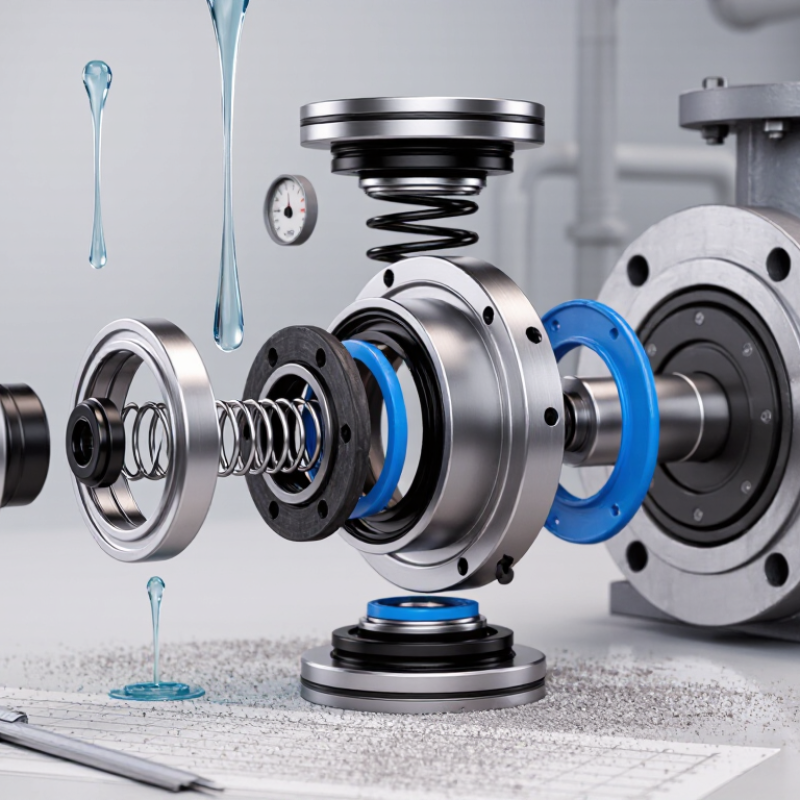
A non-cartridge mechanical seal is a pump sealing assembly installed piece by piece. Its rotating face, stationary face, spring, O-ring, and gland are separate components. Unlike a cartridge seal, it does not arrive factory-set on a sleeve. The technician positions each part directly on the shaft and inside the seal chamber. This design can reduce purchase cost and fit older equipment. It also demands more attention during installation.

In 2026, selection should start with the pump shaft diameter and seal chamber dimensions. Check operating pressure, temperature, speed, and fluid properties before choosing materials. A carbon face may suit clean water, while harder faces handle abrasive service better. Elastomer choice matters when chemicals or heat can swell the O-ring. Measure the spring length and setting dimension. Small errors can cause leakage. Keep faces clean. Really clean. A fingerprint or fiber may create an early drip.

Experienced technicians also inspect shaft runout, sleeve wear, and chamber squareness. These details often explain failures blamed on the seal itself. A non-cartridge seal offers flexibility, but that flexibility is not free. Individual parts can simplify repairs, yet installation time may increase. I would not choose it only because the price is lower. The better choice depends on maintenance skill, available tools, and repeatable measurements. Even careful work can reveal that the pump is already worn. That condition deserves correction before fitting a new seal.


How to Identify Equipment and Operating Requirements

How to Choose a Non Cartridge Mechanical Seal in 2026?

How to Identify Equipment and Operating Requirements

Choosing a non-cartridge mechanical seal starts with the equipment, not the seal catalog. Confirm the pump type, shaft diameter, rotation, and available installation space. Measure the stuffing box carefully. Small errors can create leakage or difficult assembly.

I have seen maintenance teams rely on old drawings that no longer match the pump. Measure the shaft, seal chamber depth, bore, and shoulder location directly when possible. Check the shaft surface for scoring, runout, and corrosion. A clean, stable surface matters. Also verify whether the seal uses springs, pins, or drive lugs that require a specific rotation direction.

Operating conditions determine the seal materials and design. Record fluid composition, pressure, temperature, speed, viscosity, and solids content. Include start-up, shutdown, and dry-running risks. A hot, abrasive slurry needs different face materials than clean cooling water. Chemical compatibility also includes elastomers, springs, and secondary seals. Do not judge compatibility from the fluid name alone.

Review flush plans and cooling arrangements before selecting dimensions. Poor circulation can damage faces even when the seal appears correctly installed. Ask whether pressure changes during operation. Many failures begin with incomplete data. If records conflict, pause and verify them. Guessing may save minutes during selection, but it can waste a shutdown later.

How to Select Materials, Faces, and Seal Arrangements

Choosing a non-cartridge mechanical seal starts with operating data, not a catalog photo. Record shaft diameter, speed, pressure, temperature, fluid composition, and equipment movement. I have seen small temperature changes alter elastomer performance. Do not guess.

Material selection should match the fluid and the environment. Carbon versus silicon carbide affects wear resistance, friction, and dry-running tolerance. Stainless steel may suit clean services, while higher-alloy metals can resist aggressive chemicals better. Elastomers need compatibility with temperature, additives, and cleaning fluids. Check pressure limits carefully. A material can be chemically resistant yet mechanically unsuitable.

Face selection requires attention to lubrication and contamination. Hard faces often tolerate abrasive particles better, but they still need a stable fluid film. Softer faces may perform well in clean, lubricating liquids. Flatness matters greatly. A scratched face can leak before installation begins. Inspect faces under proper lighting and keep them covered.

The seal arrangement should reflect the consequence of leakage. A single seal may fit ordinary water service. A dual arrangement offers better control when the liquid is hazardous, volatile, or difficult to contain. Consider buffer fluid pressure, monitoring, and maintenance access. Non-cartridge seals demand careful installation. Measure setting dimensions twice. I still allow room for error, because real pumps rarely match drawings perfectly. Check shaft runout, sleeve condition, and gland alignment before tightening.

How to Choose a Non-Cartridge Mechanical Seal in 2026?

Material, face, and seal-arrangement guidance based on typical thermal conductivity ranges of common mechanical seal face materials.

How to read the chart: Higher thermal conductivity can help move frictional heat away from the seal faces, but the final selection also depends on fluid compatibility, pressure, speed, solids content, temperature, and lubrication conditions.

Face selection: Carbon graphite is commonly used as a softer mating face, while silicon carbide and tungsten carbide are harder options for abrasive or demanding services. Alumina may be suitable where chemical resistance and hardness are important, subject to impact and thermal-shock limits.

Arrangement selection: A single seal is generally used for standard, non-hazardous services. Dual seals are considered when leakage containment, hazardous fluids, poor lubrication, or zero-emission requirements make additional protection necessary.

Values shown are typical material ranges in W/m·K and can vary significantly by grade, porosity, binder, manufacturing process, and operating temperature. Always verify the selected grade and seal design with the equipment and fluid requirements.

How to Verify Compatibility, Installation, and Maintenance Needs

How to Choose a Non Cartridge Mechanical Seal in 2026?

A non-cartridge mechanical seal should match the pump, shaft, fluid, and operating conditions. Start with the shaft diameter, sleeve length, rotation speed, pressure, and temperature range. Check the fluid’s abrasiveness and chemical behavior. Water, solvents, and slurries demand different face and elastomer materials. Hard faces handle particles better, while softer materials may suit cleaner liquids. Confirm the seal’s dimensions against the pump drawing, not memory or assumptions. Small differences matter.

Installation quality often determines service life. Inspect the shaft for scratches, burrs, corrosion, and excessive runout. Clean the stuffing box carefully. Measure shaft squareness and verify the correct spring direction. Never force the seal over a sharp keyway. Lubricate compatible elastomers lightly, then tighten fasteners evenly. Use a calibrated torque tool where specifications are available. I have seen leaks caused by fingerprints on sealing faces. It sounds minor. It is not.

Maintenance planning should include leakage, vibration, temperature, and flush condition. Record a baseline after startup, then compare readings during routine inspections. A slight drip may indicate adjustment, contamination, or face damage. Do not tighten blindly. Over-compression can create heat and rapid wear. Replace damaged components instead of reusing questionable parts. In difficult services, ask a qualified technician to review material compatibility and installation records. My own checks are not perfect, so a second inspection often catches overlooked alignment errors.

How to Compare Reliability, Cost, and 2026 Industry Standards

How to Choose a Non Cartridge Mechanical Seal in 2026?

Reliability starts with the pump, not the catalogue. A non-cartridge seal needs accurate shaft measurements, clean faces, and correct spring compression. In field work, small installation errors often create heat marks within hours.

The U.S. Department of Energy reports that pumping systems can consume about 25% of industrial electricity. Poor sealing can increase this burden through leakage, friction, and repeated shutdowns.

Cost comparison should include maintenance labor, lost production, flushing fluid, and disposal. A lower purchase price may become expensive after two premature failures.

API 682, Fifth Edition, published in 2022, provides qualification and leakage-control guidance for process pump seals. ISO 21049 also offers a recognized framework for seal selection and testing. These standards do not remove engineering judgment. They only make the decision less subjective.

Check pressure, temperature, speed, shaft runout, and fluid chemistry before comparing quotations. Use documented test records, inspection reports, and installation procedures.

Reliability data matters more than confident sales language. Ask for expected operating hours and failure evidence. Not every seal needs the highest specification. That choice can waste money.

A practical 2026 comparison should rank reliability first, lifecycle cost second, and purchase price last. Still, this order may change when the pump is inexpensive, noncritical, and easy to isolate. That is where many evaluations become imperfect.

Powder Coat Booths

For those larger-sized parts, or smaller quantity runs, we have 2 independent powder coat booths and ovens. The quality, durability and affordability of today’s powder coating finishes make this the process of choice for world-class companies.

Powder coating advantages over other forms of coating are many. Materials used in the Powder coating process can be metals and non-metals that come in a multitude of thicknesses, textures, colors, etc. Another of Powder coating’s biggest advantages over conventional coatings is its ability to create finishes in many different textures. Powder Coating Booths allow us the ability to apply these advantages to large products.

Wet Paint Line

Tri-State Fabricators runs a full-service conveyor line for painting. Wet painting can provide protection or decoration to many different part styles. From start to finish, every project is easier to undergo random and point-based inspection by our skilled painting team.

Advantages to our Wet Paint Line are these lines start with product prep and ends with a thorough inspection of a high quality finished product. Our ability to complete large and small projects with a superior finish and doing so in a timely and economical fashion. This passes along the savings in production to our customers. When powder coating ins not an option, our Wet Paint Line gets the job done right the first time.

Wet Paint Booths

When the parts get big and heavy we roll-out our custom paint racks and oversize booth. By utilizing our partnerships with all the major paint brands, we can match virtually any color with wet paint.

The advantages of having access to a Wet Paint Booth are many. Large projects of many different shapes can be loaded into the booth. The Wet Paint Booth offers an environment that is much more controlled than a typical parts painting operation.

Not only are they used because of their controlled environment, but they’re are also advantageous when it comes to applying paint to parts that are needed in industries that require specialty coatings such as medical, aerospace, etc.

Military CARC

Our military forces have some very high standards when it comes to the finish of their vehicles and equipment. From the first pre-treatment step to final coat, it takes a great deal of knowledge and experience to protect the men and women of our armed forces. They deserve only the best, and Tri-State Fabricators provides it.

All of our processes are closely monitored by our staff and management teams. Both of which are highly trained in the processes of metal fabrication and finishing. Tri-State Fabricators’ goal is to always fully satisfy each and every customer, including the military. We will always put a 110% into what we do.

Glass-Bead Blasting

Abrasive media blasting is an excellent way to remove old paint, rust, and increase the paint/powder adhesion. Glass beads produce a much smoother and brighter finish than angular abrasives; leaving the part clean yet without any dimensional change. Chemically inert and environmentally friendly, we can recycle our beads approximately 30 times; making them a more preferred method of metal cleaning or surface finishing.

Advantages to Glass Bead Blasting are many. Glass bead blast media is used when a project is needing rough surfaces need to become smooth for applications of coatings such as paint. It is typically used to clean paint and rust from a product surface without deforming the surface it is being used on. Overall, compared to many other blasting media, Glass Bead Blasting is a very economical choice and those savings are always passed on to our customers.

Part Washing

Tri-State Fabricators utilize a zinc phosphate wash to clean and etch the material to ensure the best paint adhesion possible. The unique design of our 3-stage wash system does the work like a 5-stage. From Cleaning and rinsing to conversion coating and post-treatment, Our Part Washing process is a complete service and works throughout the fabrication service and the finishing service.

Along with the previously mentioned benefits, Curing is a vital chemical reaction that leaves the product finish hard and relatively safe from mild abrasion and aggressive corrosion. This process can be done in more than one way; ambient air-dry or in curing ovens at temps that exceed 240°.

Burn-Off Oven

From fixing paint mistakes (someone else’s of course) to simply cleaning our paint line hooks, our burn-off oven is put to good use. After a quick burn-off, a little clean up, and a fresh coat of paint, your parts will look better than new.

Why does our Burn-Off Oven work so well? Because super heating the air around parts turns the materials into ashes. From paint and powder coatings to rubber and machining oils, high temps do the job without degrading the integrity of the part.

Masking

Masking is a vital part of producing high quality products. We have die-cut masking patterns to protect machined surfaces as well as a wide range of plugs and caps to protect threaded holes and bolts. We provide permanent and temporary masking.

Masking allows the selected sections of a product to be protected from a fabrication or finishing service. This can be with both chemicals when etching and tapes, paints when only finishing just a section of the product. Masking is great in aiding the customization process of a project.

Screen Printing

Screen printing is a photographic process that transfers artwork onto a porous nylon screen which allows colored ink to flow through the screen and be deposited on an aluminum or plastic component. We can generally have just about any design created onto a screen for your parts.

Some of the advantages of Screen Printing are, brand recognition for your business displaying on your products, assembly instructions, product warnings/hazards, etc. Tri-State Fabricators produces Screen Printing of the highest quality so you know it’s durable.

Metal Finishing

Metal Finishing is the art of treating the exterior portion of product, often metal but can also be made of other materials, so that the surface is clean and free of any debris. Then the process of applying coats or either paint of powder coat takes place. This coating process improves the quality of the product in both appearance and resistance to wear and corrosion.

Tri-State Fabricators, Inc., understands that a project typically isn’t complete until a high-quality finish has been added to your product. This is why our painting and powder coating teams continuously inspect the products throughout the Metal Finishing process.
