How to Choose a Heavy Duty Chipper Shredder in 2026?
Choosing a Heavy Duty Chipper Shredder in 2026 requires more than comparing engine horsepower. Real workloads differ sharply between wet branches, dry limbs, leaves, and mixed green waste.
The FAO Global Forest Resources Assessment 2020 reports that forests cover approximately 4.06 billion hectares worldwide. That scale highlights the continuing need for responsible biomass handling. Yet global forest data cannot determine which machine suits your property. Local material matters more. A six-inch hardwood branch behaves differently from a soft, leafy limb. Moisture changes feeding speed, fuel use, and discharge performance.
Start with the job.
Professional buyers should examine maximum feed diameter, rotor design, blade access, screen configuration, and engine torque. The U.S. EPA’s Sustainable Materials Management data shows that yard trimmings remain a major recoverable waste stream in the United States. Efficient size reduction can support reuse, composting, and lower transport volume. However, published waste figures vary by collection method. That limitation deserves attention.
Safety cannot be an afterthought. OSHA’s logging and arboricultural guidance emphasizes guarding, training, lockout procedures, and safe feeding practices. ANSI Z133 also provides widely recognized safety practices for arboricultural operations. Look for emergency-stop controls, feed-table visibility, stable discharge direction, and straightforward maintenance access.
Small details matter.
A machine that accepts large branches may still struggle with tangled vines. A powerful engine may increase operating costs unnecessarily. Service records, parts availability, warranty terms, and dealer response can reveal more than a glossy specification sheet. This guide compares these factors carefully, while acknowledging one uncomfortable truth: no single Heavy Duty Chipper Shredder performs perfectly across every material, climate, and worksite.
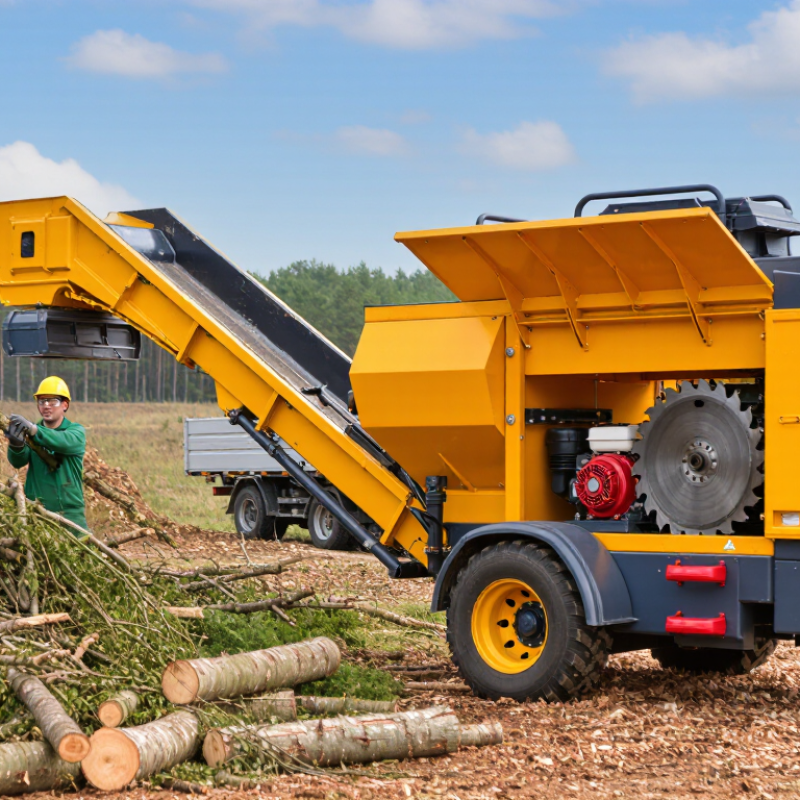
Define Workload: Match 4–6 in. Chipping Capacity to Daily Yard Volume
Capacity should follow workload, not engine size. A 4–6 inch chipper-shredder suits branches within that diameter range, but diameter alone is a weak buying metric. Count incoming material for several normal workdays. Record branch diameter, pile volume, wetness, and loading time. A six-inch throat can still underperform when vines, forked limbs, or muddy leaves dominate.
Scale matters nationally. The U.S. EPA’s Municipal Solid Waste Facts and Figures: 2018 reported 35.4 million tons of yard trimmings generated, with 24.4 million tons recovered. That figure reflects a broad waste stream, not a machine specification. Still, it shows why daily volume and disposal distance deserve measurement. For a small crew, estimate cubic yards per day, then test a realistic mixed load. Do not size from one unusually heavy storm cleanup.
Choose four inches when most branches are under three inches and access is tight. Choose six inches when larger limbs arrive daily and downtime costs more than fuel. Leave operating margin. A machine fed continuously at its limit may heat up, clog, and produce uneven chips. Check manufacturer throughput, screen design, feed-roller opening, and rated material limits. These figures are not interchangeable. Compare measured loads with hourly output, not brochure claims. Field estimates can miss badly when wet brush is weighed instead of measured by pile space. That mistake deserves review before it reaches the yard.
How to Choose a Heavy-Duty Chipper Shredder in 2026?
Define your workload by matching daily yard-debris volume with the machine’s maximum chipping capacity.
Planning guide: a 4-inch chipper is generally suitable for light workloads up to about 5 cubic yards per day, while 5-inch and 6-inch machines provide more capacity for larger daily volumes. Actual throughput depends on material type, moisture, feeding rate, operator experience, and cleanup time.
Compare Powertrains: Evaluate 10–18 HP Engines and 3,600 RPM Cutting Speed
Choosing a heavy-duty chipper shredder in 2026 starts with the powertrain, not the paint or frame. A 10–12 HP engine suits regular branch cleanup and moderate yard waste. For hardwood, twisted limbs, or longer work sessions, 14–18 HP provides more reserve power. Torque matters more.
A 3,600 RPM cutting speed can sound impressive, but the number needs context. It may describe engine speed rather than the actual rotor speed. Ask about belt reduction, blade diameter, and cutting chamber design. A fast rotor with poor torque can stall when fed a forked branch. I prefer a steady feed rate over aggressive loading. It keeps the engine from hunting and reduces belt heat.
Check whether the engine governor holds speed under load. Listen for sharp RPM drops during testing. The drive belt should remain cool after several minutes of continuous chipping. Bearings, shaft thickness, and service access also deserve attention. These details often predict working life better than peak horsepower.
My own buying mistake was focusing too much on advertised RPM. The machine sounded powerful, yet wet material exposed its limits quickly. A larger fuel tank may extend work time, but it also adds weight. Confirm the real intake size, because manufacturers may measure openings differently. Wear gloves, eye protection, and hearing protection during operation. Reliable performance comes from matching engine torque, rotor speed, and material size—not chasing the biggest number.
Assess Reduction Performance: Target 3:1 Output for Easier Compost Handling
How to Choose a Heavy Duty Chipper Shredder in 2026?
Choosing a heavy-duty chipper shredder should begin with reduction performance, not engine size. A practical target is a 3:1 output ratio. Three loose volumes of brush become one volume of processed material. That can reduce loader trips, storage pressure, and compost-bay congestion. The U.S. Environmental Protection Agency reported 292.4 million tons of municipal solid waste in its 2023 Facts and Figures report, based on 2018 data. Volume control remains a serious operating issue.
Treat 3:1 as a target, not a universal standard. Ask how the figure was measured. Check the feedstock, moisture level, screen size, and starting volume. Fresh branches may reduce differently from wet leaves or tangled vines. Field operators should process a measured batch, then compare bucket counts before and after shredding. Record the result.
Small details matter. A 2023 BioCycle industry report highlights inconsistent feedstock and contamination as recurring organics-recycling challenges. Those conditions can weaken real-world reduction performance. A machine may achieve 3:1 in a controlled test, yet deliver closer to 2:1 during a muddy autumn shift. That gap deserves attention. The best evaluation uses your own material, your own crew, and repeated trials. One clean test is not enough.
How to Choose a Heavy Duty Chipper Shredder in 2026? - Assess Reduction Performance: Target 3:1 Output for Easier Compost Handling
Volume reduction is calculated as input volume divided by processed output volume. A 3:1 ratio means that 3 units of loose material produce approximately 1 unit of processed material. | Material Type | Typical Particle Size Before Processing | Recommended Reduction Target | Output Volume from 3 m³ Input | Preferred Processing Action | Selection Considerations |
| Fresh branches and brush | Up to 75 mm diameter | 3:1 or higher | About 1.0 m³ | Chipping | Use a wide feed opening, hardened cutting components, and controlled discharge to reduce bridging and clogging. |
| Mixed branches and leaves | Branches up to 50 mm | 3:1 to 5:1 | About 0.6–1.0 m³ | Chipping and shredding | A reversible cutting system or separate chipper-shredder stages can improve consistency when material moisture varies. |
| Dry leaves | Loose, lightweight material | 5:1 or higher | About 0.6 m³ or less | Shredding | Look for strong airflow, a fine-shred setting, and a discharge path that limits dust accumulation. |
| Wet leaves and green waste | Soft, fibrous material | 3:1 to 4:1 | About 0.75–1.0 m³ | Shredding with controlled feed | Wet material is heavier and more prone to sticking, so inspect access panels, clean-out openings, and anti-wrap protection. |
| Small woody offcuts | Up to 40 mm diameter | 3:1 to 4:1 | About 0.75–1.0 m³ | Chipping | Check the maximum branch diameter, torque capacity, feed-roller grip, and protection against foreign objects. |
| Compost-bound mixed yard waste | Variable; remove stones and metal | At least 3:1 | About 1.0 m³ or less | Two-stage processing | Prioritize adjustable screens, overload protection, easy maintenance, and a discharge size suitable for composting. |
Practical buying benchmark: Select a heavy-duty chipper shredder that can maintain at least a 3:1 volume-reduction ratio under the material mix you process most often. Verify the result with a controlled test using equal input and output volume containers, because moisture, particle shape, feed rate, and screen settings can materially change performance.
Verify Safety Systems: Check Interlocks, Emergency Stops, and OSHA 1910.266
Choosing a heavy-duty chipper in 2026 starts with its safety systems, not engine size. The BLS reported a 2023 fatality rate of 110.9 per 100,000 full-time logging workers. That figure demands disciplined equipment checks. The numbers are sobering.
Test every interlock before feeding material. Opening the discharge chute or service door should prevent blade or rotor movement. Confirm the control circuit resets correctly after power returns. A machine that restarts unexpectedly is unacceptable. OSHA 1910.266 provides logging-operation safety requirements, while 1910.212 addresses protection from hazardous moving parts. Use both references when reviewing the design.
Safety Check Emergency stops need practical testing, not just visual inspection. Stand beside each control station and verify immediate shutdown. Check whether the stop button remains accessible while gloves, branches, and noise create confusion. NIOSH FACE investigations repeatedly describe entanglement and struck-by hazards around wood-processing equipment. Keep the test area clear. Document the result.
I would not trust a glossy checklist alone. Inspectors should also examine damaged cables, faded labels, bypassed switches, and slow-stopping rotors. A missing guard may reflect poor maintenance, but it may also reveal weak safety culture. Ask the seller for inspection records, training procedures, and proof that safety devices cannot be easily defeated. Small details matter. Surprisingly, they are often the details people skip.
Calculate Ownership Cost: Compare Fuel Use, Maintenance, Warranty, and Uptime
Choosing a heavy-duty chipper shredder in 2026 requires more than comparing purchase prices. Calculate fuel cost from real operating data. The U.S. Energy Information Administration reported an average retail diesel price of about $3.76 per gallon in 2024. At 8 gallons per hour and 600 annual hours, fuel alone costs approximately $18,048. Use your local price, not a brochure estimate.
Maintenance can quietly exceed fuel savings. Record knife changes, screen replacement, belt tensioning, lubrication, filters, and technician hours. The U.S. Bureau of Labor Statistics continues to track rising repair and maintenance labor costs, making service access financially important. Ask for scheduled maintenance intervals and typical parts pricing. Small parts matter. They add up.
Warranty terms need careful reading. Coverage for the engine may exclude knives, belts, bearings, screens, and labor-related downtime. Compare warranty length, response time, transport coverage, and authorized service capacity. Then estimate lost production during repairs. A shredder earning $250 per productive hour loses $2,000 during an eight-hour delay. That figure may exceed the repair bill. I have seen buyers overvalue warranty length and underestimate waiting time. That is an easy mistake.
Use a simple ownership formula: purchase price, financing, fuel, maintenance, insurance, labor, downtime, and resale value. Request documented fuel consumption under similar material loads. Test the machine with wet branches, not only dry samples. A lower-priced unit may become expensive when uptime remains uncertain.





