How to Choose a Custom Vacuum Carburizing Process Factory?
Choosing a Custom Vacuum Carburizing Process Factory requires more than comparing prices or polished websites. The decision affects case depth, surface hardness, distortion, fatigue performance, and long-term reliability. A capable factory should explain each stage clearly, from loading and vacuum control to carburizing, diffusion, quenching, tempering, and inspection.
Quality expert W. Edwards Deming said, “Quality comes not from inspection, but from the improvement of the production process.” This principle fits vacuum carburizing closely. A trustworthy supplier should control carbon potential, furnace temperature, gas flow, and quench conditions. It should also document them. Ask for sample process records, metallurgical reports, hardness profiles, and traceability details. Useful evidence may include cross-sectional micrographs and measurements taken from actual production parts.
Experience matters. The factory should understand your steel grade, component geometry, required case depth, and acceptable distortion range. Ask how it handles thin gears, deep cavities, sharp edges, or mixed production loads. Walk through the facility if possible. Look for calibrated instruments, clean loading areas, and technicians who can discuss problems without vague promises.
No factory is perfect. That matters. A reliable partner should acknowledge process variation and explain corrective actions. A trial batch may reveal unexpected distortion or uneven case depth. That is not failure by itself. Refusing to learn from it is. The best Custom Vacuum Carburizing Process Factory combines technical knowledge, repeatable equipment, transparent communication, and evidence gathered from real production experience.
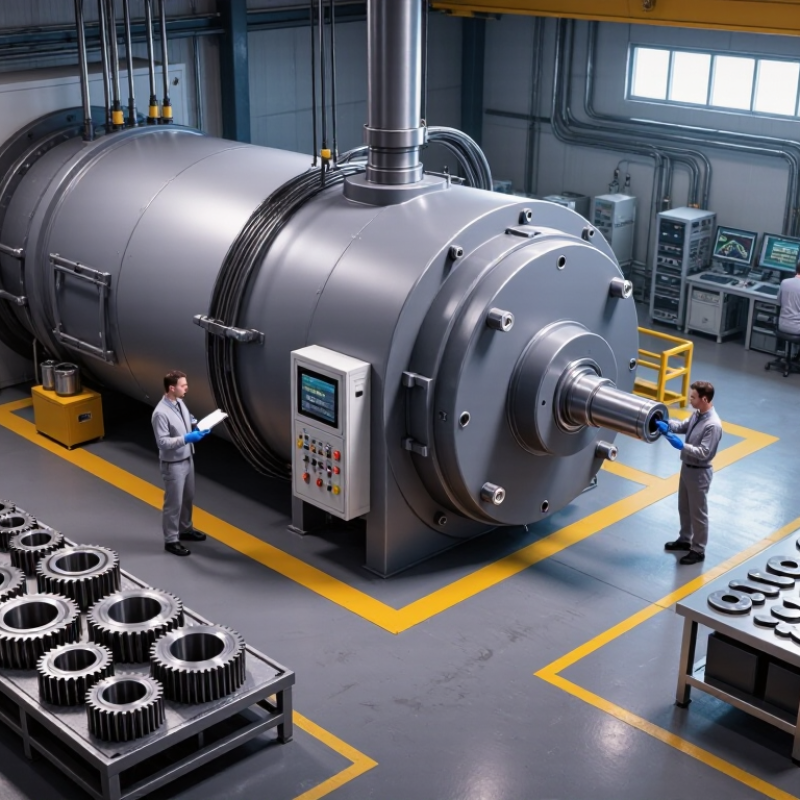
Understanding Custom Vacuum Carburizing and Its Industrial Applications
How to Choose a Custom Vacuum Carburizing Process Factory?
Understanding Custom Vacuum Carburizing and Its Industrial Applications
Custom vacuum carburizing enriches a steel surface with carbon inside a controlled low-pressure chamber. The process produces a hard, wear-resistant case while preserving a tougher core. This balance supports gears, shafts, bearings, dies, and power-transmission components. It can also reduce surface oxidation and unwanted distortion. However, results depend on steel grade, part geometry, heating cycles, and cooling control. A factory should explain these variables clearly, not hide behind general claims.
Look for a facility with suitable chamber capacity, accurate temperature control, and documented process monitoring. Ask how technicians verify case depth, hardness, microstructure, and dimensional change. Reliable factories usually provide test reports and maintain traceability for each production batch. Their engineers should review drawings before quoting a process. Small holes, sharp corners, and thin sections can react differently during treatment. A perfect specification rarely exists. Practical adjustments are sometimes necessary.
Tips: Share the material certificate, target case depth, hardness range, and expected production volume. Request sample processing when geometry is complicated. Check whether the factory can perform metallographic inspection and hardness mapping. Discuss cleaning, fixturing, quenching, and post-treatment grinding. These details often influence performance more than the advertised cycle name. An experienced supplier should also state process limits honestly, even when the answer is inconvenient.
Defining Your Part Requirements and Carburizing Performance Goals
Choosing a Custom Vacuum Carburizing Process Factory?
Defining your part requirements is the first practical step. Record the steel grade, dimensions, weight, and critical surfaces. Note holes, threads, thin edges, and sealing areas. These details affect heat transfer and distortion. Then define your carburizing performance goals. Specify surface hardness, effective case depth, core hardness, and acceptable dimensional change. Do not rely on “high hardness” alone. It is too vague.
A reliable factory should convert these requirements into a controlled process plan. Ask how it manages vacuum level, carburizing temperature, gas flow, quenching, and tempering. Request sample results from similar geometries, not generic charts. Metallographic images, hardness profiles, and distortion records reveal more than confident promises. In my experience, small test loads often expose problems hidden in full production. That matters. However, even a strong trial cannot predict every part variation. Steel cleanliness and machining stress may still change the result.
Tips: Prepare a drawing with tolerance zones and marked functional surfaces. Separate cosmetic areas from performance-critical areas. Ask for inspection frequency, equipment calibration records, and corrective-action procedures. Confirm whether the factory can repeat the same cycle across different batch sizes. A useful supplier will ask difficult questions before quoting. If they accept unclear requirements too quickly, pause. That may be convenient, but it is not necessarily reliable. Reconsider the target when cost, case depth, and distortion limits conflict. Better decisions often begin with an honest compromise.
How to Choose a Custom Vacuum Carburizing Process Factory?
Define the required effective case depth and surface hardness before selecting a factory. These representative targets reflect common engineering requirements for carburized steel components and should be confirmed against the part drawing, material grade, load conditions, and inspection standard.
A suitable supplier should be able to control case depth, hardness, distortion, and repeatability within the specified limits, while providing documented testing such as hardness profiles, metallographic evaluation, and dimensional inspection.
Evaluating Factory Equipment, Process Control, and Technical Expertise
How to Choose a Custom Vacuum Carburizing Process Factory?
Choosing a custom vacuum carburizing factory requires more than viewing a clean workshop. Inspect the furnace configuration, loading capacity, heating uniformity, and quenching performance. Ask for recent temperature uniformity records, not only equipment specifications. A reliable factory should explain how it controls pressure, carburizing gas flow, and carbon potential during each cycle. Small details matter. For example, poorly positioned thermocouples can hide temperature differences between parts.
Process control should be visible in the records. Review calibration schedules, batch traceability, alarm management, and hardness test methods. Ask whether operators measure case depth, surface hardness, core hardness, and metallographic structure. These results should connect clearly to furnace recipes and inspection reports. Statistical process control can reveal gradual drift before defects become obvious. Still, charts alone are not enough. I have seen attractive data lose value when sampling plans were too narrow.
Technical expertise becomes clear when engineers discuss distortion, fixture design, and steel response. They should compare your component geometry with previous production experience, while admitting where testing remains necessary. A factory that promises zero distortion deserves careful questions. That promise sounds confident, but it is rarely realistic. Request trial batches, cross-sectional evaluations, and documented corrective actions. Practical expertise includes knowing when to adjust the cycle, redesign the fixture, or reject an unsuitable assumption.
Comparing Quality Systems, Testing Capabilities, and Production Capacity
Choosing a custom vacuum carburizing process factory requires more than checking equipment photos. In plant audits, I examine how quality requirements become daily work instructions. A reliable factory should maintain a documented quality system, controlled recipes, calibration records, and full batch traceability. Each load needs an identifiable furnace cycle, operator record, and inspection result. A certificate alone is not enough.
Testing capability reveals real process control. Ask whether the factory can measure surface hardness, effective case depth, core hardness, and microstructure in-house. Distortion checks also matter for gears, shafts, and thin components. Review sample reports carefully. They should show actual values, acceptance limits, and measurement methods. I have seen impressive reports with unclear sampling plans. That weakness deserves direct questions.
Production capacity must match your delivery pattern, not just your annual volume. Check furnace working dimensions, maximum load weight, cooling control, and available backup equipment. Ask for typical cycle times and scheduling flexibility during urgent changes. A capable factory can separate development batches from stable production without mixing records.
Visit the loading area if possible. Crowded staging zones may signal handling risks. Small details matter. Still, no factory is perfect; even strong suppliers may struggle with unusual alloys, tight distortion limits, or sudden demand. Their response to these limitations often proves more than their sales presentation.
Selecting a Factory Through Cost, Lead Time, Service, and Reliability
Choosing a custom vacuum carburizing factory requires more than comparing hourly prices. ASM Handbook, Volume 4B, explains that vacuum carburizing can improve surface uniformity and reduce oxidation compared with conventional methods. However, each factory may use different furnace capacity, gas control, and quenching systems. Request a sample process sheet, including temperature, case depth, hardness, distortion limits, and inspection frequency.
Cost must include hidden production risks. Ask whether tooling, test coupons, fixture changes, and corrective batches are included. A low quotation may become expensive after repeated trials. Lead time also needs measurable milestones, such as design review, first article approval, and shipment date. The World Bank’s 2023 Logistics Performance Index evaluates 139 economies and emphasizes customs, infrastructure, and delivery timeliness. Check how the factory manages export documents, packaging, and backup transport.
Service quality is visible in small details. Can engineers review your drawings before pricing? Do they share hardness maps and metallographic images? ISO’s 2022 survey recorded more than 1.2 million ISO 9001 certificates worldwide, but certification alone does not prove heat-treatment capability. Ask for recent audit results, calibration records, traceability samples, and references for similar steels. Reliability needs evidence. Numbers can mislead. A factory may promise a seven-day cycle, yet lack spare parts or furnace redundancy. I would also test communication during a small pilot order, because slow replies often predict larger production problems. Mistakes happen, and honest reporting is more valuable than polished claims.
How to Choose a Custom Vacuum Carburizing Process Factory? — Selecting a Factory Through Cost, Lead Time, Service, and Reliability | Factory Profile | Typical Batch Capacity | Indicative Processing Cost* | Typical Lead Time | Process Capability | Quality and Reliability Indicators | Service Level | Overall Fit |
Profile A
Standard Production Specialist | 300–800 kg per batch | US$1.80–3.20 per kg | 7–12 working days | Vacuum carburizing for alloy steel gears, shafts, pins, and bushings;
typical case depth: 0.30–1.20 mm | Batch traceability, hardness mapping, case-depth reports, and routine process control | Standard quotation and shipment updates; limited engineering support | Best for stable, repeat-production parts with clear specifications |
Profile B
High-Mix Custom Processor | 100–400 kg per batch | US$2.80–5.50 per kg | 10–18 working days | Flexible loading for small lots and complex geometries;
case depth commonly controlled within 0.20–1.00 mm | Lot-specific recipes, trial runs, metallographic analysis, and distortion monitoring | Strong technical communication and support for drawing or specification reviews | Best for customized parts, frequent design changes, and smaller batches |
Profile C
High-Volume Industrial Processor | 800–1,500 kg per batch | US$1.40–2.60 per kg | 5–9 working days | High-throughput vacuum carburizing for automotive, transmission, and industrial components;
case depth commonly controlled within 0.40–1.50 mm | Statistical process control, preventive maintenance records, calibrated testing equipment, and capacity planning | Dedicated production scheduling and formal corrective-action procedures | Best for large volumes where unit cost and delivery speed are priorities |
Profile D
Premium Controlled-Atmosphere Specialist | 200–700 kg per batch | US$3.80–7.00 per kg | 12–22 working days | Tight control of carbon potential, surface hardness, effective case depth, and low-distortion requirements | Detailed furnace records, metallurgical laboratory support, capability studies, and documented calibration | Advanced process development, technical meetings, and full inspection documentation | Best for safety-critical or high-value parts requiring strict validation |
Profile E
Regional Flexible Processor | 150–500 kg per batch | US$2.20–4.50 per kg | 8–15 working days | General-purpose vacuum carburizing for medium-sized component families;
typical case depth: 0.30–1.00 mm | Standard hardness and case-depth inspection; reliability depends on documented equipment maintenance | Responsive local coordination and flexible delivery arrangements | Best for buyers prioritizing communication, moderate cost, and flexible scheduling |
| Evaluation guidance: Compare factories using the same part drawing, material grade, target surface hardness, effective case depth, distortion tolerance, batch weight, inspection requirements, packaging method, and delivery destination. *Cost ranges are indicative industry benchmarks for vacuum carburizing services and can vary with part geometry, steel grade, batch size, required case depth, inspection scope, loading method, and freight conditions. |





