


Choosing a Cnc Wire Cut Machine in 2026 requires more than comparing cutting speed and purchase price. The global electrical discharge machining market is expanding steadily. Grand View Research estimated its value at approximately US$5–6 billion in 2023 and projected continued growth through 2030. MarketsandMarkets also identifies aerospace, medical devices, automotive, and precision tooling as major demand sectors. These trends matter because machine buyers increasingly need tight tolerances, unattended operation, and reliable process control.
Look beyond the brochure.
A suitable machine should match your material, thickness range, taper requirements, and daily workload. For example, a mold shop cutting hardened tool steel may prioritize accuracy and surface finish. An aerospace supplier may need traceable data, stable thermal compensation, and dependable filtration. Check positioning performance against ISO 230-2 where applicable, then request test cuts using your own steel and drawing files. Ask about wire consumption, dielectric maintenance, generator technology, and local technician response times. The cheapest machine may become expensive when filters, guides, downtime, and training are included. TCO is often overlooked.
Some published market forecasts use different methods and should not be treated as guarantees. That deserves reflection. A high CAGR cannot compensate for weak after-sales support or unsuitable shop conditions. In this guide, we compare the technical, financial, and service factors that define a dependable Cnc Wire Cut Machine for real production in 2026.
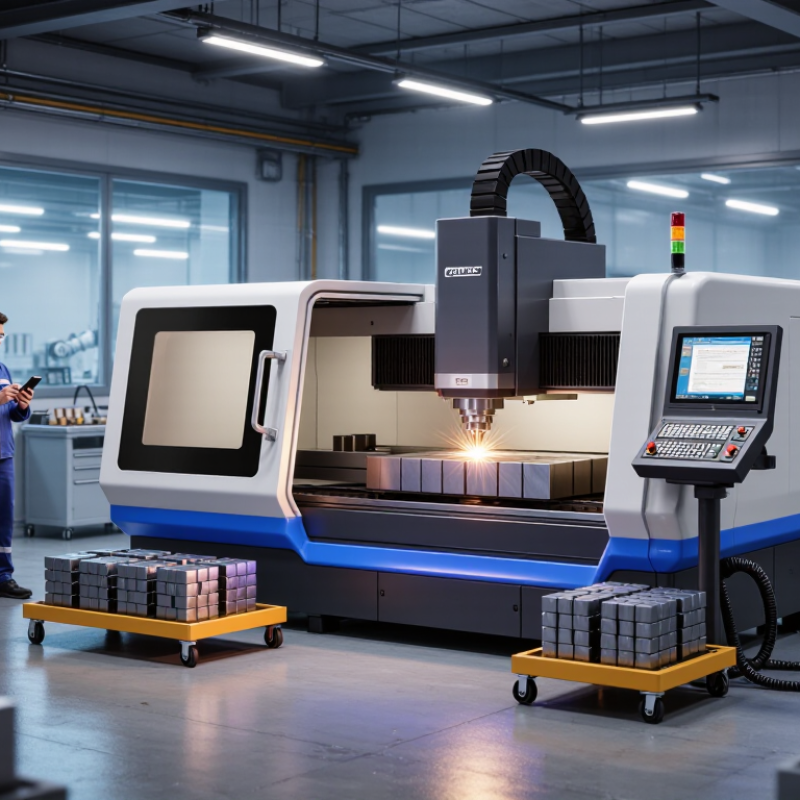
A CNC wire cut machine uses controlled electrical discharges to shape conductive metal. A thin, continuously moving wire removes material inside dielectric fluid. It does not touch the workpiece like a milling cutter. This reduces cutting force and supports sharp corners, narrow slots, and complex profiles. The process also cuts hardened steel after heat treatment. It is not suitable for plastics or nonconductive ceramics without special preparation.
Its main workplaces are toolrooms, mold shops, aerospace plants, medical-device factories, and precision automotive suppliers. Operators use it for stamping dies, extrusion tools, turbine components, surgical parts, and small electronic components. According to Grand View Research’s 2024 Machine Tools Market report, Asia-Pacific held the largest regional share of the global machine tools market in 2023. That demand reflects expanding precision manufacturing, although market reports often combine different machine categories.
A practical selection should examine taper accuracy, wire consumption, flushing control, automation, and after-sales training. The machine’s claimed accuracy may not match production results. Thermal changes, dirty water, and poor workholding can alter a fine profile. A 2024 report from Fortune Business Insights identified rising demand for high-precision electrical discharge machining in aerospace and medical applications. Check the test-cut record instead of trusting a brochure. Ask for measured results on your own alloy, thickness, corner geometry, and required surface finish. Small details matter.

In 2026, choosing a CNC wire cut machine should begin with the job, not its advertised speed. Define the largest workpiece, smallest slot, maximum thickness, and required taper angle. Record the tightest tolerance and acceptable surface roughness. Measure twice. A 300 mm plate and a 600 mm plate require very different machine capacities. Cutting height also affects flushing performance, wire stability, and machining time. Do not estimate these values from occasional work. Use drawings and production records whenever possible.
Material range needs equal attention. Wire EDM generally requires electrically conductive materials, including tool steel, hardened steel, copper, aluminum, and carbide. Nonconductive ceramics, glass, and many plastics cannot be processed directly. Check the material’s thickness, hardness, thermal behavior, and electrical conductivity before comparing machines. Hardness usually matters less than conductivity, but extreme thickness can still reduce cutting efficiency. That detail is often missed.
Match the machine to your real production mix. If most parts are thin stamping dies, prioritize fine accuracy, stable wire tension, and clean corner control. For thick molds, examine flushing pressure, work tank size, and automatic wire threading reliability. Request a test cut using your actual material and geometry. Inspect the kerf, taper, corner radius, and surface finish afterward. A perfect specification is rarely possible. I still leave a small margin for future jobs, because yesterday’s material range may not fit next year’s orders. Oversizing the machine can waste floor space and budget, while undersizing it creates delays that brochures never show.
How to Choose a CNC Wire Cut Machine in 2026?
Which Machine Specifications Matter Most in 2026
Choosing a CNC wire cut machine in 2026 starts with specifications, not brochure language. Accuracy is the first filter. ISO 230-2 separates positioning accuracy from repeatability, so request both figures. Ask for test results at your required table size. Thermal drift can turn a perfect morning cut into a tight afternoon fit. In shop practice, that detail matters. Measure twice.
Cutting speed matters, but only beside surface finish and wire consumption. Grand View Research’s 2024 market analysis projects roughly 7% annual growth in the wire EDM market through 2030. That growth reflects stronger demand for precise, automated production. A faster machine may still lose money if it uses excessive wire or needs frequent operator correction. Check speed data on your material, thickness, and corner geometry. Do not trust one headline number.
Energy and maintenance deserve equal attention. The U.S. Department of Energy reports that motor-driven systems consume more than half of industrial electricity. Compare pump efficiency, standby consumption, filtration life, and dielectric temperature control. Reliable machines should show alarms clearly and record cutting conditions automatically. Inspect the wire threading cycle with gloves on. Is it simple after a break? I would also question impressive specifications without independent test records. That skepticism is useful. Automation helps, but poor flushing settings can still leave rough edges, broken wire, and wasted hours.
A practical comparison of typical CNC wire electrical-discharge machining specifications for different production requirements.
| Specification | Compact Precision Class | General-Purpose Production Class | Large-Workpiece Class | High-Accuracy Fine-Finish Class | Why It Matters |
|---|---|---|---|---|---|
| Recommended Application | Small dies, inserts, punches, prototypes and repair work | Tool-and-die production, precision components and batch manufacturing | Large stamping dies, automotive tooling and oversized components | Medical, aerospace and optical-grade components requiring tight tolerances | Choose the class according to the largest part, required tolerance and production volume rather than machine size alone. |
| Typical Worktable Size | 400–700 × 250–450 mm | 600–900 × 400–600 mm | 900–1,600 × 600–1,000 mm | 500–900 × 300–600 mm | The table must support the workpiece, clamping fixtures, flushing space and access for loading. |
| Typical Axis Travel | X/Y: 250–450 / 150–300 mm | X/Y: 400–700 / 250–450 mm | X/Y: 700–1,200 / 450–800 mm | X/Y: 300–600 / 200–400 mm | Allow clearance for the complete cutting profile and leave room for alignment and workholding. |
| Maximum Workpiece Height | 150–250 mm | 200–350 mm | 300–600 mm | 150–300 mm | Greater height capacity is important for thick plates, stacked parts and multi-level tooling. |
| Maximum Workpiece Weight | 300–800 kg | 600–1,500 kg | 1,500–5,000 kg | 400–1,200 kg | Check both table capacity and the rated load during movement, because dynamic loads can be lower than static capacity. |
| Wire Diameter Range | 0.15–0.30 mm | 0.15–0.30 mm | 0.20–0.30 mm | 0.05–0.25 mm | Standard wire is commonly around 0.25 mm; smaller wire improves fine-detail capability but reduces cutting robustness. |
| Maximum Cutting Thickness | 100–200 mm | 200–400 mm | 300–600 mm | 100–300 mm | Actual capability depends on material, workpiece condition, wire diameter, flushing and required surface finish. |
| Typical Positioning Accuracy | ±0.003–0.005 mm | ±0.002–0.005 mm | ±0.003–0.008 mm | ±0.001–0.003 mm | Ask whether the specification is positioning accuracy, repeatability or contour accuracy; these are not interchangeable. |
| Typical Contour Accuracy | ±0.005–0.010 mm | ±0.003–0.008 mm | ±0.005–0.015 mm | ±0.002–0.005 mm | Contour accuracy is usually more relevant to finished parts than unloaded axis positioning accuracy. |
| Typical Surface Finish | Ra 0.8–1.6 µm | Ra 0.6–1.2 µm | Ra 0.8–1.6 µm | Ra 0.2–0.8 µm | Finishing performance depends on the number of skim cuts, power settings, material and wire condition. |
| Maximum Taper Capability | ±15° to ±30° | ±15° to ±30° | ±10° to ±30° | ±15° to ±30° | Confirm the taper angle at the required thickness, because the maximum angle may be specified only for thin workpieces. |
| Cutting Speed Range | 80–180 mm²/min | 120–250 mm²/min | 100–220 mm²/min | 60–180 mm²/min | Published maximum speed is normally measured under favorable conditions; compare stable production speed instead. |
| Wire Threading | Manual or optional automatic threading | Automatic threading commonly available | Automatic threading recommended | Automatic threading with fine-wire support preferred | Automatic threading reduces downtime after wire breakage and supports unattended or lights-out operation. |
| Dielectric System | Filtered deionized water | Filtered deionized water with controlled conductivity | High-capacity filtration and temperature control | Fine filtration, conductivity control and temperature stabilization | Water quality directly affects wire breakage, dimensional stability, surface finish and machine reliability. |
| Temperature Stability Requirement | Stable workshop environment recommended | Approximately 20 ± 2 °C preferred for precision work | Approximately 20 ± 2 °C strongly recommended | Approximately 20 ± 1 °C recommended | Thermal expansion of the machine, workpiece and dielectric can affect accuracy during long cutting cycles. |
| Unattended Operation Features | Basic monitoring and alarm functions | Automatic wire threading, wire-break recovery and collision monitoring | Remote monitoring, large wire capacity and automatic recovery recommended | Process monitoring, automatic threading and multi-job scheduling preferred | For unmanned production, verify recovery behavior, alarm communication and safe shutdown functions. |
| Control and Data Functions | 2D CAD/CAM input, USB or network transfer | 3D taper programming, job memory and network connectivity | Advanced taper control, remote diagnostics and production data logging | High-resolution interpolation, compensation tables and traceable process data | Useful controls should reduce setup time, simplify taper programming and support repeatable process records. |
| Typical Installed Power | 8–15 kVA | 12–25 kVA | 20–45 kVA | 12–30 kVA | Check electrical supply, transformer requirements, peak demand and standby consumption before installation. |
| Approximate Floor Space | 3–6 m² | 5–10 m² | 10–25 m² | 6–12 m² | Include space for the chiller, filtration unit, wire spool access, maintenance and workpiece handling. |
| Best Selection Priority | Compact footprint, basic accuracy and low operating cost | Balanced accuracy, speed, automation and serviceability | Work envelope, load capacity, flushing performance and rigidity | Thermal control, motion accuracy, fine finishing and process stability | Prioritize the specification that limits your actual production process; avoid paying for unused capacity. |
How to Choose a CNC Wire Cut Machine in 2026?
Accuracy should be judged on your parts, not only the brochure. Ask for a test cut using your actual material and thickness. Measure corner geometry, taper, repeatability, and surface finish after thermal stabilisation. A machine claiming ±0.005 mm may still produce inconsistent results if wire guides, flushing, or temperature control are neglected. ISO 230-2 provides a useful framework for checking positioning accuracy and repeatability.
Speed needs a wider view. Compare cutting rate, setup time, threading time, and recovery after wire breaks. A faster rough cut may lose its advantage during slow finishing passes. Automation can reduce these interruptions. The International Federation of Robotics reported 541,302 industrial robots installed worldwide in 2023, showing the wider shift toward automated production. Deloitte’s 2024 Smart Manufacturing survey found that 86% of manufacturers expect smart operations to become important for competitiveness within five years. These figures support automation, but they do not prove every automated option will pay back.
Tips: Calculate operating cost per finished part. Include wire, filters, resin, electricity, maintenance, labor, and scrap. Request real production records, not only maximum speed. Check whether automatic threading works after submerged cutting and overnight stops. I would also question remote monitoring claims; a dashboard is useful, but poor alarms still create expensive downtime. The best choice may be less impressive on paper, yet more stable across a full month of production.
Choosing a CNC wire cut machine in 2026 requires more than comparing cutting speed and price. A polished showroom is not proof of dependable production. Request sample cuts using your actual material, thickness, corner details, and tolerance. Ask for measured results, not promises. Deloitte’s 2024 Smart Manufacturing and Operations Survey found that 86% of manufacturing leaders expect smart manufacturing to drive competitiveness within five years. Supplier software skills now matter. Check whether technicians can support programming, remote diagnostics, calibration, and operator training.
Safety must be visible and testable. Inspect door interlocks, emergency stops, electrical protection, dielectric-fluid controls, fire detection, and access procedures. Ask for risk-assessment documents based on ISO 12100 and relevant machinery standards. The supplier should explain what happens after a fault, not only during a demonstration. Long-term support deserves equal attention. Request spare-part availability, service response targets, preventive-maintenance schedules, and software-update policies. The International Federation of Robotics reported 541,302 industrial robots installed worldwide in 2023, according to World Robotics 2024. That growth increases pressure on suppliers to provide reliable integration and technical support.
Tips: Visit one operating customer site if possible. Bring a checklist. Measure repair response, training quality, and consumable costs. Ask how many engineers support your region. A low purchase price can become expensive after one week of downtime. I would also challenge my own evaluation: the fastest test cut may not represent stable overnight production. Get independent inspection before payment, where practical. Never accept vague support language.


For those larger-sized parts, or smaller quantity runs, we have 2 independent powder coat booths and ovens. The quality, durability and affordability of today’s powder coating finishes make this the process of choice for world-class companies.
Powder coating advantages over other forms of coating are many. Materials used in the Powder coating process can be metals and non-metals that come in a multitude of thicknesses, textures, colors, etc. Another of Powder coating’s biggest advantages over conventional coatings is its ability to create finishes in many different textures. Powder Coating Booths allow us the ability to apply these advantages to large products.
Tri-State Fabricators runs a full-service conveyor line for painting. Wet painting can provide protection or decoration to many different part styles. From start to finish, every project is easier to undergo random and point-based inspection by our skilled painting team.
Advantages to our Wet Paint Line are these lines start with product prep and ends with a thorough inspection of a high quality finished product. Our ability to complete large and small projects with a superior finish and doing so in a timely and economical fashion. This passes along the savings in production to our customers. When powder coating ins not an option, our Wet Paint Line gets the job done right the first time.
When the parts get big and heavy we roll-out our custom paint racks and oversize booth. By utilizing our partnerships with all the major paint brands, we can match virtually any color with wet paint.
The advantages of having access to a Wet Paint Booth are many. Large projects of many different shapes can be loaded into the booth. The Wet Paint Booth offers an environment that is much more controlled than a typical parts painting operation.
Not only are they used because of their controlled environment, but they’re are also advantageous when it comes to applying paint to parts that are needed in industries that require specialty coatings such as medical, aerospace, etc.
Our military forces have some very high standards when it comes to the finish of their vehicles and equipment. From the first pre-treatment step to final coat, it takes a great deal of knowledge and experience to protect the men and women of our armed forces. They deserve only the best, and Tri-State Fabricators provides it.
All of our processes are closely monitored by our staff and management teams. Both of which are highly trained in the processes of metal fabrication and finishing. Tri-State Fabricators’ goal is to always fully satisfy each and every customer, including the military. We will always put a 110% into what we do.
Abrasive media blasting is an excellent way to remove old paint, rust, and increase the paint/powder adhesion. Glass beads produce a much smoother and brighter finish than angular abrasives; leaving the part clean yet without any dimensional change. Chemically inert and environmentally friendly, we can recycle our beads approximately 30 times; making them a more preferred method of metal cleaning or surface finishing.
Advantages to Glass Bead Blasting are many. Glass bead blast media is used when a project is needing rough surfaces need to become smooth for applications of coatings such as paint. It is typically used to clean paint and rust from a product surface without deforming the surface it is being used on. Overall, compared to many other blasting media, Glass Bead Blasting is a very economical choice and those savings are always passed on to our customers.
Tri-State Fabricators utilize a zinc phosphate wash to clean and etch the material to ensure the best paint adhesion possible. The unique design of our 3-stage wash system does the work like a 5-stage. From Cleaning and rinsing to conversion coating and post-treatment, Our Part Washing process is a complete service and works throughout the fabrication service and the finishing service.
Along with the previously mentioned benefits, Curing is a vital chemical reaction that leaves the product finish hard and relatively safe from mild abrasion and aggressive corrosion. This process can be done in more than one way; ambient air-dry or in curing ovens at temps that exceed 240°.
From fixing paint mistakes (someone else’s of course) to simply cleaning our paint line hooks, our burn-off oven is put to good use. After a quick burn-off, a little clean up, and a fresh coat of paint, your parts will look better than new.
Why does our Burn-Off Oven work so well? Because super heating the air around parts turns the materials into ashes. From paint and powder coatings to rubber and machining oils, high temps do the job without degrading the integrity of the part.
Masking is a vital part of producing high quality products. We have die-cut masking patterns to protect machined surfaces as well as a wide range of plugs and caps to protect threaded holes and bolts. We provide permanent and temporary masking.
Masking allows the selected sections of a product to be protected from a fabrication or finishing service. This can be with both chemicals when etching and tapes, paints when only finishing just a section of the product. Masking is great in aiding the customization process of a project.
Screen printing is a photographic process that transfers artwork onto a porous nylon screen which allows colored ink to flow through the screen and be deposited on an aluminum or plastic component. We can generally have just about any design created onto a screen for your parts.
Some of the advantages of Screen Printing are, brand recognition for your business displaying on your products, assembly instructions, product warnings/hazards, etc. Tri-State Fabricators produces Screen Printing of the highest quality so you know it’s durable.
Metal Finishing is the art of treating the exterior portion of product, often metal but can also be made of other materials, so that the surface is clean and free of any debris. Then the process of applying coats or either paint of powder coat takes place. This coating process improves the quality of the product in both appearance and resistance to wear and corrosion.
Tri-State Fabricators, Inc., understands that a project typically isn’t complete until a high-quality finish has been added to your product. This is why our painting and powder coating teams continuously inspect the products throughout the Metal Finishing process.

