


How to Choose 8K Stainless Steel Plate in 2026?

Choosing an 8k Stainless Steel Plate in 2026 takes more than checking whether its surface looks mirror-bright. “8K” generally describes a highly polished finish, not a stainless steel grade or a complete performance specification. A reflective sheet can still disappoint if its alloy, thickness, flatness, or protective film does not suit the job.

Demand gives buyers reason to compare carefully. The World Stainless Association reported global stainless steel melt-shop production of 58.4 million tonnes in 2023. Grand View Research estimated the global stainless steel market at USD 130.4 billion that year, with further growth projected. These figures describe the wider market, not 8K plate sales. Still, they show why consistent quality and traceable sourcing matter.

Look beyond the showroom shine. Check the material grade against the environment, then review the mill test certificate, surface condition, and dimensional tolerances. ASTM A480/A480M provides relevant requirements for flat-rolled stainless steel, but a finish label alone cannot confirm compliance or suitability. Ask how the plate was polished, inspected, and packed. A clean sample may hide fine scratches that appear under bright factory lighting. That detail matters.

There is no universal “best” plate. The right choice depends on whether it will face moisture, frequent cleaning, fabrication, or close visual inspection. This guide explains how to compare those factors, question supplier claims, and specify an 8K Stainless Steel Plate with fewer surprises. One caution remains: a perfect mirror finish is not proof of durable performance.
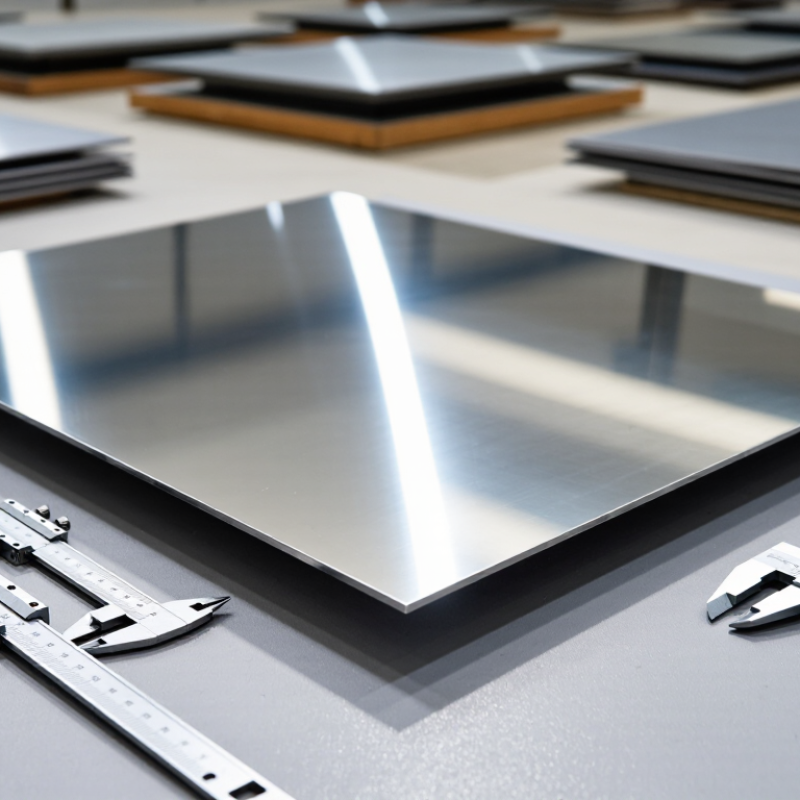
How to Choose 8K Stainless Steel Plate in 2026?

Understanding the 8K Mirror Finish and Its Common Uses

An 8K stainless steel plate is valued for its bright, mirror-like surface. The finish is produced through successive polishing stages, rather than by adding a reflective coating. In practice, “8K” can vary slightly between suppliers, so the label alone is not enough. Request a physical sample and inspect it under lighting similar to the installation site. Reflections can look crisp in a showroom but reveal waviness under long, direct light.

When choosing a plate, confirm the stainless steel grade, thickness, flatness, and protective film. The grade should suit the environment; a highly polished surface does not automatically provide better corrosion resistance. Check both sides and edges for marks, and ask how the sheet was packed and handled. A sample helps. One easy mistake is judging gloss while overlooking distortion or tiny polishing lines.

Common uses include elevator interiors, wall panels, columns, decorative trim, and retail displays. The finish helps brighten enclosed spaces by reflecting light. It also shows fingerprints, water spots, and fine scratches clearly, especially near doorways or busy counters. For wet areas, consider cleaning routines and exposure to cleaners before specifying it. A mirror finish is striking, but sometimes a softer surface is simply easier to live with.


How to Choose 8K Stainless Steel Plate in 2026?

Chromium content is one factor to consider when choosing a stainless-steel grade for a mirror finish. The chart shows the specified chromium ranges for three commonly used grades.

Choosing a grade: Grade 304 is commonly used for indoor decorative panels, elevator interiors, and mirror-like surfaces. Grade 316 is often preferred in coastal or chloride-exposed environments. Grade 430 is used for indoor decorative applications where conditions are relatively dry. An 8K finish describes the polished surface, not the alloy’s corrosion resistance; select the grade for the service environment.

Composition ranges shown are chromium by mass, based on ASTM A240/A240M grade requirements. Confirm the applicable specification and product certificate when purchasing.

Matching Stainless Steel Grades to Your Environment

An 8K stainless steel plate reflects its surroundings sharply, so small scratches, fingerprints, and surface waviness are hard to hide. Choose the grade for the environment before judging the mirror finish. Grade 304 suits many indoor applications, including wall panels and clean, dry display areas. It offers useful corrosion resistance without making every project more expensive. Still, “indoor” does not always mean gentle.

For coastal sites, swimming-pool areas, or locations exposed to de-icing salts, grade 316 is often a more suitable choice. Its molybdenum content improves resistance to chloride-related corrosion, but it does not make the surface maintenance-free. Rinse salt deposits away regularly. Grade 430 can work for dry interior trim and is magnetic, but it is generally less suitable where moisture or salts persist. I would not treat these choices as a perfect rule; cleaning chemicals and trapped moisture can change the outcome. Check the actual exposure, not just the room name. An 8K surface also shows damage quickly, so confirm handling and protective-film practices before installation. A sample near the intended lighting can reveal flaws that a specification sheet cannot.

Choosing Plate Thickness, Size, and Surface Protection

How to Choose 8K Stainless Steel Plate in 2026?

Choosing Plate Thickness, Size, and Surface Protection

An 8K finish is highly reflective, so small surface flaws can stand out under bright lighting. Choose thickness based on how the plate will be used, not appearance alone. Wall cladding may need less rigidity than a panel exposed to vibration or frequent contact. For fabricated parts, account for bending, support spacing, and the weight the plate must carry. Check the supplier’s thickness tolerance, too; nominal size does not always mean exact size.

Measure the finished area carefully, then allow for cutting, seams, and edge treatment. Oversized sheets can reduce visible joints, but they may be harder to move without flexing or scratching. A practical check is to compare the largest available sheet with your access routes and installation equipment. One detail is easy to overlook: reflective surfaces can make slight waviness look worse.

Keep protective film on during transport and fabrication when suitable, but confirm that its adhesive matches the finish and expected storage time. Remove it promptly after installation, following the supplier’s guidance. Dust and metal particles can leave marks. Use clean gloves and soft separators when stacking plates. I would still inspect a sample under the actual lighting; a showroom sample can look different on site. That small check can prevent an expensive mismatch.

Checking Reflectivity, Flatness, and Finish Consistency

How to Choose 8K Stainless Steel Plate in 2026?

A bright 8K surface can look flawless under showroom lights and uneven beside a window. Check reflectivity under consistent lighting, then view the plate from several angles. A straight LED strip makes distortions easier to spot: its reflection should remain clear, not ripple or break. Fingerprints and protective film can mislead, so inspect a clean sample when possible.

Flatness matters just as much. Place the plate on a stable, level surface and check for rocking or visible gaps. For closer inspection, use a straightedge and feeler gauge, comparing results with the project’s stated tolerance. Don’t assume a mirror finish means a flat sheet. It doesn’t.

Finish consistency deserves a side-by-side check. Look across the center, edges, and corners for cloudy patches, fine scratches, or changes in reflection. Compare samples from the same production batch if appearance must match across several panels. Ask how surface condition and flatness are measured, and request clear acceptance criteria. Specifications help, but a single sample may not represent every sheet. I would record inspection conditions, too; it is easy to overlook how much lighting changes what you see.

Verifying Certifications, Fabrication Needs, and Supplier Quality

Choosing 8K stainless steel plate in 2026 starts with records, not a mirror-like sample. Request a mill test certificate listing grade, heat number, chemistry, and thickness tolerance. Check it against the purchase specification and relevant standards, such as ASTM A480/A480M. Verify the certificate’s scope and validity with the issuing body. A PDF alone proves little. The World Stainless Association reported 58.4 million tonnes of global stainless crude-steel production in 2023 in Stainless Steel in Figures 2024. That scale does not guarantee traceability for your order. Ask the supplier to link each plate to its heat and inspection records.

Discuss fabrication before approving the finish. Tell the supplier whether the plate will be laser-cut, bent, welded, or exposed to salt spray and frequent cleaning. Inspect a sample made using the same finishing route. Look for haze, polishing lines, and edge discoloration under consistent lighting. 8K is a commercial mirror-finish designation, not a corrosion rating; clarify the supplier’s acceptance criteria. Confirm the alloy grade separately, and record the protective film and removal timing. A beautiful panel can still warp. This detail is easy to miss.

Tips: Check flatness and thickness at several points with calibrated tools. Request a written defect remedy and delivery commitment. Keep an approved sample; lighting can mislead.

How to Choose 8K Stainless Steel Plate in 2026? — Verifying Certifications, Fabrication Needs, and Supplier Quality
Selection Dimension What to Verify Practical Requirement or Evidence Why It Matters
Meaning of “8K” finish Confirm the finish definition with the supplier rather than relying on the “8K” label alone. Agree on a signed-off reference sample, viewing conditions, inspection method, and any required surface-roughness limit. Finish terminology and acceptance criteria can vary by market and supplier. “8K” is not, by itself, a complete specification for appearance or surface roughness. A defined sample and measurable criteria help prevent disputes.
Stainless steel grade Match the grade to the environment, cleaning chemicals, temperature, and forming requirements. Common options include 304/304L for many general indoor and mildly corrosive applications, and 316/316L where greater resistance to chloride-containing environments is needed. Confirm suitability for the actual service conditions. Mirror polishing does not change the underlying alloy’s corrosion resistance. The correct grade depends on exposure and use.
Material standard and product form Check that the purchase order identifies the grade, applicable product standard, and whether the material is plate, sheet, or strip. Examples include ASTM A240/A240M for chromium and chromium-nickel stainless steel plate, sheet, and strip, or EN 10088-2 for stainless steel sheet, plate, and strip for general purposes. Confirm the applicable edition and product scope. A grade designation alone may not define all delivery, testing, and dimensional requirements.
Material certification Request a material test certificate linked to the actual supplied heat or batch. For European documentation, EN 10204 Type 3.1 is an inspection certificate validated by the manufacturer’s authorized inspection representative independent of the manufacturing department. Check heat number, grade, chemical analysis, mechanical test results, and traceability to the plate. Traceable documentation helps verify that the delivered material matches the order. A certificate should correspond to the material actually shipped.
Dimensions and tolerances Specify thickness, width, length, flatness, edge condition, and allowable tolerances in the order. State the governing dimensional standard and tolerance class where applicable; do not assume one universal tolerance applies to every thickness, width, or product form. Require inspection records for critical dimensions. Dimensional variation can affect fit-up, cutting yield, flatness, and downstream fabrication.
Surface appearance and protection Define acceptable scratches, dents, waviness, polishing lines, stains, and handling marks. Agree on the inspection side, lighting and viewing distance, protective-film requirements, and whether the film is suitable for the planned storage and fabrication process. Inspect both before and after film removal as appropriate. Highly reflective surfaces make handling and appearance defects more noticeable. Protective film can reduce damage but does not replace careful handling.
Fabrication plan Tell the supplier how the plate will be cut, formed, welded, and finished. Confirm that the supplied thickness and format suit the process. For bending, establish bend direction, tooling, and trial requirements; for welding, plan to restore the required corrosion resistance and appearance in the heat-affected area. Fabrication can alter the finish, flatness, and surface condition. A mirror finish may require protection or re-finishing after processing.
Handling and storage Review packaging, lifting, stacking, and storage practices. Use clean, non-damaging contact surfaces; prevent contact with carbon-steel debris; keep sheets dry and protected; and use appropriate separators when stacking. Confirm packaging will protect the finish during transport. Contamination and abrasion can damage the surface or cause problems during later processing and cleaning.
Supplier quality controls Evaluate inspection capability, traceability, complaint handling, and consistency between sample and production lots. Request documented incoming and final inspection procedures, measurement records for agreed criteria, traceability records, and a clear process for nonconforming material. Where needed, arrange a pre-shipment inspection. Reliable controls reduce the risk of receiving material that differs from the approved sample or purchase specification.
Final purchase-order checklist Make every critical requirement explicit before placing the order. Include grade and standard, thickness and tolerances, dimensions, finish definition and approved sample, certificate type, traceability, packaging, inspection criteria, and acceptance procedure. A complete purchase specification gives the buyer and supplier a common basis for production, inspection, and acceptance.

Note: Standards, editions, and project requirements can differ. Confirm the applicable specification and acceptance criteria in the contract before purchase.

Powder Coat Booths

For those larger-sized parts, or smaller quantity runs, we have 2 independent powder coat booths and ovens. The quality, durability and affordability of today’s powder coating finishes make this the process of choice for world-class companies.

Powder coating advantages over other forms of coating are many. Materials used in the Powder coating process can be metals and non-metals that come in a multitude of thicknesses, textures, colors, etc. Another of Powder coating’s biggest advantages over conventional coatings is its ability to create finishes in many different textures. Powder Coating Booths allow us the ability to apply these advantages to large products.

Wet Paint Line

Tri-State Fabricators runs a full-service conveyor line for painting. Wet painting can provide protection or decoration to many different part styles. From start to finish, every project is easier to undergo random and point-based inspection by our skilled painting team.

Advantages to our Wet Paint Line are these lines start with product prep and ends with a thorough inspection of a high quality finished product. Our ability to complete large and small projects with a superior finish and doing so in a timely and economical fashion. This passes along the savings in production to our customers. When powder coating ins not an option, our Wet Paint Line gets the job done right the first time.

Wet Paint Booths

When the parts get big and heavy we roll-out our custom paint racks and oversize booth. By utilizing our partnerships with all the major paint brands, we can match virtually any color with wet paint.

The advantages of having access to a Wet Paint Booth are many. Large projects of many different shapes can be loaded into the booth. The Wet Paint Booth offers an environment that is much more controlled than a typical parts painting operation.

Not only are they used because of their controlled environment, but they’re are also advantageous when it comes to applying paint to parts that are needed in industries that require specialty coatings such as medical, aerospace, etc.

Military CARC

Our military forces have some very high standards when it comes to the finish of their vehicles and equipment. From the first pre-treatment step to final coat, it takes a great deal of knowledge and experience to protect the men and women of our armed forces. They deserve only the best, and Tri-State Fabricators provides it.

All of our processes are closely monitored by our staff and management teams. Both of which are highly trained in the processes of metal fabrication and finishing. Tri-State Fabricators’ goal is to always fully satisfy each and every customer, including the military. We will always put a 110% into what we do.

Glass-Bead Blasting

Abrasive media blasting is an excellent way to remove old paint, rust, and increase the paint/powder adhesion. Glass beads produce a much smoother and brighter finish than angular abrasives; leaving the part clean yet without any dimensional change. Chemically inert and environmentally friendly, we can recycle our beads approximately 30 times; making them a more preferred method of metal cleaning or surface finishing.

Advantages to Glass Bead Blasting are many. Glass bead blast media is used when a project is needing rough surfaces need to become smooth for applications of coatings such as paint. It is typically used to clean paint and rust from a product surface without deforming the surface it is being used on. Overall, compared to many other blasting media, Glass Bead Blasting is a very economical choice and those savings are always passed on to our customers.

Part Washing

Tri-State Fabricators utilize a zinc phosphate wash to clean and etch the material to ensure the best paint adhesion possible. The unique design of our 3-stage wash system does the work like a 5-stage. From Cleaning and rinsing to conversion coating and post-treatment, Our Part Washing process is a complete service and works throughout the fabrication service and the finishing service.

Along with the previously mentioned benefits, Curing is a vital chemical reaction that leaves the product finish hard and relatively safe from mild abrasion and aggressive corrosion. This process can be done in more than one way; ambient air-dry or in curing ovens at temps that exceed 240°.

Burn-Off Oven

From fixing paint mistakes (someone else’s of course) to simply cleaning our paint line hooks, our burn-off oven is put to good use. After a quick burn-off, a little clean up, and a fresh coat of paint, your parts will look better than new.

Why does our Burn-Off Oven work so well? Because super heating the air around parts turns the materials into ashes. From paint and powder coatings to rubber and machining oils, high temps do the job without degrading the integrity of the part.

Masking

Masking is a vital part of producing high quality products. We have die-cut masking patterns to protect machined surfaces as well as a wide range of plugs and caps to protect threaded holes and bolts. We provide permanent and temporary masking.

Masking allows the selected sections of a product to be protected from a fabrication or finishing service. This can be with both chemicals when etching and tapes, paints when only finishing just a section of the product. Masking is great in aiding the customization process of a project.

Screen Printing

Screen printing is a photographic process that transfers artwork onto a porous nylon screen which allows colored ink to flow through the screen and be deposited on an aluminum or plastic component. We can generally have just about any design created onto a screen for your parts.

Some of the advantages of Screen Printing are, brand recognition for your business displaying on your products, assembly instructions, product warnings/hazards, etc. Tri-State Fabricators produces Screen Printing of the highest quality so you know it’s durable.

Metal Finishing

Metal Finishing is the art of treating the exterior portion of product, often metal but can also be made of other materials, so that the surface is clean and free of any debris. Then the process of applying coats or either paint of powder coat takes place. This coating process improves the quality of the product in both appearance and resistance to wear and corrosion.

Tri-State Fabricators, Inc., understands that a project typically isn’t complete until a high-quality finish has been added to your product. This is why our painting and powder coating teams continuously inspect the products throughout the Metal Finishing process.
