


How to Buy Acetic Acid in Bulk?

Buying Acetic Acid in bulk is not simply a matter of finding the lowest price. The right purchase depends on your intended use, required concentration, delivery schedule, and site capabilities. A clear specification helps suppliers quote on comparable terms. Include grade, concentration, quantity, packaging preference, and any relevant quality limits.

Request a current safety data sheet and a certificate of analysis for the product being offered. Check that batch details and stated specifications match your requirements. Details matter. Compare packaging options, such as drums or intermediate bulk containers, against your storage space, handling equipment, and expected consumption. Confirm lead times, minimum order quantities, transport arrangements, and the supplier’s process for addressing damaged packaging or quality concerns. Small checks help.

A low quote can look convincing, but it may exclude delivery charges, handling fees, or other costs. Compare the full delivered cost, not just the price per unit. Ask how product traceability and order changes are managed, and review references or relevant quality credentials where available. Keep the procurement record: specifications, quotations, approvals, and delivery documents. Even a careful review cannot remove every uncertainty; inspect the first shipment and assess whether it meets expectations before increasing order volume. This guide outlines practical questions to ask so buyers can make a more informed, documented decision.
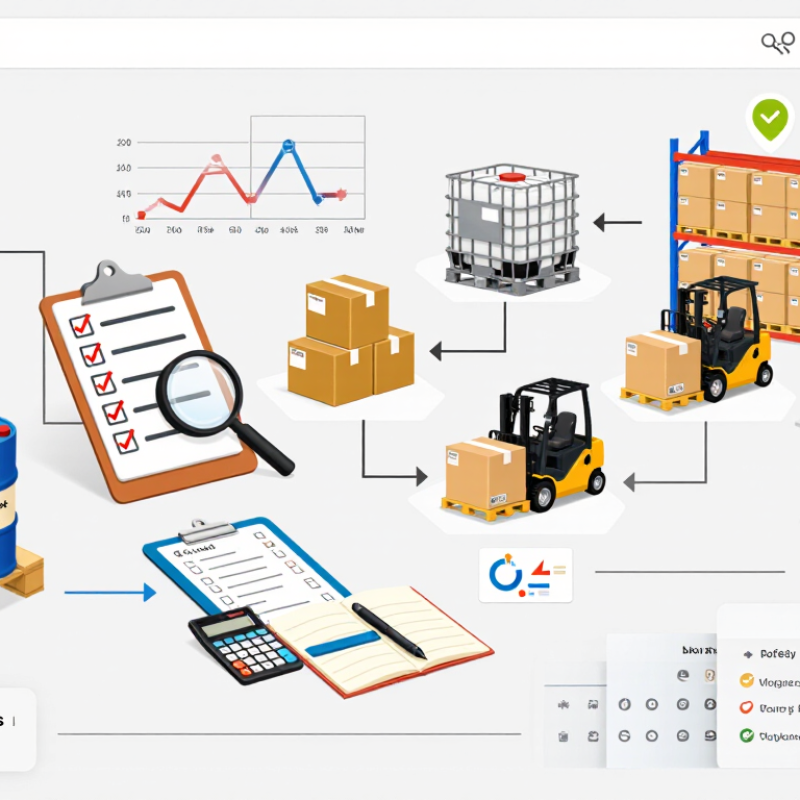
How to Buy Acetic Acid in Bulk?

Define Your Bulk Acetic Acid Requirements

Before requesting a bulk quote, define the product precisely: concentration, grade, expected monthly use, and delivery format. “Acetic acid” alone is not a complete purchasing specification. A food-process buyer and a laboratory may need different impurity limits and documentation. Ask for a current certificate of analysis and safety data sheet, then check that their specifications match your process.

Estimate demand from actual consumption records, not an optimistic production forecast. Include peak-use weeks, delivery lead time, and the amount your site can safely store. The NIST Chemistry WebBook places pure acetic acid’s melting point near 16.6°C, so seasonal temperatures can matter when planning storage and handling. NIOSH’s Pocket Guide lists a boiling point of about 118°C and a specific gravity near 1.05. These reference values help frame handling questions, but they do not replace the supplier’s product-specific data. Small details matter.

Set the order size only after checking tank or drum capacity, unloading access, and inventory rotation. Specify whether you need drums, totes, or bulk-tanker delivery, plus the delivery schedule and acceptable shipment variation. One assumption deserves a second look: lower unit cost may not offset slow turnover or unsuitable storage. Keep a modest demand buffer, but calculate it from lead-time history and actual usage.


Compare Grades, Concentrations, and Product Specifications

Buying acetic acid in bulk starts with matching grade to the process, not choosing the strongest solution. Glacial grades commonly approach 99–100% assay, while aqueous products are sold at process-specific concentrations. Verify the exact assay and test method on the certificate of analysis. The NIST Chemistry WebBook lists a molar mass of 60.052 g/mol and a normal boiling point near 118°C. These reference values can help check basic identity, but they do not replace supplier acceptance limits. Grade names vary. “Industrial” alone is not a complete specification.

Compare water content, formic acid, aldehydes, iron, chloride, color, and residue limits where relevant. A buyer handling a clear coating feed may care about color and trace metals; a process using dilution may focus more on assay and water. Ask for the latest certificate of analysis, safety data sheet, batch traceability, and packaging compatibility. ISO 258 provides test methods for acetic acid for industrial use; specify the applicable method and limit in the purchase agreement. I have seen teams overlook sampling details. That can make good-looking paperwork less useful.

Tips: State concentration as a percentage by mass or another defined basis, and record the test temperature for density checks. Confirm the required grade, impurity limits, delivery form, and container material before ordering.

How to Buy Acetic Acid in Bulk: Compare Concentrations

Commercial acetic acid is available at different concentrations, from dilute aqueous solutions to glacial acetic acid. Compare the required concentration with your process needs before requesting a bulk quote.

Values show nominal concentration by weight for common commercial solution options; actual availability and product specifications vary. Confirm assay, impurity limits, packaging, and the certificate of analysis with the supplier.

Verify Supplier Qualifications and Regulatory Compliance

When buying acetic acid in bulk, check the supplier’s legal identity, operating permits, and quality-management records. Request a current safety data sheet, a batch-specific certificate of analysis, and documented traceability from production to shipment. Compare the stated concentration, impurity limits, and test methods with your process needs. A polished certificate is not enough; verify that its batch number matches the drums or tanker documents. Details matter.

Review transport, storage, and worker-protection procedures before placing an order. The NIOSH Pocket Guide to Chemical Hazards lists a recommended exposure limit of 10 ppm as an eight-hour average and 15 ppm as a short-term limit. OSHA’s Table Z-1 also lists a 10 ppm permissible exposure limit. These U.S. values are useful screening references, not substitutes for local requirements. Ask how the supplier controls vapor exposure, manages leaks, and trains loading staff. Request recent audit findings or corrective-action records where available. Some paperwork may look complete but still leave practical gaps.

Confirm that the supplier’s registrations and product documentation fit the destination country and intended use; requirements differ by jurisdiction. For cross-border shipments, check that the transport classification, packaging, and emergency contacts agree across the SDS and shipping papers. Keep samples and retain incoming batch records. A small mismatch is worth investigating.

How to Buy Acetic Acid in Bulk? — Verify Supplier Qualifications and Regulatory Compliance
Verification Dimension Evidence to Request What to Confirm Practical Buying Check
Supplier identity and authorization Business registration details, applicable chemical trading or operating permits, and the legal entity named on the quotation and contract. Confirm that the supplier is legally established and authorized for the relevant activities in the country or region where it operates. Permit requirements vary by jurisdiction. Match the legal entity across the quotation, contract, invoice, payment instructions, and shipping documents. Verify permits with the issuing authority where possible.
Product identity and grade Product specification, current Safety Data Sheet (SDS), and a representative Certificate of Analysis (COA). Confirm the product is acetic acid (CAS 64-19-7) and that the concentration, grade, impurity limits, and intended use match the purchase specification. Specify concentration and test methods in the purchase order. For food, pharmaceutical, or other regulated uses, request documentation appropriate to that use; industrial-grade material should not be assumed suitable.
Batch quality control Batch-specific COA, sampling and testing procedures, and traceability information. Check that results are tied to the supplied batch and report relevant agreed parameters, such as assay and specified impurities. Limits depend on the grade and application. Agree on acceptance limits, retesting procedures, and how nonconforming material will be handled before placing the order.
SDS and hazard communication Current SDS in the required language and hazard-label information for the supplied concentration. Review hazards, first aid, handling, storage, exposure controls, personal protective equipment, and emergency measures. Classification and labeling can depend on concentration and local rules. Ensure the SDS matches the actual product and concentration, and provide it to receiving, safety, and emergency-response personnel before delivery.
Chemical inventory and market access Applicable substance inventory status, registrations or notifications, and importer or downstream-user documentation, where relevant. Requirements depend on the destination market, substance, quantity, and supply-chain role. For example, TSCA requirements may apply in the United States and REACH obligations may apply in the European Economic Area. Identify who is responsible for applicable registrations, notifications, and import obligations in writing. Do not treat a supplier’s general compliance statement as proof of every buyer-specific obligation.
Transport classification Transport classification and shipping documents for the exact concentration, packaging, transport mode, and destination. Acetic acid transport classification depends on the formulation and applicable transport rules. UN 2789 is used for glacial acetic acid and certain solutions with more than 80% acid; UN 2790 covers certain solutions containing not less than 10% and not more than 80% acid. Confirm the applicable entry for the actual shipment. Have the supplier or qualified dangerous-goods shipper confirm the UN number, hazard class, packing group, marks, and documentation under the rules governing the route and transport mode.
Packaging and bulk-transfer readiness Packaging or tank-trailer specifications, compatibility information, inspection records, and transfer procedures. Confirm packaging is suitable for the concentration and shipment conditions, and that loading and unloading arrangements are compatible with the receiving site. Agree on delivery quantity, permitted vehicle or container type, connections, hose and seal checks, unloading controls, and responsibility for equipment readiness.
Storage and emergency controls Written storage guidance, spill-response information, and relevant emergency contact procedures. Acetic acid is corrosive; concentrated material can also present a flammable-liquid hazard. Follow the product SDS and applicable local fire, chemical-storage, and workplace-safety requirements. Before delivery, verify that the site has suitable compatible storage, access controls, spill response, and trained personnel for the intended volume and concentration.
Management-system certifications Current third-party certificates, where claimed, including certificate scope, site, and validity dates. A quality-management certification such as ISO 9001 can indicate a documented management system, but it is not a substitute for product-specific testing or legal compliance. Check the certificate issuer and scope. Treat certifications as supporting evidence rather than proof that the product meets every specification or regulatory requirement.
Commercial terms and delivery controls Written quotation, specification, delivery schedule, inspection terms, and agreed Incoterms® rule and named place, if used. Clarify concentration, quantity tolerance, packaging, delivery responsibilities, transfer of risk, required documents, and procedures for delays or rejected goods. Put the approved specification, batch documentation, sampling plan, and discrepancy-resolution process into the purchase contract or purchase order.

Evaluate Pricing, Packaging, and Transportation Options

How to Buy Acetic Acid in Bulk?

Bulk purchasing starts with comparing the delivered cost, not just the price per kilogram. Ask for quotes that specify concentration, grade, volume, payment terms, and delivery point. A low unit price may look less attractive after freight, container deposits, or transfer fees are added. Details matter.

Choose packaging that suits your order size and site equipment. Drums may work for smaller shipments, while totes or tankers can suit larger volumes. Confirm material compatibility, closures, pallet condition, and unloading connections before ordering. Review the current safety data sheet and make sure staff have appropriate protective equipment and a spill-response plan. Acetic acid is corrosive, and some concentrations may also present flammability concerns. Requirements depend on the product and local rules.

Transportation affects both cost and delivery reliability. Compare practical options, then confirm transit time, carrier capability, shipping documents, and any temperature limits with qualified professionals. Ask whether the quote includes insurance, appointment delivery, and waiting time. A spreadsheet can still miss a hose fitting or a narrow receiving window. Even careful estimates are imperfect, so check the shipment plan against your storage capacity before placing a large order.

Arrange Delivery, Safe Handling, and Storage

Before ordering bulk acetic acid, confirm the grade, concentration, quantity, and delivery method with your supplier. Arrange a suitable unloading area with clear vehicle access and enough space for compatible tanks or drums. Keep trained staff available to check labels, container condition, and delivery paperwork when the shipment arrives. A rushed handoff is easy to regret.

Tips: Review the product safety data sheet before delivery. Wear the specified protective equipment, and keep an eyewash station and safety shower accessible. Use compatible transfer hoses and fittings. Never rely on a familiar-looking container alone.

Store acetic acid in a cool, well-ventilated area with secondary containment. Keep containers closed, upright, and separated from incompatible materials, including strong bases and oxidizers. Protect storage vessels from heat and direct sunlight, and follow the supplier’s guidance for the specific concentration. Check tanks, valves, and surrounding surfaces routinely for leaks or corrosion. Even a careful plan can miss a loose connection, so record inspections and fix concerns promptly. Bulk storage needs attention between deliveries, too.

Powder Coat Booths

For those larger-sized parts, or smaller quantity runs, we have 2 independent powder coat booths and ovens. The quality, durability and affordability of today’s powder coating finishes make this the process of choice for world-class companies.

Powder coating advantages over other forms of coating are many. Materials used in the Powder coating process can be metals and non-metals that come in a multitude of thicknesses, textures, colors, etc. Another of Powder coating’s biggest advantages over conventional coatings is its ability to create finishes in many different textures. Powder Coating Booths allow us the ability to apply these advantages to large products.

Wet Paint Line

Tri-State Fabricators runs a full-service conveyor line for painting. Wet painting can provide protection or decoration to many different part styles. From start to finish, every project is easier to undergo random and point-based inspection by our skilled painting team.

Advantages to our Wet Paint Line are these lines start with product prep and ends with a thorough inspection of a high quality finished product. Our ability to complete large and small projects with a superior finish and doing so in a timely and economical fashion. This passes along the savings in production to our customers. When powder coating ins not an option, our Wet Paint Line gets the job done right the first time.

Wet Paint Booths

When the parts get big and heavy we roll-out our custom paint racks and oversize booth. By utilizing our partnerships with all the major paint brands, we can match virtually any color with wet paint.

The advantages of having access to a Wet Paint Booth are many. Large projects of many different shapes can be loaded into the booth. The Wet Paint Booth offers an environment that is much more controlled than a typical parts painting operation.

Not only are they used because of their controlled environment, but they’re are also advantageous when it comes to applying paint to parts that are needed in industries that require specialty coatings such as medical, aerospace, etc.

Military CARC

Our military forces have some very high standards when it comes to the finish of their vehicles and equipment. From the first pre-treatment step to final coat, it takes a great deal of knowledge and experience to protect the men and women of our armed forces. They deserve only the best, and Tri-State Fabricators provides it.

All of our processes are closely monitored by our staff and management teams. Both of which are highly trained in the processes of metal fabrication and finishing. Tri-State Fabricators’ goal is to always fully satisfy each and every customer, including the military. We will always put a 110% into what we do.

Glass-Bead Blasting

Abrasive media blasting is an excellent way to remove old paint, rust, and increase the paint/powder adhesion. Glass beads produce a much smoother and brighter finish than angular abrasives; leaving the part clean yet without any dimensional change. Chemically inert and environmentally friendly, we can recycle our beads approximately 30 times; making them a more preferred method of metal cleaning or surface finishing.

Advantages to Glass Bead Blasting are many. Glass bead blast media is used when a project is needing rough surfaces need to become smooth for applications of coatings such as paint. It is typically used to clean paint and rust from a product surface without deforming the surface it is being used on. Overall, compared to many other blasting media, Glass Bead Blasting is a very economical choice and those savings are always passed on to our customers.

Part Washing

Tri-State Fabricators utilize a zinc phosphate wash to clean and etch the material to ensure the best paint adhesion possible. The unique design of our 3-stage wash system does the work like a 5-stage. From Cleaning and rinsing to conversion coating and post-treatment, Our Part Washing process is a complete service and works throughout the fabrication service and the finishing service.

Along with the previously mentioned benefits, Curing is a vital chemical reaction that leaves the product finish hard and relatively safe from mild abrasion and aggressive corrosion. This process can be done in more than one way; ambient air-dry or in curing ovens at temps that exceed 240°.

Burn-Off Oven

From fixing paint mistakes (someone else’s of course) to simply cleaning our paint line hooks, our burn-off oven is put to good use. After a quick burn-off, a little clean up, and a fresh coat of paint, your parts will look better than new.

Why does our Burn-Off Oven work so well? Because super heating the air around parts turns the materials into ashes. From paint and powder coatings to rubber and machining oils, high temps do the job without degrading the integrity of the part.

Masking

Masking is a vital part of producing high quality products. We have die-cut masking patterns to protect machined surfaces as well as a wide range of plugs and caps to protect threaded holes and bolts. We provide permanent and temporary masking.

Masking allows the selected sections of a product to be protected from a fabrication or finishing service. This can be with both chemicals when etching and tapes, paints when only finishing just a section of the product. Masking is great in aiding the customization process of a project.

Screen Printing

Screen printing is a photographic process that transfers artwork onto a porous nylon screen which allows colored ink to flow through the screen and be deposited on an aluminum or plastic component. We can generally have just about any design created onto a screen for your parts.

Some of the advantages of Screen Printing are, brand recognition for your business displaying on your products, assembly instructions, product warnings/hazards, etc. Tri-State Fabricators produces Screen Printing of the highest quality so you know it’s durable.

Metal Finishing

Metal Finishing is the art of treating the exterior portion of product, often metal but can also be made of other materials, so that the surface is clean and free of any debris. Then the process of applying coats or either paint of powder coat takes place. This coating process improves the quality of the product in both appearance and resistance to wear and corrosion.

Tri-State Fabricators, Inc., understands that a project typically isn’t complete until a high-quality finish has been added to your product. This is why our painting and powder coating teams continuously inspect the products throughout the Metal Finishing process.
