


How Sandwich Panel Packaging Affects Overseas Delivery?

A sandwich panel may leave the factory in perfect condition, but that does not guarantee it will arrive at an overseas construction site the same way. Long-distance shipping exposes building materials to moisture, friction, impact, and repeated handling. These risks can affect not only the appearance of the panels but also their installation and overall project schedule.

For overseas projects, packaging deserves more attention than it often receives. The way materials are wrapped, secured, and loaded can influence delivery quality as well as transportation costs.

What Can Go Wrong During Long-Distance Shipping?

Sea freight is often the most practical option for transporting large quantities of building materials overseas. However, a journey lasting several weeks can expose cargo to changing temperatures, humidity, and rough handling.

Moisture is one of the main concerns. Temperature fluctuations inside shipping containers can cause condensation, commonly known as container rain. Water droplets may form on container walls or ceilings and eventually reach the cargo. If protective packaging cannot keep moisture away from metal surfaces, corrosion may develop during transit.
 sandwich panel

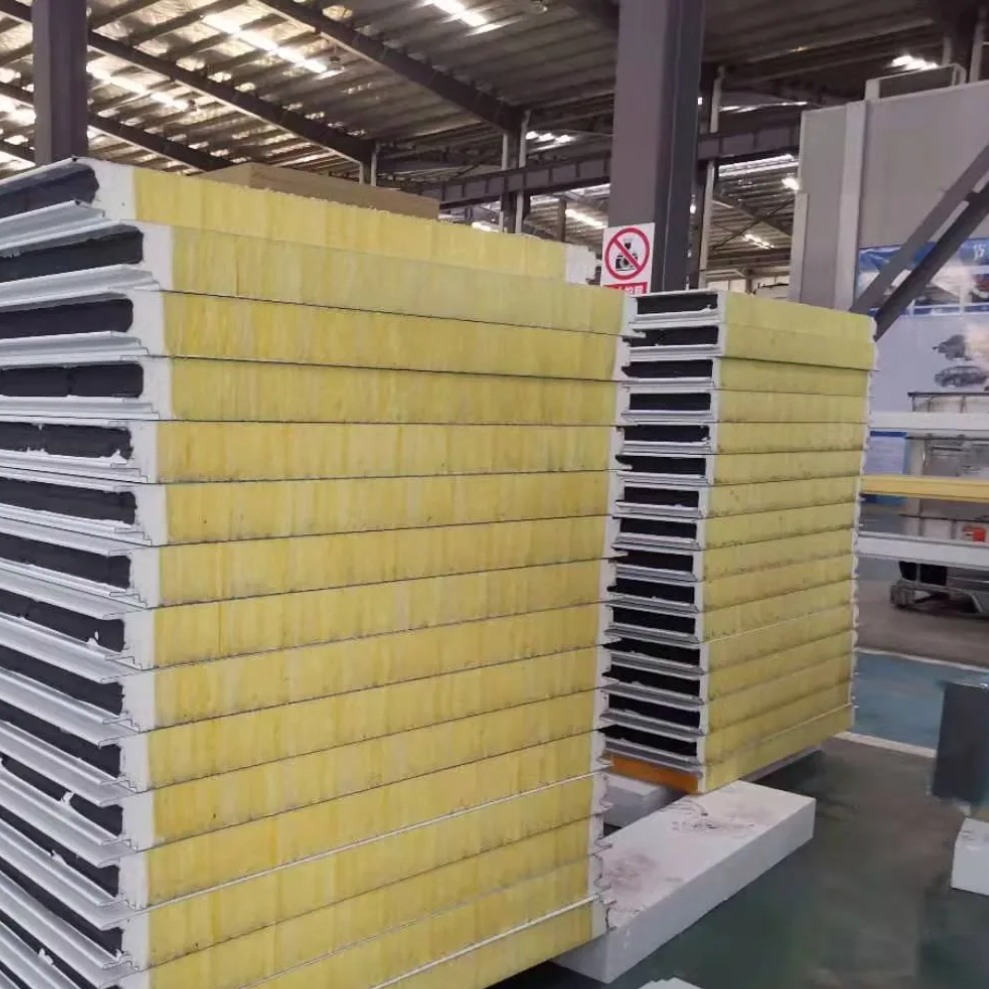
Surface damage presents another challenge. Panels may rub against each other when cargo shifts during transportation. Repeated movement can scratch painted metal surfaces, especially when protective separation is insufficient.

Panel edges and corners also need attention. A minor impact during loading or unloading can dent the metal sheets or damage the panel edges. Such damage may complicate installation, particularly when workers need to align long wall or roof sections.

These problems do not always appear serious in shipping records. Yet once the materials reach the site, damaged panels may require additional inspection, sorting, or replacement. This can disrupt installation plans and increase costs.

Packaging and Container Loading Should Work Together

Good packaging is not simply about adding more protective materials. It should address the actual risks during storage, transportation, and handling.

Moisture protection comes first. Multiple layers of waterproof and moisture-resistant packaging can help isolate metal surfaces from external humidity. However, packaging materials alone cannot eliminate condensation inside a container. Proper cargo preparation, container inspection, and moisture-control measures also matter.
sandwich panel

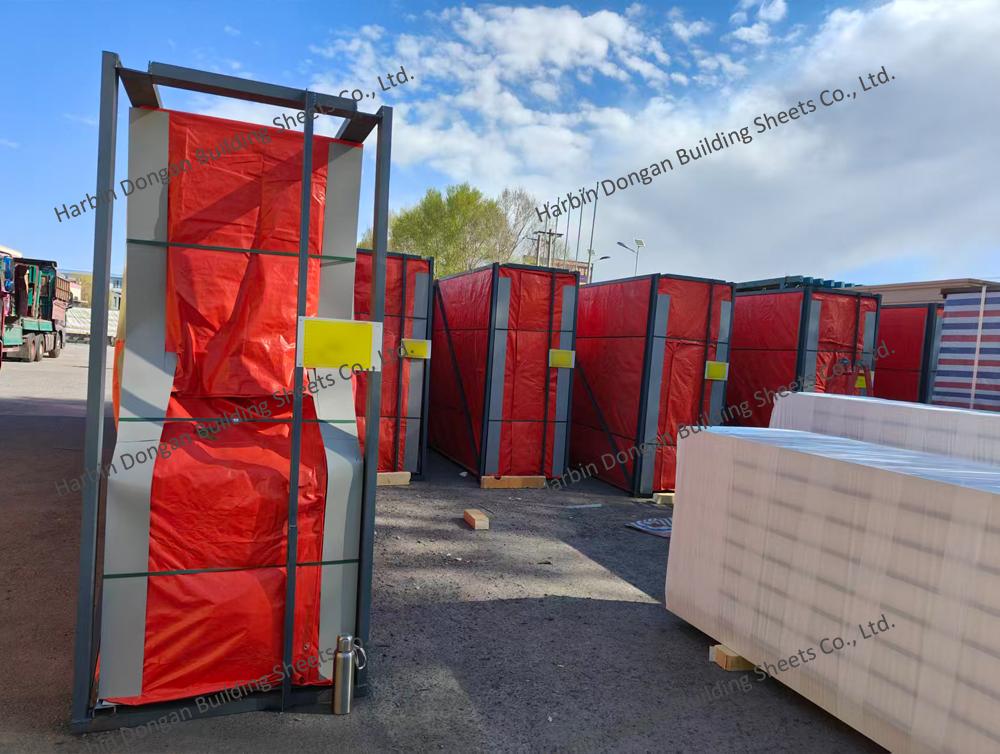
Mechanical protection requires a different approach. Protective separators can reduce direct contact between panels, while reinforced frames help prevent shifting and edge damage. The packaging structure should also account for the weight and dimensions of the cargo.

Container loading is equally important. Poorly arranged cargo may leave unnecessary gaps or create uneven pressure points. Excessive stacking pressure can damage panel surfaces and edges. A suitable loading plan should consider panel dimensions, weight distribution, unloading sequence, and available container space.

Packaging frames also influence freight efficiency. A poorly designed frame may occupy too much space, leaving less room for the actual building materials. On the other hand, a well-planned frame can secure multiple panels into organized units, making stacking and container loading more efficient.

The goal is to balance protection with space utilization. Higher container loading efficiency means more usable material can fit into each shipment, potentially reducing the freight cost allocated to every panel. This is particularly important for overseas projects with large material quantities and long shipping distances.

The Belgian Clean Mine Project: Balancing Protection and Freight Efficiency

DongAn’s Belgian clean mine building envelope renovation project provides a practical example of how these considerations influence overseas delivery.
sandwich panel

The project involved supplying building envelope materials for the renovation of a clean mine facility in Europe. Given the long sea transportation route, the company needed to reduce the risk of corrosion, surface abrasion, and edge damage before the panels reached the destination.

Instead of relying on standard packaging alone, DongAn developed a dedicated packaging and container loading arrangement for the shipment.

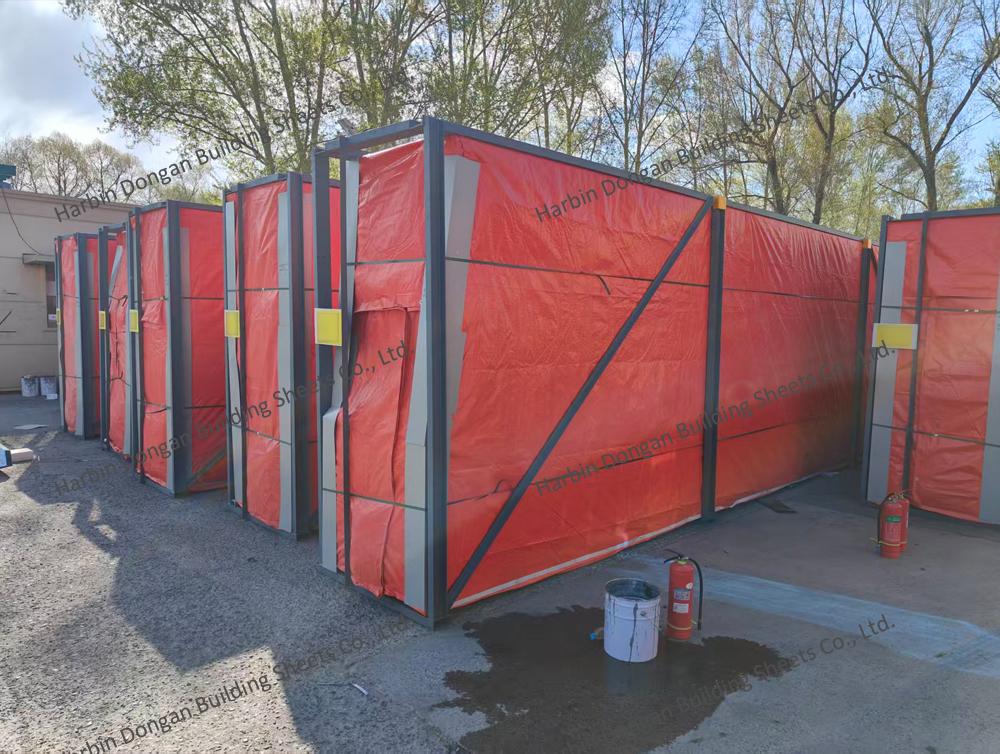
First, the panels received multiple layers of waterproof and moisture-resistant wrapping. This provided an additional barrier against external moisture during the long journey and helped reduce the risk of corrosion on the metal surfaces.

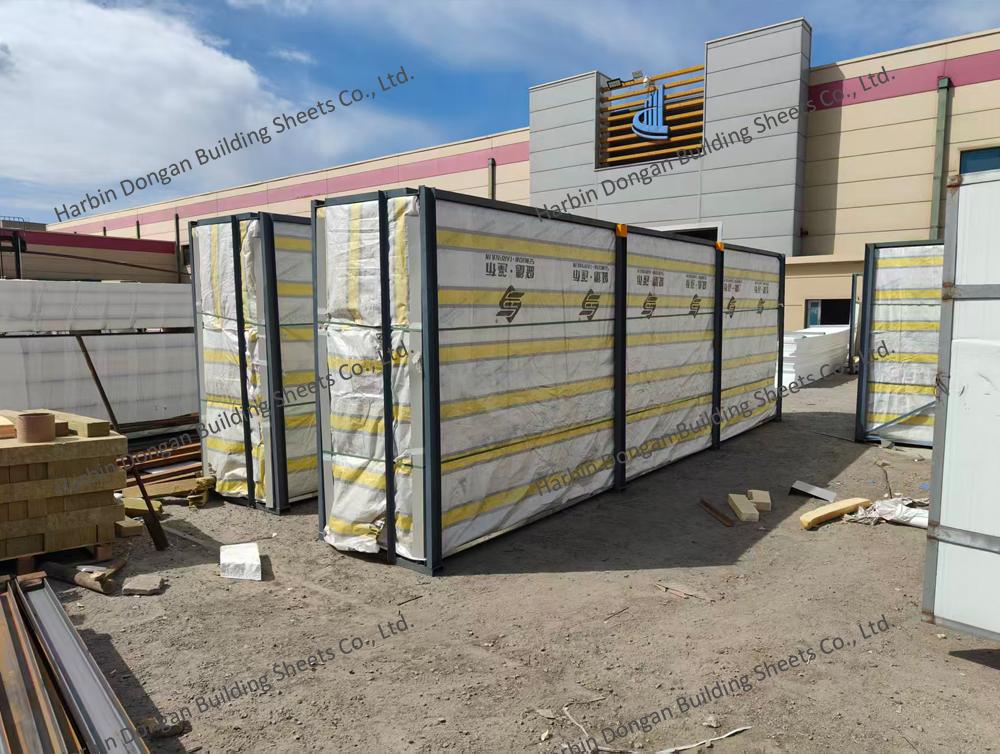
The company also addressed the problem of mechanical damage. It designed packing frames using welded high-quality angle steel. These reinforced frames provided external support, helped protect vulnerable edges and corners, and reduced the risk of damage during transportation and handling. Additional separation and securing measures helped limit friction and unwanted movement between panels.

The frame design also considered container space. By organizing the panels into more manageable and compact loading units, the arrangement helped improve container utilization while maintaining adequate protection. This reduced wasted space and helped customers save on shipping costs.

The rigid frames offered another practical benefit. Their structure made forklift handling during loading and unloading more convenient, reducing the need for repeated manual handling.
sandwich panel

This approach connected three important delivery considerations: material protection, loading efficiency, and handling convenience. Rather than treating packaging as an isolated step, the project considered it part of the overall transportation plan.

Delivery Quality Starts Before the Container Leaves

Overseas material delivery involves more than meeting production specifications and arranging vessel space. Packaging, cargo protection, and loading methods all influence what arrives at the construction site.

For sandwich panel shipments, these details deserve attention early in the project. The required packaging should reflect the transportation distance, product dimensions, surface finish, handling conditions, and unloading arrangements.

A well-prepared shipment cannot eliminate every transportation risk. However, it can reduce avoidable damage, make better use of container space, and help control unnecessary freight expenses. In overseas projects, these factors are an important part of delivery quality.


Powder Coat Booths

For those larger-sized parts, or smaller quantity runs, we have 2 independent powder coat booths and ovens. The quality, durability and affordability of today’s powder coating finishes make this the process of choice for world-class companies.

Powder coating advantages over other forms of coating are many. Materials used in the Powder coating process can be metals and non-metals that come in a multitude of thicknesses, textures, colors, etc. Another of Powder coating’s biggest advantages over conventional coatings is its ability to create finishes in many different textures. Powder Coating Booths allow us the ability to apply these advantages to large products.

Wet Paint Line

Tri-State Fabricators runs a full-service conveyor line for painting. Wet painting can provide protection or decoration to many different part styles. From start to finish, every project is easier to undergo random and point-based inspection by our skilled painting team.

Advantages to our Wet Paint Line are these lines start with product prep and ends with a thorough inspection of a high quality finished product. Our ability to complete large and small projects with a superior finish and doing so in a timely and economical fashion. This passes along the savings in production to our customers. When powder coating ins not an option, our Wet Paint Line gets the job done right the first time.

Wet Paint Booths

When the parts get big and heavy we roll-out our custom paint racks and oversize booth. By utilizing our partnerships with all the major paint brands, we can match virtually any color with wet paint.

The advantages of having access to a Wet Paint Booth are many. Large projects of many different shapes can be loaded into the booth. The Wet Paint Booth offers an environment that is much more controlled than a typical parts painting operation.

Not only are they used because of their controlled environment, but they’re are also advantageous when it comes to applying paint to parts that are needed in industries that require specialty coatings such as medical, aerospace, etc.

Military CARC

Our military forces have some very high standards when it comes to the finish of their vehicles and equipment. From the first pre-treatment step to final coat, it takes a great deal of knowledge and experience to protect the men and women of our armed forces. They deserve only the best, and Tri-State Fabricators provides it.

All of our processes are closely monitored by our staff and management teams. Both of which are highly trained in the processes of metal fabrication and finishing. Tri-State Fabricators’ goal is to always fully satisfy each and every customer, including the military. We will always put a 110% into what we do.

Glass-Bead Blasting

Abrasive media blasting is an excellent way to remove old paint, rust, and increase the paint/powder adhesion. Glass beads produce a much smoother and brighter finish than angular abrasives; leaving the part clean yet without any dimensional change. Chemically inert and environmentally friendly, we can recycle our beads approximately 30 times; making them a more preferred method of metal cleaning or surface finishing.

Advantages to Glass Bead Blasting are many. Glass bead blast media is used when a project is needing rough surfaces need to become smooth for applications of coatings such as paint. It is typically used to clean paint and rust from a product surface without deforming the surface it is being used on. Overall, compared to many other blasting media, Glass Bead Blasting is a very economical choice and those savings are always passed on to our customers.

Part Washing

Tri-State Fabricators utilize a zinc phosphate wash to clean and etch the material to ensure the best paint adhesion possible. The unique design of our 3-stage wash system does the work like a 5-stage. From Cleaning and rinsing to conversion coating and post-treatment, Our Part Washing process is a complete service and works throughout the fabrication service and the finishing service.

Along with the previously mentioned benefits, Curing is a vital chemical reaction that leaves the product finish hard and relatively safe from mild abrasion and aggressive corrosion. This process can be done in more than one way; ambient air-dry or in curing ovens at temps that exceed 240°.

Burn-Off Oven

From fixing paint mistakes (someone else’s of course) to simply cleaning our paint line hooks, our burn-off oven is put to good use. After a quick burn-off, a little clean up, and a fresh coat of paint, your parts will look better than new.

Why does our Burn-Off Oven work so well? Because super heating the air around parts turns the materials into ashes. From paint and powder coatings to rubber and machining oils, high temps do the job without degrading the integrity of the part.

Masking

Masking is a vital part of producing high quality products. We have die-cut masking patterns to protect machined surfaces as well as a wide range of plugs and caps to protect threaded holes and bolts. We provide permanent and temporary masking.

Masking allows the selected sections of a product to be protected from a fabrication or finishing service. This can be with both chemicals when etching and tapes, paints when only finishing just a section of the product. Masking is great in aiding the customization process of a project.

Screen Printing

Screen printing is a photographic process that transfers artwork onto a porous nylon screen which allows colored ink to flow through the screen and be deposited on an aluminum or plastic component. We can generally have just about any design created onto a screen for your parts.

Some of the advantages of Screen Printing are, brand recognition for your business displaying on your products, assembly instructions, product warnings/hazards, etc. Tri-State Fabricators produces Screen Printing of the highest quality so you know it’s durable.

Metal Finishing

Metal Finishing is the art of treating the exterior portion of product, often metal but can also be made of other materials, so that the surface is clean and free of any debris. Then the process of applying coats or either paint of powder coat takes place. This coating process improves the quality of the product in both appearance and resistance to wear and corrosion.

Tri-State Fabricators, Inc., understands that a project typically isn’t complete until a high-quality finish has been added to your product. This is why our painting and powder coating teams continuously inspect the products throughout the Metal Finishing process.
