What is Hexagonal Boron Nitride Used For in 2026?
In 2026, Hexagonal Boron Nitride (h-BN) continues to rise as a versatile material in various industries. Dr. Emily Chen, a leading expert in materials science, states, “Hexagonal Boron Nitride is shaping the future of advanced applications.” Its unique properties, including high thermal conductivity and electrical insulation, make it invaluable.
Manufacturers are increasingly using h-BN in electronics, coatings, and even lubricants. For instance, its application in semiconductor devices is noteworthy. As devices become smaller, the need for effective thermal management grows. h-BN meets this need, providing exceptional heat dissipation without affecting electrical performance.
However, challenges remain. Sourcing high-quality h-BN can be difficult, leading to inconsistencies. Moreover, the recycling of h-BN remains an area needing improvement. The industry must address these issues to unlock the full potential of Hexagonal Boron Nitride. As demands evolve, so too must the approaches taken towards this remarkable material.
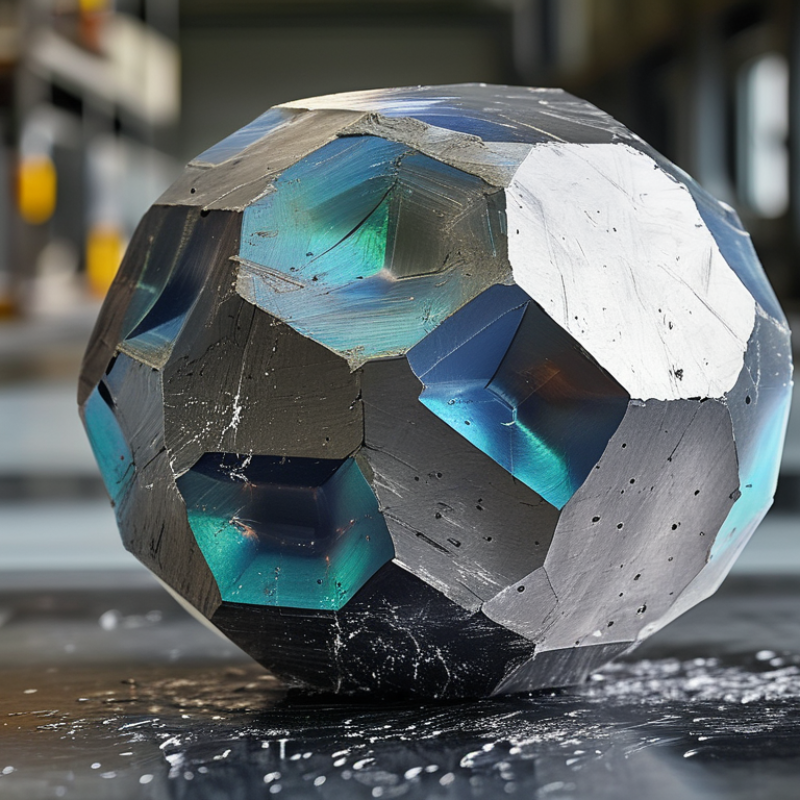
Applications of Hexagonal Boron Nitride in Electronics by 2026
Hexagonal boron nitride (h-BN) is gaining significant traction in the electronics sector by 2026. Its unique properties make it a reliable material for various applications. Researchers estimate that the global market for h-BN in electronics will reach $1.2 billion by 2026, driven largely by its excellent thermal conductivity and electrical insulation capabilities.
In semiconductor manufacturing, h-BN plays a crucial role. It provides a stable substrate for two-dimensional materials, enhancing performance and reliability. According to a 2023 market report, the demand for h-BN in this domain is projected to increase by 15% annually. The material's ability to withstand high temperatures also makes it ideal for heat dissipation in advanced electronics, such as power devices and LEDs.
Moreover, h-BN's usage in the fabrication of dielectric layers in capacitors is an emerging trend. Capacitors made with h-BN show improved efficiency and lifespan. Despite these advantages, there are challenges, such as the high cost of production and scalability issues. Companies are exploring innovative methods to produce h-BN at lower costs. As the industry progresses, addressing these barriers is crucial for maximizing h-BN's potential in electronics.
Role of Hexagonal Boron Nitride in Thermal Management Solutions
Hexagonal Boron Nitride (h-BN) has gained attention for its pivotal role in thermal management solutions by 2026. As electronic devices become more advanced, efficient heat dissipation is crucial. h-BN offers excellent thermal conductivity, surpassing many traditional materials. This property makes it an ideal candidate for substrates in high-performance electronics, where maintaining optimal temperatures is vital.
In high-temperature environments, h-BN remains stable. This stability ensures reliable performance of critical components. Its incorporation in thermal interface materials allows for better heat transfer. Such improvements can lead to longer device lifespans and enhanced performance. However, challenges remain in fully integrating h-BN across various applications. The cost of production, for instance, still deserves scrutiny. Finding a balance between performance enhancements and economic feasibility is essential for widespread adoption.
The research community continues to explore innovative ways to utilize h-BN in thermal management. Collaboration between scientists and engineers may yield breakthroughs in material usage. However, practical implementation can prove complex. It’s vital to address these challenges while harnessing the benefits h-BN can offer. Adopting a careful approach to research and application will ensure that the potential of h-BN is realized effectively in future technologies.
Hexagonal Boron Nitride in Cutting Tools and Abrasive Materials
Hexagonal Boron Nitride (h-BN) has emerged as a vital component in the manufacturing of cutting tools and abrasive materials. This unique material boasts excellent thermal stability and exceptional chemical resistance. These properties make it ideal for high-performance applications. h-BN acts as a solid lubricant, reducing friction between cutting edges and materials. This ultimately leads to longer tool life and improved cutting efficiency.
In 2026, the demand for advanced cutting tools is expected to rise. Manufacturers are continuously seeking ways to enhance performance and durability. Hexagonal Boron Nitride fits this need perfectly. Its hexagonal structure allows for efficient heat dissipation during machining processes. This helps maintain optimal cutting temperatures, preventing damage to both the tool and the workpiece. However, integrating h-BN into tool design poses challenges. Proper dispersion and bonding techniques must be developed to fully leverage its benefits.
The abrasive industry also benefits significantly from h-BN. Its hardness is comparable to that of traditional abrasives, yet it offers better thermal stability. This quality is crucial when working with tough materials. Despite its advantages, h-BN is often underutilized due to cost considerations and limited awareness. Exploring its full potential requires ongoing research and innovation. The future of cutting tools and abrasives likely hinges on overcoming these obstacles.
Hexagonal Boron Nitride Applications in 2026
Use of Hexagonal Boron Nitride in Composite Materials for Manufacturing
Hexagonal Boron Nitride (h-BN) is gaining traction in manufacturing, particularly in composite materials. By 2026, its utilization is expected to increase significantly within various industries, driven by its unique properties. h-BN is known for its high thermal conductivity and electrical insulation capabilities. According to a study by MarketsandMarkets, the global market for h-BN in composites is projected to reach $200 million by 2026. This growth reflects the material's versatility and the increasing demand for advanced composites.
Manufacturers are incorporating h-BN into lightweight composites for aerospace and automotive applications. These composites exhibit enhanced mechanical strength and thermal stability. Research indicates that adding just 10% h-BN to polymer matrices can improve thermal conductivity by over 30%. Furthermore, h-BN's lubricating properties allow for better wear resistance in mechanical components. However, challenges remain in large-scale production and consistency of material quality.
The adoption of h-BN in composites is not without drawbacks. Sourcing high-purity h-BN can be costly and complex. Additionally, manufacturers face challenges in maintaining uniform dispersion within the matrix materials. Addressing these issues is crucial for wider acceptance in the market. Continuous research is necessary to optimize production processes and ensure the material meets industry standards.
Emerging Trends in Hexagonal Boron Nitride Research and Development
Hexagonal boron nitride (h-BN) is gaining attention in 2026 for its unique properties and versatile applications. Recent studies indicate that the global market for h-BN will exceed USD 2 billion by 2027. The material's high thermal conductivity and electrical insulation make it ideal for electronic applications. Innovations in h-BN coatings have shown great promise in enhancing the performance of thermal management systems.
Research is focused on evolving the production methods of h-BN. Current processes are expensive and not always efficient. A breakthrough in sustainable synthesis techniques was documented, potentially reducing costs by up to 40%. This could unlock further uses in pharmaceuticals and aerospace industries, where high purity and stability are crucial.
The interaction of h-BN with other materials is also a hot topic. Studies suggest that combining h-BN with graphene can yield significantly better mechanical strength. However, the challenges of uniform dispersion remain. Researchers acknowledge that this inconsistency can hinder the full potential of h-BN composites. Continuous exploration is necessary to address these challenges and truly capitalize on h-BN's capabilities.





