


What Are Heavy Duty Sliding and Folding Doors?

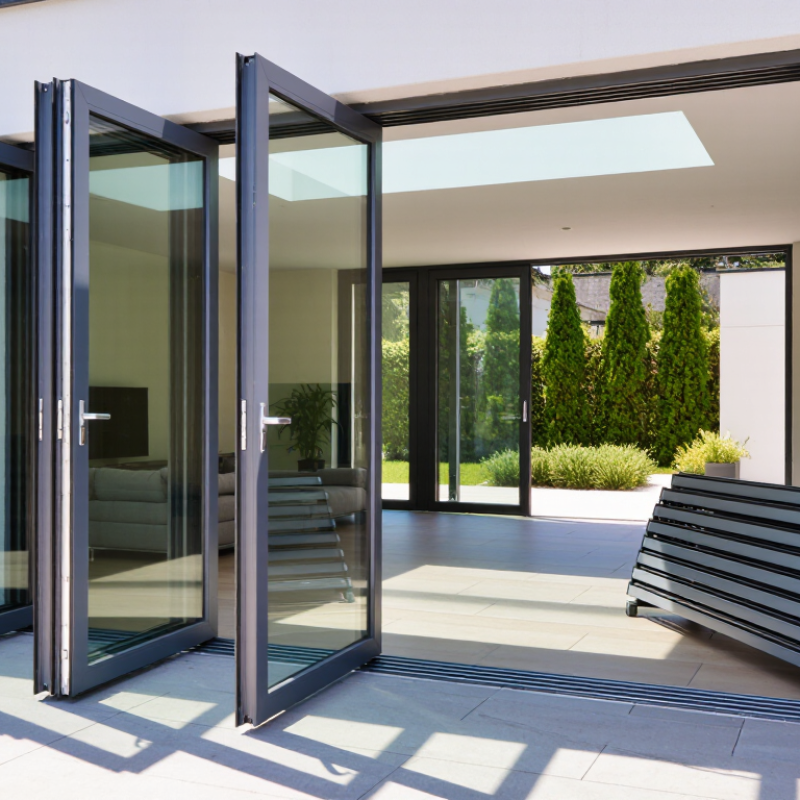
Heavy-Duty Sliding & Folding Doors are designed to open wide while carrying substantial panels through repeated daily use. They can help connect a living room to a patio, or give a commercial space a broad, flexible entrance. The term “heavy-duty” is not a universal performance rating, though. Buyers should check panel weight limits, hardware specifications, weather seals, and installation requirements for the exact system.

Architect Louis Kahn famously said, “A room is not a room without natural light.” His observation offers a useful architectural lens: wide-opening doors can bring daylight deeper indoors and make the threshold feel less defined. But appearance is only part of the decision. A smooth glide depends on correctly sized tracks, rollers, hinges, and supports. Small installation errors can become noticeable when large panels move each day.

Sliding doors typically travel along tracks, while folding systems gather panels to one or both sides. Each layout has trade-offs. Tracks need attention, and folded panels occupy space near the opening. Not every system suits every building. Check the opening dimensions, exposure to wind and rain, access needs, and available clearance before choosing. A product label alone cannot confirm performance. The details matter.

This guide explains the basic designs, materials, hardware, and practical selection points. It also considers limitations, because oversized doors can be impressive—and demanding. For a reliable comparison, use manufacturer specifications and have a qualified installer assess the opening.
What Are Heavy Duty Sliding and Folding Doors?

What Defines Heavy-Duty Sliding and Folding Doors?

Heavy-duty sliding and folding doors are defined by how their parts handle weight, movement, and repeated use—not by appearance alone. The frame must resist flexing, while tracks, rollers, hinges, and fasteners need to support the door’s size and operating demands. A wide sliding panel, for example, depends on a stable track and correctly sized rollers to move smoothly. Folding panels place added demands on hinges and connections between sections. Small components matter.

There is no single weight that makes a door “heavy-duty” in every setting. Daily opening frequency, panel width, exposure to wind, and the building structure all affect what is suitable. Look for clear load information and installation guidance, then match those details to the opening. A strong door fitted to an uneven frame can bind or wear prematurely. That part is easy to overlook. Track alignment, secure anchoring, and accessible maintenance points matter too. I would not judge durability by thick-looking metal alone; the full assembly and how it is installed tell a more useful story.


How Do Sliding and Folding Door Systems Support and Move Heavy Panels?

Heavy sliding and folding doors move through a chain of load-bearing parts. In a sliding system, rollers carry the panel along a level track, while hangers and brackets transfer its weight into the supporting structure. A floor guide controls sway; it should guide, not carry, the panel. Folding systems divide the load across linked hinges and carriers, so alignment matters at every joint. Small installation errors can make a heavy door drag or bind.

The EN 1527:2019 hardware classification includes declared door-mass categories and endurance testing of up to 100,000 operating cycles. This gives specifiers a useful basis for comparing hardware, but it does not guarantee smooth movement in every opening. Track deflection, uneven floors, dust, and frequent slamming still affect performance. The panel’s actual weight, width, and use frequency should inform hardware selection, not appearance alone.

Tips: Ask for the tested mass rating and cycle class. Check that the track support matches the building structure. Keep rollers clean, and inspect alignment when movement becomes uneven. A little resistance is easy to dismiss; it can signal a developing problem.

Which Materials and Hardware Determine a Door’s Load Capacity?

Heavy-duty sliding and folding doors are defined less by appearance than by the weight each panel and its hardware must carry. A wide glass leaf can weigh far more than a narrow timber one. Steel reinforcement, frame depth, glass thickness, and panel size all affect that load. Yet strong materials alone cannot prevent sagging.

Check the stated maximum panel mass, not just the total system capacity. Rollers, bearings, track, hinges, fixings, and the supporting wall must work together. EN 1527:2019 classifies sliding and folding hardware durability using cycle tests ranging from 5,000 to 100,000 cycles. That measures repeated operation, not a door’s safe load by itself. ASTM E330/E330M provides a test method for structural performance under uniform pressure; it does not set one universal capacity for every door. A detail that is easy to overlook: installation errors can undermine otherwise well-rated hardware.

Tips: Ask for a tested panel-weight rating and confirm whether it includes the glass. Check track fixing points and substrate strength. For unusually wide or heavy panels, request project-specific engineering. Ratings matter. Real support matters too.

What Are Heavy Duty Sliding and Folding Doors? — Which Materials and Hardware Determine a Door’s Load Capacity?

Door or Component Material or Construction Relevant Fact How It Affects Load Capacity Selection Check
Sliding door leaf Glass panel Ordinary glass has a density of about 2,500 kg/m³. A 10 mm pane therefore weighs about 25 kg per square metre, before adding the frame and hardware. Glass thickness and panel area contribute directly to the weight carried by the rollers and track. Calculate the complete panel weight, including frame, handles, and fittings. Use safety glass where required by applicable building codes.
Sliding or folding door leaf Timber Timber density varies widely with species, moisture content, and construction. Solid timber, engineered timber, and hollow-core leaves can have substantially different weights. The material name alone does not establish leaf weight; construction and dimensions matter. Use the documented weight of the finished leaf rather than estimating from the surface material.
Framed door leaf Aluminum Aluminum has a density of about 2,700 kg/m³, but finished frame weight depends on profile shape, wall thickness, reinforcement, and glazing. A suitably designed frame can support large glazed panels, but the assembled door still loads the track, rollers, or hinges. Check the complete assembly weight and the frame maker’s permitted panel dimensions and infill.
Framed door leaf Steel Steel has a density of about 7,850 kg/m³. Thin formed profiles can be strong, but steel components add weight. Frame stiffness and connection design matter; added frame mass also increases the load on moving hardware. Confirm both structural suitability and the finished leaf weight, including reinforcement and glazing.
Sliding hardware Track, rollers, and hangers Hardware capacity is specified by the system supplier and may be stated per door leaf or per hardware set. Rollers carry the moving leaf, while the track and its fixings transfer the load to the supporting structure. Match the stated rating to the finished leaf weight. Verify the fixing substrate, number of carriers, and any installation limits.
Folding hardware Hinges, pivots, carriers, and track Folding systems distribute forces across connected panels and support points; the layout and hardware arrangement affect performance. Panel weight, panel width, hinge spacing, and system configuration all influence the loads on pivots and carriers. Check the system rating for the specified panel count, panel dimensions, and configuration—not just an individual hinge rating.
Supporting structure Header, wall, floor, and anchors Door hardware can only perform as intended when fixed to a suitable, adequately supported structure. A weak or flexible header, unsuitable anchors, or an uneven floor can limit the effective capacity of the entire installation. Confirm structural support, anchor type, alignment, and installation requirements with the project’s qualified installer or engineer.
Illustrative weight calculation 1.0 m × 2.1 m glass panel, 10 mm thick Glass area is 2.1 m². At about 25 kg/m², the glass alone weighs approximately 52.5 kg. The finished leaf will weigh more after adding its frame, hardware, and other components. Use the actual finished leaf weight when selecting hardware; do not treat the glass-only estimate as the total door weight.

Important: “Heavy duty” has no single universal load rating. Capacity depends on the complete door system, its configuration, installation, and supporting structure. Always follow the system supplier’s documented per-leaf limits and installation instructions.

How Does EN 13241 Assess Industrial Door Performance?

EN 13241 helps assess industrial doors by defining product characteristics that manufacturers document for their intended use. It covers many industrial, commercial, and garage doors, including sliding and folding designs. The standard is not a single endurance test. Assessment uses relevant test methods and technical evidence. Depending on the door, declared performance may include wind resistance, water tightness, air permeability, and thermal transmittance. A loading-bay door exposed to gusts and rain needs different evidence from an indoor divider. Small details matter.

Buyers should compare the declared performance with actual site conditions, not rely on a general claim that a door is “heavy duty.” Check the documentation, installation requirements, and the conditions under which test results were obtained. Powered doors may also need safety checks under complementary standards, such as EN 12453. EN 13241 does not provide one universal score that suits every building. A laboratory result may not reflect poor fitting, worn seals, or uneven floors. That limitation deserves attention: paperwork is useful, but the installed door must still be checked and maintained in its real setting.

What Do EN 12424 Wind-Load Classes 0–5 Mean for Door Selection?

What Are Heavy Duty Sliding and Folding Doors?

For heavy-duty sliding and folding doors, EN 12424 wind-load classes offer a useful starting point. The standard ranks resistance to wind pressure: Class 0 means performance has not been determined; Class 1 is 300 Pa; Class 2, 450 Pa; Class 3, 700 Pa; Class 4, 1,000 Pa; and Class 5 exceeds 1,000 Pa. These pressure values come from EN 12424, while EN 12444 describes testing methods. Class 0 does not automatically mean a door is unsafe. It means you lack a declared class for comparison. That matters.

A higher class may suit exposed sites, but pressure rating alone cannot settle the choice. Building height, surrounding terrain, opening size, and installation details affect wind exposure. A large folding assembly can behave differently from a compact sliding door, even at the same class. Ask for test documentation covering the door’s actual configuration, including panels, tracks, seals, and locking hardware. Check that the tested dimensions are close to your planned opening. A neat class label can still hide a mismatch.

Tips: Compare the declared class with the project’s wind-load requirements, then ask how the complete assembly was tested under EN 12444. Confirm the installer follows the specified anchoring details. I would not choose by class alone. A careful check now can prevent rattling panels and strained fixings later.

Powder Coat Booths

For those larger-sized parts, or smaller quantity runs, we have 2 independent powder coat booths and ovens. The quality, durability and affordability of today’s powder coating finishes make this the process of choice for world-class companies.

Powder coating advantages over other forms of coating are many. Materials used in the Powder coating process can be metals and non-metals that come in a multitude of thicknesses, textures, colors, etc. Another of Powder coating’s biggest advantages over conventional coatings is its ability to create finishes in many different textures. Powder Coating Booths allow us the ability to apply these advantages to large products.

Wet Paint Line

Tri-State Fabricators runs a full-service conveyor line for painting. Wet painting can provide protection or decoration to many different part styles. From start to finish, every project is easier to undergo random and point-based inspection by our skilled painting team.

Advantages to our Wet Paint Line are these lines start with product prep and ends with a thorough inspection of a high quality finished product. Our ability to complete large and small projects with a superior finish and doing so in a timely and economical fashion. This passes along the savings in production to our customers. When powder coating ins not an option, our Wet Paint Line gets the job done right the first time.

Wet Paint Booths

When the parts get big and heavy we roll-out our custom paint racks and oversize booth. By utilizing our partnerships with all the major paint brands, we can match virtually any color with wet paint.

The advantages of having access to a Wet Paint Booth are many. Large projects of many different shapes can be loaded into the booth. The Wet Paint Booth offers an environment that is much more controlled than a typical parts painting operation.

Not only are they used because of their controlled environment, but they’re are also advantageous when it comes to applying paint to parts that are needed in industries that require specialty coatings such as medical, aerospace, etc.

Military CARC

Our military forces have some very high standards when it comes to the finish of their vehicles and equipment. From the first pre-treatment step to final coat, it takes a great deal of knowledge and experience to protect the men and women of our armed forces. They deserve only the best, and Tri-State Fabricators provides it.

All of our processes are closely monitored by our staff and management teams. Both of which are highly trained in the processes of metal fabrication and finishing. Tri-State Fabricators’ goal is to always fully satisfy each and every customer, including the military. We will always put a 110% into what we do.

Glass-Bead Blasting

Abrasive media blasting is an excellent way to remove old paint, rust, and increase the paint/powder adhesion. Glass beads produce a much smoother and brighter finish than angular abrasives; leaving the part clean yet without any dimensional change. Chemically inert and environmentally friendly, we can recycle our beads approximately 30 times; making them a more preferred method of metal cleaning or surface finishing.

Advantages to Glass Bead Blasting are many. Glass bead blast media is used when a project is needing rough surfaces need to become smooth for applications of coatings such as paint. It is typically used to clean paint and rust from a product surface without deforming the surface it is being used on. Overall, compared to many other blasting media, Glass Bead Blasting is a very economical choice and those savings are always passed on to our customers.

Part Washing

Tri-State Fabricators utilize a zinc phosphate wash to clean and etch the material to ensure the best paint adhesion possible. The unique design of our 3-stage wash system does the work like a 5-stage. From Cleaning and rinsing to conversion coating and post-treatment, Our Part Washing process is a complete service and works throughout the fabrication service and the finishing service.

Along with the previously mentioned benefits, Curing is a vital chemical reaction that leaves the product finish hard and relatively safe from mild abrasion and aggressive corrosion. This process can be done in more than one way; ambient air-dry or in curing ovens at temps that exceed 240°.

Burn-Off Oven

From fixing paint mistakes (someone else’s of course) to simply cleaning our paint line hooks, our burn-off oven is put to good use. After a quick burn-off, a little clean up, and a fresh coat of paint, your parts will look better than new.

Why does our Burn-Off Oven work so well? Because super heating the air around parts turns the materials into ashes. From paint and powder coatings to rubber and machining oils, high temps do the job without degrading the integrity of the part.

Masking

Masking is a vital part of producing high quality products. We have die-cut masking patterns to protect machined surfaces as well as a wide range of plugs and caps to protect threaded holes and bolts. We provide permanent and temporary masking.

Masking allows the selected sections of a product to be protected from a fabrication or finishing service. This can be with both chemicals when etching and tapes, paints when only finishing just a section of the product. Masking is great in aiding the customization process of a project.

Screen Printing

Screen printing is a photographic process that transfers artwork onto a porous nylon screen which allows colored ink to flow through the screen and be deposited on an aluminum or plastic component. We can generally have just about any design created onto a screen for your parts.

Some of the advantages of Screen Printing are, brand recognition for your business displaying on your products, assembly instructions, product warnings/hazards, etc. Tri-State Fabricators produces Screen Printing of the highest quality so you know it’s durable.

Metal Finishing

Metal Finishing is the art of treating the exterior portion of product, often metal but can also be made of other materials, so that the surface is clean and free of any debris. Then the process of applying coats or either paint of powder coat takes place. This coating process improves the quality of the product in both appearance and resistance to wear and corrosion.

Tri-State Fabricators, Inc., understands that a project typically isn’t complete until a high-quality finish has been added to your product. This is why our painting and powder coating teams continuously inspect the products throughout the Metal Finishing process.
